



Covers for large sofas are a quick and seriously practical way to protect your furniture, give your décor a refresh, and extend the life of one of your home's biggest investments. From defending against spills and pet hair to providing a complete style overhaul, a quality slipcover is a versatile and budget-friendly solution for any oversized couch.
Why a Sofa Cover Is a Smart Upgrade
Most people start thinking about a cover for their large sofa with a single goal in mind, like protecting it from the kids' sticky fingers or the dog's muddy paws. While that’s a massive plus, the real value goes much deeper. It’s a clever, strategic choice that offers flexibility, saves you money, and gives you peace of mind in all sorts of real-world situations.
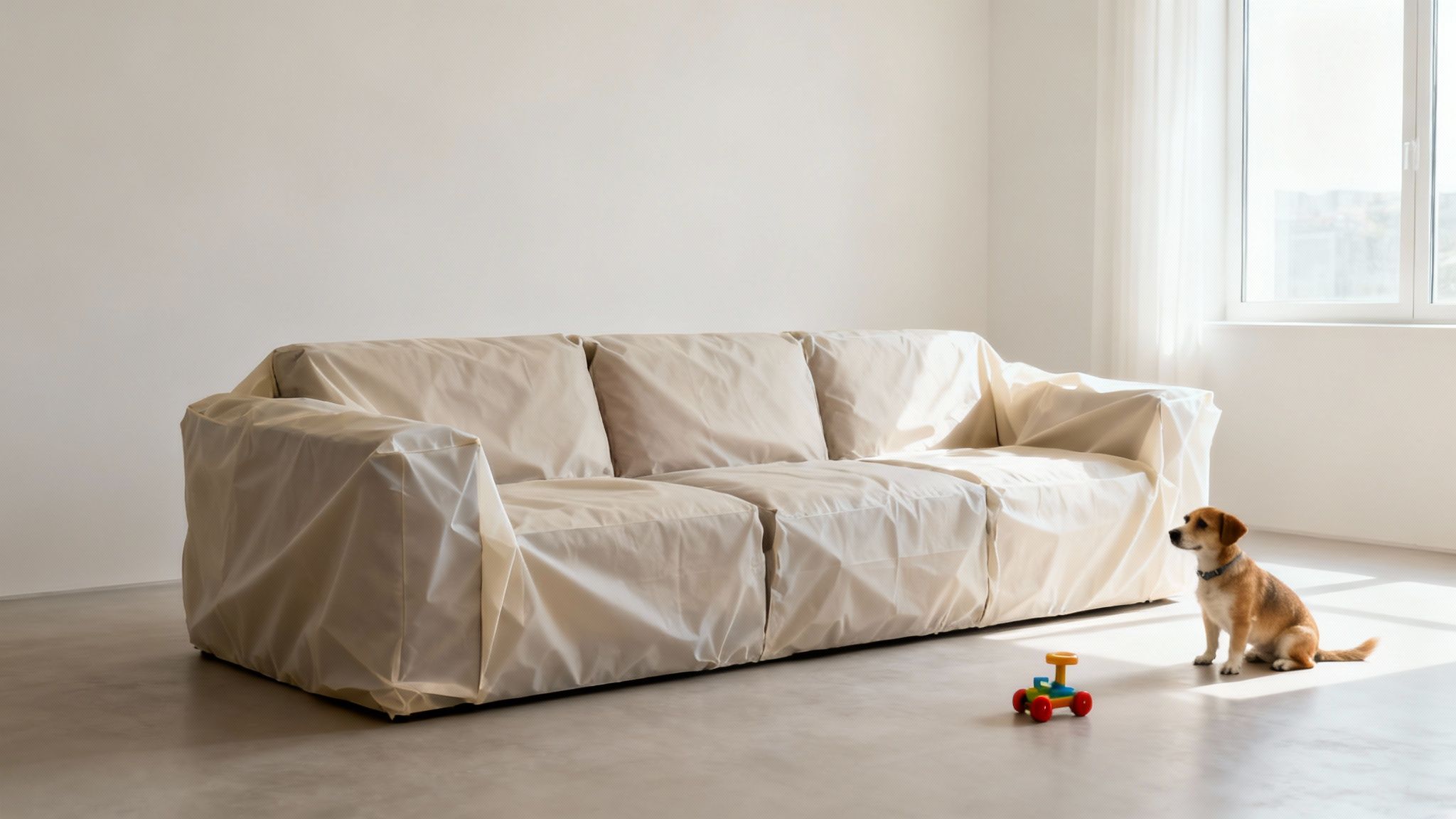
This simple upgrade is more than just a piece of fabric; it’s a problem-solver. It can take a tired, stained, or outdated sofa and turn it into a fresh centrepiece, all without the expense and hassle of buying new furniture.
Beyond Simple Protection
For families, the sofa is the heart of the home, which also makes it a prime target for spills, stains, and general wear and tear. A machine-washable cover acts as a renewable shield. One red wine accident or a felt-tip masterpiece doesn't have to mean a permanent mark on your expensive upholstery. You can simply whip the cover off, wash it, and have it looking good as new in a few hours. This makes for a much more relaxed living room where life can happen without constant worry.
Likewise, pet owners know the struggle of keeping furniture free from fur, scratches, and smells. A durable, well-fitted cover creates a barrier that’s far easier to clean than the sofa itself, preserving the fabric underneath for years.
A Landlord’s Best Asset
In the rental market, making furniture last is paramount. Landlords and Airbnb hosts need solutions that are both durable and easy to maintain between tenants or guests. A neutral, hard-wearing sofa cover allows for a quick refresh, ensuring the property always looks clean and inviting.
This is especially relevant in the UK's bustling contract furniture market, where sofas are the fastest-growing segment. With this sector projected to nearly double to USD 7,091.0 million by 2033, protecting these assets becomes a crucial business decision. Durable covers let property owners safeguard their investments with minimal downtime.
A sofa cover is one of the most cost-effective tools for property managers. It instantly deals with signs of wear, improves hygiene, and presents a consistently high standard to new tenants, directly boosting rental appeal and slashing replacement costs.
The Renter’s Style Solution
If you're in rented accommodation, making a space feel like your own can be a challenge. You can’t change the paint, and buying new furniture that might not fit your next home feels risky. A stylish sofa cover is the perfect compromise.
It allows you to inject your personality into a living room, covering up a landlord's less-than-ideal sofa choice with a colour or texture that reflects your own taste. It’s a non-permanent design choice that has a huge visual impact. For other ideas on refreshing existing pieces, have a look at these creative vinyl wrap ideas to transform furniture.
How to Measure Your Sofa for a Perfect Fit
Getting the measurements right is easily the most important part of buying a cover for your large sofa. Let's be honest, an ill-fitting cover looks sloppy and just won't stay put, which defeats the whole purpose. The good news is you don’t need to be an expert upholsterer; a few key measurements are all it takes to get that snug, tailored look.
Before you even reach for a tape measure, take a proper look at your sofa's shape. Does it have unusually high arms, really deep seats, or a T-cushion design where the seat cushions stick out in front of the arms? These little details are common on bigger sofas and will definitely affect how you measure.
The Essential Measurements You Can't Skip
For any standard sofa, there are a few non-negotiable dimensions you’ll need. These numbers are the foundation for nearly every sofa cover sizing chart out there. Grab a flexible tape measure—the soft kind used for sewing is ideal as it can follow curves easily—and a notepad.
- Total Width (Arm to Arm): This is the big one. Measure the entire length of your sofa from the outermost point of one arm right across to the outermost point of the other. Keep the tape measure pulled straight and taut.
- Seat Width: Now measure the total width of just the seating area, from the inside of one armrest to the inside of the other. This helps confirm the fit, especially for covers that come with separate pieces for the seat cushions.
- Sofa Height: Run the tape from the very top of the sofa's back frame all the way down to the floor. Make sure you're not measuring from the top of the cushions.
- Armrest Height and Depth: Measure from the top of the armrest down to the seat cushion, and then measure the depth from the front of the armrest to the back.
Pro Tip: Always measure twice. It’s a simple habit that catches tiny errors. A difference of just a few centimetres can be the difference between a perfect fit and a cover that needs constant fiddling.
Once you have these core numbers, you're in a great position to choose the right size. For a more detailed breakdown and some helpful visual aids, our complete guide on how to measure your sofa offers even more granular instructions.
Measuring Tricky Shapes: L-Shaped and U-Shaped Sofas
Sectional sofas, like L-shaped or U-shaped models, can look intimidating, but the process is surprisingly simple if you treat each section as a separate piece of furniture. A common mistake is trying to measure the whole thing in one go, which almost always leads to the wrong numbers.
For an L-shaped sofa, you have two main parts. Measure the length and depth of each one on its own. For the main sofa part, measure from the outer arm to the corner. Then, for the chaise or corner bit, measure from that same corner out to its end. You'll essentially be buying two separate covers designed to meet neatly at the corner.
The exact same logic applies to a U-shaped sofa, which usually has three sections. Measure each of the three parts from its outer end into the corner. This ensures each piece of the cover fits its corresponding sofa section correctly, giving you a clean, seamless look.
Handling Unique Features and Curves
Large sofas often come with design details that need a little extra attention. Things like high-back designs, classic rolled arms, or curved backs need to be measured carefully.
When you're measuring a curved back, don't just pull the tape measure straight across the gap. Instead, make sure you follow the actual curve of the sofa from one end to the other. This ensures the cover has enough fabric to hug your sofa's shape without being stretched too tightly. Similarly, for deep-seated sofas, check that your seat depth measurement goes all the way back to the back cushions.
If you're thinking about making a custom cover, getting precise dimensions is even more critical. To make sure you buy or cut the right amount of material, understanding how to go about calculating fabric yardage accurately is essential.
Using a Sizing Chart
Once you've got your numbers written down, you can use a sizing chart with confidence. Most manufacturers provide a simple table that matches measurement ranges to their specific cover sizes (e.g., 3-seater, 4-seater, extra-large).
It's your best tool for translating your measurements into the right purchase.
Sofa Cover Sizing Chart
Here is a typical example to help you match your sofa's measurements to the correct cover size. For single-piece sofas, the key number is the total length from outer arm to outer arm.
| Sofa Type | Measurement Range (cm) | Recommended Cover Size |
|---|---|---|
| 3-Seater Sofa | 185 - 230 cm | Large |
| 4-Seater Sofa | 235 - 300 cm | Extra-Large |
| L-Shaped Main Section | 185 - 230 cm | Large (Sectional Piece) |
| L-Shaped Chaise | 140 - 180 cm | Medium (Sectional Piece) |
Always choose the size that your sofa's largest measurement falls into. If your sofa is right on the borderline between two sizes, it's almost always better to choose the larger size. You can easily tuck away any excess fabric for a snug fit, but a cover that's too small is simply not going to work.
Choosing the Right Fabric for Your Lifestyle
The perfect cover for your large sofa does more than just fit well—it has to fit your life. The material you choose is the difference between a practical, long-lasting solution and a frustrating purchase. Your daily routine, who you share your home with, and your personal style all play a massive role in finding the right fabric.
A material that works wonders in a quiet, adult-only flat might be a disaster in a busy family home with pets and children. Let's break down the best options for different real-world scenarios, ensuring your cover is an asset, not an afterthought.
Just as a quick reminder, getting those measurements right is the foundation for a great-looking cover, no matter what fabric you end up choosing.
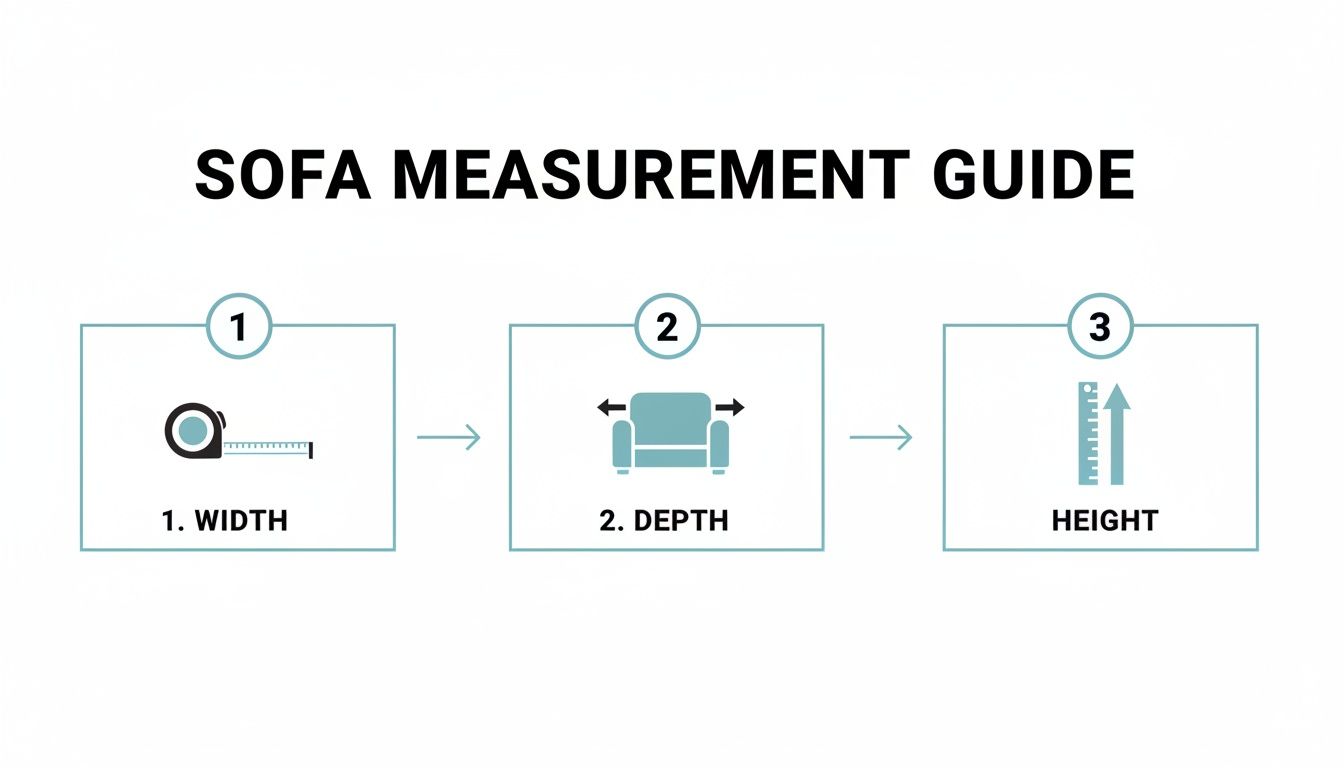
With width, depth, and height sorted, you can be confident that whichever material you pick will drape perfectly.
For a Busy Family with Pets and Kids
In a home buzzing with activity, durability and convenience are non-negotiable. Your sofa is the command centre for movie nights, homework sessions, and impromptu naps, which means it’s also a magnet for spills, crumbs, and muddy paws.
The clear winner here is a waterproof or highly water-resistant fabric. These materials have a protective layer that stops liquids from seeping into the cover's fibres and, more importantly, the sofa upholstery beneath. High-stretch spandex blends are a fantastic choice, as they are not only forgiving on large sofas but also incredibly resilient.
Key features to prioritise:
- Machine Washable: This is essential. The ability to simply throw the cover in the wash after an accident saves an incredible amount of time and stress.
- Durable Weave: A tight, robust weave will stand up better to the claws of cats and dogs, resisting snags and pulls.
- Stain Resistance: Many modern polyester blends are inherently stain-resistant, meaning spills can often be wiped away before they set.
This need for robust protection is a significant driver in the UK furniture market. Forecasts suggest the market will hit £19.5 billion in 2025, with a huge focus on furnishings that can withstand family life. In fact, 65% of UK households with children report sofa damage from spills or claws within just two years, making protective covers an incredibly smart investment. You can discover more insights about UK furniture trends at Mintel.
For the Practical Landlord or Airbnb Host
If you're managing a rental property, your priorities shift to longevity, neutrality, and fast turnarounds. A sofa cover in a rental needs to be a workhorse—tough enough to handle frequent use from different guests while being easy to clean and maintain between stays.
The goal is to find a fabric that looks welcoming and fresh for every new arrival. Darker, neutral colours like grey, navy, or beige are often the safest bet, as they hide minor marks and fit seamlessly into most decor schemes.
For landlords, a high-quality sofa cover is an insurance policy. It protects a significant asset from wear and tear, minimises cleaning time, and ensures the property is always presented in the best possible light, directly impacting guest satisfaction and reviews.
Focus on materials that are hard-wearing and less prone to wrinkling. A polyester-spandex blend is again an excellent choice due to its durability and ease of care. It snaps back into shape after washing, meaning less time spent steaming or ironing.
For the Style-Conscious Homeowner
For those who view their sofa as a key design element, a cover is an opportunity for a style refresh. It allows you to experiment with colours, textures, and trends without the commitment of buying a whole new piece of furniture.
This is where more textured and luxurious fabrics come into play. A jacquard cover, for example, features intricate woven patterns that add depth and visual interest to your living room. The raised design gives it a more premium, upholstery-like feel compared to a flat, plain fabric.
Consider these stylistic options:
- Rich Textures: Look for materials like plush corduroy or chenille-style fabrics that invite touch and add a layer of cosiness.
- Seasonal Colours: Swap out covers to match the seasons. A light, airy colour for spring and summer can be replaced with a deep, warm tone like emerald green or burgundy for autumn and winter.
- Foam Inserts: For a truly polished look, ensure your cover comes with foam inserts. Tucking these into the crevices of your sofa creates crisp lines and prevents the fabric from shifting, giving you that sought-after custom-upholstered appearance.
Ultimately, the best fabric choice is a balance of form and function. To help you weigh your options, our guide on choosing the best fabric for your sofa provides an even deeper comparison of popular materials.
Installation Tips for a Flawless Finish
You’ve measured meticulously, picked the perfect fabric, and now your new cover has arrived. Getting the installation right is what transforms a good fit into that seamless, tailored look you’re after. It’s less about brute force and more about technique—a few simple tricks make all the difference.
This isn’t just a case of throwing a bit of fabric over your furniture. It’s about working with the material, knowing how to secure it, and turning it into an integrated part of your sofa. With a little patience, you can get a finish that looks almost custom-upholstered.
Getting Started The Right Way
Before you even think about putting the cover on, give your sofa a quick vacuum to get rid of any crumbs or pet hair. A clean surface helps the cover grip much better. Next, unpack your new cover and hunt for the tag that indicates the back—this tiny detail saves a world of guesswork.
Start by draping the cover loosely over the entire sofa, making sure that tag is lined up with the centre of the sofa’s back. Let the fabric fall naturally over the arms and front. Don’t pull it tight at this stage; you’re just aiming for even distribution.
The Art of Tucking and Securing
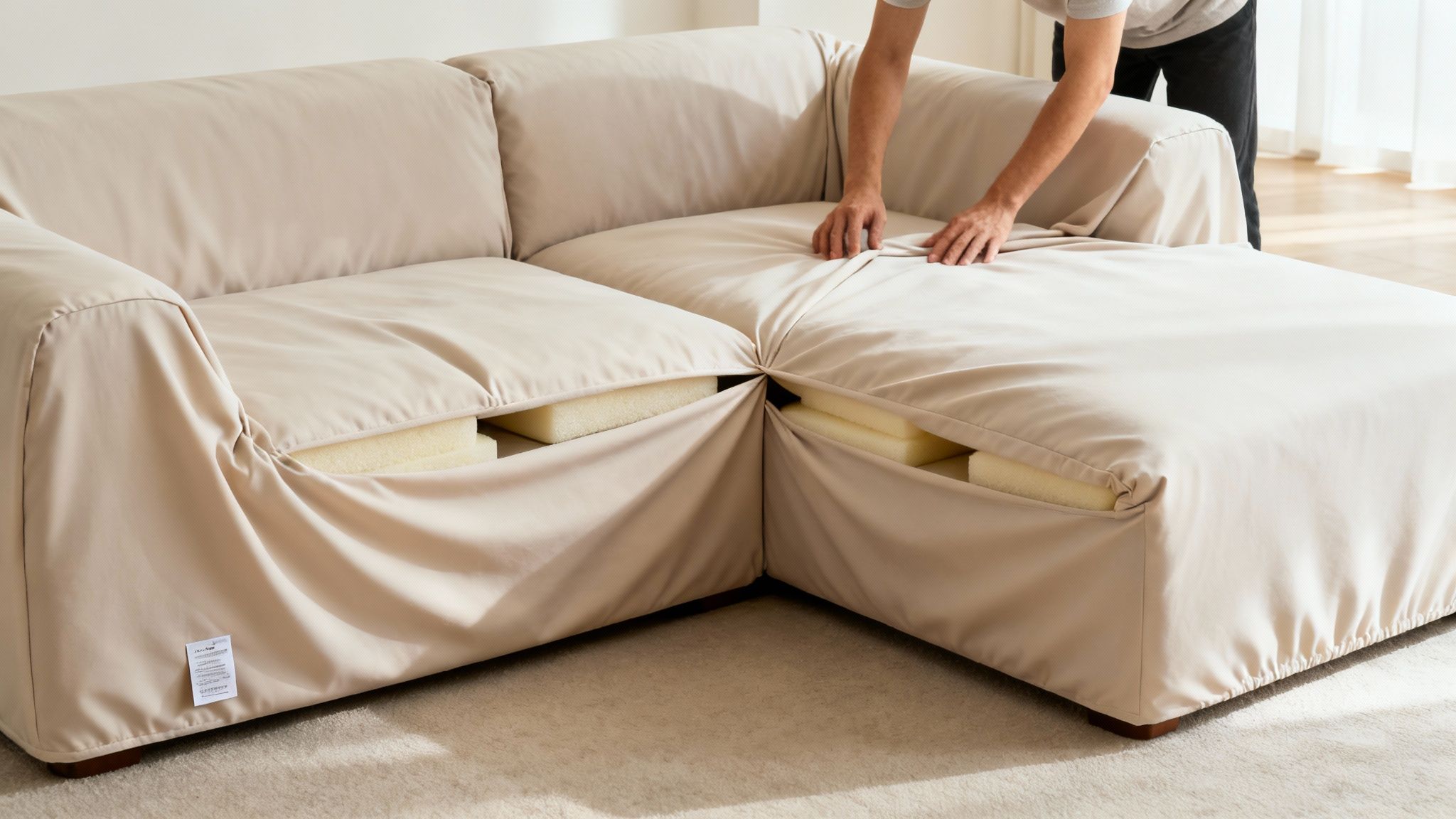
Right, this is where the magic happens. The key to a wrinkle-free, professional finish is to systematically tuck the excess fabric deep into the crevices of your sofa. Most quality covers for large sofas come with foam inserts or sticks for exactly this reason.
- Start at the back: Push the fabric down into the gap where the back of the sofa meets the seat cushions. Always work from the centre outwards.
- Move to the arms: Next, tuck the material down into the gaps between the armrests and the seat cushions. This really helps to define the sofa’s shape.
- Insert the foam sticks: Once the fabric is pushed in, firmly press the foam sticks into these same gaps. They act as anchors, creating tension and holding everything securely in place, even with daily use.
Pro Tip: Don't be shy when you're tucking. You need to push those foam sticks in quite deep to get a really secure grip. The handle of a wooden spoon or even a ruler can help you poke the fabric into tight corners without damaging it.
For an even more detailed walkthrough, our official installation guide has video tutorials and step-by-step visuals to help you master the process.
Troubleshooting Common Installation Issues
Even with the most careful fitting, you might hit a couple of common snags, especially with uniquely shaped sofas. Here’s how to handle them.
Problem: Excess Fabric on a Corner Sofa
Sectional sofas can leave you with a bit of extra material bunched up at the corner join. The fix is to create a neat, clean fold. Pull the excess fabric taut at the corner, create a crisp vertical pleat (just like wrapping a present), and tuck it down securely into the seam between the two sofa sections.
Problem: The Cover Slips on Leather
Leather and faux-leather sofas have a slick surface that can cause covers to shift. This is where those under-sofa straps or clips that came with your cover become absolutely essential. Make sure you secure these tightly to pull the entire cover taut from below. The combination of deeply tucked foam sticks and secured straps is specifically designed to stop covers from sliding on smooth surfaces.
Styling Your Newly Covered Sofa
Once the cover is fitted perfectly, the real fun begins—the styling. A new cover is a fantastic chance to refresh your entire living room aesthetic. It’s a blank canvas, inviting you to play with texture and colour.
Your newly covered sofa is now the centrepiece, so build the room's look around it.
- Add Throw Pillows: This is the easiest way to create a cohesive look. Choose pillows that pick up on other colours in your room—from your curtains, rug, or wall art. For a plush, inviting feel, try textures like corduroy or velvet to add a layer of cosiness.
- Drape a Throw Blanket: A soft throw draped over an armrest or the back of the sofa adds another layer of texture and colour. It breaks up the solid block of colour and makes the space feel more lived-in and welcoming.
- Coordinate with Your Decor: If you've chosen a bold colour for your cover, keep other accessories in the room more neutral to create balance. On the other hand, a neutral grey or beige cover is the perfect backdrop for more vibrant cushions and throws.
By pairing a flawless installation with thoughtful styling, your cover becomes more than just a protective layer—it becomes a central part of your home's design.
Keeping Your Sofa Cover Looking New
You’ve made a great investment in a high-quality cover for your large sofa, and with just a little care, you can keep it looking fresh and vibrant for years. Proper maintenance isn't complicated, but it’s absolutely key to getting the most out of your purchase. It really all boils down to knowing your fabric and tackling life’s little messes as they happen.
Protecting a significant purchase like a large sofa just makes sense. The UK furniture market is a testament to our love for quality home furnishings, with its size projected to hit £175.8 billion by 2026. A durable, easy-care cover is the smartest way to preserve that investment. You can read the full research about the UK furniture industry's growth on IBISWorld to see the bigger picture.
Washing and Drying Your Cover Correctly
The first rule of cleaning is to always check the care label – different materials need different handling. The good news is that most modern stretch covers are designed for total convenience.
For the vast majority of polyester and spandex blend covers, a gentle machine wash will do the job perfectly.
- Temperature: Stick to a cool or lukewarm setting, around 30°C. Hot water is the enemy of elastic fibres and can cause your cover to lose its stretch over time.
- Detergent: A mild, non-bio liquid detergent is your best friend here. Avoid using bleach or harsh stain removers directly on the fabric unless the label specifically says you can.
- Drying: Air-drying is always the safest bet. If you really must use a machine, choose a low-heat, delicate setting to prevent any chance of shrinkage or damage.
If you have a waterproof or specially coated cover, the care is similar, but make sure to skip the fabric softener, as it can break down that protective layer. For more delicate weaves like jacquard, a gentle cycle is crucial to protect those beautiful, intricate patterns.
Tackling Common Stains Like a Pro
Accidents are inevitable, but a quick response can stop a temporary spill from becoming a permanent mark. Whether it's a splash of red wine or a muddy paw print, acting fast is your best defence.
For most liquid spills, start by blotting—never, ever rubbing—the area with a clean, dry cloth to soak up as much as possible. For more stubborn stains, a simple solution of mild washing-up liquid and cool water usually does the trick. Gently dab the stain with a sponge, working from the outside in to stop it from spreading.
A brilliant household hack for greasy stains like pizza or butter is a sprinkle of cornflour or bicarbonate of soda. Let it sit for about 15-20 minutes to absorb the oil, then gently brush it off before spot-cleaning the area.
How Often Should You Wash Your Cover?
There's no single right answer here; the ideal washing schedule really depends on your household. But as a general guide, here's what I've found works for most people:
- Homes with Pets and Young Children: Every 2-4 weeks is a good rhythm to keep things hygienic and fresh.
- Average Use Households: A wash every 1-2 months or just seasonally is usually more than enough to handle dust and general wear.
- Low-Traffic or Guest Rooms: Every 3-6 months, or as needed for spills, will keep the cover in perfect condition.
When you're storing a spare cover, pop it in a breathable fabric bag and keep it in a cool, dry place away from direct sunlight. This stops the colours from fading and ensures it's dust-free and ready for its next appearance.
Common Questions About Large Sofa Covers
Even with all the tips and guides, it’s completely normal to have a few questions left. Choosing a cover for a big, central piece of furniture like your sofa feels like a big deal, so let's clear up a few of the most common queries we get.
Will a Stretch Cover Really Fit My Oversized or Unusual Corner Sofa?
Absolutely. This is probably the number one concern for anyone with a large or awkwardly shaped sofa, and it’s the exact problem our covers are designed to solve. They’re made from a high-quality, four-way stretch spandex blend that’s incredibly forgiving.
The fabric's elasticity allows it to hug a huge variety of shapes, from sofas with really deep seats to those with high, chunky armrests and everything in between.
For L-shaped or U-shaped corner sofas, we don’t try to make one giant cover work. Instead, we provide separate covers for each individual section. This gives you a much cleaner, more tailored look at the join, rather than trying to awkwardly stretch a single piece over a complex shape. The secret, as always, is measuring each section on its own, just as our guide shows.
How Are Your Covers Different for My Slippery Leather Sofa?
This is another question we hear all the time. Smooth surfaces like leather and faux leather just don't offer much grip, which can be frustrating. Our solution is a combination of the right fabric and some clever design features that work together to stop the slipping.
First off, the spandex-blend material has a better natural grip than many standard fabrics. But more importantly, our covers for large sofas come with free foam inserts and discreet clips or straps.
The foam sticks get tucked deep into the gaps between the cushions and the sofa frame. This creates the tension needed to anchor the cover firmly in place. The clips or straps then run underneath the sofa, pulling everything taut and stopping it from shifting and bunching up during daily use.
This whole system is specifically designed to combat the slipping and sliding that’s so common on leather furniture, keeping your cover looking neat and tidy.
As a Landlord How Quickly Can I Refit a Cover Between Tenants?
We designed our covers with landlords and Airbnb hosts in mind, because we know that a quick, efficient turnaround is everything. The entire process is refreshingly straightforward and won’t eat into your valuable time.
Here’s a realistic breakdown of how it works:
- Removal: Pulling off the old cover takes just a couple of minutes.
- Washing: All our covers are machine washable on a gentle, cool cycle, which is usually about an hour.
- Drying: You can tumble-dry them on a low heat or just let them air-dry, which takes a few hours.
- Re-installation: Once you’ve done it once, fitting a fresh cover takes around 10-15 minutes.
This means you can easily have a fresh, clean, and hygienic sofa ready for new guests or tenants in half a day. It's a hugely practical way to protect your furniture investment and maintain high standards of cleanliness with minimal fuss, ensuring your property always looks its best.
Ready to give your large sofa the protection and style refresh it deserves? At The Sofa Cover Crafter, we offer a wide range of high-quality, stretchable covers designed for a perfect fit and a flawless finish. Explore our collection and find the ideal solution for your home today at https://thesofacovercrafter.co.uk.