


You're standing in a paint shop or scrolling through fabric swatches, holding an ochre cushion against a grey sofa and wondering whether it'll look warm and considered or oddly yellow. Ochre cushion covers can work beautifully in UK living rooms, but the result depends on natural light, wall colour, the sofa's undertone and the textures around them. Check those four things before buying, rather than treating ochre as a universally flattering neutral.
Our decorative pillow covers are an easy way to add pattern and texture.
Key Takeaways Ochre Cushion Covers: Styling, Care and Buying Guide
- Check the room light: North-facing rooms can make ochre look deeper.
- Choose a shade with brown in it: It avoids looking harsh against grey.
- Look at sofa and walls together: Judge the colour in context, not alone.
Table of Contents
- Key Takeaways Ochre Cushion Covers: Styling, Care and Buying Guide
- Will Ochre Cushion Covers Work in My Living Room
- Why Ochre Is Dominating UK Interior Palettes
- Which Colour Pairings Make Ochre Cushions Look Their Best
- Which Fabric Should I Choose for Ochre Cushion Covers
- How Do I Get the Right Size and Fit for My Cushions
- Can I Machine-Wash Ochre Cushion Covers Without Fading Them
- What Should I Check Before Buying Ochre Cushion Covers
Will Ochre Cushion Covers Work in My Living Room
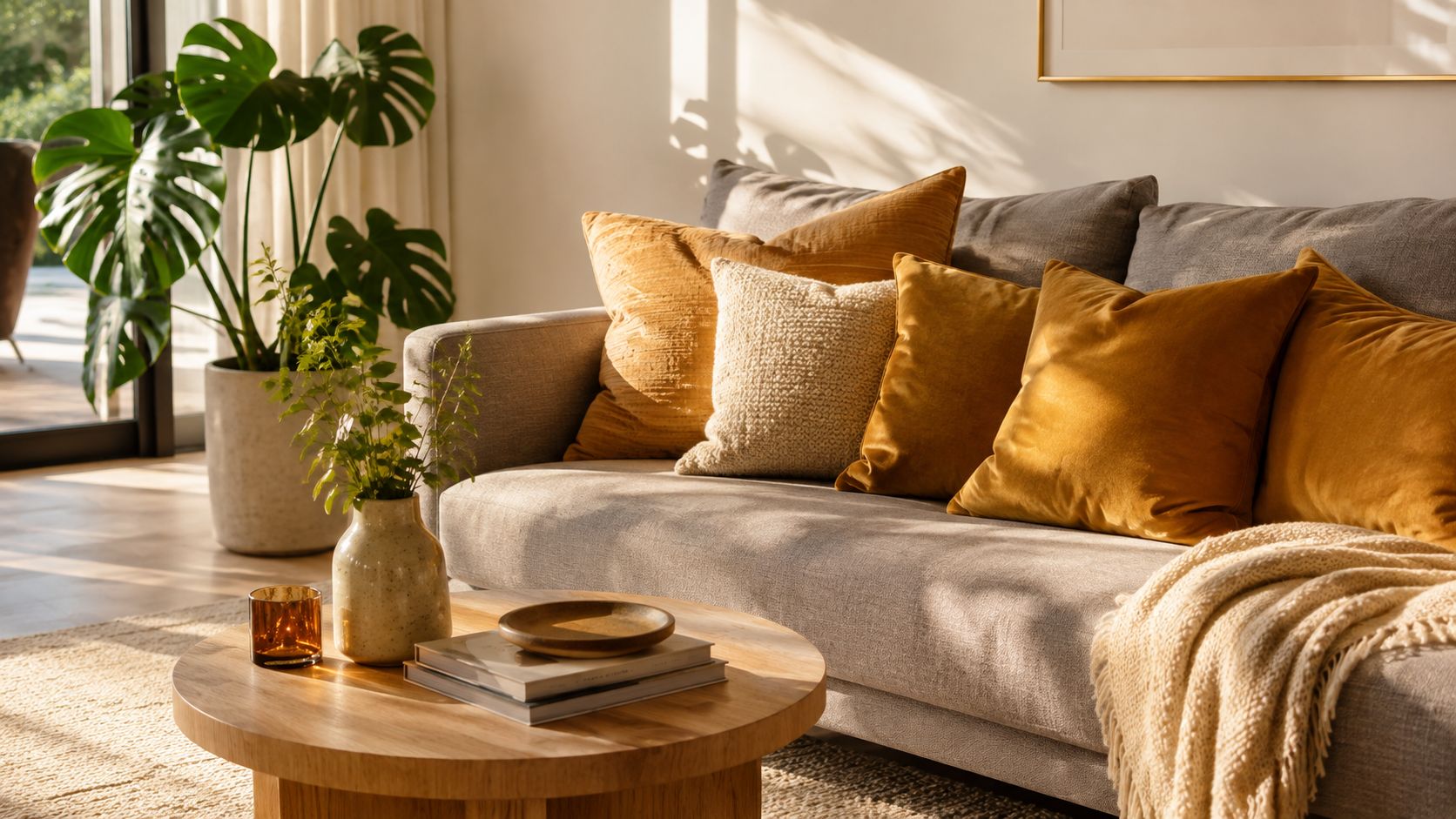
A shopper with a cool grey sofa, pale walls and a north-facing window can usually use ochre successfully, provided the shade has enough brown in it to avoid looking acidic. In a darker room, a muted ochre with a slightly earthy undertone tends to look more refined than a bright yellow ochre. Against a warm beige sofa or yellow-toned wall, however, the same cushion can look muddy because there isn't enough contrast.
What should I check in the room first
Start by looking at the sofa and walls together, not at the cushion in isolation.
- North-facing rooms: Cooler, flatter daylight can make ochre appear deeper and browner. Choose a clear, warm shade and add cream, pale wood or a soft ivory throw to keep the arrangement lifted.
- South-facing rooms: Stronger daylight can intensify yellow and orange undertones. A dusty, brown-based ochre usually behaves better than a saturated mustard.
- Grey upholstery: Ochre provides welcome warmth and prevents a grey sofa from feeling cold, particularly when paired with timber, woven baskets or linen.
- White walls: Almost any earthy ochre can create a pleasing focal point, although very bright versions may dominate a small room.
- Beige or taupe walls: Test carefully. Ochre may blend into the wall rather than frame the sofa, especially where the room already has several yellow-brown accessories.
Practical rule: Put the fabric sample on the sofa in the morning, afternoon and evening. Electric lighting can make ochre look more orange than it appears in daylight.
Texture makes the colour easier to live with. A matte cotton or linen-look cover looks relaxed, while velvet gives ochre more depth and makes it feel richer. If the room already contains dark wood, warm lamps and brown upholstery, use ochre sparingly. One or two covers can add structure. Covering every cushion in the same warm shade usually makes the room feel visually heavy.
Why Ochre Is Dominating UK Interior Palettes
A grey sofa, pale flooring and neutral walls can leave a UK living room feeling flat, particularly under weak winter daylight. Ochre adds warmth without the high intensity of pure yellow, which is why it continues to appear in schemes moving away from cool greys and stark whites. UK trend coverage places it alongside terracotta and forest green, while also showing how it works with grey, a useful quality in homes where grey upholstery remains common. UK colour trend coverage from Dream of Home
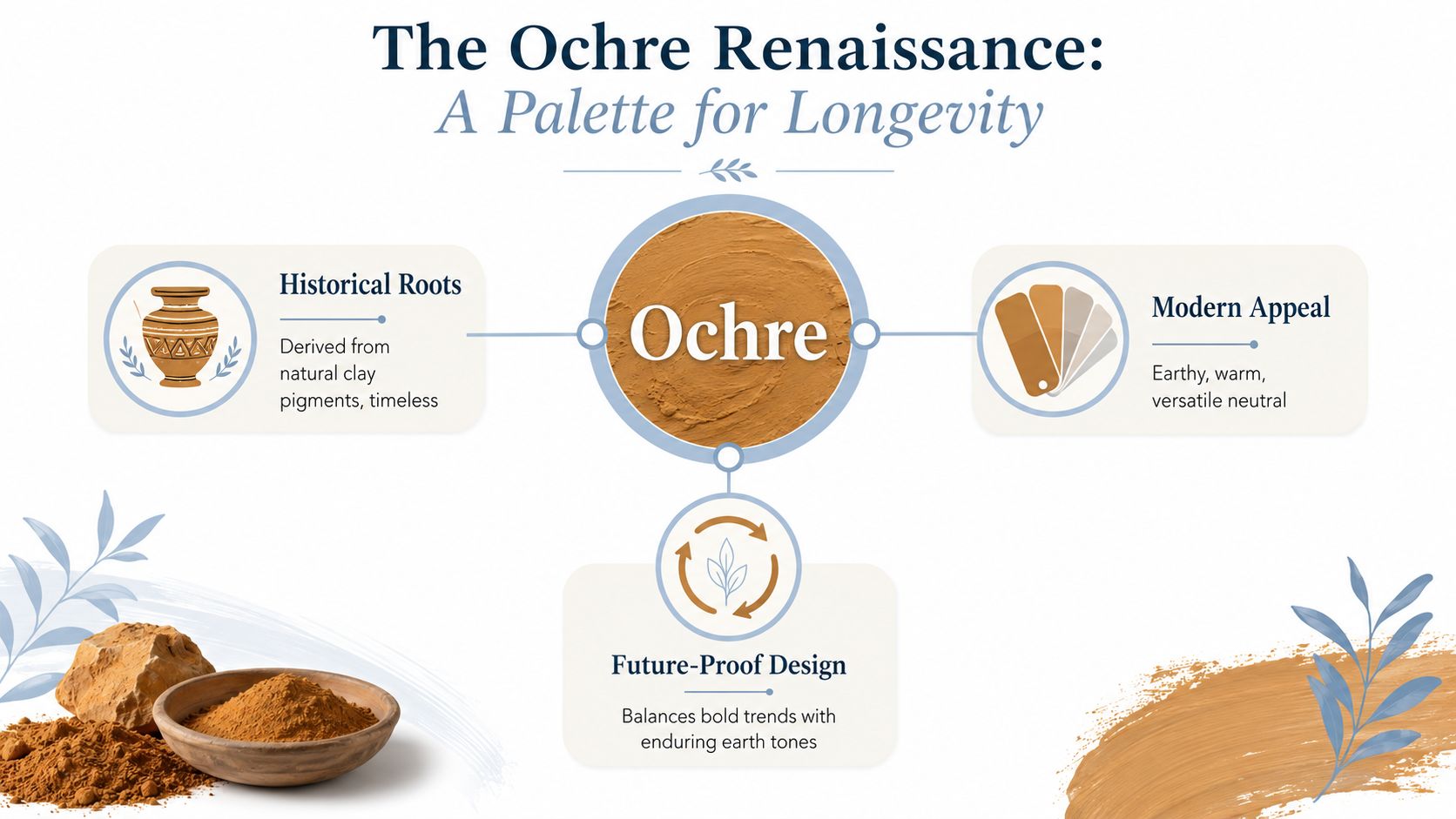
The shade looks most considered when it relates to materials already in the room. Oak, walnut, rattan, marble, linen and handmade ceramics give an ochre cushion a visual connection, so it reads as part of the scheme rather than a random colour block. This matters in rental properties and family homes, where a removable cover can refresh a sofa without repainting or replacing large furniture.
Is ochre a sensible long-term choice
Ochre has staying power because the commitment is small. Swap the covers as the room changes. Chalky cream, faded blue and fresh green make it feel lighter in spring, while rust, tobacco, deep green and heavier wool textures give it more depth in autumn.
According to IndexBox's UK market overview, its 2024 market overview estimated the UK furnishing articles, furniture and cushion-cover market at about 20K tons, valued at around $230M, with imports of roughly 14K tons. The overview projects about 22K tons by 2035, with a volume CAGR of around 1.0% and a value CAGR near 1.2% from 2024 to 2035. These figures describe the wider category, not guaranteed demand for every ochre design, but they indicate gradual projected expansion rather than a market disappearing suddenly.
Ochre works best as a flexible supporting colour, not as a promise that a room must follow one fixed trend.
Order samples before committing, especially where the room has mixed lighting. Distinguish the neighbouring shades too. Rust is redder and more dramatic, terracotta is clay-like and orange, while biscuit is softer and paler. Ochre sits between yellow and brown, giving warmth with less visual heat than rust. In an already orange room, choose a restrained ochre. A room lacking contrast can take a stronger version.
For landlords and busy family households, colour is only part of the purchase decision. Check that the cover is made for the intended cushion, can be removed for cleaning, and has clear care instructions. Upholstery and loose-cover fire-safety requirements can differ by product and use, so check the supplier's compliance information rather than assuming a decorative cover is suitable for every rental setting.
A darker botanical palette can be balanced with the Sofa Cover - Velvet - Dark Green - Adaptable & Expandable, described as a dark green velvet cover with an adaptable design, protective layer and machine-washable fabric.
Which Colour Pairings Make Ochre Cushions Look Their Best
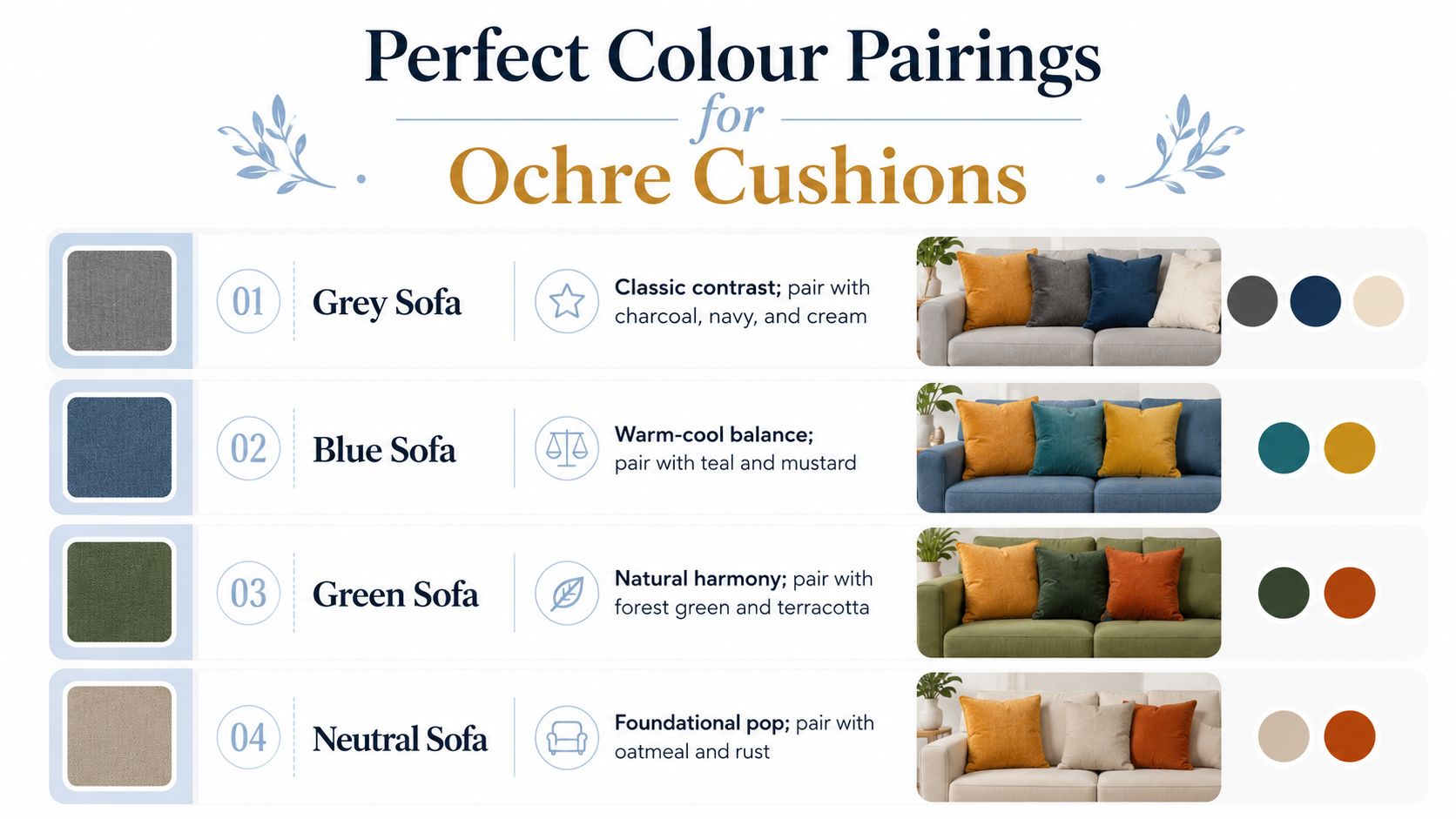
Ochre cushion covers look strongest when the surrounding palette either cools them down or gives them a clean neutral background. The right combination depends on your sofa's undertone and the mood you want, from crisp contrast to layered, earthy richness.
Which cushions suit a grey sofa
Grey is the safest starting point because it gives ochre room to register as warm rather than yellow. Use ochre as the focal cushion, then add charcoal, navy or cream in smaller quantities. A smooth ochre cotton cover next to a chunky knitted throw stops the arrangement from feeling flat, while a nubby bouclé cushion can soften a very structured grey sofa.
If your grey is blue-based, choose an ochre with more brown. If the sofa is warm greige, select a cleaner ochre and introduce a cooler accent, such as faded blue, to keep the arrangement from becoming beige-on-beige.
Can ochre cushions work with navy or charcoal
Yes. Navy and charcoal create a strong, elegant contrast, but the combination needs a pale element to stop the sofa area becoming too dense. Try ochre, cream and charcoal together, with a natural linen throw or pale timber coffee table nearby. Velvet ochre looks particularly rich against navy, while a washed linen version feels less formal.
How do I soften ochre with cream and linen
Cream, oatmeal and natural linen make ochre feel calm rather than theatrical. This pairing suits smaller flats, Scandinavian-inspired rooms and pale oak furniture. Use varied surfaces, perhaps a woven cover, a linen-look cushion and a lightly textured throw, because several smooth fabrics in nearly related shades can look bland.
Does ochre pair with green and terracotta
Ochre and forest green create a natural, botanical combination. Add terracotta carefully, preferably through a smaller cushion, ceramic vase or artwork rather than making every textile warm. This works in rooms with timber, rattan and leafy plants, but it can become visually crowded if the walls, rug and curtains already contain strong earthy colours.
Avoid placing ochre against a wall that is already strongly yellow unless you want a deliberately tonal scheme. Beige can also swallow a dull ochre, so add contrast through cream piping, dark wood or a cooler accent. For more arrangement ideas, see this guide to mixing and matching cushions.
The following video can help when you're judging proportion, layering and visual balance in a cushion arrangement.
Which Fabric Should I Choose for Ochre Cushion Covers
Choose the fabric according to friction, cleaning demands and the visual effect you want. Cotton and linen suit relaxed decorative schemes, velvet adds depth but needs gentler handling, and polyester blends are often the more practical choice for family sofas, rental properties and frequent washing.
Martindale testing measures how many rub cycles fabric withstands before visible wear appears. Guidance for furnishing fabrics places decorative accessories around 6,000 rubs, while heavier-duty domestic and commercial upholstery fabrics can reach 30,000+ rubs, as explained in this Martindale testing guide. Cushion covers aren't automatically upholstery fabric, so check the stated rating rather than assuming a thick-looking textile is durable.
| Fabric | Martindale rating | Best for | Care level |
|---|---|---|---|
| Cotton | Check the manufacturer's specification | Relaxed sitting rooms and breathable everyday styling | Usually moderate, label dependent |
| Linen | Check the manufacturer's specification | Natural, textured schemes with a slightly relaxed finish | Moderate, with possible creasing |
| Velvet | Check the manufacturer's specification | Accent cushions and rooms where visual depth matters | Higher, especially with a delicate pile |
| Polyester blend | Check the manufacturer's specification | Families, landlords and frequent-use sofas | Often practical, but follow the label |
| Jacquard weave | Check the manufacturer's specification | Pattern, texture and more formal arrangements | Moderate to higher, depending on construction |
A high Martindale figure doesn't answer every performance question. Seams, corners and zip edges receive concentrated friction as people sit, move cushions and pull covers off for cleaning. A firm polyester blend may cope better with that routine than a delicate decorative weave, even when both look substantial.
Why colour fastness matters for ochre
Warm yellow-brown dyes can transfer onto pale upholstery or throws when the pigment system isn't well bound. Colour fastness to rubbing, also called crocking, should be checked for ochre covers, especially if the cover will sit on a cream or light-grey sofa.
BS EN ISO 105-X12:2016 uses a white cloth rubbed against the textile in dry and wet conditions. The wet test is more severe, and results are commonly graded on a 1-to-5 grey scale, where 5 indicates the best resistance to colour transfer, according to SATRA's explanation of rubbing fastness. A higher grade reduces transfer risk, though it doesn't replace sensible care and testing the actual fabric against your upholstery.
For a decorative cushion in a formal room, velvet may be worth the care because its pile gives ochre a deep, changeable appearance. For an Airbnb or family sofa, prioritise a documented rub rating, secure construction and a care label you can follow. Textured options can add interest without relying on a bright colour, as shown in this guide to textured cushion covers.
How Do I Get the Right Size and Fit for My Cushions
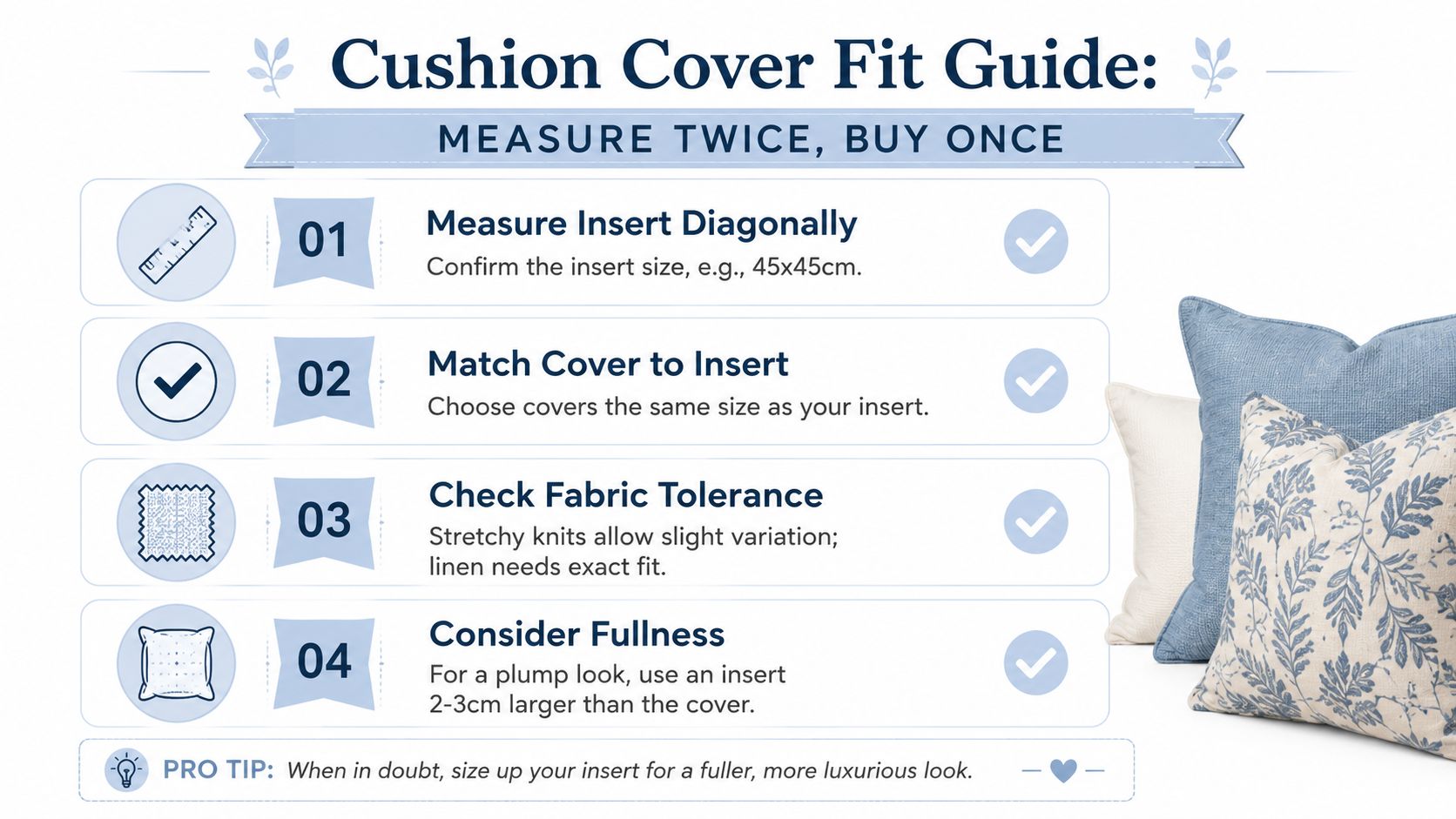
Measure the cushion insert, then choose a cover based on the insert's actual dimensions and the fabric's tolerance. Don't measure only the loose outer cover, because stretched, compressed or overfilled covers can give you misleading figures.
What measurements should I take
Lay the insert flat and measure from seam to seam across the width and height. Note whether it's square, rectangular, boxed or piped. Common UK formats include 45 x 45cm, 50 x 50cm and 60 x 60cm, along with rectangular lumbar shapes, but the printed size on a cover still needs checking against your own insert.
The supplied fit guidance for a plump appearance suggests using an insert 2-3cm larger than the cover, while another practical rule is to size down by 2-5cm for a shaped look. Those instructions work best when the fabric has enough give and the insert can compress naturally. Don't force a rigid feather insert into a significantly smaller cover, as the zip and seams may take unnecessary strain.
Which insert and fastening should I choose
Feather-and-down inserts usually look fuller when the cover is slightly smaller, because the filling compresses and pushes into the corners. Polyester fibre inserts generally work better with a true-to-size cover, since they don't reshape as easily and can look lumpy when overpacked.
- Envelope backs: Easy to remove and visually simple, but the overlap needs enough depth to stay closed.
- Hidden zips: Neater and more secure, particularly for children, pets or rental properties, but the zip must be strong enough for repeated removal.
- Tie fastenings: Decorative and useful for relaxed interiors, although loose ties can catch or become untidy in busy rooms.
Stretchy knitted fabrics tolerate slight variation. Linen and structured jacquard need more accurate measuring because they won't disguise excess space or recover from a poor fit. Check the seller's size guide and return policy before ordering, particularly if you're matching several covers across one sofa.
Can I Machine-Wash Ochre Cushion Covers Without Fading Them
A removable cover is not automatically machine-washable. Ochre cushion covers can go in the washing machine only when the sewn care label permits that method, temperature and cycle. The colour name gives no indication of how the textile will respond to agitation, heat or water.
UK care symbols cover machine washing at 30°C, 40°C, 60°C and 95°C, with 40°C described as the common everyday setting and 60°C associated with cotton whites, bed linen and towels in this UK washing-symbol guide. The symbols also distinguish gentle-cycle, very-gentle or wool, hand-wash-only and do-not-wash instructions. Check the label before removing the insert.
How should I wash a coloured cushion cover
Turn the cover inside out, close the zip and wash it alone or with similar colours. Choose a colour-safe detergent and avoid optical brighteners, which may change the appearance of warm ochre tones. Use a gentle programme where the label allows it, particularly with linen blends, textured weaves and fabrics with a raised pile.
Dry the cover naturally away from direct sunlight. A hot radiator or bright window can contribute to shrinkage, distortion and uneven fading, even where the dye has good colour fastness against rubbing. Refit it only when completely dry, working the fabric gently into the seams and corners instead of pulling hard on one area.
Velvet needs extra care. Rubbing, vigorous washing and unsuitable spot treatments can crush its pile. Follow the manufacturer's instructions rather than applying a general upholstery cleaner.
What does fire safety mean for removable covers
Under the UK Furniture and Furnishings (Fire) (Safety) Regulations 1988, a cushion may contain filling that does not itself pass the ignitability test when it has a primary cover and the complete cushion passes with that cover fitted, as set out in the regulation text. The outer cover can therefore form part of the tested assembly, rather than serving only a decorative purpose.
Trading-standards guidance includes cushions among the upholstered products covered by the regulations. It summarises requirements for filling materials, cigarette resistance of upholstery composites, match resistance or a suitable interliner for covers, and a permanent label on each applicable item in the Darlington Trading Standards guidance.
Landlords and Airbnb hosts should keep original labels and product paperwork. Check replacement covers carefully, especially after laundering or changing the insert, and do not describe an unverified decorative cover as a compliant replacement for a tested cushion assembly.
What Should I Check Before Buying Ochre Cushion Covers
Buy ochre cushion covers only after checking colour undertone, measurements, fabric performance, care instructions and the intended use of the room. A beautiful swatch is the beginning of the decision, not the whole decision.
What should landlords and Airbnb hosts prioritise
For frequent guest use, start with construction rather than appearance. Look for a documented Martindale rating appropriate to the expected friction, a colour-fastness result for rubbing, a secure zip and clear washing instructions. If you need regular laundering, confirm that the label permits machine washing at the stated temperature, rather than relying on a product description.
Fire-safety information deserves separate attention. Keep the permanent label and any product documentation, and check whether the replacement cover forms part of a tested cushion assembly. The 1988 regulations should be treated as a compliance reference, not as evidence that an untested cover is suitable.
What works for families with children or pets
Choose a cover that can be removed without wrestling with the insert. A strong zip, washable construction and a spare cover for rotation are more useful than a fragile finish that looks impressive but cannot handle spills. Darker ochre can disguise everyday marks, but it won't remove the need for prompt cleaning or correct laundering.
How can seasonal decorators avoid a short-lived purchase
Choose an ochre that works with more than autumnal accessories. A balanced, earthy shade can move towards spring when paired with cream, pale blue, washed linen and fresh green, then become cosier with rust, wool and dark timber. Before ordering, compare the swatch with your sofa in different light, confirm the insert dimensions, read the care symbols and check delivery tracking, returns and the available size guide.
The Sofa Cover Crafter offers sofa covers, throws and cushion covers intended to refresh and protect living spaces, with washable options, size and installation guidance, tracked delivery and a 30-day return policy. Visit The Sofa Cover Crafter to compare practical cover options and choose an ochre cushion arrangement that suits your sofa, light and household routine.
Take a look at our full range of settee covers to find the right fit.
