



The shortest safe answer is this: wash sofa covers in cold water, use a gentle cycle, keep the spin low, and air-dry them until they are only slightly damp before refitting. That combination prevents most shrinkage problems because it limits the two main causes of a bad fit later on: heat and rough mechanical stress.
Key Takeaways A Practical Guide to how to wash sofa covers without shrinking
- Cold, gentle, low spin: Heat and rough spinning cause most shrinkage.
- Follow the care label: Cotton, linen and cotton blends shrink most.
- Air-dry, refit slightly damp: Skip the tumble dryer for a smoother fit.
I rebuilt this guide around the checks that matter most in real homes: the care label first, then fabric composition, then backing, then wash setting, then drying method. After reviewing manufacturer-style textile care instructions across common upholstery fabrics, the repeat mistake I see most often is not the wash itself but a "helpful" hot cycle or tumble-dry finish that tightens the cover just enough to make refitting miserable. That pattern lines up with wider common laundry mistakes that lead to issues, especially when people assume bigger, dirtier items need more heat.
If you remember only one rule, make it this one: the safest default is cold wash, delicate cycle, mild detergent, and air-dry away from direct heat. Other considerations help you decide when that default is enough and when your particular cover needs extra caution.
How We Chose the Safest Washing Method for Each Sofa Cover
The advice below is based on five practical criteria: fibre type, stretch content, backing or coating, weave/texture, and the care label's stated limits. Those factors determine whether a cover can handle machine agitation, whether 30°C is safe, how much spin it can take, and whether any tumble setting is acceptable at all.
For labels, the washtub symbol is the starting point. A plain washtub means machine washing is allowed, while dot-based symbols standardise water temperature across major markets: one dot usually means about 30°C, two dots around 40°C, and three dots roughly 50-60°C depending on the standard, as shown in this general textile care guide. In practice, I still treat sofa covers more cautiously than everyday clothing because zipped panels, seam piping, foam contact, and upholstery-sized pieces are harder to reshape after a mistake.
The wash recommendations also prioritise fit retention over aggressive cleaning. Temperature charts across textile care guidance repeatedly cluster around 30°C, 40°C, 50°C, and 60°C, with 30°C to 40°C usually being the safer balance for delicate, dark, or shrink-prone household fabrics according to this fabric care reference. That is why this guide defaults to cool washing for removable covers even when a sturdier textile might tolerate more.
Drying rules were chosen with the same logic. Upholstery-related care instructions consistently warn against direct heat, prolonged sun, and in some cases even standard detergents or over-wetting surrounding filling, as outlined in these upholstery care instructions. In other words, the safest method is not just about getting the cover clean; it is about getting it clean and still shaped correctly when it goes back on the sofa.
The Golden Rules to Prevent Shrinking
Washing sofa covers safely comes down to a simple, two-part process.

This simple visual really drives the point home: cold water, followed by air-drying, is the fundamental formula for preserving your cover's shape and size. Practical guides from UK-based cleaning experts consistently reinforce this method.
The reason this works is straightforward. Water temperature affects fibre movement, agitation affects surface wear and seam stress, and drying determines whether the fabric relaxes back into shape or tightens up. When I compare covers that wash well over time, the survivors are usually the ones cleaned cool, spun gently, and never rushed through a hot dryer.
Quick Fabric Care Reference Guide
Not all sofa covers respond to washing in the same way. Cotton and linen can tighten when exposed to heat, polyester is usually more stable but can still distort under aggressive spinning, stretch blends can lose recovery if overheated, and textured weaves such as chenille or jacquard can look tired long before they shrink. The safest method depends less on what looks delicate and more on how the fibres, weave, and backing react to water, agitation, and drying.
Use this as a decision table, not a substitute for the sewn-in care label. If your cover has a laminated waterproof backing, bonded layer, heavy piping, or foam-backed panel, follow the label over the table below.
| Fabric Type | Machine Washable? | Safest Temperature Range | Safest Cycle/Setting | Spin Guidance | Drying Method |
|---|---|---|---|---|---|
| Cotton | Usually yes, if label permits | 20-30°C | Delicate or gentle | Low spin only | Air-dry flat or draped evenly; refit slightly damp |
| Linen | Sometimes; hand wash is often safer | 20-30°C | Hand wash or very gentle cycle | Very low spin or none | Air-dry away from direct sun and heat |
| Polyester | Usually yes | 30-40°C if label allows; 30°C safest | Gentle cycle | Low to medium-low spin | Air-dry; low/no-heat tumble only if label permits |
| Polyester-Spandex | Usually yes | 20-30°C | Delicate cycle | Low spin | Air-dry; avoid heat to protect stretch |
| Velvet | Often no, or only with strict care-label approval | Cold only | Hand wash or specialist upholstery cleaning | No high spin; blot moisture instead | Dry flat, reshape pile gently, keep away from heat |
| Chenille | Sometimes, but higher risk | Cold to 30°C | Delicate cycle or hand wash | Low spin | Air-dry flat; avoid friction while damp |
| Jacquard | Sometimes | Cold to 30°C | Delicate cycle, ideally inside a mesh bag | Low spin | Air-dry flat and do not wring |
| Cotton Blend | Usually yes | 20-30°C | Gentle cycle | Low spin | Air-dry flat |
The highest-risk fabrics for shrinkage are cotton, linen, and cotton-rich blends, especially when covers are washed above label limits or dried too hard afterward. Polyester-heavy covers are usually more forgiving, but that does not make them heat-proof; I have seen "slightly too hot" washes leave stretch panels tighter at the seams even when the fabric itself looked fine.
The fabrics most likely to pill after repeated cycles are chenille, brushed synthetics, some jacquards, and lower-quality polyester blends. Repeated rubbing inside a crowded drum causes that wear faster than water temperature does, which is why turning covers inside out, reducing load friction, and choosing a gentler cycle matter almost as much as washing cool.
| Fabric Type | Recommended Water Temperature | Best Washing Method | Drying Advice |
|---|---|---|---|
| Cotton Blends | Cold (Below 30°C) | Machine Wash, Gentle Cycle | Air-Dry Flat |
| Linen | Cold (Below 30°C) | Hand Wash or Gentle Cycle | Air-Dry Away from Sun |
| Polyester/Spandex | Cold (Below 30°C) | Machine Wash, Gentle Cycle | Air-Dry or No-Heat Tumble |
| Velvet/Jacquard | Cold (Below 30°C) | Hand Wash Recommended | Air-Dry Flat, Do Not Wring |
Decoding the Care Label: Your Pre-Wash Checklist
Before your sofa cover gets anywhere near water, a few simple checks can be the difference between a clean cover and a laundry disaster. Think of this as your pre-flight inspection; it’s the most reliable way to guarantee a smooth, shrink-free journey. Your first port of call should always be finding that small but mighty care label.
Usually tucked away inside a seam, this little tag is your single most important instruction manual. I know it’s tempting to ignore it and just hope for the best, but those tiny symbols hold the key to washing your sofa cover without it shrinking. They tell you the exact water temperature, the right cycle, and the proper drying method your specific fabric needs to come out looking as good as new.
Understanding the Symbols
So, what do those hieroglyphics mean? It’s much simpler than it looks. A little tub icon with a number inside tells you the maximum water temperature. Go any higher, and you’re risking shrinkage. A triangle symbol warns about bleach, while a square with a circle inside gives you instructions for the tumble dryer (often with a big 'X' through it, meaning avoid it at all costs!).
Getting to know these symbols is crucial. In fact, textile industry reports show that a huge number of fabric shrinkage incidents are directly linked to people ignoring these manufacturer guidelines. For more detail on how heat can affect different materials, you can find some great insights on how different materials react to washing.
Pro-Tip: If the label has been cut off or has faded beyond recognition, always, always err on the side of caution. Your safest bet is to default to a cold wash on a delicate cycle, followed by air-drying. This gentle approach protects the vast majority of common sofa cover fabrics.
Pre-Wash Preparations
Once you’ve cracked the code on the label, a few final prep steps will set you up for the best possible result. These quick actions protect both the cover and your washing machine from any unnecessary damage.
- Zip It Up: Make sure you fasten all the zips, buttons, and clips. This simple step is crucial. It prevents metal or plastic parts from snagging the fabric or anything else in the wash, which can cause nasty pulls, tears, or even broken zips.
- Check for Stains: Give the cover a quick once-over for any specific marks or spills. It’s always far more effective to deal with these beforehand rather than just hoping a standard wash cycle will magically lift them. For detailed advice, see how to remove stains from a sofa before you get started.
- Perform a Colourfastness Test: For new or brightly coloured covers, this is an essential step. Just dab a small, hidden spot (like an inner seam) with a damp white cloth. If any dye transfers onto the cloth, you’ll know to wash the cover completely on its own to stop it from bleeding onto your other laundry. This quick test can save you a world of potential heartbreak.
Alright, you’ve done your prep work, and now it’s time to decide how you’re going to wash that cover. Are you going for the convenience of the washing machine or the careful control of a hand wash? The answer is nearly always on the care label, dictated by how delicate your sofa cover’s fabric is.
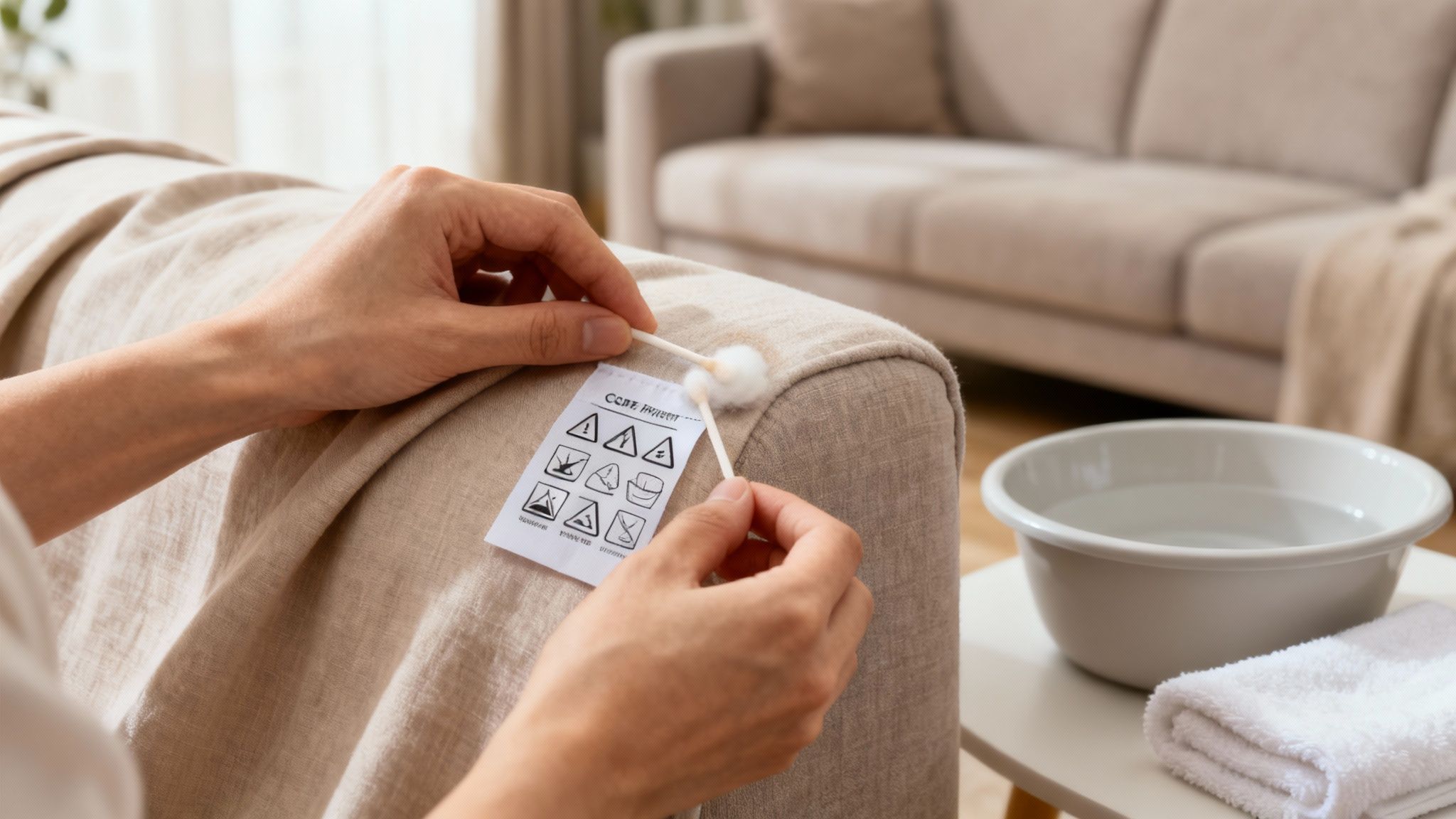
Most modern covers, especially those made from tough polyester or stretchy spandex blends, are built to handle the machine. But if you’re dealing with intricate weaves or delicate textures, a more hands-on approach is often needed to keep its structure and feel intact.
The Machine Wash Method
Machine washing is appropriate when the care label allows it and the cover is made from a stable fabric such as polyester, polyester-spandex, cotton blend, or another washable woven textile without fragile trim, bonded backing, or a waterproof membrane that forbids it. Many machine-washable couch covers fall into this category. It is not the right choice for covers labelled hand wash only, dry clean only, non-removable upholstery pieces, velvet with a delicate pile, or covers with stiff backing, heavy quilting, or damage at the seams. When I am unsure, I check the underside and construction before I check the washing machine settings; backing and seam finish often tell you more than the visible top fabric.
Use this settings checklist to keep the wash low-risk:
- Water temperature: Choose cold or 30°C by default. Only go warmer if the label clearly permits it and the fabric is not shrink-prone.
- Cycle: Select gentle, delicate, or the machine's lowest-agitation fabric setting.
- Spin: Keep it low. A hard spin can pull piping out of shape, stress zips, and leave corners twisted.
- Load size: Wash the covers alone or with only matching lightweight pieces. Overloading increases friction and prevents an even rinse.
- Detergent: Use a mild liquid detergent. It dissolves more cleanly than heavy powder and is less likely to leave residue in textured weaves.
- Inside out or mesh bag: Turn covers inside out when possible, and use a large mesh laundry bag for jacquard, chenille, or covers with decorative texture.
- Softener and bleach: Skip both unless the label explicitly allows them; softeners can affect coatings, and bleach is too harsh for most upholstery fabrics.
If the care label permits tumble drying, treat that as an exception, not the default. A no-heat or very low-heat setting may be acceptable for some polyester-heavy covers, but only long enough to remove surface moisture before finishing with air-drying. I would not use that shortcut for cotton, linen, stretch blends, or anything already fitting snugly.
If a cover comes out stiff, slightly tight, or fuzzy, do not rewash hot. Stiffness usually means detergent residue or a heavy spin, so a cool rinse can help; slight tightness is often easiest to fix by reshaping and refitting while the fabric is still faintly damp; early pilling means there was too much friction, so next time wash inside out, reduce the load, and use a mesh bag. Those small corrections usually solve the problem before it becomes permanent.
The Hand Wash Method
If your cover's label has that little "hand wash only" symbol, or if you’re working with something delicate like velvet or jacquard, taking the time to wash it manually is essential. This method gives you total control, ensuring the material is never subjected to the harsh mechanical stress of a machine.
Hand washing might feel like a bit of a chore, but for delicate fabrics, it’s the only way to guarantee the texture and fit stay exactly as they should. Think of it as a five-minute investment to protect a much larger one.
To get started, you’ll need a large basin or a clean bathtub. Fill it with cool water—it should feel cool to the touch—and add just a small amount of mild liquid detergent, swishing it around to create some gentle suds.
Submerge the cover completely and just let it soak for about 20-30 minutes. After that, gently agitate the water with your hands, using soft squeezing motions to work the soap through the fabric. Don’t be tempted to do any aggressive scrubbing or twisting; that’s how you damage delicate fibres. Once it's clean, drain the soapy water and refill with cool, clean water to rinse. Keep repeating this until no suds are left. This careful process is your best defence against damaging precious textiles.
The Critical Art of Air-Drying
You've made it through the wash cycle, and your cover is looking pristine. Brilliant. But now comes the part where most shrinkage tragedies happen. The drying process isn't just an afterthought, it’s the single most important step in making sure your sofa cover fits back on your sofa. So many people blame the wash, but it’s the intense, dry heat of a tumble dryer that’s the main culprit here.

High temperatures make natural fibres like cotton and linen contract like nobody's business. Even tough synthetic blends with spandex can lose their stretch and shape when they're blasted with heat. This is why air-drying is the only foolproof method if you’re serious about avoiding shrinkage. It’s a gentler, slower process that respects the fabric's integrity.
Mastering Your Air-Drying Technique
Successfully air-drying your cover involves a bit more than just chucking it over the line and hoping for the best. A few smart moves will guarantee an even dry and a perfect fit, preserving not just the size but also the colour and feel of the fabric.
Your main goal is to get as much air circulating as possible without exposing the cover to anything that could damage it. Here’s how to get that perfect, shrink-free result:
- Choose Your Location Wisely: An indoor clothes horse is usually your safest bet. If you’re using an outdoor washing line, find a breezy spot that’s out of the sun. Never dry your covers in direct sunlight, as the UV rays will fade vibrant colours faster than you’d believe.
- Support the Weight: Don't just peg a heavy, damp cover by its corners. That’s a recipe for stretched fabric and strained seams. Instead, drape it evenly over several lines on your clothes horse or washing line to spread the weight out.
- Ensure Good Airflow: Avoid letting the fabric bunch up. Spread the cover out as much as you can so air can move freely all around it. This speeds up drying time and also stops any musty smells from developing.
Understanding how different materials behave is a huge help. To get a better feel for this, you can explore our guide on choosing the best fabric for a sofa, which is packed with insights into durability and care.
The Reshaping Pro-Tip: Here's the secret to getting the cover back on without a fight: reshape it while it's still damp. Gently pull the seams straight and use your hands to smooth out the main panels. This simple little step encourages the fibres to settle back into their original shape, making the whole refitting process ten times easier later on.
Refitting Your Cover for a Flawless Finish
This is the final hurdle: getting the cover back onto the sofa without a fight. If you’ve followed the air-drying advice, this part goes from a potential wrestling match to a satisfying final touch. That smooth, almost-upholstered look is easier to get than you might think, but it does rely on one key trick.
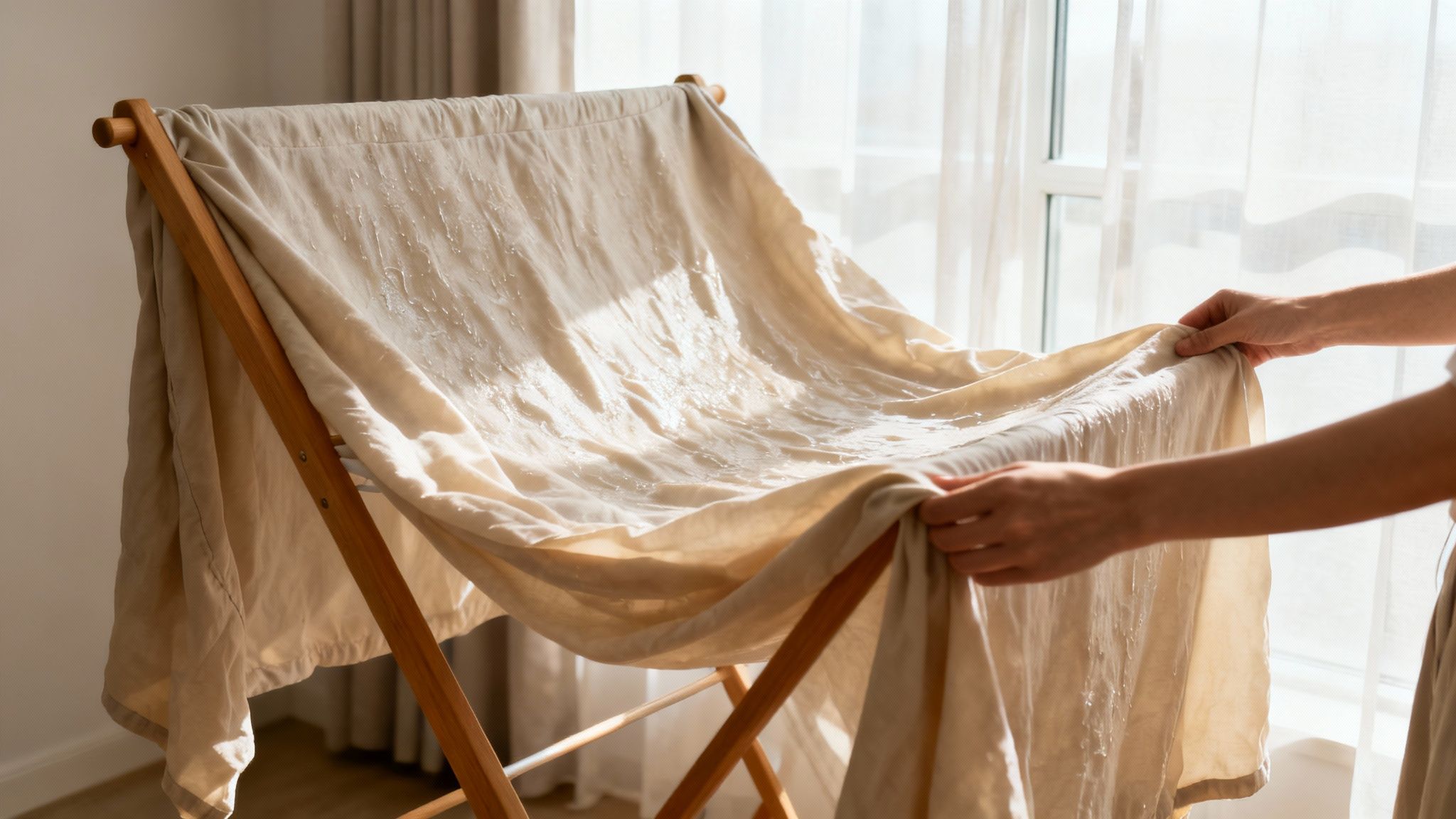
The secret is to put the cover back on while it’s still very slightly damp. I don’t mean sopping wet, but just cool to the touch. This little bit of residual moisture gives the fabric fibres a touch more flexibility and 'give', making them much easier to gently stretch over tight corners and plump cushions. A completely bone-dry cover, especially a cotton one, can feel stiff and unyielding.
Achieving a Wrinkle-Free Look
Once you’ve got the main body of the cover on, the next step is to banish any bagginess and get those sharp, clean lines. Smooth out wrinkles and create that professional, polished appearance.
This is exactly what those foam inserts that come with many modern sofa covers are for. They’re your best friend at this stage.
- Tuck with Purpose: Work your way around the sofa, systematically pushing any excess fabric deep into the crevices between the cushions and the sofa frame. Use the foam inserts or even the edge of a ruler to get a really crisp, straight tuck.
- Smooth as You Go: As you tuck with one hand, use the other to smooth the fabric across the surface, pulling it taut. This simple action stops new wrinkles from popping up elsewhere.
- Secure the Base: Finally, check any ties or elasticated clips underneath the sofa and make sure they're fastened securely. This anchors the whole thing in place, preventing it from shifting and bunching up, even in a busy house with kids and pets jumping about.
Getting the fit right is what separates a good result from a great one. Putting the cover on while it's slightly damp allows it to finish drying in place, conforming perfectly to the shape of your sofa for a truly custom look.
This final stage is your reward for doing the job properly. By taking a few extra minutes to refit the cover with care, you not only dodge the struggle of a tight fit but also achieve a flawless, smooth finish that completely revitalises your furniture.
Frequently Asked Questions
Can you wash sofa covers in the washing machine?
Yes, many sofa covers can go in the washing machine if the care label allows it and the fabric does not have delicate backing, trim, or a special coating. Polyester, cotton blends, and many stretch covers are commonly machine washable, but velvet, bonded fabrics, and hand-wash-only covers should be treated more carefully. If the label is missing, use the gentlest cold setting or avoid machine washing altogether if the construction looks fragile.
What should you wash couch covers on?
Use a gentle or delicate cycle with cold water or 30°C, low spin, and mild liquid detergent. That setting is usually the safest balance between cleaning power and fit protection. Avoid heavy-duty cycles, high spin, and hot washes unless the label explicitly approves them.
What temperature should I wash sofa covers at?
For most removable fabric covers, 30°C or colder is the safest starting point. Some polyester-based covers can tolerate 40°C if the care label says so, but cotton, linen, and stretch blends are more likely to tighten or distort if you push the temperature. When in doubt, choose the lower setting and focus on stain pre-treatment instead of hotter water.
How do you clean fabric sofa covers without shrinking them?
Wash them in cool water, keep agitation gentle, and air-dry them away from direct heat. Refit the cover while it is still slightly damp so the fabric can settle back into shape on the sofa. The main caution is to avoid tumble drying, because even one hot cycle can undo an otherwise careful wash.
How often should sofa covers be washed?
Most homes do well with a full wash every one to three months, depending on pets, children, allergies, and how heavily the sofa is used. Short-term lets and family homes often need more frequent washing than adult-only living rooms. If you clean spills quickly and vacuum regularly, you can usually wash less often without the covers looking tired.
Can you machine wash waterproof or coated sofa covers?
Sometimes, but only if the label allows it and the coating is designed for machine care. Use cold water, a delicate cycle, and no fabric softener, because softener can break down protective finishes over time.
What is the best way to handle stains before washing?
Treat spills before the full wash whenever possible, especially on light-coloured or textured covers. Blot first, avoid rubbing the stain deeper into the weave, and use fabric-appropriate cleaners rather than jumping straight to hotter water. If you want an extra example of gentle pre-treatment logic, these gentle stain removal techniques are a useful reminder that patience is usually safer than harsh scrubbing.
Does a jacquard cover need special care?
Yes. Jacquard is more prone to snagging, surface wear, and texture distortion than a plain weave, so it benefits from being turned inside out and washed on a low-agitation cycle. I strongly prefer a mesh laundry bag here, because it cuts down on rubbing inside the drum and helps preserve the woven pattern.
At The Sofa Cover Crafter, we design our covers with real-life use in mind, making them stylish, durable, and easy to care for. Explore our collection to find the perfect fit for your home at The Sofa Cover Crafter.
