



Making your sofa feel brand new often comes down to two simple things: restoring support and adding softness. The quickest and easiest wins usually involve plumping up tired cushions with fresh foam inserts, adding a few supportive pillows for your back, and layering on soft throws to hide worn or scratchy fabric. These small changes can completely transform how your sofa feels without breaking the bank.
Key Takeaways How to Make a Sofa More Comfortable: Quick Guide
- Diagnose first: Flat cushions, a sagging base and worn fabric need different fixes.
- Restore support, then add softness: Fresh foam or a support board, then pillows and throws.
- Finish with a stretch cover: It hides tired upholstery and refreshes the look.
Table of Contents
- Key Takeaways How to Make a Sofa More Comfortable: Quick Guide
- Your Uncomfortable Sofa Is a Solvable Problem
- Identifying the Root Cause
- Diagnosing Your Sofa's Comfort Issues
- Quick Wins for an Instantly Cozier Sofa
- The Power of Pillows and Cushions
- Introduce Comforting Textures
- A Fresh Surface with a Sofa Cover
- Restoring Your Sofa's Foundation and Support
- Addressing Sagging Seat Cushions
- Quick Fixes for a Sinking Frame
- The Ultimate Sofa Makeover for Comfort and Style
- Choosing and Fitting the Perfect Cover
- Layering for a Designer Finish
- Long-Term Sofa Care and Maintenance Tips
- Building a Simple Sofa Care Routine
- Knowing When to Call a Professional
- Your Sofa Comfort Questions, Answered
- How Can I Make My Sofa Cushions Softer?
- What’s the Best Fix for a Sofa That’s Too Deep?
- Can a Sofa Cover Really Improve Comfort?
Your Uncomfortable Sofa Is a Solvable Problem
It’s a feeling we all know. The sofa that was once your cosy haven now feels lumpy, saggy, or just plain uninviting. But before you start looking at the hefty price tag of a new one, it's worth remembering that most comfort issues are completely fixable. More often than not, the problem isn't the sofa itself, but the bits and pieces that have naturally worn out with use.
This guide is all about walking you through practical, affordable ways to bring that comfort back. We'll cover everything from simple, no-cost tweaks to easy DIY fixes that can make a world of difference. You really don't need to be a furniture expert to figure out what’s wrong and put it right.
Identifying the Root Cause
The first step is a bit of detective work to pinpoint exactly what's making your sofa so unpleasant. The problem nearly always falls into one of three main camps:
- Flattened Cushions: Over time, the foam or fibre filling inside your cushions gets squashed down, leaving you with a hard, unsupportive seat.
- Sagging Frame: The support system underneath—whether it’s springs or webbing—can lose its tension, causing you to sink too far into the sofa.
- Worn Upholstery: The fabric itself might have become rough, thin, or scratchy, making the surface unpleasant to sit on.
This handy decision tree can help you visualise the most common sofa comfort issues and point you in the direction of the right solution.
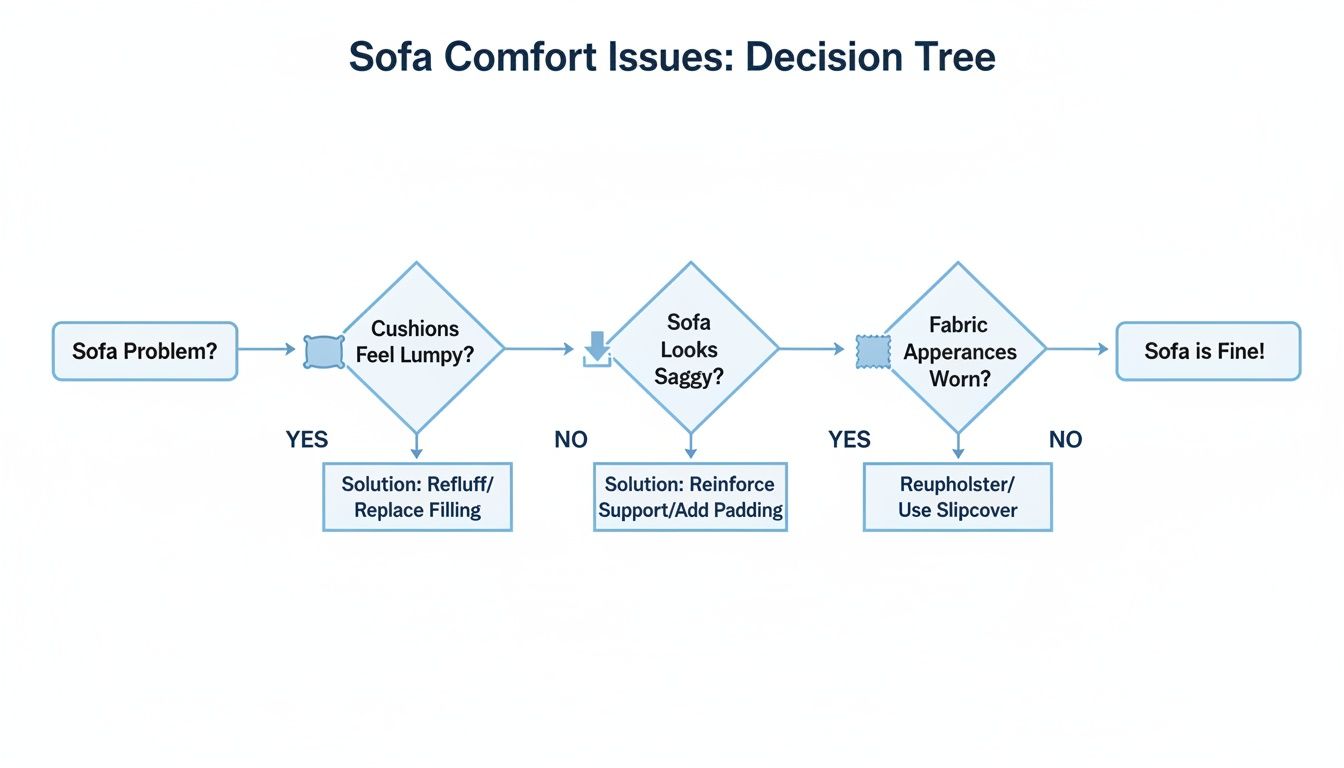
Here's a quick summary to help you identify the root cause of your sofa's discomfort and find the best starting point for a solution.
Diagnosing Your Sofa's Comfort Issues
| Symptom | Common Cause | Quick Fix Idea |
|---|---|---|
| Seat feels hard or lumpy | Cushion filling has compressed | Add a foam insert or batting |
| You sink too far into the seat | Springs or webbing have weakened | Place a sofa support board underneath |
| Fabric feels rough or scratchy | Upholstery is worn or pilled | Cover with a soft throw or a new cover |
| No lower back support | Cushions are too deep or soft | Add supportive scatter cushions or a bolster |
By figuring out whether your issue is lumpiness, sagging, or just worn-out fabric, you can focus on the fixes that will have the biggest impact. Sometimes, a simple fix like a new set of cushion covers or a plush throw can transform not just the feel but the whole look of your living space.
Quick Wins for an Instantly Cozier Sofa
If your sofa has lost its welcoming feel but you're not ready for a major overhaul, don't worry. There are several immediate, budget-friendly fixes that can make a huge difference. These simple enhancements focus on layering, texture, and strategic support to quickly improve how your sofa feels when you sink into it.
You don't need any special skills or a big budget to turn your seating from lacklustre to luxurious in minutes. The key is to target the main points of contact—your back, your seat, and the feel of the fabric against your skin. A few thoughtful additions can solve common complaints like a lack of lower back support, a seat that feels too deep, or upholstery that's seen better days.
The Power of Pillows and Cushions
Never underestimate what a few well-placed cushions can do. If you find yourself constantly slouching or stuffing a spare cushion behind your back just to get comfortable, your sofa is likely too deep for you or lacks decent lumbar support. Adding a few extra cushions is the easiest fix in the book.
- Layer for Depth: Use two or three larger square pillows as a base against the sofa's back. Then, place smaller, firmer scatter cushions in front of them. This simple layering trick lets you adjust the depth of the seat to perfectly fit your posture.
- Targeted Support: A cylindrical bolster pillow is brilliant for precise lower back support. It fills that annoying gap between your spine and the sofa back, encouraging better posture and preventing aches during a long film night.
- Vary Textures: Don't be afraid to mix different materials like velvet, linen, and chunky knits. This not only adds visual interest but also makes the sofa feel much more inviting and tactile.
By customising your support system with cushions, you can instantly make your sofa more comfortable whether you're sitting upright or properly lounging.
Pro Tip: If your existing sofa cushions feel flat but the covers are still in good nick, don't rush to replace them. Unzip the covers and wrap the old foam insert with a layer of polyester batting before putting it back in. This simple trick adds plumpness and softness for a fraction of the cost of new foam.
Introduce Comforting Textures
Sometimes, the problem isn't the sofa's structure but its surface. Upholstery can become rough over time or feel cold to the touch, especially with leather or certain synthetic fabrics. This is where soft furnishings truly shine.
Adding accessories like throw blankets can instantly elevate your sofa's comfort and aesthetic. A plush, inviting throw draped over the back or arm of your sofa does more than just look good; it completely changes the tactile experience. For more ideas on their versatile uses, check out this excellent guide on understanding throw blankets for comfort and style.
Look for materials that feel wonderful against the skin. Consider exploring a collection of cosy sofa throws to find a texture that suits your style, whether it’s a chunky knit for winter warmth or a lightweight fleece for year-round softness. This single addition can make a scratchy or worn sofa feel brand new.
A Fresh Surface with a Sofa Cover
If worn, pilled, or just plain uncomfortable upholstery is the main issue, a well-fitted sofa cover is a fantastic solution. Modern stretch covers are designed to hug the contours of your furniture, providing a smooth, soft, and unified new surface.
This instantly solves any texture problems and gives your entire sofa a fresh start. A jacquard or velvet-feel cover adds a layer of softness that can make a hard sofa feel much more comfortable and inviting.
Restoring Your Sofa's Foundation and Support
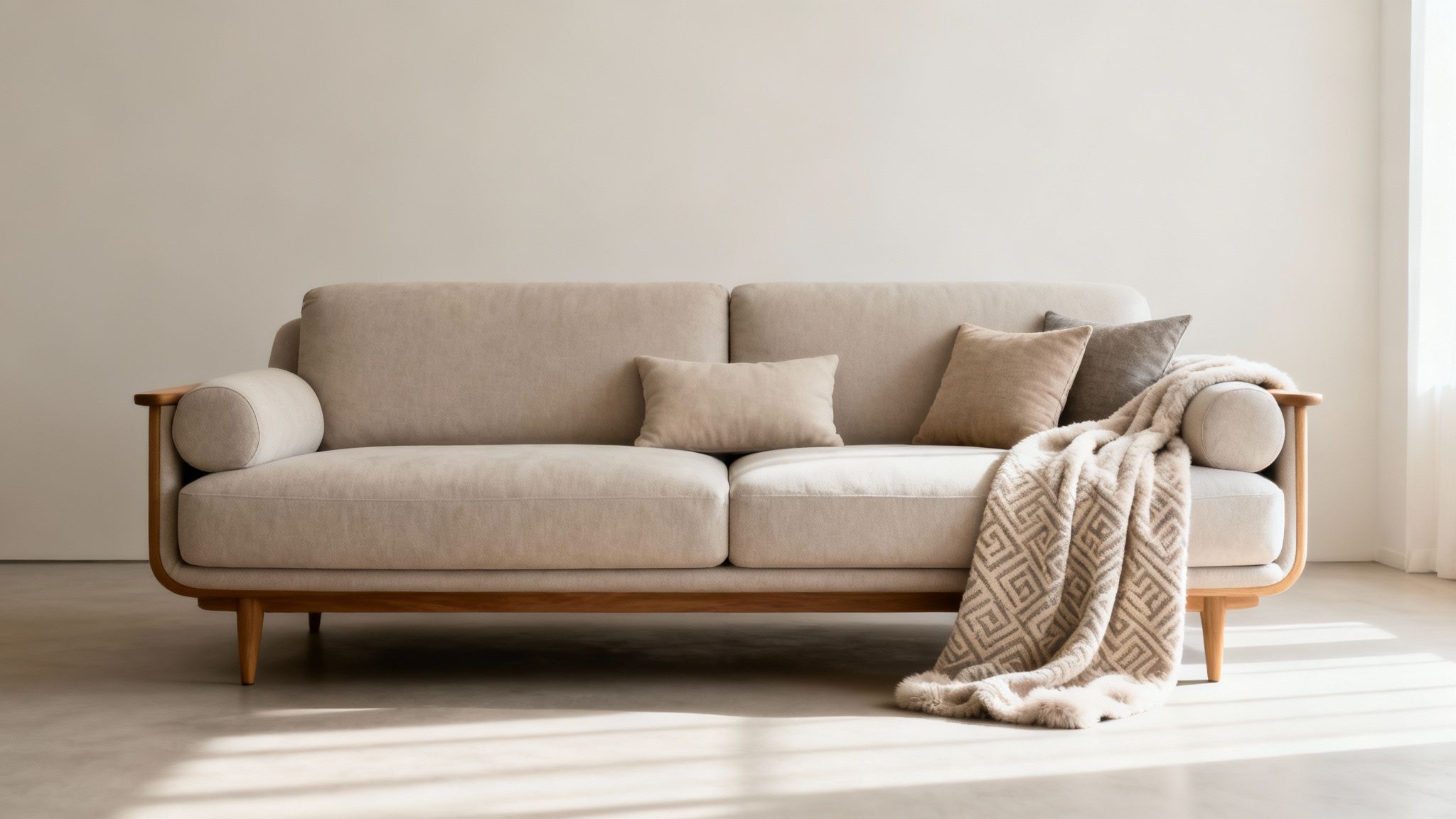
When throws and scatter cushions aren't quite cutting it anymore, it’s usually a sign that the problem lies deeper. A sagging sofa is one of the most common complaints I hear, turning a beloved lounging spot into a dip you have to climb out of. That sinking feeling almost always points to an issue with your sofa's core support structure.
Before you can fix it, you need to play detective for a moment. Pull off all the seat cushions and take a good look at what’s underneath. Have the cushions themselves gone flat, or is the base beneath them bowing downwards? Press firmly on the frame—if it gives way easily, you’re likely dealing with worn-out springs or stretched webbing. If the frame feels solid but the cushions are pancake-flat, then the foam filling is the real culprit.
Addressing Sagging Seat Cushions
If your investigation points to the cushions being the weak link, you’ve got a fantastic opportunity for a major comfort upgrade. Over time, the foam inside compresses and loses its bounce, offering little to no support. Simply replacing this tired filling can make your sofa feel brand new again.
Swapping out the foam is a brilliant weekend project. Here’s a quick guide:
- Remove the Old Foam: Carefully unzip your cushion covers and pull out the old foam inserts. If they’re wrapped in batting, take that off too.
- Measure Up: Measure the length, width, and depth of the old foam. For a plumper, firmer result, I always recommend adding an extra centimetre to both the width and depth measurements.
- Choose Your New Foam: Go for high-density foam. It provides much better support and lasts significantly longer than cheaper alternatives, giving you a firm but comfortable base that won’t flatten in a few months.
- Get the New Foam In: Wriggling the new, slightly oversized foam into the cover can be a bit of a wrestle. A great little trick is to wrap the foam in a thin plastic sheet (like a bin bag) to help it slide in smoothly. Once it’s in place, you can just tear the plastic away through the zip opening.
Once you’ve got your lovely fresh inserts, you can finish the job with some new covers. If you're looking for ideas, our complete guide to sofa cushion covers is packed with inspiration for fabrics and styles to match your revitalised cushions.
Quick Fixes for a Sinking Frame
But what if the cushions are fine and it’s the base that’s sagging? This is a dead giveaway that the springs or webbing supporting the cushions have lost their tension. While a full replacement is a more involved job, there are some incredibly effective fixes you can do right now, no upholstery skills required.
The aim is simple: create a solid, level platform under the cushions to counteract that dip. This provides instant lift and stops you from sinking uncomfortably into the frame.
The Plywood Solution: A custom-cut piece of plywood or MDF, about half an inch thick, works wonders. Just measure the seating area under the cushions and get a piece cut to size at your local DIY shop. Slide it onto the sofa frame, put the cushions back, and you’ll feel an immediate difference in firmness.
This approach has become really popular as a cost-effective way to get more life out of a sofa. Recent UK furniture industry data shows that younger buyers, especially those aged 25 to 34, are actively seeking practical and affordable ways to maintain their furnishings. You can explore more on these trends in Mintel's market report. For families with kids or pets, protecting and prolonging a sofa's life is a huge priority, making these kinds of lasting fixes incredibly valuable.
For an even easier, ready-made option, you can buy a commercial sofa support board. These are usually foldable panels of engineered wood or plastic wrapped in fabric. They’re designed to slot neatly under the cushions to provide that crucial extra support without any cutting or measuring.
The Ultimate Sofa Makeover for Comfort and Style
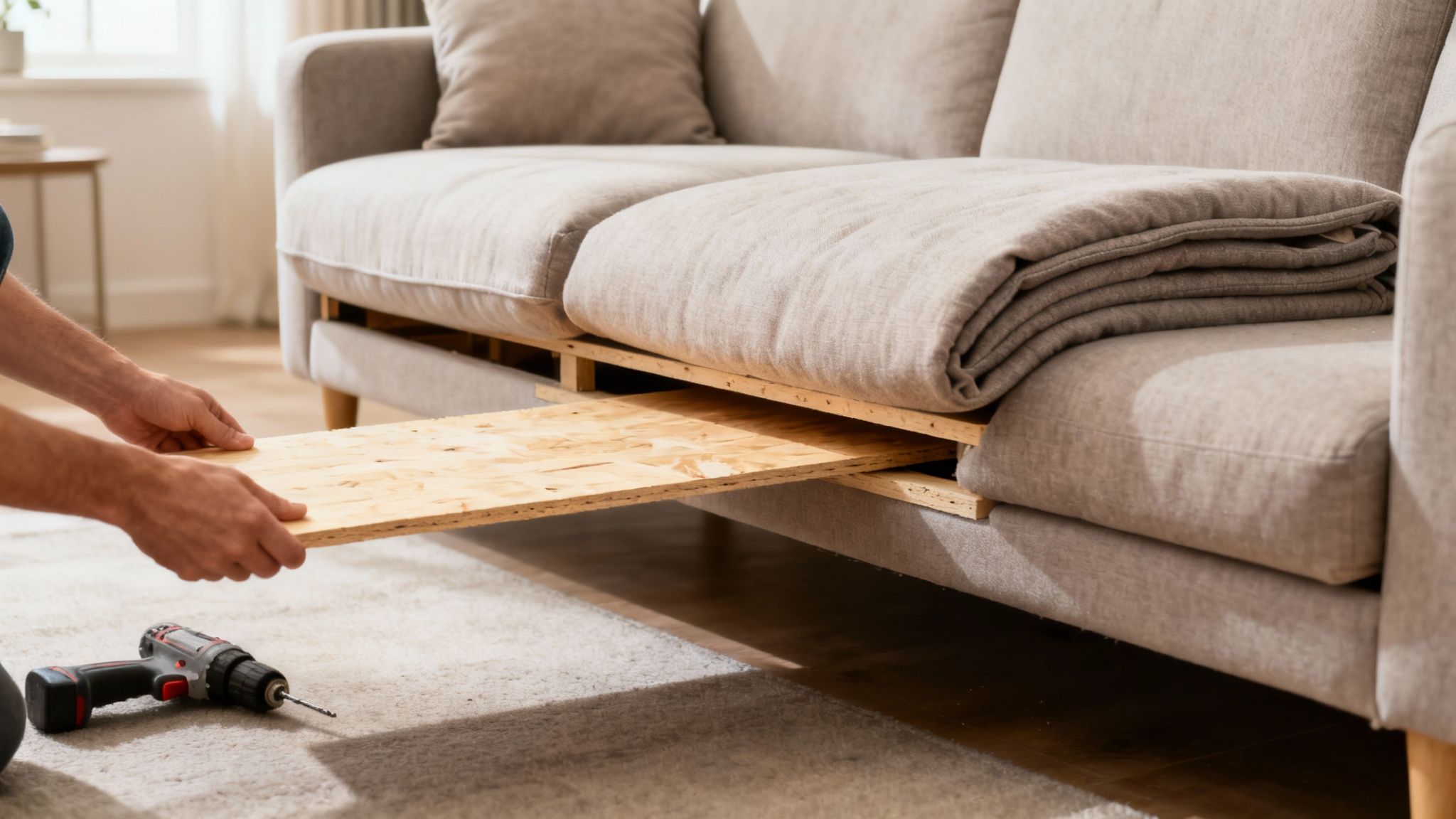
Sometimes, a few extra cushions just won't cut it. You’re ready to completely revitalise your living space, and that means tackling comfort and style in one go. This is more than just fixing a problem; it’s about giving your sofa a whole new lease of life, transforming it from a piece of furniture you put up with into a centrepiece you’re genuinely proud of.
This is the perfect approach when the upholstery is looking tired, the colour feels dated, and sinking into it at the end of the day just doesn't feel as good as it used to.
The cornerstone of this kind of transformation is, without a doubt, a high-quality stretch sofa cover. It is the single most effective way to overhaul your sofa’s look and feel in one simple step. Modern covers offer a tailored, seamless finish that can completely disguise worn, faded, or even unpleasantly textured original fabric.
Choosing and Fitting the Perfect Cover
First things first, you need to pick a material that suits your home. The fabric you choose will have a massive impact on how comfortable your sofa actually becomes. For a home with kids or pets, a waterproof cover is a game-changer, giving you peace of mind alongside a fresh new look.
If you’re aiming for a more style-led makeover, a luxurious jacquard fabric adds texture and a real touch of elegance. If you're stuck for ideas, our guide on choosing the https://thesofacovercrafter.co.uk/blogs/sofa-cover-ideas/best-fabric-for-sofa can walk you through all the options.
Once you’ve got your cover, getting a flawless, wrinkle-free fit is everything. Here’s how I always do it:
- Start from the Back: Drape the cover over the sofa and pull it down evenly over the back and arms first. Get it roughly in position before you do anything else.
- Tuck in the Excess: Now for the secret to that non-slip, tailored look. Use the foam inserts that come with the cover to push any loose material deep into the crevices between the cushions and the frame.
- Secure Underneath: Fasten any clips or ties underneath the sofa to keep everything taut. This stops the cover from shifting about every time someone sits down.
Taking your time with this methodical approach is what gives you that smooth, professional-looking result that truly transforms your furniture.
Layering for a Designer Finish
With your new cover creating a fresh canvas, it's time to start layering. This is where you can inject your own personality and add those extra layers of cosiness that make a sofa not just look better, but feel incredibly inviting. Think of it as dressing your sofa for both style and comfort.
Start by adding coordinating cushion covers. You could choose colours that complement your new sofa cover for a calm, harmonious look, or go for contrasting shades and patterns to create a bold focal point. I love mixing different textures—like a soft velvet cushion against a chenille cover—to add depth and tactile appeal.
And finally, no truly comfortable sofa is complete without a stylish throw. Draped over an arm or slung across the back, a throw adds that final layer of warmth and texture, making you want to curl up and relax.
This strategic layering of covers, cushions, and throws doesn't just make a sofa more comfortable; it turns a purely functional fix into an exciting home decor project, aligning with the growing consumer appetite for design-led comfort.
This trend is something we’re seeing across the whole UK furniture market. The sector, valued at USD 14.73 billion in 2025, is projected to hit USD 17.18 billion by 2030, driven by an increasing desire for affordable and stylish ways to refresh our homes. With online channels expected to handle nearly 40% of transactions, accessible products like sofa covers are becoming essential. You can read more insights about UK furniture market growth on mordorintelligence.com.
Long-Term Sofa Care and Maintenance Tips
Getting your sofa feeling comfortable again is a brilliant achievement, but the real secret is keeping it that way. A little bit of proactive care makes all the difference, preventing uneven wear and preserving that ‘like-new’ feeling for years to come. Think of it as a simple routine that protects your favourite spot in the house.
By looking after the frame, cushions, and fabric, you can massively extend your sofa’s lifespan and stop it from becoming prematurely uncomfortable. These aren't complicated jobs—just simple, effective habits to maintain the support and softness you’ve worked to restore.
Building a Simple Sofa Care Routine
The easiest and most effective maintenance trick costs nothing at all: regularly flip and rotate your seat and back cushions. It’s human nature to have a favourite spot, which means one side of the sofa gets far more use than the other. Swapping the cushions around every week or two ensures they wear down evenly, stopping that lopsided sagging in its tracks.
Regular cleaning also plays a huge part in preserving both comfort and appearance. A weekly vacuum with a soft brush attachment is all it takes to lift away the dust and grit that can slowly wear away at fabric fibres over time.
Quick Tip: Sunlight is one of the biggest culprits when it comes to fabric damage. Direct UV rays can cause colours to fade and materials to become brittle and fragile. If your sofa sits right by a window, think about drawing the curtains during the sunniest part of the day or using a decorative throw to shield the upholstery.
For a deeper clean that really refreshes your sofa's fabric, a practical guide to steam clean upholstery can help you tackle stubborn dirt and allergens, maintaining a fresh and inviting surface.
Knowing When to Call a Professional
While most comfort issues have a DIY fix, some problems are best left to an expert. If you hear creaking, cracking, or popping sounds coming from the frame when you sit down, that’s a red flag. It could signal a broken support beam or a failed spring—serious structural issues that need professional attention.
Likewise, if you’ve tried adding support but the sofa continues to sag dramatically, an internal component has likely failed beyond a simple fix. In these cases, it’s best to get in touch with an upholstery specialist.
This focus on quality and longevity is something we’re seeing across the wider market. In fact, the UK sofa retail industry saw a 25% increase in organic visibility in 2025, showing just how many retailers are connecting with customers who prioritise long-term value. In a competitive landscape like this, investing in maintenance is always a smart move. You can learn more about UK sofa industry trends at salience.co.uk.
Your Sofa Comfort Questions, Answered
Even with the best advice, a few specific questions always pop up when you start a project like this. We get it. To help you get started with total confidence, we've answered some of the most common queries we hear day in and day out.
How Can I Make My Sofa Cushions Softer?
If sinking into your sofa feels less like a cosy retreat and more like perching on a park bench, your cushions are the prime suspect. The culprit is usually foam that’s just too firm or a fibre filling that’s become hopelessly compressed over time, losing all its life.
For an immediate and fantastic fix, just add a new layer of softness. You can wrap your existing foam inserts in a thick, fluffy layer of polyester batting before popping them back into their covers. It adds a plush, cloud-like feel without losing the support of the foam underneath.
Want a more luxurious upgrade? Consider replacing the inserts entirely with a down-alternative fill for that classic, irresistible sink-in feeling.
What’s the Best Fix for a Sofa That’s Too Deep?
A sofa that’s too deep can be a real pain—literally. You end up slouching just to get some back support, which is a recipe for aches and discomfort. The simplest solution is to use cushions strategically to shrink the seat depth.
- Start with Large Base Pillows: Place two or three large, firm square pillows right up against the back of the sofa.
- Layer Smaller Cushions: Arrange your smaller, decorative scatter cushions in front of these. This clever combination effectively shortens the seat and gives you brilliant lumbar support exactly where it’s needed.
- Try a Bolster: A single long, cylindrical bolster pillow can also work wonders, filling that gap perfectly.
This layering technique is a bit of a designer's secret for making any sofa fit for purpose. It doesn’t just solve the depth problem; it also adds gorgeous texture and visual interest, making your sofa look as good as it feels.
Can a Sofa Cover Really Improve Comfort?
Absolutely. While it’s easy to think of sofa covers as being purely for looks or protection, the right material can completely change how a sofa feels to the touch. If your current upholstery is scratchy, worn-out, or unpleasantly cold (like some faux leathers can be), a cover offers an instant textural upgrade.
Opting for a cover in a naturally soft fabric like chenille, velvet, or a plush jacquard adds a whole new, inviting surface layer. It’s one of the most effective ways to tackle surface-level discomfort, making your sofa instantly feel warmer and more welcoming. It's a simple change that makes a huge difference to your daily lounging.
Ready to give your sofa the ultimate comfort makeover? Explore the range of stylish and practical solutions at The Sofa Cover Crafter. From plush throws to perfectly fitted covers, find everything you need to transform your living space at https://thesofacovercrafter.co.uk.