



That heart-sinking moment when a glass of wine topples over or a dollop of pudding lands on a pristine cushion doesn't have to end in disaster. Panic is the first reaction for most of us, but a calm, quick response is your most powerful tool in the fight against a permanent stain.
Think of it as damage control. The first five minutes are absolutely crucial, and what you do right now determines how easily that stain will lift later on.
Table of Contents
- Your Immediate Action Plan for Sofa Spills
- The First Crucial Steps for Any Spill
- Essential Tools to Grab Immediately
- Understanding Your Sofa's Fabric Care Label
- Decoding the Sofa Cleaning Codes
- Sofa Fabric Cleaning Codes Explained
- What If There Is No Label?
- A Practical Guide To Removing Common Household Stains
- Dealing With Red Wine Disasters
- Conquering Coffee And Tea Stains
- Tackling Oily And Greasy Marks
- Removing Stubborn Ink Stains
- Addressing Unpleasant Pet Accidents
- Signs It’s Time to Call in a Professional
- What the Pros Can Do That You Can't
- Proactive Sofa Protection and Long-Term Care
- Why Sofa Covers Are a Game-Changer
- Choosing the Right Protective Cover
- The Financial Sense of Proactive Care
- Your Sofa Stain Questions, Answered
- Can I Use a Steam Cleaner on My Sofa?
- How Do I Get Rid of Watermarks After Cleaning?
- Are DIY Solutions Safe for All Colours?
Your Immediate Action Plan for Sofa Spills
Your immediate goal isn't to make the stain vanish instantly. It’s to contain the mess and get as much of the offending substance off the fabric as possible. This sets you up for a much more successful, targeted cleaning approach once the initial panic has subsided.
The First Crucial Steps for Any Spill
Before you even think about reaching for a specialised cleaner, there are a couple of universal actions you should take right away.
First, if the spill is something solid, like mud or a chunk of food, grab a dull knife or the edge of a spoon. Gently scrape away the excess from the surface of the fabric. The key here is to be gentle and avoid pressing down, as that can just push the substance deeper into the weave.
For liquid spills, the golden rule is to blot, never rub. Rubbing grinds the stain into the fibres and can wreck the fabric's texture. Grab a clean, white microfibre cloth or a few sheets of kitchen roll and press firmly onto the spill to soak up as much as you can. You’ll be surprised how effective this simple action is.
A pro tip that makes a huge difference: always work from the outside edge of the stain and blot towards the centre. This simple technique stops the stain from spreading outwards and becoming a much bigger problem. It’s a small detail, but a critical one.
Once you’ve blotted the area, you might notice it's still damp. Whatever you do, resist the urge to blast it with a hairdryer. Direct heat can permanently set certain types of stains, especially anything with protein or sugar in it. Just let it air dry, or if you're in a real hurry, use the cool setting on your hairdryer.
Essential Tools to Grab Immediately
Having a small, dedicated 'stain emergency kit' can be a real lifesaver. You don't need fancy products for this initial response; a few household staples are all it takes.
Here’s what you should have ready to go:
- Clean White Cloths: Using white cloths is non-negotiable. It stops any potential dye from a coloured cloth transferring onto your sofa.
- Kitchen Roll: Super absorbent and perfect for that first blotting action.
- A Dull Knife or Spoon: Ideal for scraping off solids without snagging the fabric.
- A Small Bowl of Cold Water: For lightly dampening a cloth to tackle certain initial spills.
With these first steps done, you've successfully contained the spill and massively reduced its chances of becoming a permanent fixture. Now you’re ready to move on to the more specific cleaning methods based on the type of stain and your sofa's fabric.
Understanding Your Sofa's Fabric Care Label
Before you even think about grabbing the first cleaning spray you see, just stop. Take a breath. The single most important thing you can do when learning how to get a stain out of your sofa is to understand exactly what you’re working with. Using the wrong product can turn a tiny, fixable spot into a permanent, faded disaster. I’ve seen it happen.
Your sofa has a secret weapon in this fight: the fabric care label. This little tag, usually tucked away under a cushion or along an inside seam, holds the key to cleaning your upholstery safely. Ignoring it is like trying to drive through a new city without a map—you’ll probably end up somewhere you really don’t want to be.
Decoding the Sofa Cleaning Codes
Think of these codes as your roadmap to a successful stain removal. They’re usually just a single letter, but that letter tells you everything you need to know about which cleaning agents are safe for your fabric. Getting to know them is essential.
Here’s a quick guide to what those cleaning codes on your sofa's tag actually mean, so you know exactly what to reach for (and what to avoid) when a spill happens.
Sofa Fabric Cleaning Codes Explained
| Code | Meaning | Safe Cleaning Agents | Avoid |
|---|---|---|---|
| W | Water-Based | Water and water-based upholstery cleaners, mild detergents. | Solvents, harsh chemicals. |
| S | Solvent-Based | Dry-cleaning solvents or water-free upholstery cleaners only. | Water, steam, and any water-based products. |
| W/S or SW | Water or Solvent | Both water-based cleaners and dry-cleaning solvents are fine. | Harsh chemicals, vigorous scrubbing. |
| X | Vacuum Only | Vacuuming with an upholstery attachment, light brushing. | ALL liquids – water, solvents, and cleaners. |
As you can see, these codes are not just suggestions; they're critical instructions for keeping your sofa looking its best.
Let’s break them down a bit further:
-
W for Water-Based: If you see a 'W', you can relax a little. This is the most common and user-friendly code, meaning you can safely use water and water-based cleaning solutions. Mild detergents and proper upholstery shampoos are generally fine.
-
S for Solvent-Based: A code 'S' is a firm instruction to avoid water completely. On these fabrics, water can cause shrinking, nasty spotting, and even make the colour bleed. You’ll need a specific dry-cleaning solvent or a water-free upholstery cleaner for any spot treatments.
-
W/S or SW for Both: This code gives you the most flexibility. It means you can use either water-based cleaners or dry-cleaning solvents. Even so, it’s always smart to test both in a hidden area to see which one gives you better results on your specific fabric.
-
X for Vacuum Only: The 'X' code is the most restrictive and needs to be taken seriously. It means the fabric is extremely delicate and should never be cleaned with any liquid, whether it’s water or solvent-based. Your only safe bet here is to vacuum, brush gently, or call in a professional who understands these materials.
Crucial Takeaway: Trying to use a water-based cleaner on an 'S' code fabric is a recipe for disaster. It can leave behind a massive water ring that’s often far more obvious and harder to remove than the original stain ever was. Always respect the code.
What If There Is No Label?
Finding a sofa without its care tag is frustrating, especially with vintage or second-hand furniture. If you find yourself in this situation, the safest path forward is to act as though the fabric has an 'S' code.
Start by spot-testing a solvent-based cleaner on a completely hidden area, like the fabric on the back of the sofa near the floor or under the skirt. Apply a tiny amount with a clean white cloth, let it dry completely, and then check for any colour change or damage. This cautious first step can save you from a very expensive mistake.
Of course, some materials follow different rules entirely. Leather, for example, has its own unique cleaning process. For detailed guidance on that, it’s well worth reading up on the best way to clean a leather sofa to make sure you’re using the right products and techniques.
Understanding these codes gives you the confidence to act quickly and correctly. It turns the stressful panic of a spill into a calculated process, protecting your furniture and keeping your living space looking its best. Now that you know the rules for your fabric, you’re ready to tackle the stains themselves.
A Practical Guide To Removing Common Household Stains
Right, you’ve figured out your sofa’s fabric type. Now it's time to roll up your sleeves and get to work on the actual stains. The truth is, every spill is a bit different, and a one-size-fits-all approach just doesn't cut it. Knowing exactly what you're up against is half the battle.
Think of this as your go-to guide for the most common (and frustrating) stains we see in UK homes. We’re talking about the real-life messes—from a glass of red wine knocked over during movie night to a greasy mark from Friday night's takeaway. These methods have been tried and tested, and best of all, they rely on simple things you probably already have in your cupboards.
Dealing With Red Wine Disasters
The dreaded red wine spill is a classic for a reason, but it's rarely a lost cause. The absolute key is to act fast, before the tannins—the compounds that give wine its deep colour—have a chance to permanently dye the sofa fibres.
For a fresh spill on a 'W' code (water-safe) fabric, your first move is to blot up as much of the wine as you can with a clean, white cloth. Don't rub! Then, mix up a simple solution.
A splash of white vinegar mixed with an equal amount of water in a small bowl is perfect. Lightly dampen a fresh cloth with it and gently dab the stain, working from the outside edge inwards. The vinegar is brilliant at breaking down the pigments in the wine.
Afterwards, "rinse" the area by blotting it with another cloth dampened with plain cold water. To finish, press a dry cloth or some kitchen roll firmly onto the spot to soak up as much moisture as possible.
If a faint mark lingers, a paste made from three parts baking soda to one part water can be a lifesaver. Gently apply it, let it sit for about 15 minutes to draw out the last of the stain, and then vacuum it all up once it's bone dry. For a more detailed look at general cleaning, our guide on the best way to clean a fabric sofa has some extra valuable tips.
Conquering Coffee And Tea Stains
That morning cuppa can quickly ruin your day if it ends up on the upholstery. Just like wine, coffee and tea are packed with tannins that love to leave a stubborn brown mark. Again, speed is your best friend here.
Blot the excess liquid immediately. For a water-safe fabric, a squirt of washing-up liquid mixed with two cups of cool water is remarkably effective. Apply it sparingly with a clean cloth, dabbing gently until the stain begins to lift. Try not to soak the fabric, as this can lead to those annoying water rings once it dries.
Expert Tip: Never, ever use hot water on coffee stains. If there's any milk or sugar in it, the heat can essentially "cook" the proteins, setting the stain permanently into the fabric. Always stick to cool water for the best results.
Tackling Oily And Greasy Marks
Grease from foods like pizza, crisps, or buttery popcorn can be a real headache because oil and water just don't mix. Dabbing it with a wet cloth will only spread the problem around.
Your first move should be to absorb the oil. Sprinkle the greasy spot generously with baking soda or cornflour. Let it sit for at least 20-30 minutes; it will act like a tiny sponge, pulling the oil right out of the fabric. Once it's had time to work its magic, vacuum up the powder.
For any residue left on a 'W' code fabric, a tiny amount of clear washing-up liquid on a damp cloth can break down what's left. If you have an 'S' code (solvent-only) fabric, this is where you'll need to reach for a proper dry-cleaning solvent, making sure to follow the instructions carefully in a well-ventilated room.
This little flowchart is a great way to quickly check which approach to take based on your sofa's cleaning code.
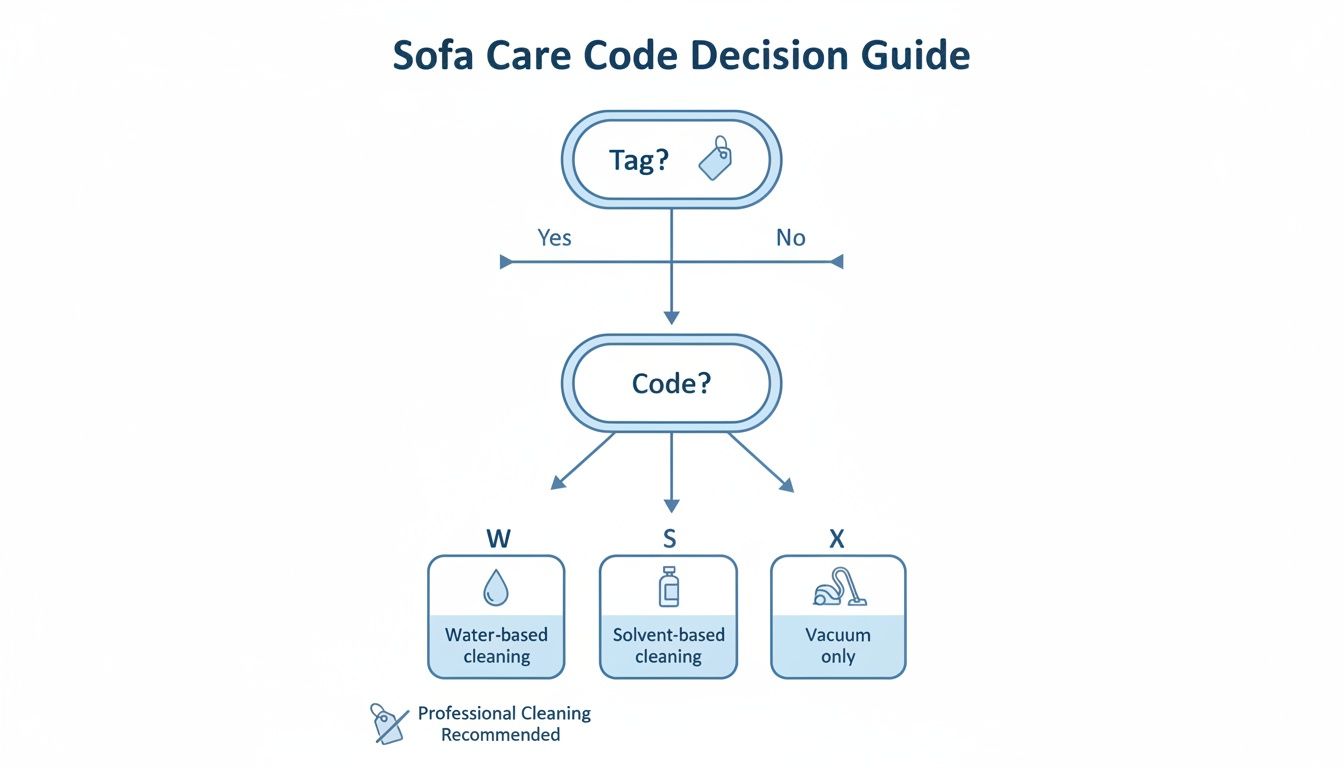
It’s a simple visual reminder of the most important rule in sofa care: always check the tag before you start cleaning to avoid a costly mistake.
Removing Stubborn Ink Stains
An accidental pen mark is one of the most feared upholstery stains. Whether it’s from a leaky biro or a child’s impromptu art project, your game plan will depend on the ink and your fabric.
For water-based ink on a 'W/S' fabric, rubbing alcohol (isopropyl alcohol) is your best bet. Dampen a cotton bud with it and carefully dab the ink mark. Be very gentle to avoid spreading it. You should see the ink transferring from the sofa onto the cotton bud. Keep swapping for fresh buds until the ink is gone.
This kind of detailed work has a lot in common with other cleaning jobs. For instance, the techniques involved in figuring out how to clean your car seats—whether they’re cloth, leather, or vinyl—can give you some great transferable skills for tackling your sofa.
Addressing Unpleasant Pet Accidents
When you're dealing with pet urine, you’re fighting two battles at once: the stain and the smell. The uric acid in urine can cause permanent damage and leaves behind a scent that encourages your pet to mark the same spot again. For this job, an enzymatic cleaner isn't just a good idea—it's essential.
These cleaners contain special enzymes that break down the uric acid crystals completely, which is the only way to eliminate both the stain and the odour. Standard cleaners often just mask the smell, which isn't a long-term fix.
- First, blot up as much fresh urine as you can with kitchen roll. Press firmly.
- Next, thoroughly saturate the area with the enzymatic cleaner. Don't be shy with it; you need the cleaner to reach everywhere the urine did.
- Then, you have to let it air dry completely. This might take a day or two, but this is when the enzymes are actively working, so don't rush it.
- Once it's totally dry, just give the area a good vacuum.
Keeping our homes clean is a big deal, and it shows in the market. The UK fabric stain remover market was valued at USD 113.3 million in 2025, and it’s expected to grow by 5.7% over the next decade. A huge chunk of these products are used on upholstery, as we all rely on targeted sprays to deal with spills.
We've all been there. You've acted fast, blotted the spill, and carefully applied the right cleaning solution for your sofa's fabric. You followed every step to the letter, but the stain just isn’t shifting. It’s a frustrating moment, for sure.
But knowing when to step back and admit defeat is just as important as knowing how to tackle a fresh spill in the first place. Pushing a DIY solution too far can often make things much worse, potentially setting the stain for good or even damaging the fabric itself.
Recognising that point of no return is key. If you’ve tried your usual methods and the mark refuses to budge—or worse, seems to be spreading—it’s time to put down the cleaning cloths. Continuing to throw different household chemicals at it can create a nasty cocktail that even a professional will struggle to undo.
Signs It’s Time to Call in a Professional
It's not just about a stubborn mark that won’t fade. There are a few clear signs that a stain has gone beyond the scope of a home remedy and needs an expert’s touch.
Here are the big red flags to watch for:
- The Stain Is Old or Deep-Set: An old, dried stain that’s had time to properly bond with the fabric fibres is a formidable opponent. Professionals have access to powerful, specialised solvents and equipment that can break down these set-in marks without harming your upholstery.
- A Nasty Odour Lingers: If you've cleaned up a pet accident or a food spill but a persistent, unpleasant smell remains, it means the source of the problem has soaked deep into the cushions and padding. A professional deep clean is the only way to truly get rid of it.
- Your Sofa Is Made of Delicate Material: Fabrics like silk, velvet, or certain types of linen are notoriously tricky to clean. The wrong technique can easily lead to water rings, texture damage, or colour loss. It’s simply not worth the risk.
- The Stain Is a Total Mystery: If you have no idea what caused the mark, you can’t possibly choose the right cleaning agent. Guessing is a recipe for disaster, whereas a pro can identify the type of stain and treat it properly.
It's crucial to remember that a professional clean isn't just about getting rid of one stain. It’s about restoring the overall health and hygiene of your sofa by removing the allergens, dust mites, and bacteria that build up over time.
What the Pros Can Do That You Can't
Calling in a professional is an investment in your furniture's future. They bring a level of expertise and equipment that you just can't replicate at home. A typical professional service involves several key stages, from a pre-inspection to post-treatment grooming, all designed to ensure a thorough and safe clean.
They often use methods like hot water extraction, which injects a cleaning solution deep into the fabric and then powerfully sucks it back out, taking all the dirt, grime, and stain residue with it. If you've tried everything and are still staring at a stubborn mark, it might be time to consider professional carpet and furniture cleaning services.
The demand for these services in the UK shows just how common this problem is. The upholstery cleaning industry is huge, with Europe—including the UK—making up about 34% of global revenues back in 2022. This market was valued at over USD 55 billion globally and is still growing, driven by homeowners and businesses needing expert help. Making that call can save you a lot of frustration and bring your sofa back to its former glory.
Proactive Sofa Protection and Long-Term Care
We’ve spent a lot of time talking about how to react when spills happen, but honestly, the best way to handle a sofa stain is to stop it from happening in the first place. Shifting your mindset from reactive cleaning to proactive care is the single most effective thing you can do to keep your furniture looking great. It’s all about creating a simple barrier between daily life and your upholstery, saving yourself from future stress and frantic scrubbing sessions.
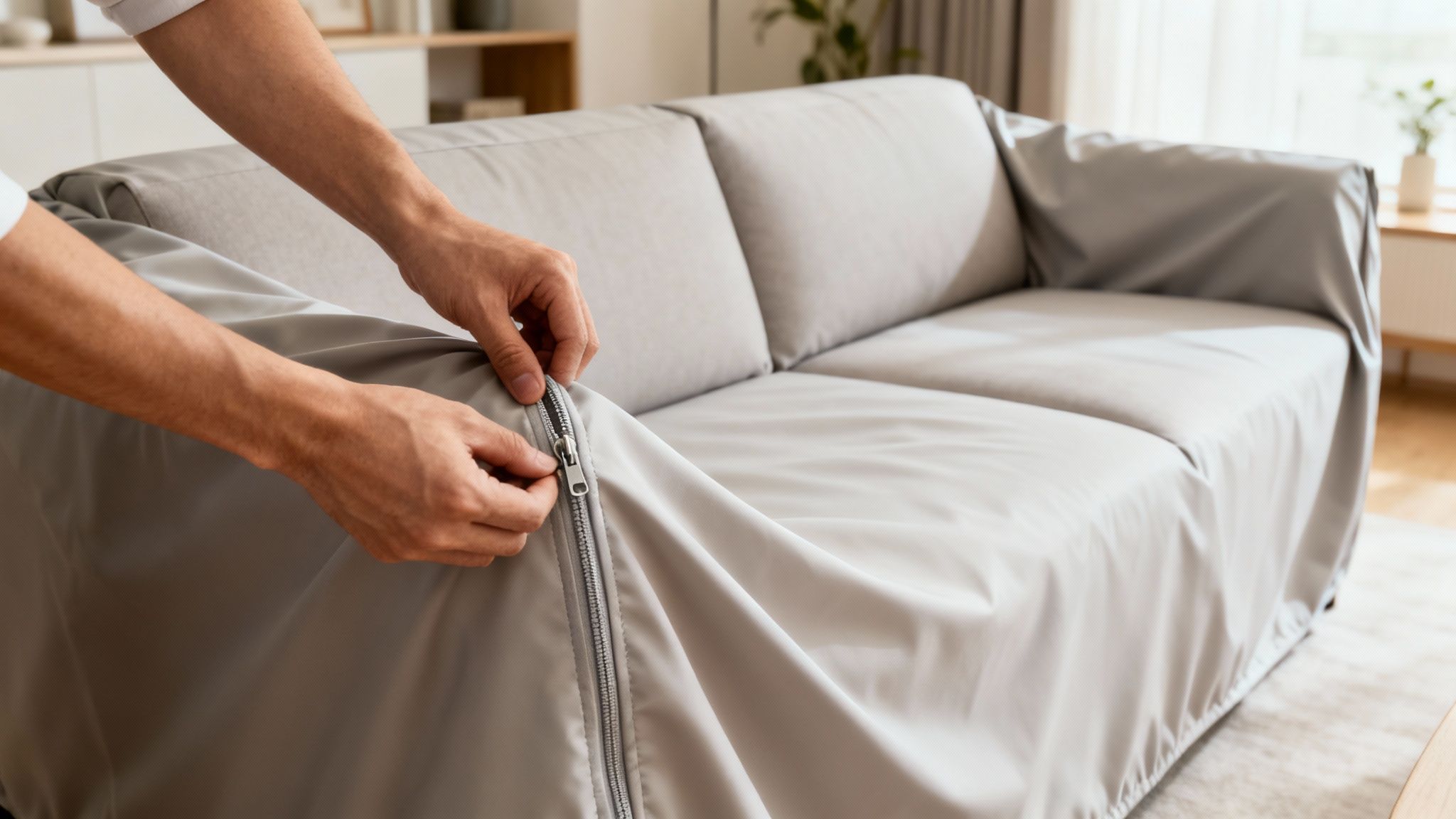
This is where a high-quality, machine-washable sofa cover becomes your greatest ally. Don’t think of it as an afterthought, but as a fundamental part of owning a sofa—an investment that pays for itself over and over again.
Why Sofa Covers Are a Game-Changer
A good sofa cover is like a shield. It absorbs the spills, catches the crumbs, and takes the hit from everyday wear and tear, leaving the original fabric underneath looking pristine. When a mess inevitably happens, the solution couldn't be simpler: you just take the cover off and pop it in the wash. There’s no panic, no frantic blotting, and no worrying about permanent damage.
For some households, this isn’t just a nice-to-have; it’s an absolute necessity.
- For Families with Young Children: Spilled juice, sticky fingers, and the odd felt-tip pen mark are just part of the routine. A washable, waterproof cover turns the sofa from a high-stress zone into a comfortable family space where life can happen without constant worry.
- For Pet Owners: Muddy paws, shedding fur, and the occasional accident are pretty much guaranteed. A durable, easily removable cover means you can clean up in minutes, keeping your sofa hygienic and free from any lingering odours.
- For Landlords and Airbnb Hosts: Protecting your furniture investment is paramount. A slipcover ensures the sofa stays in excellent condition for every new tenant or guest, saving you from costly professional cleaning bills or having to replace it prematurely.
The real beauty of a sofa cover is the peace of mind it brings. It allows you to truly live in your living room, knowing that your furniture is protected from all the unpredictable moments of daily life.
Choosing the Right Protective Cover
Let's be clear: not all sofa covers are created equal. To get the real benefits, you need to pick one that suits your lifestyle and offers genuine protection. Modern slipcovers are a world away from the ill-fitting sheets of the past; they are cleverly designed to look stylish while being incredibly practical.
When you're shopping around, look for features that deliver both form and function. Stretchy, high-quality fabrics give you a snug, smooth fit that can genuinely mimic the look of original upholstery. It's the little details that make a big difference, like foam inserts you can tuck into the gaps and secure ties or clips underneath to stop the cover from shifting around and giving you a clean, wrinkle-free look.
If you’re looking for options, exploring a range of machine-washable sofa covers can give you a clear idea of the different styles and protective features out there, from waterproof layers to soft, textured finishes that add a whole new decorative touch to your room.
The Financial Sense of Proactive Care
Investing in a good cover isn't just about convenience; it's a financially savvy move. In many UK cities, dealing with a single serious stain on a fabric sofa can cost anywhere from £60–£100 for a professional spot clean. Using a washable cover, paired with the occasional spot treatment, is a much smarter habit. It drastically reduces the risk of permanent damage and spreads your sofa care costs over many small, routine washes instead of sporadic, high cleaning bills. You can discover more insights about the cost of cleaning products and services on GM Insights.
This proactive approach fundamentally changes your relationship with your furniture. It puts you in control, allowing you to maintain its condition easily and affordably, and ensuring it stays looking great for years. By preventing stains before they become a problem, you save time, money, and a great deal of stress—which is the ultimate goal of any long-term care plan.
Your Sofa Stain Questions, Answered
Even with the best guide in hand, there are always a few tricky situations that pop up when you're mid-clean. Getting these moments right is often the difference between a perfectly clean sofa and a permanent mark. We’ve gathered the most common queries we hear from UK households to give you clear, expert answers.
Think of this as your go-to for those "what do I do now?" moments. These are the real-world insights you need to tackle any final stain removal hurdles and get the job done with complete confidence.
Can I Use a Steam Cleaner on My Sofa?
This is a very common question, and the answer is a firm "it depends". Steam is just superheated water, which is brilliant for sanitising but can be a total disaster for the wrong type of fabric.
Before you even think about plugging it in, you must check your sofa's care label. If you see a 'W' or 'W/S' code, you can usually go ahead, but with caution. However, if that little tag shows an 'S' (meaning solvent-based cleaners only) or an 'X' (vacuum only), a steam cleaner will almost certainly cause irreversible damage like shrinking, new water stains, or colour bleeding. Don't risk it.
How Do I Get Rid of Watermarks After Cleaning?
It's one of the most frustrating things – you get the original stain out, only to be left with a giant, conspicuous water ring. This usually happens because of the minerals in your tap water, or simply from using too much water, which pushes the dirt to the outer edge of the damp patch where it dries into a ring.
To stop them from forming in the first place, always use as little water as you possibly can and dry the area quickly, but gently. A hairdryer on its coolest setting, held a good distance away, can work wonders.
If you already have a watermark, you can often fix it. Just slightly dampen a clean, white cloth with distilled water (which has no minerals) and gently blot from the outside of the ring inwards, feathering the edges. This helps to blend the transition between the damp and dry areas, letting it all dry more evenly.
Key Takeaway: The secret to avoiding watermarks is to work with a barely damp cloth, not a soaking wet one. As soon as you're done cleaning, blot the area with a dry towel to soak up as much excess moisture as possible. This one step massively reduces the chance of a ring forming.
Are DIY Solutions Safe for All Colours?
While homemade cleaners with ingredients like vinegar or baking soda can be really effective, they're not universally safe for every sofa colour. Natural acids like vinegar and lemon juice have mild bleaching properties that could easily lighten darker or brightly coloured upholstery.
This is exactly why spot-testing is non-negotiable. Before you tackle a visible stain, test your cleaning solution on a hidden area first, like an inside seam or a patch of fabric under a cushion. Apply a small amount, let it dry completely, and then check for any colour fading or changes before you go anywhere near the actual stain. It’s a simple step that acts as your best insurance against a cleaning disaster.
For ultimate peace of mind and stylish protection against any future spills, take a look at the practical solutions from The Sofa Cover Crafter. You can explore our collection of machine-washable covers that make stain worries a thing of the past.