



Beige cushion covers work when you choose the right undertone and pair at least two different textures in the same beige family. If you buy a flat, cool beige and stack it with more of the same, the room goes dead fast, so I'd start by deciding whether you want warm sand, pink-leaning nude, cool taupe, or a pale oat tone, then build from there.
The useful part is that cushion covers beige are not one safe neutral, they're a set of very different looks. On a sofa or bed, velvet, classic stretch, crosshatch, bobble, Luma, Veloura, Crossmere, and Cordelle all read differently, even before you get into shade, and every pillow cover here is 45cm x 45cm. Beige works best when it looks considered, not washed out.
Table of Contents
- Which Beige Cushion Covers Work in a Living Room
- Reading Beige Shades So a Room Stays Warm
- Beige Textures Compared From Velvet to Bobble
- The Lighter Layer With Velvet, Veloura, Crossmere and Cordelle
- Keeping a Beige Scheme Warm Without Going Flat
- Seasonal Swaps That Refresh a Beige Sofa
- Caring for Pale Covers So the Beige Stays Beige
- If You Actually Meant the Sofa Seat Cushions
Which Beige Cushion Covers Work in a Living Room
Beige cushion covers work in a living room only when the shade has enough warmth to hold the sofa, the wall colour, and the floor together. Choose a beige that sits in sand, oatmeal, caramel, or soft taupe territory, then mix two finishes so the room looks deliberate rather than bland.
If you want the simplest shopping shortlist from our beige cushion covers, start with Velvet Pillow Cover in Beige from £9.90 for a soft-focus anchor, Classic Stretch Pillow Cover in Linen Beige from £7.90 for a flatter, cleaner look, and Bobble-Textured Pillow Cover in Beige and Beige & Black from £11.90 if the room needs more surface life. Crosshatch Pillow Cover in Beige from £7.90 sits between those options, while Luma Pillow Cover in Beige from £11.90 gives a neater woven feel.
Velvet is the one I'd pick for depth on a plain sofa. Classic stretch is the tidiest choice if you want beige to behave like a calm background rather than the main event. Bobble texture does the most visual lifting, so use it sparingly if the rest of the room is already busy.
Practical rule: if the sofa is plain, do not buy three plain beige covers. Buy one smooth beige, one textured beige, and one paler neighbour.
This fabric guide on the site is useful before you commit, because beige shows every wrong finish in bright British daylight. A shade that looks warm online can read flat and tired in the room, so judge it against your sofa and walls, not on a glowing screen.
Reading Beige Shades So a Room Stays Warm
Beige stays warm when you treat it as a family of undertones, not a single colour. The four versions that matter most are warm sand and caramel, pink-leaning nude, cool taupe, and near-cream oat, and each one behaves differently beside a grey sofa, oak floor, or cream wall.
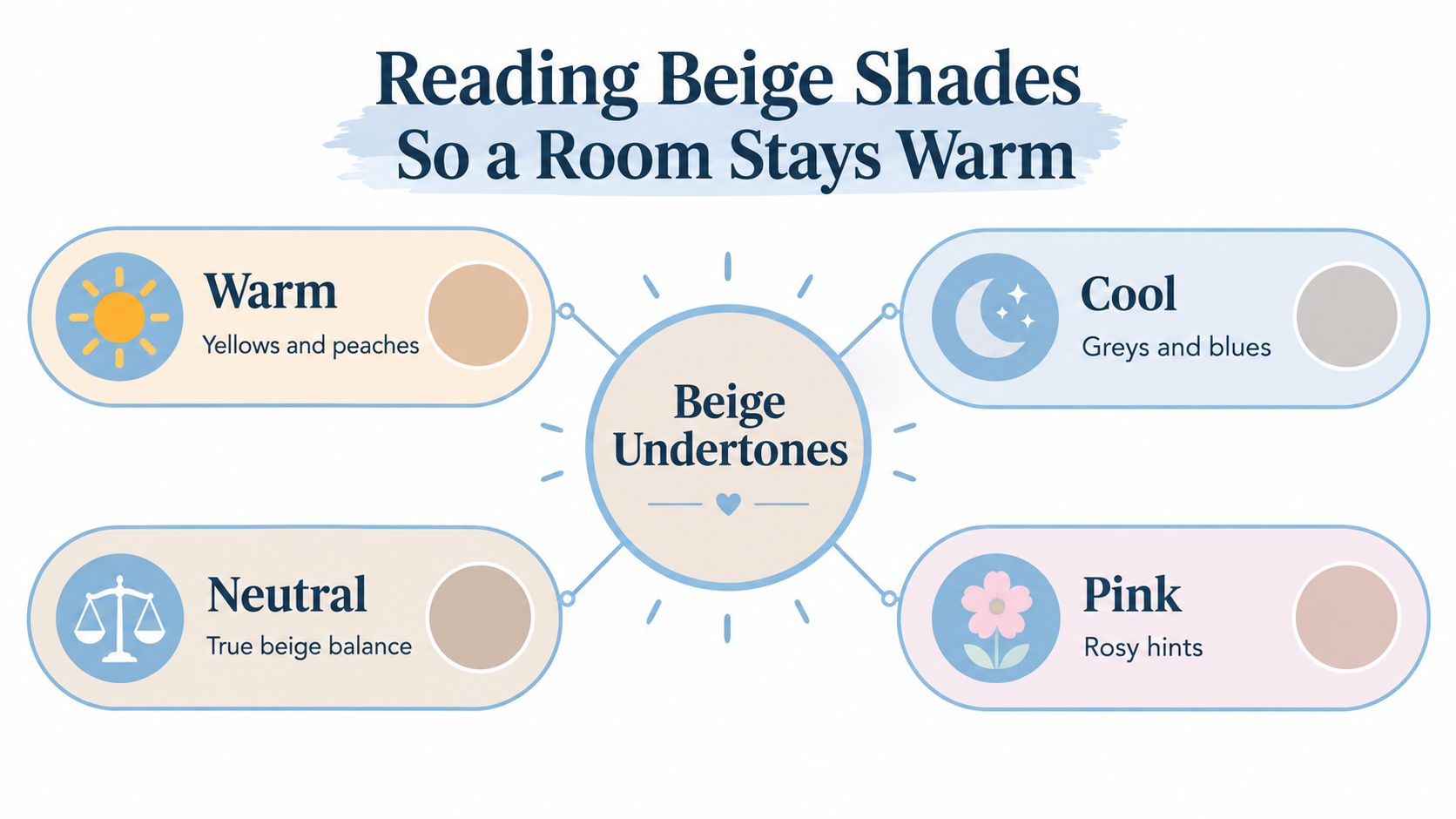
Warm, cool, neutral and pink undertones
Warm sand and caramel look richest in north-facing rooms because they keep some body when daylight is cold. Pink-leaning beige is softer and more flattering on cream walls, but it can look too blushed if the sofa is already warm and yellow.
Cool taupe is the one to watch. It can feel chic on a grey sofa, yet under dim light it often goes muddy rather than elegant. Near-cream oat is the easiest with natural wood and woven baskets, but if the rest of the room is already pale, it needs a darker companion so it doesn't disappear.
The safest habit is simple, compare any candidate cover against the product photos in daylight, not just on a phone screen at night. Screens shift beige badly, and a colour that looks like toasted oat online can land as flat grey in the room.
Beige that looks “safe” on screen often looks dull on the sofa. Check it in daylight, then decide whether it needs a warmer neighbour or a darker anchor.
The fast sampling rule
Order one beige with warmth, not three near-identical shades, then check it beside the sofa, flooring, and walls. If the cover goes grey next to your room, skip that undertone family and move warmer. If it looks too yellow, move toward taupe or a softer cream-white neighbour.
Beige Textures Compared From Velvet to Bobble
A beige cushion cover lives or dies by its surface. If the shade is already warm, the wrong texture can make it look tired; if the shade is cool, the right weave can stop it from drifting flat. Velvet is the easiest place to start because it catches light and gives beige enough body to read properly on a sofa. Stretch is neater and more fitted. Crosshatch and bobble bring more relief, while Luma sits between the two and suits anyone who wants texture without clutter.
For shoppers comparing cushion covers beige, the better question is how each finish holds up in a room that really gets used. Visible weave matters, because it changes whether pale neutral reads soft, chalky, or grounded. It also matters for everyday wear. Smoother stretch covers are easier to brush down and tend to show less lint. Velvet looks richer, but it holds pet hair and marks more readily. Bobble textures hide a bit of casual wear, though they can catch dust in the raised detail. Crosshatch sits in the practical middle, with enough structure to look composed without becoming fussy. If you want a fuller read on how weave changes a room, the guide to texture of fabrics is the right place to compare finishes.
What each texture does to the room
Velvet Pillow Cover in Beige from £9.90 is the richest-looking option, and it is the one that makes beige feel deliberate rather than washed out. Classic Stretch Pillow Cover in Linen Beige from £7.90 stays smooth and fitted, so it suits a tidy room and a sofa with some texture already. Crosshatch Pillow Cover in Beige from £7.90 gives order without feeling stiff, which is why it works well beside plain linen or timber.
Bobble-Textured Pillow Cover in Beige from £11.90 is for buyers who want visible surface lift, not a quiet finish. The Beige & Black version adds sharper contrast, while Luma Pillow Cover in Beige from £11.90 stays more restrained and is the better call if you want movement without making the room busy.
If your sofa is already textured, start with Classic Stretch. If it is smooth leather or plain fabric, start with Velvet.
The Lighter Layer With Velvet, Veloura, Crossmere and Cordelle
A beige room looks better when the cover palette moves from warm beige into cream and cream-white, not when every cushion sits in the same mid-tone. Start with one plush beige anchor, then add a textured neighbour, then finish with a paler cover so the whole scheme can breathe.
The Veloura Pillow Cover in Beige, Crossmere Pillow Cover in Beige, and Cordelle Pillow Cover in Beige each start from £10.90, and they work because they don't all read the same way on the sofa. The Jacquard Pillow Cover in Cream sits as the richer cream step, while the Rivelle and Braelyn Pillow Covers in Cream White give you that cleaner lift at the edge of the palette. Beige only gets interesting when something paler sits beside it.
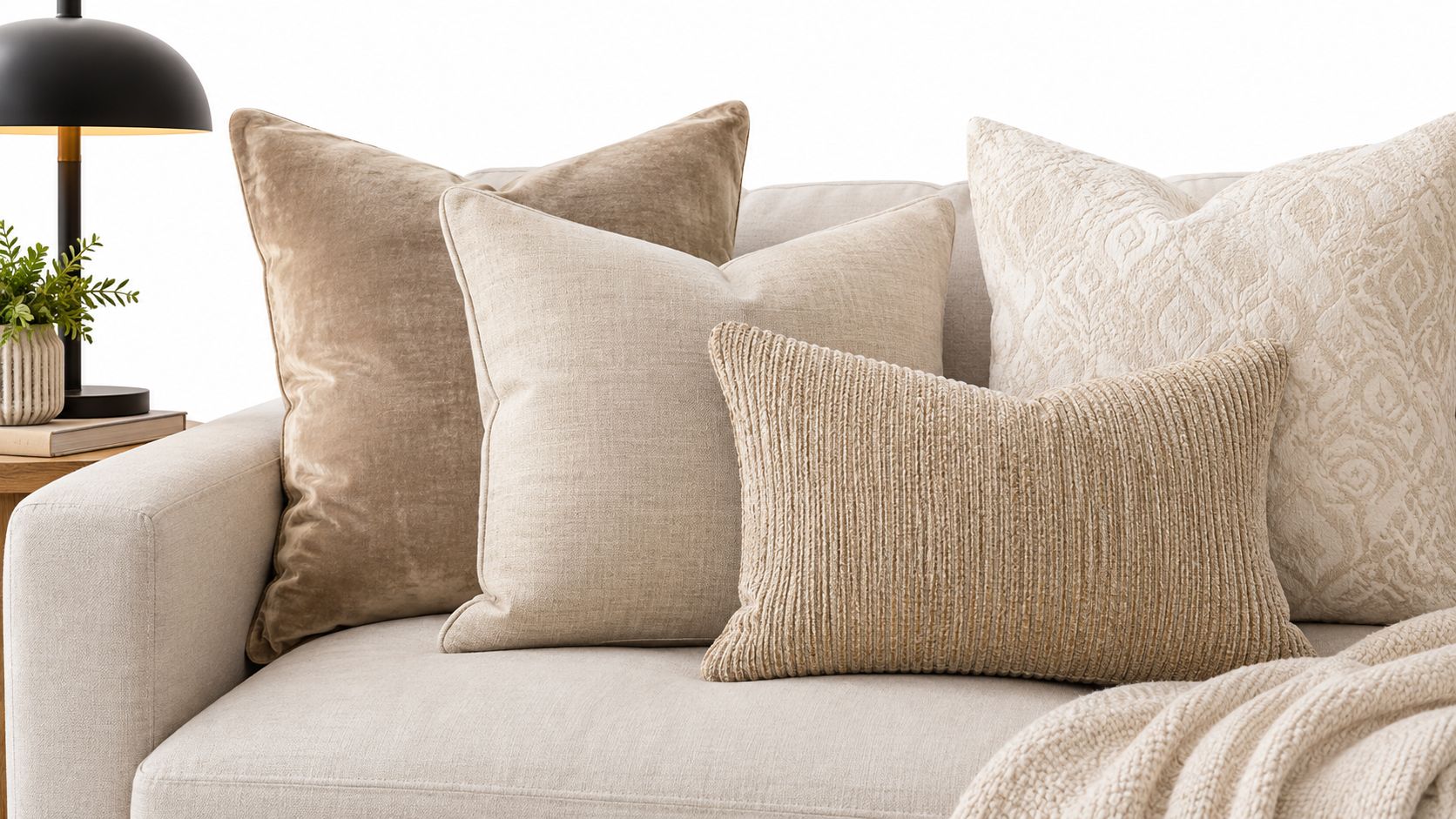
Emilia C., Velvet Pillow Cover, Beige: "The velvet feels proper plush and the beige colour is lovely – goes with everything in my living room."
That's the right response to a good beige cushion. Not “wow, what a statement”, just calm approval because the room settles immediately. If you want to see the product itself, the Velvet Pillow Cover in Beige is the one to inspect first.
Build the set in threes
One velvet beige, one textured beige, one paler cream-white is enough for most sofas. Any more and the scheme starts to lose shape. Keep the pale neighbour visible, because the point isn't matching, it's creating a ladder of tone.
Keeping a Beige Scheme Warm Without Going Flat
Beige only looks boring when it's the only thing in the room. Build around it in shades of the same family, mix textures boldly, then add one dark anchor so the neutrals don't wash out.
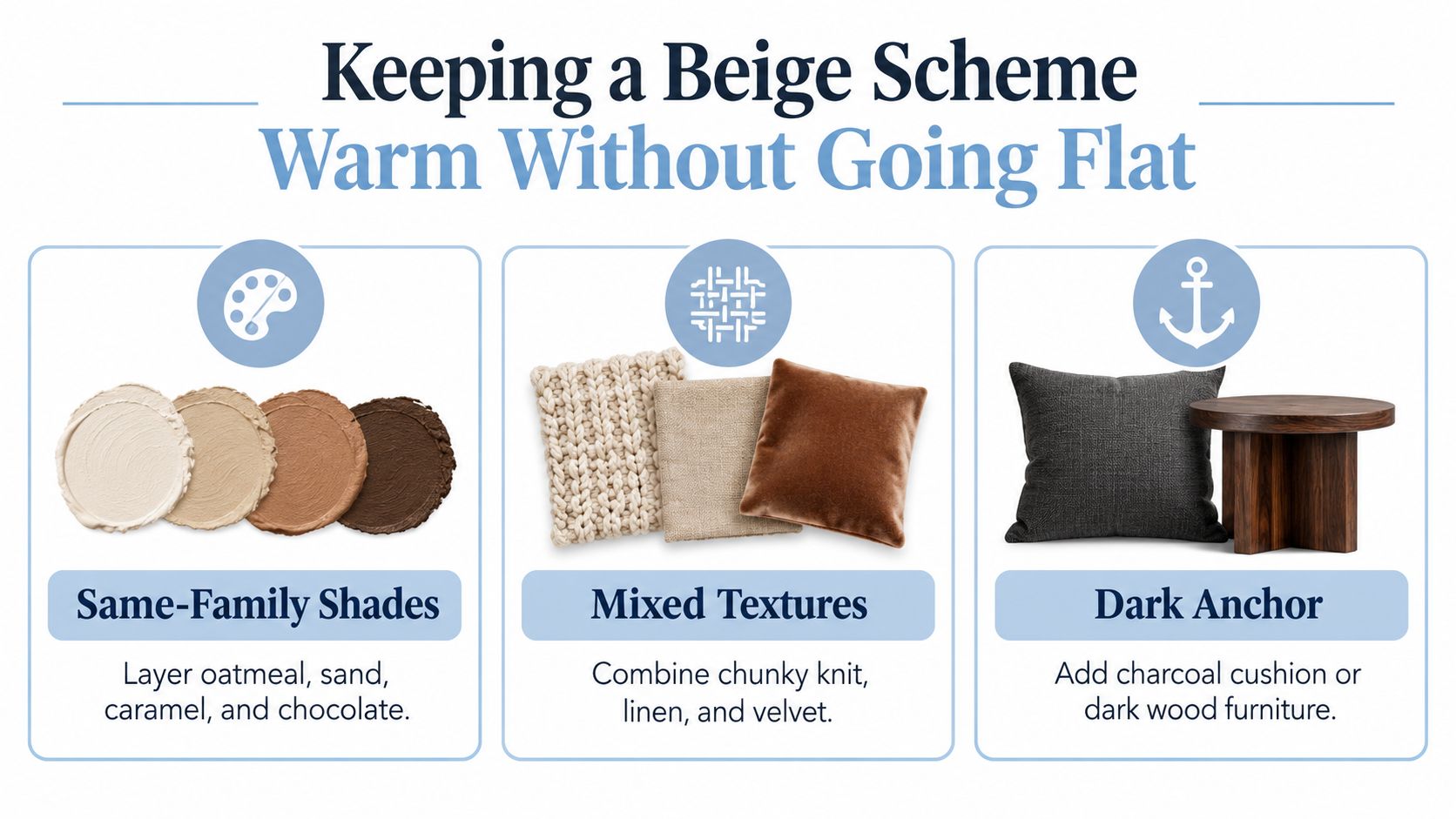
Use the same family, not the same shade
Oatmeal, sand, caramel, and chocolate belong together because they give beige depth. That same-family layering works far better than scattering random pale neutrals around the sofa. It's also why beige sits so naturally with wood, jute, linen, and stone, because the colour originally described undyed natural wool.
Mix the materials properly
A chunky knit throw, a linen cushion, and a velvet cushion create enough contrast for the room to feel designed. That applies whether you're styling the sofa, a bed, or a reading chair. If you want a quick bridge between cushions and the bigger furniture, the sofa throw collection is the right place to look.
Dark anchor matters: one black lamp, one dark wood side table, or one charcoal cushion stops a beige room from looking pale and directionless.
A room needs one element that grounds everything else. Beige is no different. Give it a darker note and it stops floating.
Seasonal Swaps That Refresh a Beige Sofa
Keep the sofa itself neutral and let the throw and cushions carry the season. In spring, use lighter linen and cotton layers so beige feels fresh, then in autumn bring in rust, mustard, and deep green so the same sofa reads warmer and deeper.
That switch is cheap to make and easy to reverse, which is exactly why beige works for people who don't want to keep buying new furniture. It's the old household logic of light coverings in summer and heavier ones in winter, just applied to modern scatter cushions and throws.
A beige base also lets you change the mood without changing the room's bones. If the sofa stays steady, you only need to swap the texture and the accent colour, not the whole scheme. That's the practical advantage of cushion covers beige over more committed colour choices.
Caring for Pale Covers So the Beige Stays Beige
Beige cushion covers stay presentable when you wash out greying and dye transfer before they set in. Wash beige with whites or pale colours, avoid tumble-dryer heat, avoid fabric softener, air-dry the cover, and refit it slightly damp if the care label allows that approach.
Light beige shows body oils and transferred colour before it shows dramatic fading, so don't treat the care label as optional. Textile sellers have to attach fibre-content labels, but they aren't legally required to supply care labels, so check the washing instructions on each cover before you buy and follow them exactly. The label beats general advice every time.
Woven or textured beige covers usually age through flattened or pilled texture rather than visible fading, which is another reason I'd choose a stronger weave if the room gets heavy use. If you want the full care discussion in one place, the site's colour-fastness guide is the right follow-up. Beige is a forgiving colour, but only if you treat the fabric properly.
If You Actually Meant the Sofa Seat Cushions
Sofa cushion covers are a different product from scatter pillow covers, and they're sized in Standard, Deep, and Chaise bands rather than 45cm x 45cm. If you meant the seats, the beige options to look at are the sofa cushion covers collection, where the Velvet Sofa Cushion Cover in Beige and Luma Sofa Cushion Cover in Beige share their shade with the pillow covers, plus the Jacquard Sofa Cushion Cover in Cream as the paler neighbour.
That matters because seat and scatter cushions can match cleanly when you stay within the same beige family. The velvet pillow and the seat version work together, as do the Luma versions, so you can keep the sofa body coherent without making the room feel overdone.
For the scatter-cushion shopper, the size is still the same, 45cm x 45cm, and the buying rule stays simple. Choose a warm undertone, mix textures, and place one dark anchor nearby so the beige doesn't flatten out. For care, follow the label and ignore any promise that sounds too neat.
The Sofa Cover Crafter keeps the choice practical, with beige scatter covers, matching seat covers, and sofa throws that let you build a room in layers instead of replacing the whole sofa. If you want to buy with the texture-and-shade rule in mind, visit The Sofa Cover Crafter and start with the beige pillow covers that suit your room rather than the ones that only look safe on screen.
