



When we talk about the "texture" of fabric, we’re really talking about how it feels to the touch and how it looks up close. It’s the difference between the silky coolness of one material and the chunky, cosy warmth of another—and it’s what gives your sofa its unique personality.
This quick guide will walk you through what texture really means, so you can pick a cover that perfectly blends comfort and style.
Table of Contents
- Understanding Fabric Texture and Its Impact
- Weave, Yarn, and Finish Explained
- Why Texture Matters for Your Sofa
- Practical Tips for Texture Selection
- Exploring the Four Keys to Fabric Texture
- The Foundation of Texture: Weave
- The Dimension of Softness: Pile
- The Final Touch: Finish
- The Practical Layer: Surface Treatments
- Fabric Texture Types at a Glance
- How Texture Shapes Your Sofa’s Feel And Function
- The Comfort Connection: Texture And Touch
- Built To Last: Durability And Weave Density
- Everyday Practicality: Hiding Life’s Messes
- Choosing the Right Texture for Your Lifestyle
- For the Busy Family with Kids and Pets
- For the Style-Conscious Renter
- For the Comfort-Seeking Homebody
- Which Sofa Cover Texture Is Right for You?
- How to Style and Care for Textured Sofa Covers
- Styling Your Textured Sofa Cover
- Caring for Different Fabric Textures
- Maintaining a Smooth, Perfect Fit
- Your Texture Questions, Answered
- More on Getting Texture Right
Understanding Fabric Texture and Its Impact
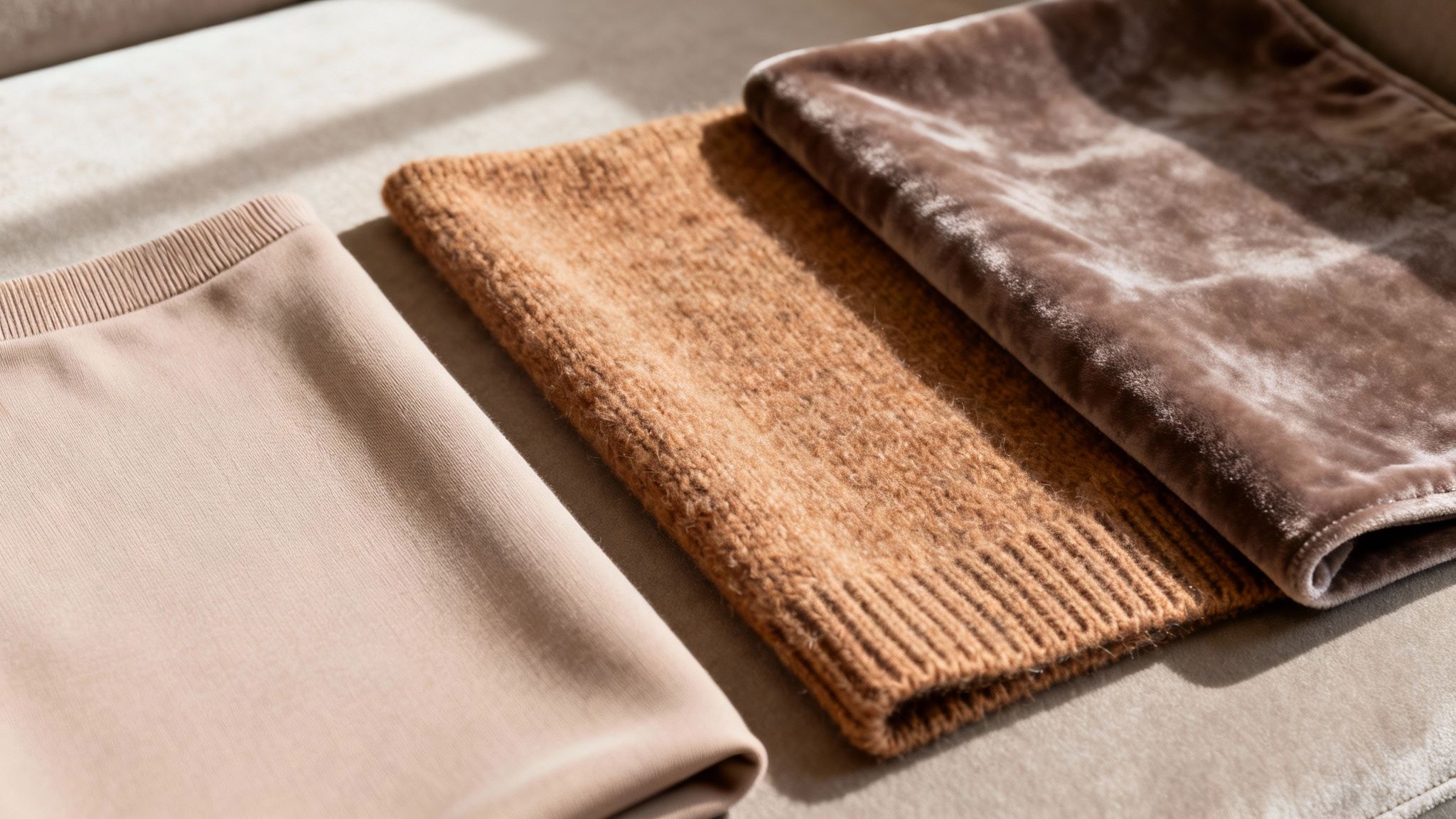
The texture of any fabric isn’t just one thing; it’s a combination of a few key elements that work together. Think of it as a recipe. The way the threads are woven, the type of yarn used, and any finishing touches all team up to define how a fabric feels, how it drapes, and how it catches the light.
- Weave: This is how the threads are interlaced. It can create anything from a simple, flat surface to an elaborate, raised pattern like a jacquard.
- Yarn: The thickness and twist of the yarn itself determines the fabric's softness, warmth, and bulk.
- Finish: These are treatments applied after weaving, like brushing for softness or coating for water resistance, which add the final layer of texture.
Weave, Yarn, and Finish Explained
A simple plain weave, for example, feels strong and straightforward, much like a sturdy canvas. A twill weave, on the other hand, has subtle diagonal ribs that are great for hiding a bit of wear and tear.
Then you have something like a jacquard weave, which creates intricate patterns you can actually feel under your fingertips. It adds a sculpted, almost three-dimensional quality that really elevates a room's visual interest. Getting a feel for different materials, like by understanding French linen, can help you appreciate these subtle but important differences.
Key insight: Fabric texture can make your sofa feel like cool, smooth silk or a cosy wool jumper, completely shifting the mood of the room.
The UK has a rich history in textiles, and the industry is still a powerhouse for creating an incredible variety of textures. In fact, there were 121,000 businesses in the UK textiles manufacturing sector this year, a figure that's grown by 2.4% annually over the last five years. This robust industry, generating £15.86 billion in revenue, is a big reason we have access to so many amazing textured fabrics, from stretchy spandex blends to intricate jacquards.
Why Texture Matters for Your Sofa
So, why does all this matter for your sofa? Well, texture has a huge impact on comfort, durability, and how easy your cover is to look after.
A varied texture is brilliant at hiding pet hair or small stains, while a smoother surface can feel cooler against the skin. A sleek spandex blend cover, for instance, offers fantastic stretch for easy tucking, whereas a jacquard cover adds visual depth and a touch of luxury. You can even get waterproof finishes that guard against spills without sacrificing that soft feel.
- For families: Look for machine-washable, low-pile textures that won't snag easily.
- For style buffs: High-pile jacquards or brushed velvets are perfect for layering seasonal looks.
- For practical renters: Smooth, waterproof options make upkeep a total breeze.
Practical Tips for Texture Selection
When you're choosing, try to get a real feel for the fabric.
Always examine swatches in natural light to see the true texture and colour. If you're looking at a spandex blend, give it a gentle stretch to check it recovers quickly—this is key to avoiding sagginess over time.
For something like a microfibre, you can test its stain resistance by rubbing a small patch with a damp cloth. And when you're torn between a jacquard and a smooth cover, put them side by side and let your fingertips decide. Do you prefer the depth of the pattern or the sleekness of the finish?
Embracing the right texture for your sofa is how you truly create a space that layers comfort, style, and practicality for every season.
Exploring the Four Keys to Fabric Texture
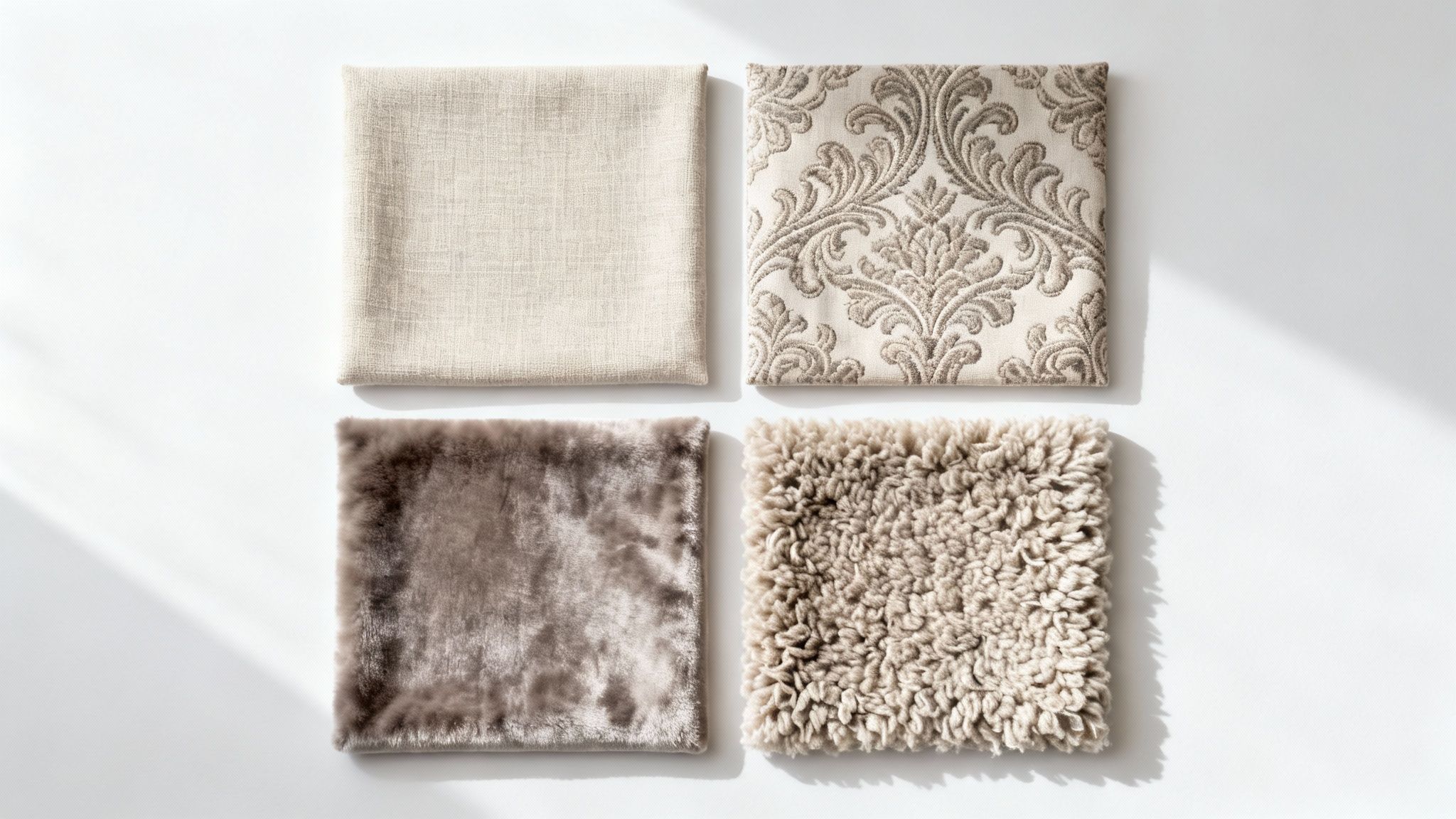
Trying to understand fabric texture can feel a bit overwhelming, but it really just boils down to four key ingredients. Get your head around these, and you'll know exactly what makes a sofa cover feel smooth, plush, or intricately patterned.
Think of them as the building blocks that come together to create the final product. By understanding Weave, Pile, Finish, and Surface Treatments, you'll be able to spot exactly what you want—and what you don’t—in your next sofa cover. Each one plays its own crucial role, so let’s break them down.
The Foundation of Texture: Weave
The weave is the absolute bedrock of any fabric. It’s simply how the threads are interlaced to create the cloth in the first place. Imagine a simple woven basket—that classic over-and-under pattern is a plain weave. It’s strong, flat, and dependable, which is why you see it in so many simple cottons and linens.
But weaves can get far more interesting, creating patterns you can both see and feel. A twill weave, for instance, creates that subtle diagonal rib you'd recognise on a pair of jeans. That structure isn't just for looks; it makes the fabric incredibly durable and great at hiding a bit of dirt.
Then you have something truly special like a jacquard weave. This is a much more complex method where intricate patterns are woven directly into the fabric, not just printed on top. This creates a rich, raised texture that adds a real sense of depth and luxury, making it a fantastic choice for a statement sofa cover.
The Dimension of Softness: Pile
Pile is all about the raised fibres that stand up from the fabric's base. It’s the secret behind what gives materials like velvet their signature softness and luxurious feel. Think of it like a dense, perfectly kept lawn, where all the individual blades of grass create a plush, uniform surface.
Fabrics with a high pile, like velvet or chenille, feel incredibly soft and warm to the touch. Because the fibres stand upright, they catch the light from different angles, creating a beautiful shimmer and depth of colour. They’re perfect for creating that cosy, inviting atmosphere in a living room.
On the other hand, a low-pile or no-pile fabric is completely flat. This includes materials like cotton canvas or a smooth spandex blend. These feel cooler and sleeker, and they're often more resilient to crushing or marking, giving off a more modern, streamlined vibe. For a deeper dive into how different materials compare, you can explore our detailed guide to the best material for sofa covers.
The Final Touch: Finish
A finish is a process applied to a fabric after it's been woven to change its texture, look, or performance. It's like the final polish on a piece of wooden furniture—it enhances what’s already there and can add entirely new properties. A fabric can be brushed, for example, to raise the fibres and create a much softer, fuzzier feel. That’s exactly how flannel gets so cosy.
Other finishes might add a lustre or sheen, making a fabric look more silky and elegant. Some processes even use heated rollers to make a fabric feel smoother and more compact.
Key Takeaway: A fabric's finish can completely transform its original character, turning a standard weave into something uniquely soft, smooth, or shiny. It's the secret step that fine-tunes the final feel.
These finishing touches are what turn a raw material into a final product ready for a specific purpose, whether that’s amping up the comfort or adding a bit of visual flair.
The Practical Layer: Surface Treatments
Finally, surface treatments are all about function. These are protective coatings applied to a fabric to give it specific, practical qualities. While a finish is often about the look and feel, a treatment is about performance in the real world. This is where the texture of fabrics meets the demands of a busy home.
The most common example you'll find with sofa covers is a waterproof or water-resistant coating. This treatment creates an invisible barrier on the fabric’s surface, causing liquids to bead up instead of soaking straight in. That gives you precious time to grab a cloth and clean up spills without a panic.
This clever bit of tech means you can have a soft, beautifully textured sofa cover without stressing about accidents from kids, pets, or a spilt cup of tea. It's a game-changing feature that adds real peace of mind.
To pull it all together, here’s a quick summary of how these four elements work.
Fabric Texture Types at a Glance
This table breaks down the four core components of fabric texture, showing how each one contributes to the final feel and function of your sofa cover.
| Texture Type | How It's Made | Feel & Appearance | Best For |
|---|---|---|---|
| Weave | The interlocking pattern of threads | Can be flat and smooth (plain), ribbed (twill), or richly patterned (jacquard) | Creating inherent strength and visual pattern |
| Pile | Raised fibres standing up from the base | Soft, plush, and warm (high pile) or sleek and cool (low/no pile) | Adding a deep, luxurious softness and comfort |
| Finish | Post-weaving processes like brushing or calendering | Can make a fabric feel softer, shinier, or smoother than its original state | Refining the fabric's feel and aesthetic appeal |
| Surface Treatment | Functional coatings applied to the surface | Doesn't usually change the feel but adds practical features like water resistance | Protecting your sofa from spills and everyday life |
Understanding these four concepts takes the guesswork out of choosing a fabric. Now, you can look at a sofa cover and know exactly what's creating the texture you love.
How Texture Shapes Your Sofa’s Feel And Function
Getting to grips with a fabric’s DNA—its weave pattern, pile height, finish and any extra surface treatments—lays the groundwork. But the real magic is seeing these details come together in your living room. Texture isn’t just a style statement; it dictates how your sofa feels, how long it lasts and how well it copes with everyday life.
Think about it: a sofa is more than a seat. It’s the centre of family catch-ups, the backdrop to your after-work unwind and occasionally the scene of a popcorn spill. The right texture guarantees your cover not only looks inviting but also pulls its weight during your busiest days.
Below, we unpack the three pillars your sofa’s texture rests on: comfort, resilience and practicality.
The Comfort Connection: Texture And Touch
At first touch, the feel of a fabric can make or break your impression of comfort. It’s the difference between snuggling into a soft dressing gown and slipping on a crisp linen shirt. Your sofa works the same way.
High-pile fabrics like chenille and velvet cradle you in warmth. Their upright fibres trap tiny pockets of air, adding natural insulation and a cosy hug for chilly evenings.
By contrast, low-pile surfaces—think spandex blends or microfibre—offer a sleek, breathable experience. Air flows freely across the fabric, keeping things cool and fresh when the temperature soars.
The Feel Factor: Plush, lofty piles deliver a warm, embracing feel—ideal for snug movie nights. Sleek, low-pile textures give a cooler, more modern touch—perfect for open-plan spaces and warmer climates.
Built To Last: Durability And Weave Density
Beyond the feel, the way threads interlock reveals a fabric’s staying power. A tight weave is akin to a timber-frame house on a sturdy foundation—robust and long-lasting. Looser weaves, by comparison, can snag more easily and show wear sooner.
Fabrics For Busy Homes:
- Tightly Woven Jacquard: Dense construction resists snags and traps fewer crumbs.
- Robust Microfibres: Smooth, close-knit fibres endure pet claws and daily abrasion.
- Chunky Bouclé (Lower Traffic): Beautiful but best kept in quieter zones to reduce the risk of loops pulling out.
The UK textile market, spanning cosy wool blends to engineered synthetics, reached USD 35.43 billion in value. Demand for durable, easy-care textures—driven largely by innovations in chemical finishes—is surging. For a deeper dive into these shifts, explore this UK textile market forecast.
Everyday Practicality: Hiding Life’s Messes
Your sofa cover’s texture also shapes how well it handles spills, crumbs and pet hair. Choosing wisely can save hours of scrubbing and keep your sofa looking smart between washes.
Here’s how textures stack up:
- Jacquard Weave: Intricate, multi-tonal patterns conceal minor stains, stray fur and dust.
- Solid, Smooth Grains: Modern aesthetic but demands more frequent cleaning to maintain pristine appeal.
- Waterproof Finishes: Applied to signature covers from The Sofa Cover Crafter, these treatments make liquids bead up on the surface—buy you crucial seconds to blot away spills before they set in.
Selecting the ideal fabric texture boils down to a balancing act: comfort versus longevity versus low-maintenance care. By weighing these three factors—touch, toughness and practicality—you’ll find a sofa cover that harmonises perfectly with your lifestyle and décor.
Choosing the Right Texture for Your Lifestyle
Knowing the building blocks of fabric texture is one thing, but actually putting that knowledge to work in your own home is where the magic happens. Your sofa isn’t just a piece of furniture; it’s the heart of your living room. The perfect sofa cover has to do more than just look good—it needs to stand up to the rigours of your daily life, whether that means kids, pets, or just the desire for a low-maintenance, stylish space.
This section is all about matching the right texture of fabrics to your specific household. We'll look at a few common scenarios, from a chaotic family home to a chic rental, and I'll recommend the ideal sofa cover texture for each. Think of it as a practical guide to help you choose with confidence, making sure your new cover is both beautiful and perfectly suited to your world.
For the Busy Family with Kids and Pets
In a home buzzing with activity, your sofa probably doubles as a fortress, a snack table, and a nap spot all in one day. Here, the absolute top priorities are durability, washability, and stain resistance. You need a fabric that can handle spills, muddy paws, and endless lounging without showing its age.
For this kind of demanding environment, a waterproof, tight-weave spandex blend is an unbeatable choice. The waterproof treatment means liquids bead up on the surface, buying you precious moments to blot away messes before they have a chance to soak in. Honestly, this feature alone is a lifesaver for parents and pet owners.
The tight weave is just as crucial, and it offers two huge benefits:
- Snag Resistance: There are far fewer loose threads for tiny fingers or pet claws to catch and pull, which keeps the cover looking smooth and intact for longer.
- Easy Cleaning: The dense surface stops crumbs and pet fur from getting deeply embedded, making vacuuming and wipe-downs much more effective.
Top Tip: Go for a cover with a subtle, multi-tonal pattern or a slightly heathered finish. These textures are brilliant at camouflaging minor stains and stray pet hair between washes, keeping your sofa looking fresh even on the most hectic of days.
For the Style-Conscious Renter
When you're renting, you want to make a space feel like your own without making any permanent changes. A sofa cover is the perfect tool for the job, offering an instant and dramatic style upgrade. For a renter, the ideal texture is one that adds visual interest, a touch of luxury, and can be easily removed without any fuss.
A jacquard weave cover is the perfect solution here. The intricate patterns are woven directly into the fabric, creating a rich, raised texture that adds depth and sophistication to any room. It can completely transform a tired, landlord-provided sofa into a stylish centrepiece.
Because jacquard patterns are so detailed, they introduce a layer of elegance that feels intentional and curated. It's an affordable way to inject a bit of high-end design into a temporary space. This rising demand for tactile, aesthetic fabrics is being seen right across the UK. In fact, garment manufacturers, who specialise in everything from smooth spandex to textured jacquards, saw an incredible 128% average sales increase in the third quarter of this year. You can read about the significant growth in UK textile demand on just-style.com to get more insights into this trend.
This little decision tree can help you prioritise what matters most, whether it's comfort, durability, or just pure practicality.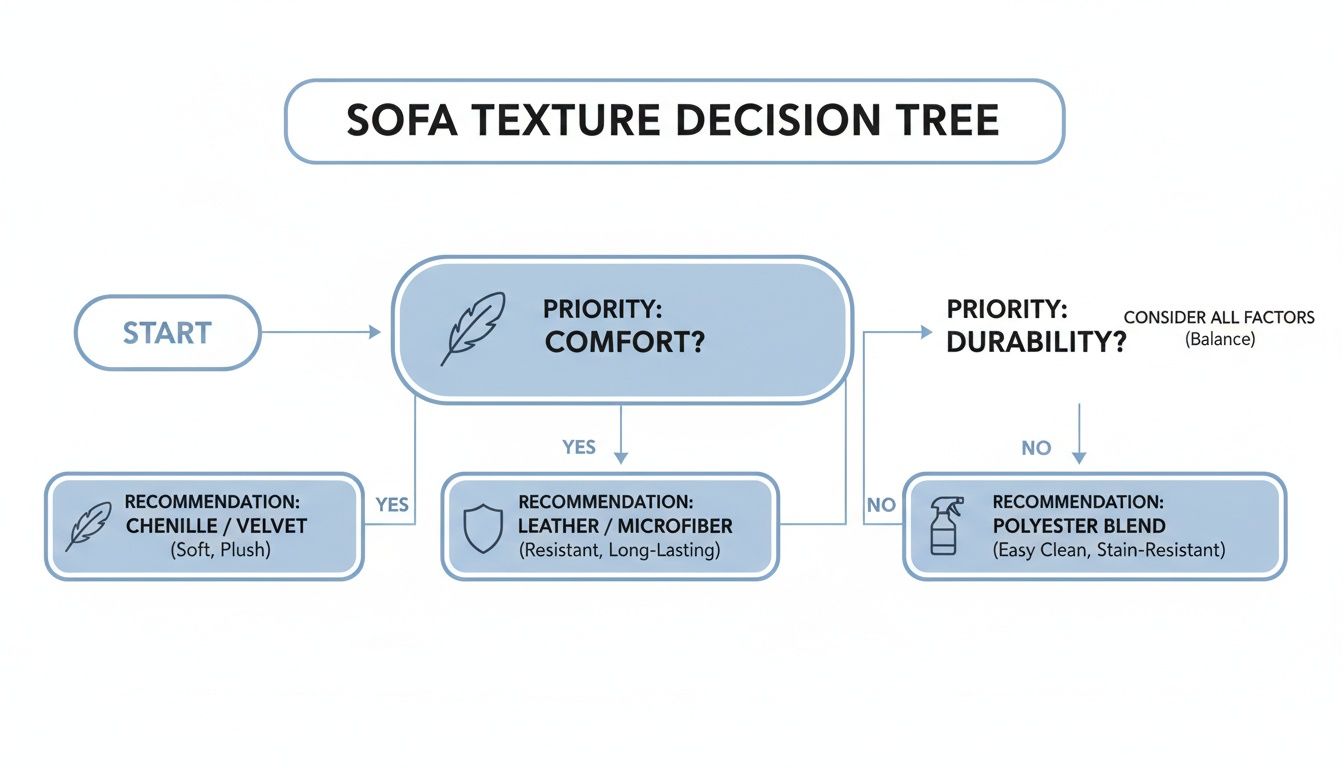
As the flowchart shows, a fabric like a polyester blend can be a fantastic all-rounder, neatly balancing durability and comfort for most households.
For the Comfort-Seeking Homebody
If your perfect evening involves curling up on the sofa with a good book and a warm drink, then softness and a cosy feel are your top priorities. You want a texture that feels inviting, is warm to the touch, and is genuinely luxurious against your skin. The goal is to create a true sanctuary of comfort.
For the ultimate cosy experience, you should look for fabrics with a plush pile, like chenille or a brushed velvet-like texture. These materials have raised fibres that feel incredibly soft and create a real sense of warmth. They are perfect for adding a layer of comfort that makes your sofa the most appealing spot in the whole house.
The high pile of these fabrics also catches the light beautifully, adding a subtle depth and richness to the colour. This creates a visually warm and inviting atmosphere, turning your sofa into a proper cosy retreat. For more ideas on finding the perfect material, check out our guide on the best fabric for a sofa, which explores even more options. Choosing a texture that prioritises a pleasant feel ensures your living room becomes a true haven for relaxation.
To pull all this together, let’s match some of our popular cover textures to different lifestyles, making it even easier to find your perfect fit.
Which Sofa Cover Texture Is Right for You?
This table breaks down some of our best-selling textures from The Sofa Cover Crafter, matching them with the lifestyles they suit best.
| Lifestyle Profile | Key Needs | Recommended Texture | Why It Works |
|---|---|---|---|
| The Busy Family | Durability, stain resistance, easy to clean. | Waterproof Spandex Blend | The waterproof layer stops spills in their tracks, while the tight weave resists snags and makes cleaning up crumbs and pet hair a breeze. |
| The Stylish Renter | Aesthetics, non-permanent style, affordability. | Jacquard Weave | Its intricate, woven-in patterns add a touch of instant luxury and visual depth, transforming a basic sofa into a statement piece. |
| The Comfort Seeker | Softness, warmth, a luxurious feel. | Chenille or Velvet-Like | The plush, raised pile is incredibly soft to the touch and creates a cosy, inviting feel perfect for relaxing and unwinding. |
| The Practical Pet Owner | Snag resistance, easy fur removal, durability. | Tight-Weave Microfibre | The dense weave is tough against claws, and the smooth surface allows pet hair to be wiped or vacuumed off with minimal effort. |
Hopefully, seeing the options side-by-side makes it clear how different textures serve different needs. It's all about finding that perfect balance between the look you want and the practicality your home demands.
How to Style and Care for Textured Sofa Covers
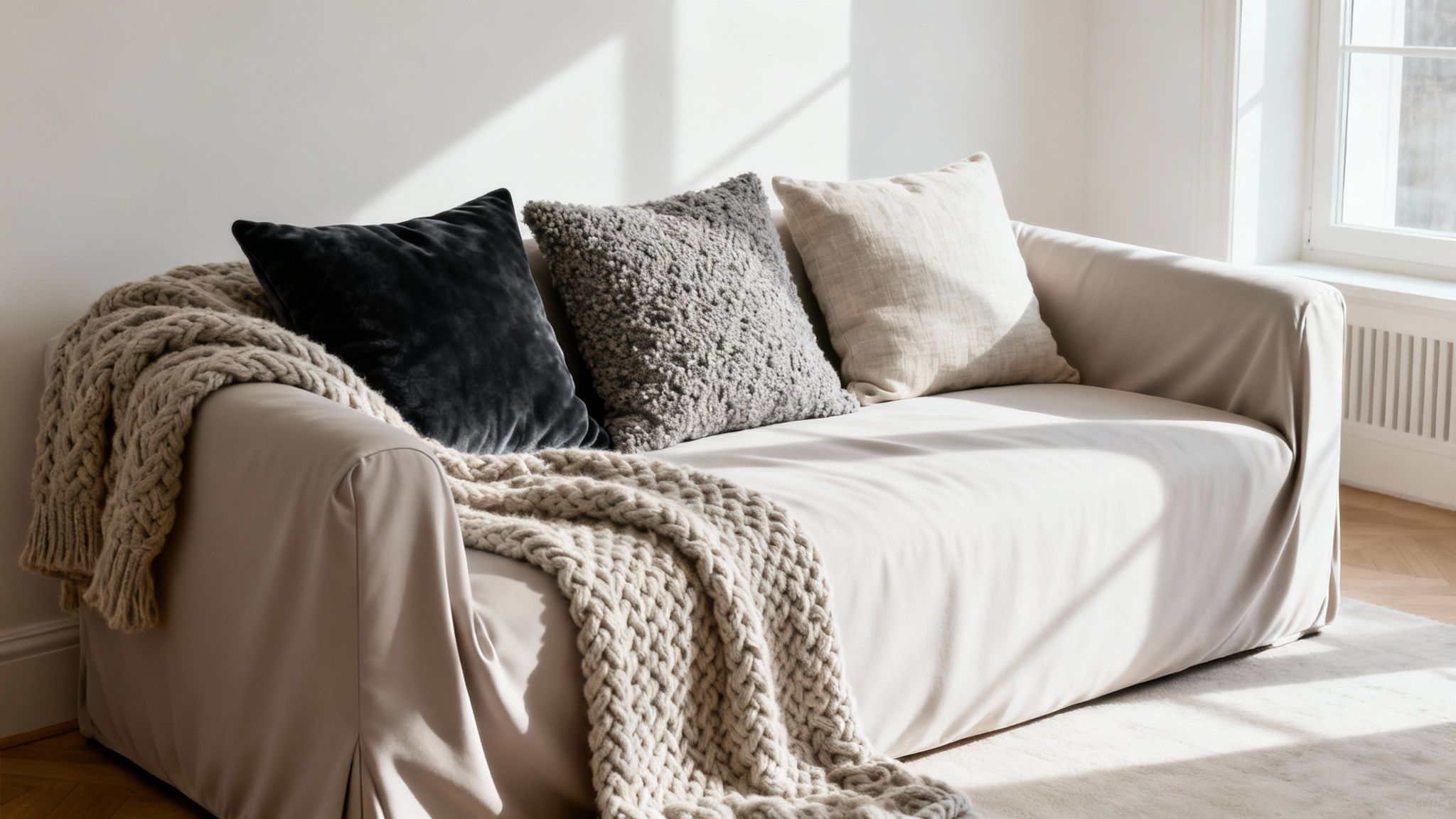
So, you’ve picked out the perfect textured sofa cover. The next step is the fun part: making it look incredible and ensuring it stays that way. A beautiful fabric texture can completely redefine your living space, but knowing how to style and look after it is the key to unlocking its full potential.
Styling is all about creating that inviting, layered look, while proper care is what keeps your cover feeling fresh and looking new. I’ll walk you through some simple, practical tips for both, helping your sofa remain a stunning centrepiece in your home for years to come.
Styling Your Textured Sofa Cover
Styling a textured cover is a brilliant chance to play with layers and contrast, adding real depth and personality to your room. The aim is to create a look that feels curated and cosy, not flat or one-dimensional. Think of your sofa cover as the main canvas and your accessories as the final brushstrokes that bring the whole picture to life.
One of the most effective tricks is texture layering. If you have a sleek, smooth cover, try draping a chunky knit throw over one corner. It instantly adds a touch of warmth and creates a gorgeous contrast. In the same way, a mix of cushions in different textures can make a sofa feel so much more dynamic.
- Mix and Match Cushions: Try pairing a plush, velvet-like cushion with a crisp linen one and a nubby bouclé for a rich, tactile experience that’s a joy to touch.
- Play with Scale: Combine large, simple cushions with smaller, more intricately patterned ones. This guides the eye and adds a bit of visual rhythm to the arrangement.
- Consider Colour Palettes: Stick to a complementary colour scheme to make sure your different textures work together rather than clashing. For example, using varying shades of grey, cream, and charcoal creates a sophisticated, layered look that feels very intentional.
Styling Tip: For a cosy, autumnal vibe, layer a rich, warm-toned throw over a neutral jacquard cover. The raised pattern of the jacquard combined with the soft throw creates an inviting space that's perfect for relaxing on a chilly evening.
This approach stops your decor from feeling monotonous and makes your living room feel so much more welcoming.
Caring for Different Fabric Textures
Looking after your sofa cover properly is essential to keep it looking as good as the day it arrived. The right cleaning methods will preserve the fabric's feel, prevent damage, and extend its life. The good news is that many modern sofa covers, especially those from The Sofa Cover Crafter, are designed with ultimate convenience in mind.
Most of our covers, including our popular spandex blends and jacquard options, are fully machine washable. This is a complete game-changer for busy households, as it removes the hassle and cost of professional cleaning. It’s absolutely vital, though, to follow the care label instructions to the letter to avoid any mishaps like shrinking or colour fading.
When it comes to washing, a few simple rules apply to most textured fabrics. For a complete walkthrough, our guide on how to wash sofa covers without shrinking gives you detailed step-by-step instructions. But as a rule of thumb, you should use a gentle cycle with cool water and a mild detergent. Always avoid bleach, as it can damage the fibres and strip the colour.
How you dry the cover is just as important as how you wash it. It's usually best to air-dry your cover away from direct sunlight to prevent fading and preserve the fabric’s elasticity. If you really must use a tumble dryer, make sure you select a low-heat setting to avoid any damage.
Maintaining a Smooth, Perfect Fit
Keeping your textured cover looking smooth and perfectly fitted is the final piece of the puzzle. A well-fitted cover looks much more like professional upholstery and seriously enhances the overall appearance of your sofa.
After washing and drying, take a few moments to refit the cover carefully. Start by aligning the seams with the corners and edges of your sofa. Once it's in place, use the free foam inserts that come with your cover from The Sofa Cover Crafter to tuck any excess fabric deep into the gaps between the cushions and the sofa frame. This simple step is absolutely crucial for achieving that crisp, tailored finish and stopping the cover from shifting about during use.
For textures with a distinct pattern, like a jacquard weave, taking a moment to ensure the design is straight and centred can make a huge visual difference. A little extra attention when you’re putting it on goes a long way in maintaining that polished, intentional look.
Your Texture Questions, Answered
Jumping into the world of fabric textures can bring up a few questions. Is it practical? Will it be comfortable? Let's clear up some of the most common queries we hear.
Which Fabric Texture Is Best for Hiding Pet Fur and Stains?
For a home with pets, or just the occasional spill, a fabric with a multi-tonal, raised pattern is your best friend. Think of something like a classic jacquard or a heathered finish. The mix of colours and the varied surface are brilliant at camouflaging stray pet hairs and minor marks.
On the other hand, smooth, solid-coloured covers tend to put every single speck of dust or fur on full display. A bit of texture is simply more forgiving for a busy, lived-in home.
Will a Textured Sofa Cover Feel Rough or Uncomfortable?
Not at all. This is a common misconception! In the world of fabrics, "texture" just refers to the variation on the surface, not necessarily how coarse it is. In fact, some of the softest, most luxurious fabrics are highly textured.
Take materials like chenille and velvet, for example. They both have a high pile, which is what gives them that wonderfully plush and soft feel you can’t help but run your hand over. It all comes down to the type of yarn used and the finishing process, which are chosen specifically to create a cosy feel without losing that gorgeous textured look.
Key Insight: Textured fabrics are a fantastic way to get visual depth and a tactile feel, all while being wonderfully cosy and comfortable.
More on Getting Texture Right
How Do I Stop a Textured Sofa Cover from Snagging?
The secret here is to look for a fabric with a really tight, dense weave. Materials like a high-quality microfibre or a well-made jacquard are excellent choices. With fewer loose threads on the surface, there's simply less for pet claws, buttons, or jewellery to catch on.
While no fabric is completely snag-proof, these tighter weaves are far more resistant to pulls and will stay looking smooth and smart, even in the busiest parts of your home.
Can I Use a Textured Cover on a Leather Sofa?
Absolutely! A textured cover can bring a lovely layer of warmth and a whole new style to a leather sofa. The key is to make sure it stays put. Look for covers with a non-slip backing, or use foam inserts tucked into the crevices for a snug, secure fit.
The added texture beautifully softens the cool, smooth surface of the leather and can give your seating a complete style refresh.
- Choose multi-tonal weaves to cleverly mask everyday dirt and pet fur.
- Opt for tight, dense weaves for better durability and snag resistance.
- Use non-slip features like foam inserts to get a stable, tidy fit on a leather sofa.
Ready to find the perfect texture to protect your sofa and elevate your space? Explore the huge range of stylish and practical sofa covers at The Sofa Cover Crafter today and give your living room the upgrade it deserves.