



You've lifted a sofa cushion and found dark specks, a shed skin or a small crawling insect. Check the seams and frame before assuming it's a bed bug, keep the sofa and loose textiles in the affected room, and arrange professional identification if you find suspicious signs. A confirmed bed bug infestation needs a qualified pest controller, not just an upholstery clean or a freshly washed cover.
Table of Contents
- How Can You Tell Bed Bugs Are on Your Sofa?
- Why Is a Sofa So Hard to Treat?
- What Do I Do With the Sofa in the First Hour?
- Can I Treat a Bed Bug Sofa Myself, or Do I Need a Pro?
- Can a Removable Cover Help Once Bed Bugs Are Found?
- How Do I Spot Bed Bugs Early Between Washes?
How Can You Tell Bed Bugs Are on Your Sofa?
Live bed bugs, shed skins or reddish-brown clusters in sofa seams, piping, button tufts, beneath cushions or around frame joints are signs to investigate; small dark spots alone aren't proof.
Start with physical evidence rather than how clean the upholstery looks. Bed bugs are wingless, and folds and stitched edges are more useful inspection points than the middle of an exposed seat cushion.
NHS Wales guidance confirms that bed bugs can hide on furniture, not only on bed frames and mattresses. Cleaning can help you notice evidence, but a clean sofa doesn't rule out their presence.
Sofa bed bug signs and where to check
| Sign | Where to look on the sofa | What it tells you |
|---|---|---|
| Live adult bed bugs | Seams, piping, button tufts and frame joints | A correctly identified live bed bug confirms their presence |
| Pale, translucent shed skins | Under seat cushions and along frame joints | Insects have moulted in the area; identification is still important |
| Reddish-brown clusters or dark marks | Fabric folds, cushion undersides and piping | Possible harbourage; confirm with a professional |
| Small dark spots on fabric | The crease where the seat meets the back and arms | Possible evidence only; other debris can look similar |
A careful inspection without dismantling the sofa
Use a torch and your phone camera. Keep anything you remove beside the sofa rather than placing it on another upholstered chair.
- Lift loose seat cushions. Check their undersides, seam lines and zip edges without carrying them elsewhere.
- Follow the stitching. Shine the torch along piping and the stitched edges of the arms and back, including button tufts.
- Open the visible creases gently. Look where the seat meets the back and arms, without pulling apart fixed upholstery.
- Check accessible underside areas. Look towards frame joints and springs without tipping heavy furniture alone or reaching into moving mechanisms.
- Photograph suspicious findings. Take a close view and a wider photograph showing the location.
Show your photographs to a pest controller, and don't let a photograph substitute for identification when you're unsure.
Bites alone don't confirm bed bugs. See a pharmacist or GP if bites concern you.
Why Is a Sofa So Hard to Treat?
A sofa is hard to treat because bed bugs shelter inside its frame, seams and joints rather than remaining on open fabric, so surface cleaning can miss their hiding places.
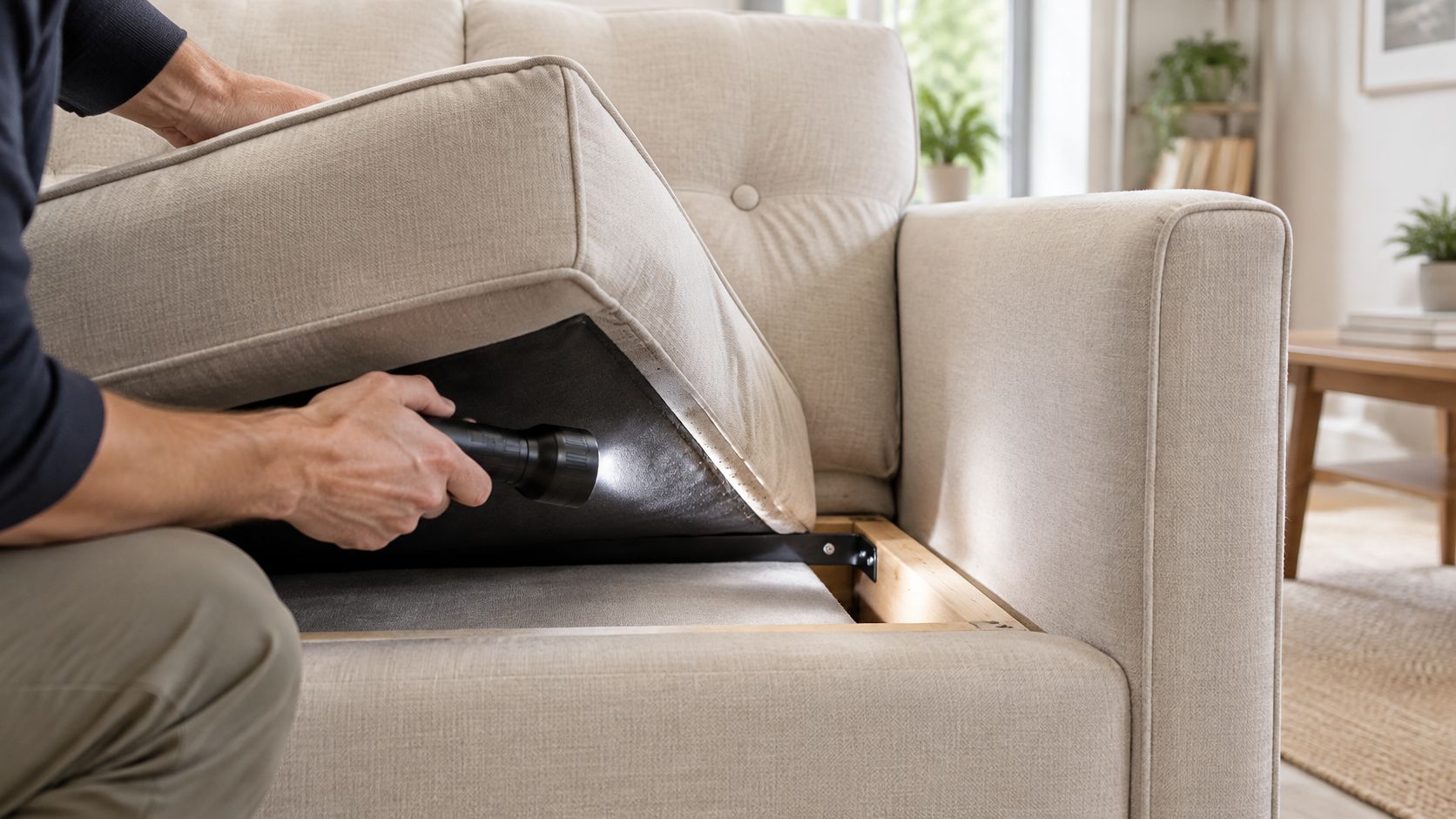
The gap behind a cushion, folded underside fabric, piping and the junction between timber and upholstery all offer shelter. Fixed backs and tightly upholstered arms restrict access further, so a tidy-looking surface tells you little about the structure beneath.
Treat the sofa as one stop on a room-wide pathway. Bed bugs crawl between hiding places and arrive on luggage, clothing and second-hand furniture, so a sofa showing activity may be a secondary harbourage connected to a bed or another resting spot.
Why treating only the seating surface falls short
The NHS bedbug guidance explains that bed bugs occur in both clean and dirty places and can hide beyond beds, including in furniture and other sheltered locations. Check nearby skirting, adjacent furniture and sleeping areas before deciding where the problem sits.
DIY surface spraying can scatter insects into other areas and create false reassurance. In the same way, cleaning a fabric sofa properly is upholstery care, and a fresh-looking sofa afterwards says nothing about whether the infestation has gone.
A washable cover gives you a removable laundry layer and a natural moment to inspect seams on wash day. Confirming and clearing bed bugs still takes a room-wide plan, usually with a pest controller.
What Do I Do With the Sofa in the First Hour?
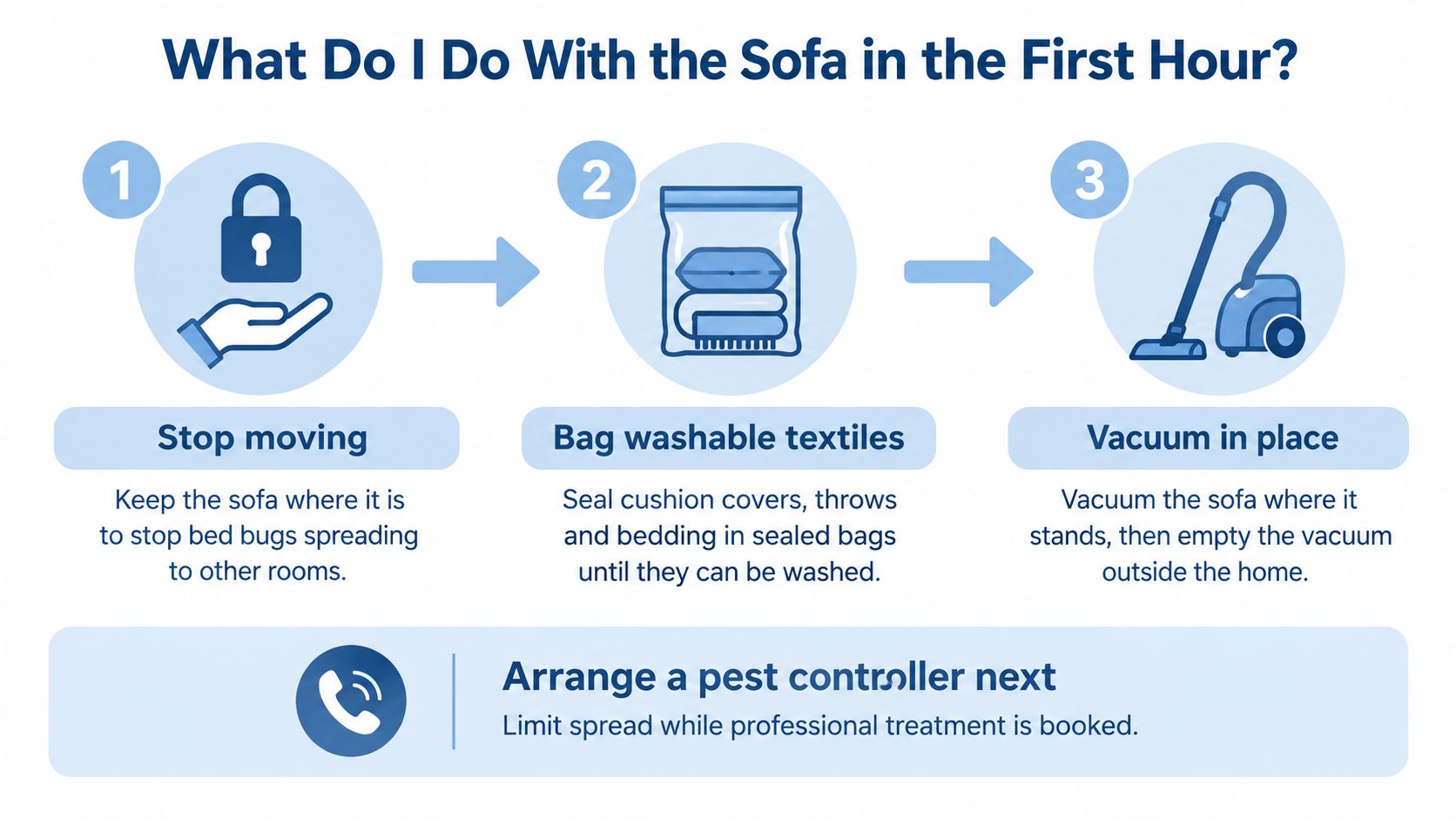
In the first hour, keep the sofa where it is, seal washable textiles before carrying them anywhere and vacuum accessible crevices in place while arranging a pest controller.
Don't start by dragging the sofa outdoors or taking every cushion to the bathroom. The immediate aim is to avoid carrying insects into unaffected areas, not to make the upholstery look clean.
Stroud District Council's bed bug treatment preparation guide recommends thorough vacuuming of floors and upholstered furniture and bagging clothing and bedding in the affected room before moving them to the laundry area.
Contain loose items and prepare access
- Stop moving furniture and cushions. Leave the sofa in its room. Don't transfer throws, bags or loose belongings onto another sofa while you work.
- Bag washable textiles where you find them. Put removable covers, throws, bedding and clothing straight into sealable plastic bags. Don't shake them out or carry them against your clothes.
- Vacuum accessible areas slowly. Remove loose cushions locally and use a crevice tool along seams, piping, folds and cushion channels. Work over the surrounding floor and edges too, without forcing the nozzle into fabric or mechanisms.
- Empty the vacuum outdoors. Seal the contents in a plastic bag, put that inside another bag and place it in an external bin. For a bagless vacuum, take care not to release debris while emptying it, and follow the appliance's cleaning instructions.
- Leave repositioning to the preparation plan. Don't drag the sofa away from the wall just to create an inspection gap. Clear accessible clutter carefully, then let the controller specify how to expose the frame and skirting safely.
- Make a record. Photograph the signs and note the date and exact location, such as the underside of the left seat cushion.
- Don't add sprays. Avoid applying products to seating. If treatment has already taken place, don't vacuum or wipe treated areas until the controller's written instructions permit it.
The priorities are containment, careful textile handling and access for treatment.
Keep laundering separate from treatment
Use the sofa-cover washing routine for label-led fabric care, not as a bed bug treatment method. Keep bagged items contained until you know how they fit into the controller's preparation plan.
Practical rule: Finish each handling task with the item contained, not waiting loose in a hallway or laundry basket.
Can I Treat a Bed Bug Sofa Myself, or Do I Need a Pro?
You can contain and inspect a suspected bed bug sofa yourself, but a confirmed infestation needs a qualified pest controller or your council's treatment service.
The difficulty isn't just choosing a stronger cleaning method. Bed bugs are hard to locate, and resistance to some insecticides can complicate treatment, so washing, vacuuming or spraying visible areas cannot establish that every hiding place has been addressed.
What you can do yourself and when to call a professional
| Situation | What you can do yourself | When to call a professional |
|---|---|---|
| Possible signs, nothing confirmed | Contain loose items, photograph evidence and inspect accessible areas; include checks on wash day | Arrange identification promptly if uncertainty remains or evidence recurs |
| Live insects or shed skins found in the sofa | Continue careful containment and keep the sofa in place | Call for identification and a treatment plan |
| Signs also found in the bed, skirting or another room | Record each location without attempting separate room treatments | Ask a professional or your council for a coordinated plan |
| Signs found on a second-hand sofa you've just brought in | Keep the sofa in its current location and avoid hasty disposal | Book an inspection before moving it further |
| Fixed upholstery with signs in the frame | Don't dismantle or spray the frame | Arrange professional assessment of the sofa itself |
Your UK contractor's assessment and written instructions should govern what happens in your home.
What to ask for when booking
Request identification and a plan addressing the affected room, relevant sleeping areas and any other locations where signs appear. Ask whether the sofa will be treated in place, what preparation is necessary and whether follow-up inspection is included.
Get written instructions for preparation, re-entry and cleaning. These should explain when you can use the room again and when vacuuming or wiping treated surfaces may resume.
- Keep the sofa stable. Don't remove a fitted cover just to carry it elsewhere; if removal is required, bag it beside the sofa.
- Delay disposal decisions. Let the controller assess whether treatment is practical before arranging removal.
- Retain the record. Keep photographs, treatment dates and later sightings together. Renters should notify their landlord or managing agent; hosts should document affected rooms and contractor clearance before returning seating to guest use.
The controller's written plan takes priority over general online advice, including advice in this article.
Can a Removable Cover Help Once Bed Bugs Are Found?
A removable stretch sofa cover helps only as a layer you can take off, bag and launder according to its care label; a stretch cover doesn't prevent, trap, kill, repel or treat bed bugs and isn't a bed-bug-proof encasement.
Fixed upholstery cannot be carried to a washing machine, whereas a removable layer can. That is a useful cleaning distinction, but it doesn't make a cover the place where an infestation is solved: the sofa's frame, springs and hidden joints still need professional attention.
Why a stretch cover isn't a heat treatment
There's a genuine conflict between heat-based pest advice and stretch-fabric care. Heat permanently relaxes the elastane that gives a stretch cover its stretch, potentially leaving the fabric slack.
Wash according to the care label, and tell the controller that the cover is heat-sensitive. Don't improvise a hotter wash or drying treatment in the hope of turning ordinary laundering into pest control.
- Use removal as an inspection opportunity. When the fitted layer comes off, check the sofa seams it normally hides.
- Wait for clearance before refitting. Follow the controller's directions about when cleaned textiles can return.
- Keep fitting separate from treatment. Our guide to covering a couch concerns installation, not pest containment.
Choosing a washable layer after treatment
Our machine-washable stretch sofa covers and separate sofa-bed covers are removable laundry layers. We sell no pest-control products, sprays, encasements or treatments.
Corner and L-shaped sofas take a corner sofa cover rather than a standard one. Measure the actual sofa against the product's sizes before buying, rather than assuming stretch fabric guarantees a suitable fit.
The practical benefit is access on wash day, not a defence between washes. A fitted cover can conceal the very stitching and creases you need to examine, so replacing a cover without inspecting underneath misses a useful opportunity.
How Do I Spot Bed Bugs Early Between Washes?
A sofa sits on the same route that luggage, second-hand furniture and returning laundry travel, so early detection means watching the pathway into the room as well as the seating itself. Check the sofa's exposed edges between washes, and examine both the removable cover and the bare sofa whenever the cover comes off.
Keep a torch near your cleaning tools so the check becomes part of ordinary upkeep. If anything suspicious appears between wash days, investigate then rather than waiting for the next laundry load.
A wash-day inspection routine
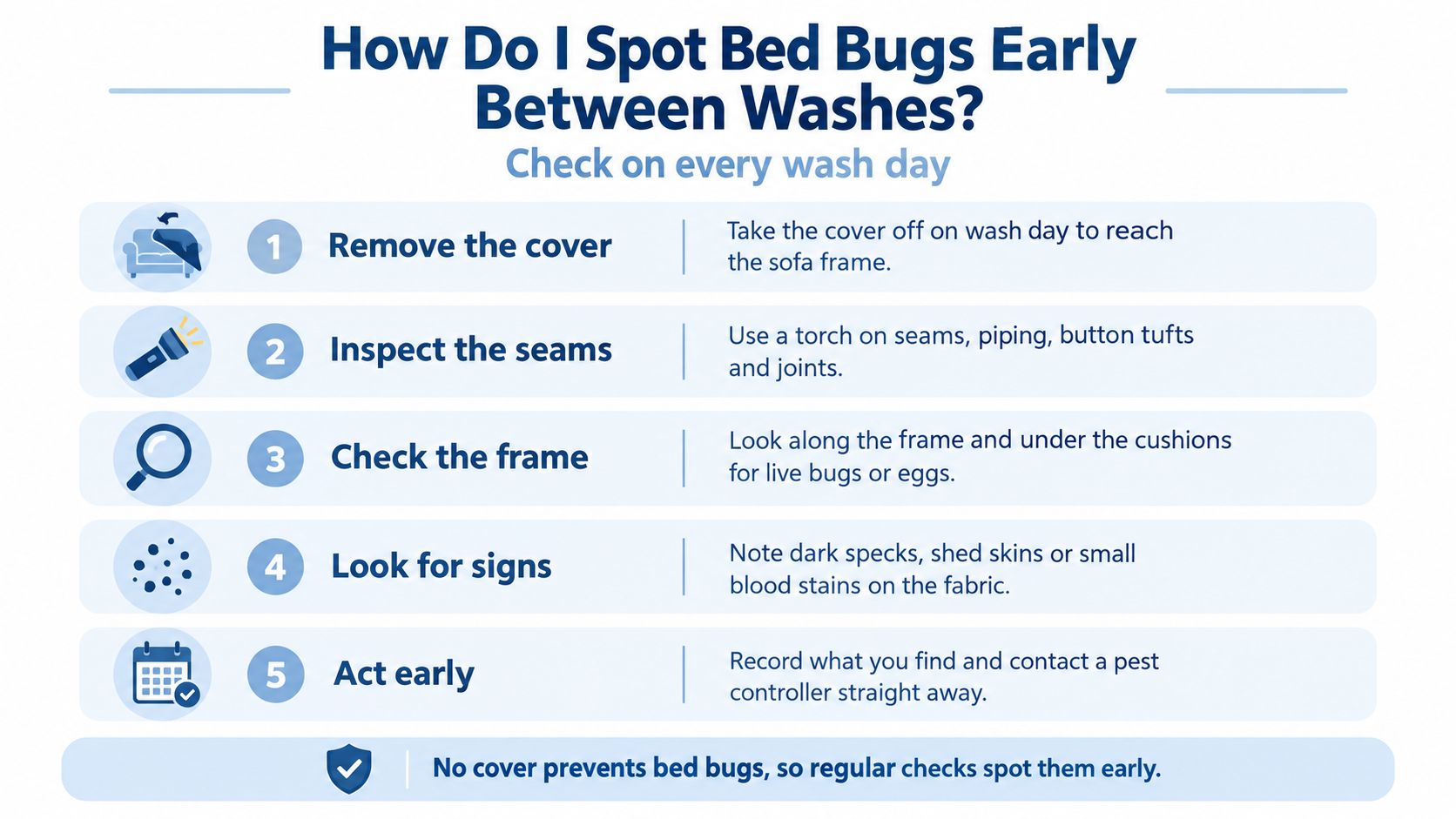
- Remove and inspect the cover beside the sofa. Check it inside and out, especially seams, tucked edges and folds, keeping the fabric next to the sofa while you work.
- Inspect the newly exposed upholstery. Work through the same hiding places you used when first confirming the problem, now uncovered: beneath loose cushions, along accessible frame junctions and every seam the fitted layer normally conceals.
- Vacuum the crevices. Use a crevice attachment on accessible seams, then empty the vacuum outside and seal the contents. During an active treatment programme, the controller's cleaning restrictions take priority.
- Bag before carrying. Put the cover into a sealed bag before taking it to the machine, so nothing drops along the hallway. Launder only as its care label allows.
- Add an underside check to your regular cleaning. Look along visible underside edges and nearby skirting without moving heavy furniture or opening fixed fabric.
- Check incoming items. Inspect second-hand furniture before bringing it indoors where practical, and examine returning luggage before placing it near upholstered seating.
- Act on suspicious evidence. Photograph the finding, record its location and contact a pest controller. Leave the cover off while deciding what to do, since refitting it only hides the marks.
For landlords and hosts, keep inspection photographs and contractor instructions in the property's furnishing records, and let the professional treatment plan decide when seating returns to use.
The aim is early detection and controlled handling. Keep laundering and pest treatment as separate jobs.
The Sofa Cover Crafter offers removable, machine-washable sofa covers and sofa-bed covers for everyday fabric care rather than bed bug control. Once professional treatment is complete, browse our stretch sofa covers to compare suitable washable layers and check the sizes against your sofa before choosing.
