



Polyester fabric is a melt-spun synthetic fibre made from melted plastic polymer, not a named weave or texture. Polyester fibre can become velvet, jacquard, microfibre, fleece or another finished fabric depending on construction and finishing.
Table of Contents
- What Is Polyester Fabric?
- How Is Polyester Made?
- How Does Polyester Perform on a Sofa?
- What Are the Pros and Cons for Home Use?
- Which Polyester Fabrics and Blends Are Common?
- How Do You Care for Polyester at Home?
- What Should UK Shoppers Know About Sustainability?
- How Do You Choose Polyester for a Sofa Cover?
What Is Polyester Fabric?
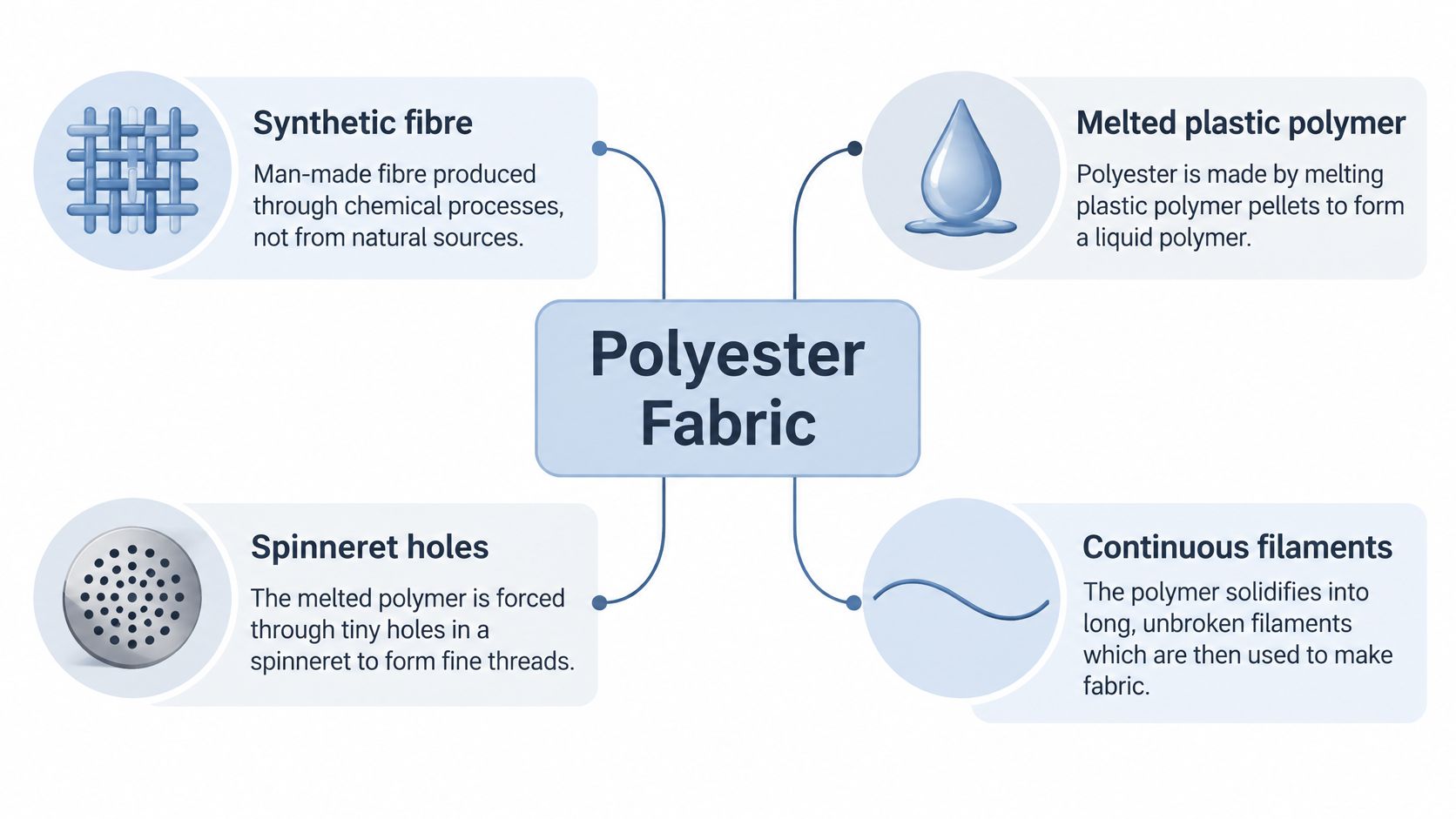
Polyester fabric is a textile made from synthetic polyester fibre, rather than one specific weave, feel or finish. The fibre starts as melted polymer that's pushed through tiny holes and drawn into filaments, which manufacturers then turn into yarn for weaving, knitting or pile-making.
That distinction overturns the most common assumption on sofa labels. When shoppers ask what is polyester fabric, they're often picturing something shiny, stiff and uncomfortable. One fibre family can't dictate all of that. Yarn thickness, weave, knit and finishing decide whether the finished cloth is smooth, soft, textured, matte or glossy.
Does Polyester Mean Waterproof or Uncomfortable?
Polyester fabric doesn't automatically mean waterproof, shiny or uncomfortable on a sofa cover, cushion cover or throw. Water behaviour depends on fabric construction, coating, backing, yarn density and seams. Comfort depends on the finished cloth you're touching, including pile height, density and how air moves through its structure.
Think of fibre as the ingredient and construction as the recipe. The same ingredient can produce a soft-looking velvet, a patterned jacquard or a brushed fleece. That is why a label alone tells you much less than you'd hope.
Judge a sofa fabric by how the finished cloth feels, stretches back, pills and washes, not by the fibre name on its own.
For UK shoppers, polyester is also mainstream rather than obscure. The WRAP Textiles Waste Hotspots Report on UK textile consumption states that 80% of textiles consumed in the UK are made from cotton, polyester, or a combination of both. That scale explains why you keep meeting the word on household labels. It doesn't, on its own, tell you whether a particular cover will suit your sofa.
How Is Polyester Made?
Polyester fibre is made by melting polyethylene terephthalate (PET) polymer, forcing it through a spinneret, cooling the streams into filaments and drawing those filaments out into thread. Polyester therefore begins as plastic that has been melted and reshaped, not as a plant or animal fibre that has been combed and spun.
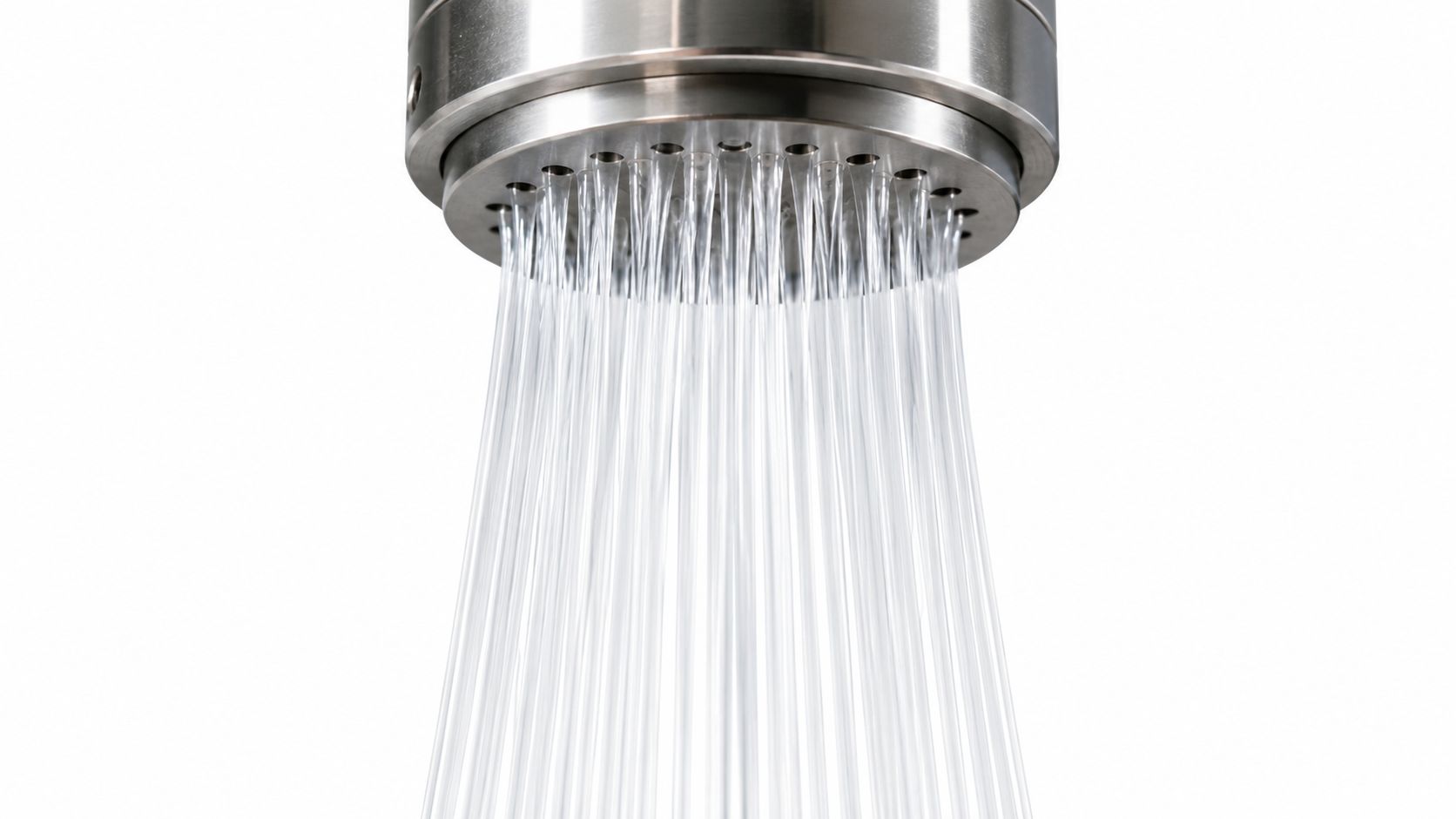
A spinneret works a little like a shower head, except it releases molten polymer rather than water. Each fine stream cools and solidifies into a filament. Drawing stretches those filaments, which aligns the polymer and helps give polyester its strength and shape stability. Heat-setting can then lock dimensions in place, although too much later heat can deform the fabric.
Why Does the Same Polyester Fibre Feel So Different?
Polyester fibre feels different in different sofa fabrics because manufacturers can use continuous filament, cut it into short staple fibre, twist yarns differently and apply different finishes. Continuous filaments are long and smooth. Staple fibres are shorter lengths spun together, which can create a softer, less sleek yarn. Neither choice is automatically better for a sofa. The result depends on the whole construction.
After yarn-making, producers choose a structure:
- Woven polyester fabric: Interlaced warp and weft yarns create flatter or patterned cloth, including jacquard designs.
- Knitted polyester fabric: Looped yarns allow more flexibility, which is useful where cloth needs to move over shaped cushions.
- Pile polyester fabric: Cut or raised yarns stand above the base cloth, creating velvet's directional surface and colour shift.
- Brushed polyester fabric: Brushing raises fibres on the surface, producing the warmer feel associated with fleece.
Melt-spun PET can be made as continuous filament or cut into staple fibre, and correctly heat-set polyester holds its dimensions well. That manufacturing history explains the practical behaviours below. A fibre that starts smooth, continuous and barely absorbent won't behave like one that drinks in water and swells.
How Does Polyester Perform on a Sofa?
Polyester fabric performs as a fast-drying, shape-retaining and crease-resistant sofa textile, but a polyester sofa cover can also feel clammy on bare skin and attract hair through static. Those opposite traits mostly trace back to one property: polyester takes up almost no water.
Because the fibre is hydrophobic, moisture tends to stay on or between fibres rather than soaking deep into each strand. A damp cover can dry comparatively quickly once water is removed, and spills may remain near the surface long enough for prompt blotting. Don't mistake that for waterproofing. Liquid can still pass through gaps in the weave or knit, run through seams or pool and work its way down. Construction, coatings and backings decide that result.
Why Does Polyester Keep Its Colour and Shape?
Polyester fabric keeps colour and shape well on sofa cushion covers because dye is held inside the fibre and the heat-set fibre resists ordinary shrinkage and distortion. Colour is not sitting as an exposed layer on the strand, so it doesn't wash away as readily as a surface treatment might. For a deeper explanation of what affects dye loss, read the guide to colour fastness in sofa fabrics.
Polyester's smooth filament structure also helps it resist creasing. Fold lines can relax rather than staying sharply set, which helps a fitted cushion cover look tidy after someone has leaned against it. Shape retention isn't unlimited, though. A knit can stretch, seams can strain and pile can flatten even while the fibre itself remains intact.
Why Do Hair and Pills Cling to Polyester?
Polyester fabric attracts pet hair and lint on sofas because its dry, low-moisture surface lets static charge build, particularly in heated rooms. Hair isn't magnetically bonded to the cloth, but it's held closely enough that brushing often moves it around rather than lifting it. A sticky surface works better because it picks the hair away instead of pushing it sideways.
Pilling follows a different mechanism. Repeated rubbing teases loose fibre ends to the surface, where they twist into small bobbles. Because polyester fibre is strong, those bobbles often stay anchored by tough strands instead of breaking off. Shave pills away rather than pulling them, because pulling can draw out more fibre and roughen the patch.
Heat is the counterweight to durability. Polyester softens when heated, so a hot iron can leave a shiny glaze and tumble-dryer heat can permanently relax the recovery of a stretch sofa cover. That's why a cover can survive ordinary sitting and washing yet never regain its close fit after careless drying.
Summer comfort needs the same balanced view. Since polyester absorbs little moisture, perspiration may stay against bare skin in warm weather, creating that clammy feeling some people dislike. Fabric thickness, pile, ventilation and room temperature still matter. A lightweight open construction won't feel identical to a dense pile, even when both use polyester.
What Are the Pros and Cons for Home Use?
Polyester fabric suits home use where a sofa cover, cushion cover or throw needs colour retention, shape retention and relatively easy cleaning, but polyester brings static, heat sensitivity and possible clamminess. There isn't a verdict that applies to every finished fabric, so match the trade-off to your room and routine.
| Potential benefit | Cause or shopper context |
|---|---|
| Fast drying | The fibre takes up very little water, so less moisture is held inside the strands. |
| Colour retention | Dye held within the fibre is less exposed than colour resting only on the surface. |
| Shape and crease resistance | Heat-set, resilient filaments help cloth keep its geometry under normal use. |
| Strength under rubbing | Tough filaments resist snapping, although that same strength can keep pills anchored. |
| Surface-level spills | Low absorption may buy time for blotting, without making untreated cloth waterproof. |
The less welcome side is easier to understand if you connect each problem to ordinary use:
- Static-held hair: Dry heated air and low fibre moisture can make hair, dust and lint cling to a sofa cushion cover.
- Pilling on friction points: Seat fronts, arms and cushion edges receive repeated rubbing, which teases out fibre ends.
- Heat damage: A hot iron can glaze fibres, while tumble heat can leave a stretch cover slack.
- Clammy skin contact: Low moisture uptake can feel less comfortable against bare legs in warm conditions.
- No automatic spill barrier: A product described as polyester shouldn't be treated as if its seams and spaces between yarns are sealed.
Practical rule: Treat "polyester" as background information, then judge the finished cloth's feel, recovery, surface and care label.
This guide explains one fibre only and doesn't rank it against alternatives. If you're deciding between several upholstery materials, use the broader comparison of the best fabric choices for a sofa after you've understood how polyester itself behaves.
Which Polyester Fabrics and Blends Are Common?
Common polyester fabrics for sofas include velvet, jacquard, microfibre, fleece and stretch cloth made with polyester and an elastane-type fibre. Those names describe construction, yarn size or surface treatment, not a different base fibre, and none guarantees identical softness or resilience.
The variety available from one fibre family becomes clearer in the chart below.
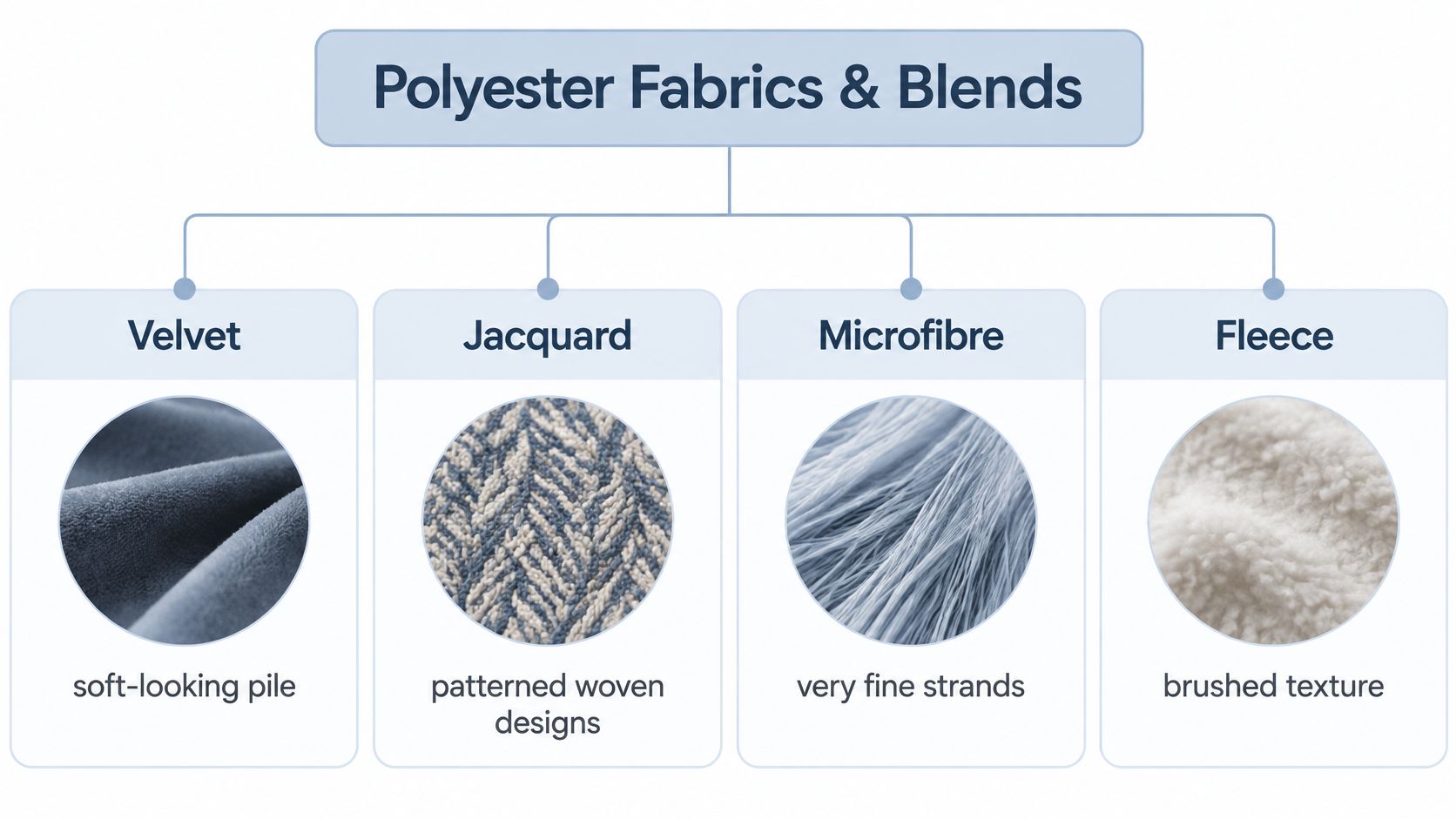
Velvet uses a raised, cut pile. It can look plush and change shade as the pile leans, but pressure may flatten busy seating areas. Jacquard weaves its pattern into the cloth rather than printing it on top, so texture and design are built into the structure. Pattern scale, yarn density and backing still shape how firm or flexible it feels.
Microfibre is a broad description for very fine strands. Fine filaments can create a smooth, closely packed surface, yet "microfibre" alone doesn't tell you how a cloth will resist pills or spills. Fleece has a brushed surface for a warmer hand feel, making it more likely to appear on throws than tightly fitted upholstery. Its raised fibres can also hold lint more visibly.
Stretch constructions add another variable. Polyester can provide the main yarn structure while a small stretch component helps cloth pull over corners and recover afterwards. Recovery still depends on knit design and care, not just the presence of stretch. Excessive heat can compromise that recovery even if the surface looks undamaged.
The short video below gives a visual sense of how different finished textiles can look once fibre has become yarn and cloth.
How Should You Read a Sofa Fabric Label?
You should read a sofa fabric label by finding the fibre composition first, then identifying the product construction and care instructions before relying on the polyester name. Look for stated percentages where they're published, wording such as stretch or elastane, any mention of coating or backing, and cleaning restrictions. If fibre composition isn't published for a product, don't guess the fibre from its appearance.
A simple sequence prevents most confusion:
- Record what's stated: Note fibre names and percentages only when the retailer provides them.
- Name the construction: Separate velvet pile, jacquard weave, brushed finish and knit from the fibre family.
- Check functional wording: Don't upgrade water-resistant or protective wording into waterproof unless the product is sold under that specific description.
- Read care limits last: Heat, washing and drying instructions often reveal whether the fabric suits everyday sofa use.
How Do You Care for Polyester at Home?
You care for polyester fabric at home by following the care label on the sofa cover, blotting spills promptly, avoiding tumble-dryer heat and lifting static-held hair with a lint roller. Those habits suit polyester's low water uptake, heat sensitivity and strong anchored fibres, but the individual product label always takes priority.
Start with a spill by lifting solids, then blot rather than rub. Rubbing pushes liquid sideways through the gaps in the cloth and can roughen pile or spread pigment. Blotting uses polyester's slower absorption to your advantage while the spill is still near the surface. Test any cleaning product on an inconspicuous area first, because dyes, coatings and backings vary.
How Do You Remove Hair, Lint and Pills?
You remove hair and lint from a polyester sofa cushion cover by rolling a sticky lint tool across the surface so it lifts static-held debris. The Reusable Sticky Lint Roller is designed for that lifting action, whereas a dry brush may redistribute hair across the cushions.
Pills need trimming, not pulling. Slide a suitable fabric shaver lightly over the bobbles so their anchoring strands are cut cleanly. Pulling can extract more fibre ends and make the worn area look thinner. For causes and prevention beyond this polyester-specific mechanism, follow the dedicated advice on how to prevent pilling on sofa fabrics.
When washing is permitted, use the product's own instructions and avoid guessing settings from the fibre name. The separate guide to washing sofa covers without shrinking them explains the wider fit issues. Don't use fabric softener on a water-repellent finish, because softener residue can coat fibres and interfere with the finish. Don't treat "machine-washable" as permission for hot drying either.
Those construction and care habits are the same ones that keep a stretch sofa cover fitting and looking right: no tumble heat, no softener where a finish could be affected and a lint roller for static-held hair.
Air drying where the label allows it protects both shape and stretch recovery. Keep a hot iron away unless the label specifically permits ironing at its stated setting, because surface glazing can happen before you notice scorching.
What Should UK Shoppers Know About Sustainability?
UK shoppers should treat polyester fabric sustainability as a trade-off between a potentially long service life and fossil-derived production, microfibre shedding and difficult end-of-life recycling. A durable polyester sofa cover isn't automatically circular, and a synthetic fibre isn't automatically short-lived.
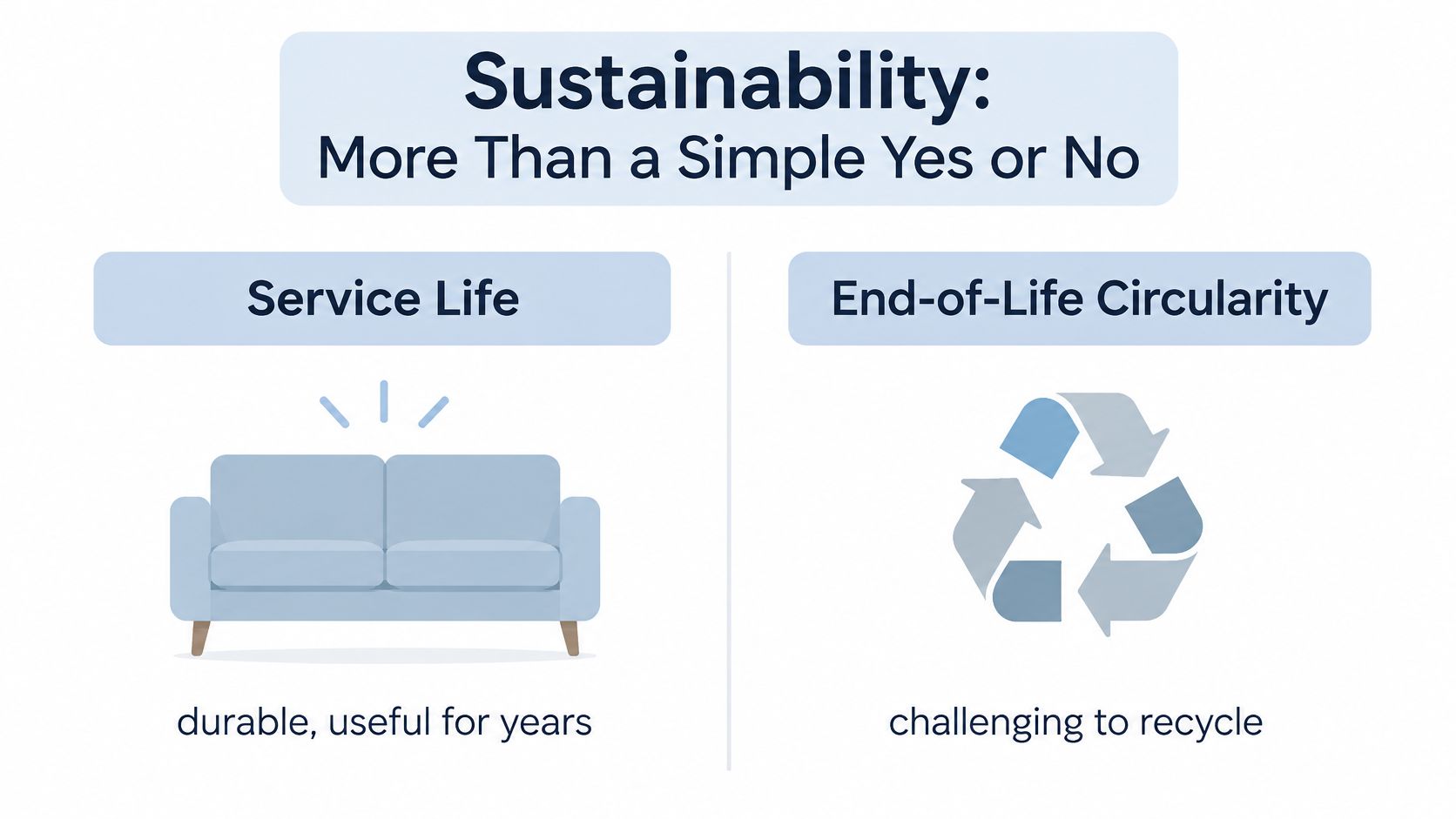
Polyester is a synthetic polymer linked to fossil-resource use before it reaches a sofa. Keeping one useful cover clean and repaired can reduce how often you replace that cover, but durability doesn't make polyester biodegradable or guarantee recycling. Blends, elastane, laminates, coatings and attached trims can make fibre separation harder, while a simpler mono-material construction is easier to identify and may suit existing routes better.
UK end-of-life figures show why disposal can't be assumed. Reporting UK post-consumer textile waste reaching 1,450 kilotonnes in 2022 states that only 2% was recycled domestically, while 44% was incinerated for energy recovery and 29% was sent overseas for disposal. Those are textile-wide figures, not polyester-only results, but polyester's large share of UK consumption makes them directly relevant.
Does Recycled Polyester Solve the Problem?
Recycled polyester fabric can reduce production emissions for a sofa textile, but recycled polyester doesn't eliminate washing impacts or end-of-life sorting problems. Shoppers should look for verified recycled content rather than assuming a product contains it.
Washing adds another trade-off. Synthetic fabrics, polyester included, shed microfibres in the wash. Wash only when needed, spot-clean where practical and use the gentlest effective cycle permitted by the care label. No single household habit eliminates shedding.
Before disposal, ask whether composition is published, whether zips or trims can be removed, whether the seller offers take-back and whether local textile recycling accepts the item. Clear answers matter more than a vague eco-friendly label.
How Do You Choose Polyester for a Sofa Cover?
You choose polyester fabric for a sofa cover by judging the finished cloth's feel, stretch recovery, construction, spill behaviour, care limits and exact fit, not by accepting the polyester name as a quality guarantee. Polyester is a useful starting clue, never the whole specification.
Use this checklist before ordering:
- Feel the surface in context: Decide whether pile flattening, a smooth knit or a patterned weave suits the seats people use most.
- Stretch and release the cloth: A stretch sofa cover should recover promptly without staying baggy around arms and corners.
- Inspect friction behaviour: Rub a sample or hidden area gently and consider whether pills could show on the seat front.
- Separate repel from waterproof: Treat a cover as waterproof only when it's sold as waterproof; water-repellent wording is not the same thing.
- Read care before style: Check whether no tumble heat, no softener on finishes and spill blotting fit your household routine.
- Measure the named configuration: Check the listed dimensions for the exact size and shape you have, whether 1 to 4 seater, 5 seater, corner or sofa bed. Don't assume a standard stretch sofa cover fits an L-shaped sofa or recliner unless that compatibility is stated.
Fire safety is a separate question from fibre. In the UK, the Furniture and Furnishings (Fire) (Safety) Regulations 1988 also cover loose covers, and a cover should never hide your sofa's permanent fire-safety label.
Browse stretch and fitted sofa covers by configuration and separate sofa cushion covers by size and construction, alongside 45cm x 45cm pillow covers. For comparisons between fibre families, use The Best Material for Sofa Covers rather than forcing a ranking into this single-fibre guide.
Refresh your seating with The Sofa Cover Crafter's sofa covers, fitted sofa cushion covers, pillow covers and throws, choosing by listed size, construction and care instructions rather than guessing at fibre content. Browse our stretch sofa covers to compare the available styles and configurations for your sofa.
