



You're not dealing with a stain problem when a sofa cover goes bobbly. You're dealing with friction damage, and the fix is to control abrasion from the first day the cover goes on, then keep the wash routine gentle enough to stop loose fibres from working free. If you want to know how to prevent pilling, the honest answer is this, buy a tighter, better-constructed fabric, fit it properly, wash it cool and softly, and stop rubbing the cover into itself with careless laundry habits.
Key Takeaways How to Prevent Pilling: Sofa Care Guide
- Wear causes pilling: Rubbing breaks fibres, not dirt.
- Choose dense weaves: Tight construction and stable surfaces resist pilling best.
- Read the fabric description: Look for signs of a durable, low-loose-fibre finish.
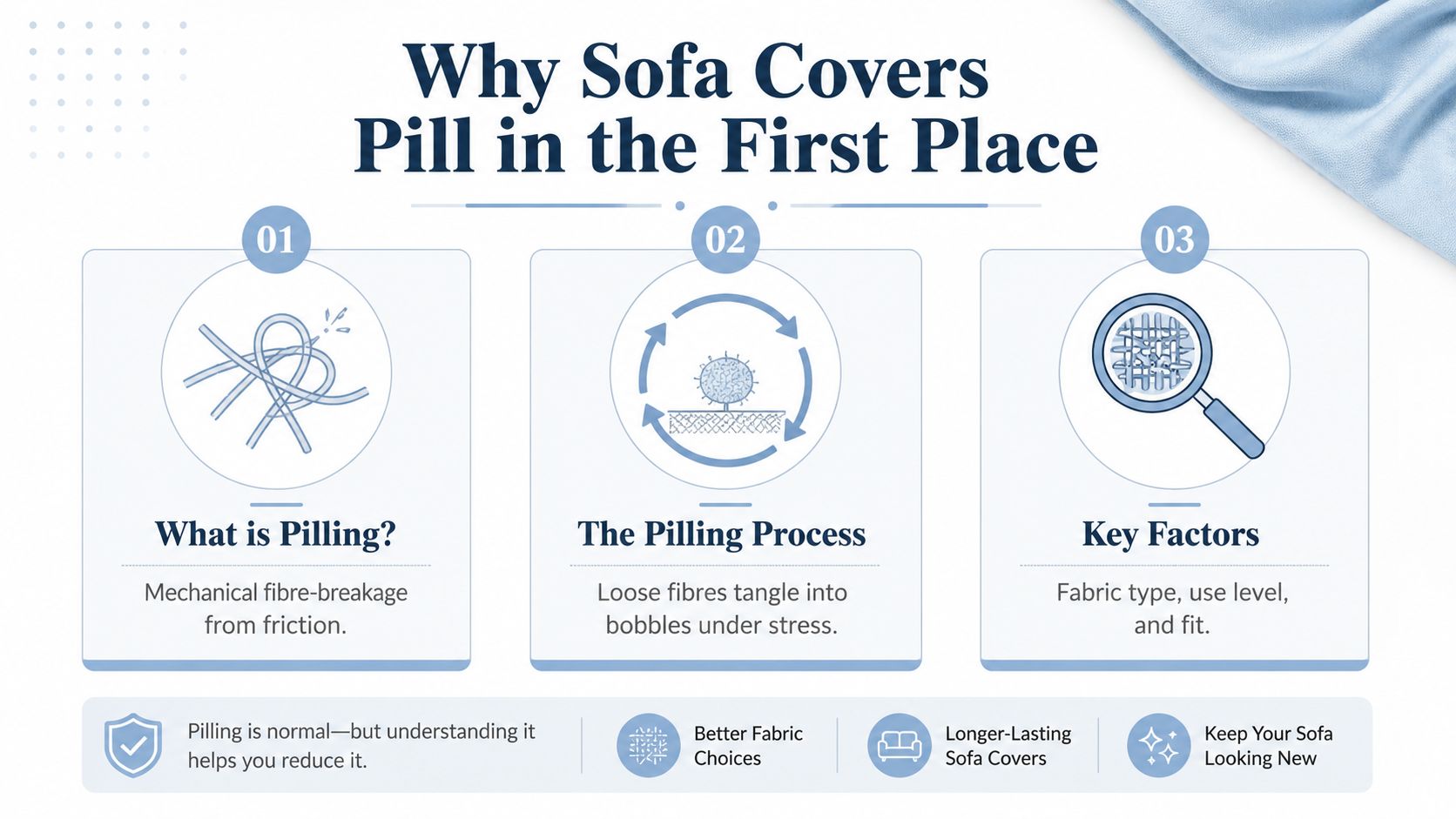
Table of Contents
- Key Takeaways How to Prevent Pilling: Sofa Care Guide
- Why Sofa Covers Pill in the First Place
- Which Fabrics Resist Pilling Best
- Does a Good Fit Actually Reduce Pilling
- What Wash Cycle Should You Use for Sofa Covers
- How Should You Dry Sofa Covers to Stop Pilling
- What Common Mistakes Quietly Cause Pilling
- Which Tools Help Remove Pills Safely
Why Sofa Covers Pill in the First Place
A sofa cover pills because surface fibres break, loosen, and tangle under repeated abrasion, not because the fabric is dirty. The first signs usually show up on the seat front, the arms, and any place where people slide, lean, or drag a throw across the same patch of fabric day after day. That's why a fresh-looking cover can turn fuzzy so quickly in a family living room.
The real mechanism is wear, not grime
Once fibres begin to break away from the yarn surface, they collect into tiny bobbles as sitting, washing, and drying keep rubbing them around. British textile care uses BS EN ISO 12945-2:2000 as a benchmark for testing pilling resistance, which matters because it measures appearance change after abrasion, not after cleaning. In plain English, pilling is a surface-damage issue you control by reducing friction at the design stage and the care stage, not by scrubbing harder.
Practical rule: if a sofa cover keeps rubbing, it will pill, no matter how expensive the detergent is.
The best frame for UK buyers is simple. A cover, throw, or washable sofa wrap that's denser, better finished, and handled gently has a better chance of staying smooth under normal use. Industry guidance aligned with the British Standard points to tighter weaves, lower-friction laundering, and finishing treatments such as singeing, heat setting, and cropping as real controls on pilling tendency, because those measures reduce the number of loose fibres available to break free.
Everyday sofa life adds its own abrasion load. Children scramble over arms, pets nestle into corners, and adults shift position constantly, all of which creates the same mechanical stress that makes pills appear on clothing. That's why the answer to how to prevent pilling starts with understanding the sofa cover as a wear surface, not a decorative skin.
Which Fabrics Resist Pilling Best
The most pill-resistant sofa fabrics are the ones with dense construction, strong surface stability, and less loose fibre at the face of the cloth. Loose knits and airy textures look soft in the showroom, but they give fibres more room to move, which makes bobbling more likely once the cover starts living on an active sofa. If you're shopping for a cover, read the weave description before you get distracted by colour names.
Read the fabric description like a buyer, not a dreamer
A tightly woven jacquard generally gives fibres less freedom to work loose than a loose knit, because the surface is more anchored. Blends with stretch can be useful for fit, but stretch by itself doesn't stop pilling, and a soft handfeel doesn't mean the fabric will stay smooth. In the UK, the most reliable buying signal isn't a fluffy marketing phrase, it's whether the construction is dense enough to reduce abrasion and whether the finish has been designed to manage surface fibre breakage, as noted in the earlier section on BS EN ISO 12945-2 and finishing controls.
If you want a broader buying view, the fabric guidance in best fabric for sofa is worth reading before you place an order. The same logic applies to the Sofa Cover - Velvet - Dark Green - Adaptable & Expandable, because a velvet face can feel luxurious and still need careful care if the household creates a lot of rubbing.
| Fabric | Weave Structure | Pilling Risk |
|---|---|---|
| Dense jacquard | Tight, structured surface | Lower |
| Velvet | Pile surface, needs careful care | Moderate |
| Loose knit | Open surface with more fibre movement | Higher |
| Stretch blend | Depends on construction, not stretch alone | Variable |
| Rough, open texture | More exposed fibres | Higher |
Finishing matters more than the label hype
Finishes such as singeing, heat setting, and cropping can reduce pilling tendency to a significant extent, according to the ScienceDirect topic on pilling tendency. That's why a well-finished fabric often outperforms a prettier but looser cloth in actual living-room use. I'd take a dense, properly finished cover over a soft-looking bargain every time, because the former survives contact with real people.
Choose the fabric that can survive the sofa, not the fabric that looks nicest under showroom lighting.
Does a Good Fit Actually Reduce Pilling
Yes, a good fit reduces pilling on a sofa cover because a stable cover creates less self-rubbing, less arm-edge abrasion, and less movement against the frame and cushions. A cover that rides up, bags out, or twists at the corners is constantly sawing at itself, and that extra motion turns into visible wear fast. Fit isn't just about looks, it's part of the abrasion-control system.
Stop the cover from drifting around
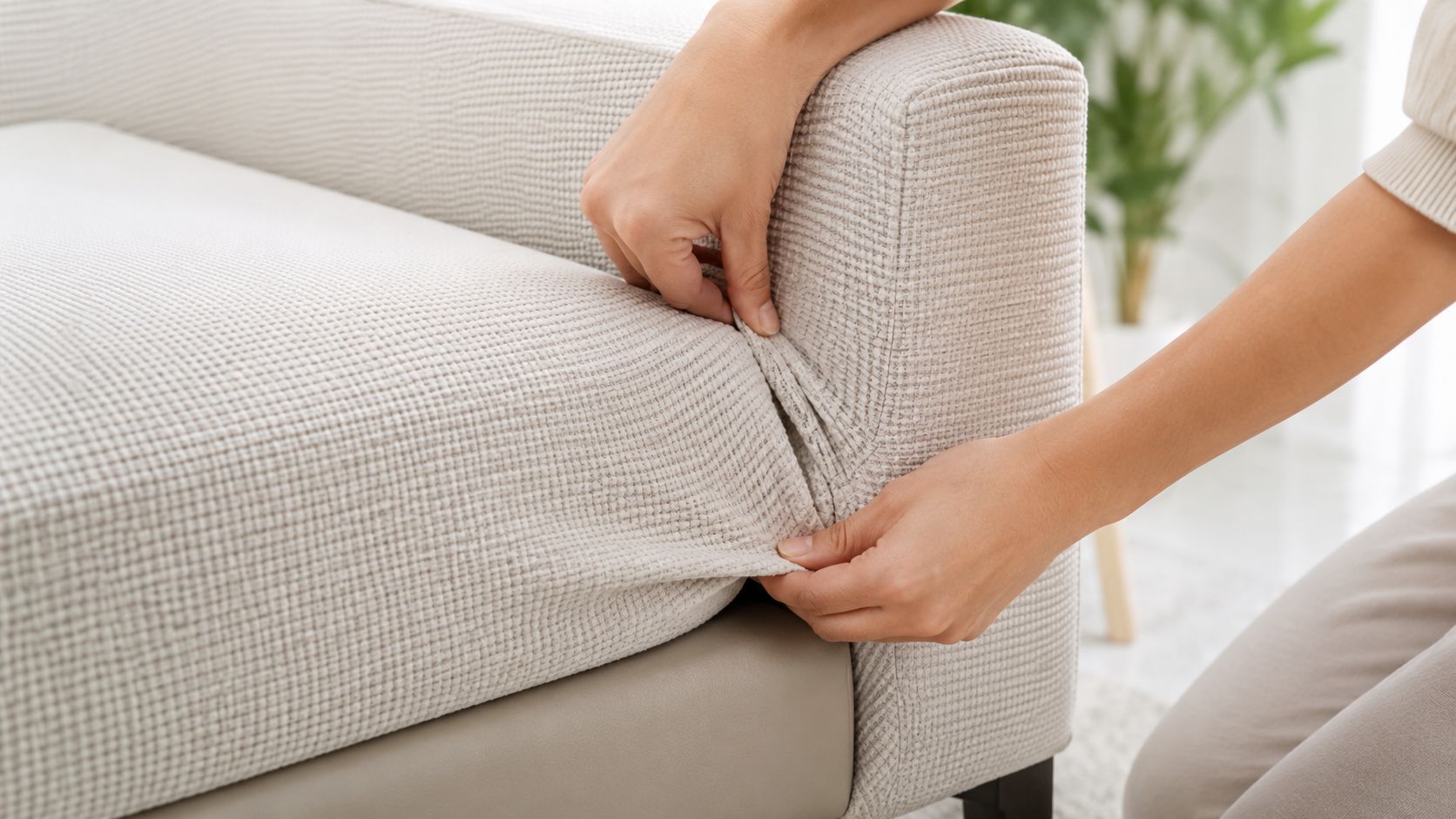
A cover that shifts during sitting creates friction where the fabric folds back on itself. Foam inserts tucked into the gaps help keep the fabric seated, and under-sofa clips anchor the hem so the cover doesn't creep every time someone sits down. That matters because a wandering hem rubs, tightens, loosens, and rubs again.
Correct sizing matters just as much. If a cover is too large for a two-seater, three-seater, or corner sofa, the excess fabric becomes a moving surface that wears itself out. If the cover is too small, the fabric stretches hard over stress points, which also increases surface strain and can shorten the life of the face fabric.
Treat installation as maintenance, not decoration
You want seams sitting where the sofa naturally takes load, not where loose fabric can flap and rub. Tuck the foam deep into the gaps, smooth the arms, and pull the hem so the cover lies flat instead of floating over the cushions. That simple bit of patience stops a lot of the repeated friction that creates pills in the first place.
A smooth install is especially useful on busy family seating, because the cover stays put through normal use instead of grinding against itself every time someone stands up. That's the kind of habit that protects a washable cover far better than you might realise.
What Wash Cycle Should You Use for Sofa Covers
Use a 30°C delicate cycle, keep the drum to about 75% maximum, wash the sofa cover inside out in a mesh laundry bag, and dry it on low heat or, better, by air. That's the routine that gives a washable sofa cover the best chance of staying smooth, because it cuts down the friction that loosens fibres in the first place. If you want one repeatable household default, that's the one.
Build the wash around low abrasion
Speed Queen's fabric-care guidance sets a practical benchmark of no more than 75% washer capacity, with a delicate cycle at 30°C, slower rotation, and reduced spin of roughly 400 to 600 rpm to cut abrasion. That machine setup aligns with the guidance to wash items inside out, close zippers and hooks, and dry on low heat or air dry, because every hard edge inside the drum adds rubbing. A crowded washer is one of the fastest ways to create pilling, so don't treat the drum like a storage basket.
If you want another useful care reference for a comparable cleaning approach, see how dry cleaning protects furniture from Rubber Ducky Rug Cleaning Birmingham. For a home-wash version, the internal guide on how to wash sofa fabric fits neatly alongside the same friction-first logic.
Keep the load soft, not packed
Put the cover inside out before it goes into the machine, because the visible face needs protection from direct rubbing. A mesh laundry bag helps isolate the cover from zips, hooks, and harder fabrics, which keeps abrasion lower across the whole cycle. That matters more than fancy detergent choice, because the main enemy is still mechanical wear.
House rule: if the drum looks stuffed, the fabric is already losing.
Use the gentlest detergent you'd normally trust for washable home textiles, then resist the urge to add more agitation for “extra clean”. Clean doesn't have to mean rough. A sofa cover that's cleaned gently and dried gently keeps its surface longer than one that's blasted through a heavy routine every time.
How Should You Dry Sofa Covers to Stop Pilling
Air-drying is the safest drying method for a sofa cover, and low heat is the fallback when air-drying isn't practical. Drying matters because tumble motion keeps rubbing loose fibres against the surface after the wash has already started the damage. If you want fewer pills, stop the fabric from being battered while it's still damp and vulnerable.
Heat and tumble motion keep the damage going
A dryer doesn't just remove moisture, it keeps the cloth moving against itself. That constant rubbing is exactly what you were trying to reduce in the wash, and heat can make fibres more prone to wear during the process. For a thick sofa cover or a heavy throw, that extra mechanical stress adds up quickly.
Flat air-drying gives the fabric the gentlest finish because it applies zero mechanical stress. If the cover is bulky, spread it out so air can reach both sides, and don't crumple it into a damp heap on the rack. A heavy cover that traps moisture for too long can smell musty, but that's a drying-layout problem, not a reason to move straight to aggressive tumble heat.
Use the air, not the drum, when you can
Drying over a line or rack is the simplest protection you've got. If a dryer has to be used, keep it on low heat and keep the cycle as light as possible, because the goal is to remove water without sanding the surface. That's especially sensible for covers that already had a rough wash week, because you don't want to stack one friction event on top of another.
The old habit of throwing sofa textiles into a hot, mixed load is a bad one. Fabric softener doesn't fix that, and a hotter cycle doesn't make the cloth more durable. A calmer dry routine does more to preserve surface appearance than many might expect.
What Common Mistakes Quietly Cause Pilling
The worst pilling mistakes are the ones people make on autopilot. Washing a sofa cover with towels, denim, or other rough textiles loads the drum with abrasive surfaces, and that extra rubbing is exactly what breaks fibres loose. If you want to stop pilling, stop treating every load as if all fabrics can survive the same punishment.
The habits that undo good fabric choice
A crowded drum is a problem because pressure rises and fibres rub harder against one another. Fabric softener is another trap, because it can make short fibres detach more easily, which works against the goal of keeping the face smooth. And yes, the heavy cotton cycle is often overkill for washable sofa textiles, because more force usually means more abrasion.
The inside-out step matters too. Skip it, and the visible face takes the hit first, which means the part you see on the sofa is the part that gets worn fastest. That's a silly way to wreck a cover you bought to protect the furniture underneath.
Simple don'ts that save the fabric
- Don't mix with rough loads: Keep sofa covers away from towels, jeans, and hard-trimmed laundry.
- Don't overload the washer: A tight drum increases rubbing and pressure.
- Don't rely on softener: Softer isn't the same thing as safer for pilling-prone fabric.
- Don't skip inside out prep: The visible side needs the protection most.
- Don't use the hottest, heaviest cycle by habit: Use the lightest wash that still gets the cover clean.
REI is blunt on the core point, pilling is chiefly caused by abrasion, so every “convenience” habit that increases rubbing is working against the fabric. That's the mindset shift you need. Stop thinking about laundry as a clean-or-dirty binary, and start thinking about how much friction each decision creates.
Which Tools Help Remove Pills Safely
A fabric comb, a battery-powered pill remover, or a sweater shaver with an adjustable guard will remove light pilling safely from a sofa cover if you use them gently. The goal isn't to scrape the fabric raw, it's to trim away the bobbles that are already sitting on the surface. Remove them promptly, and you stop them from catching more fibres and making the area look worse.
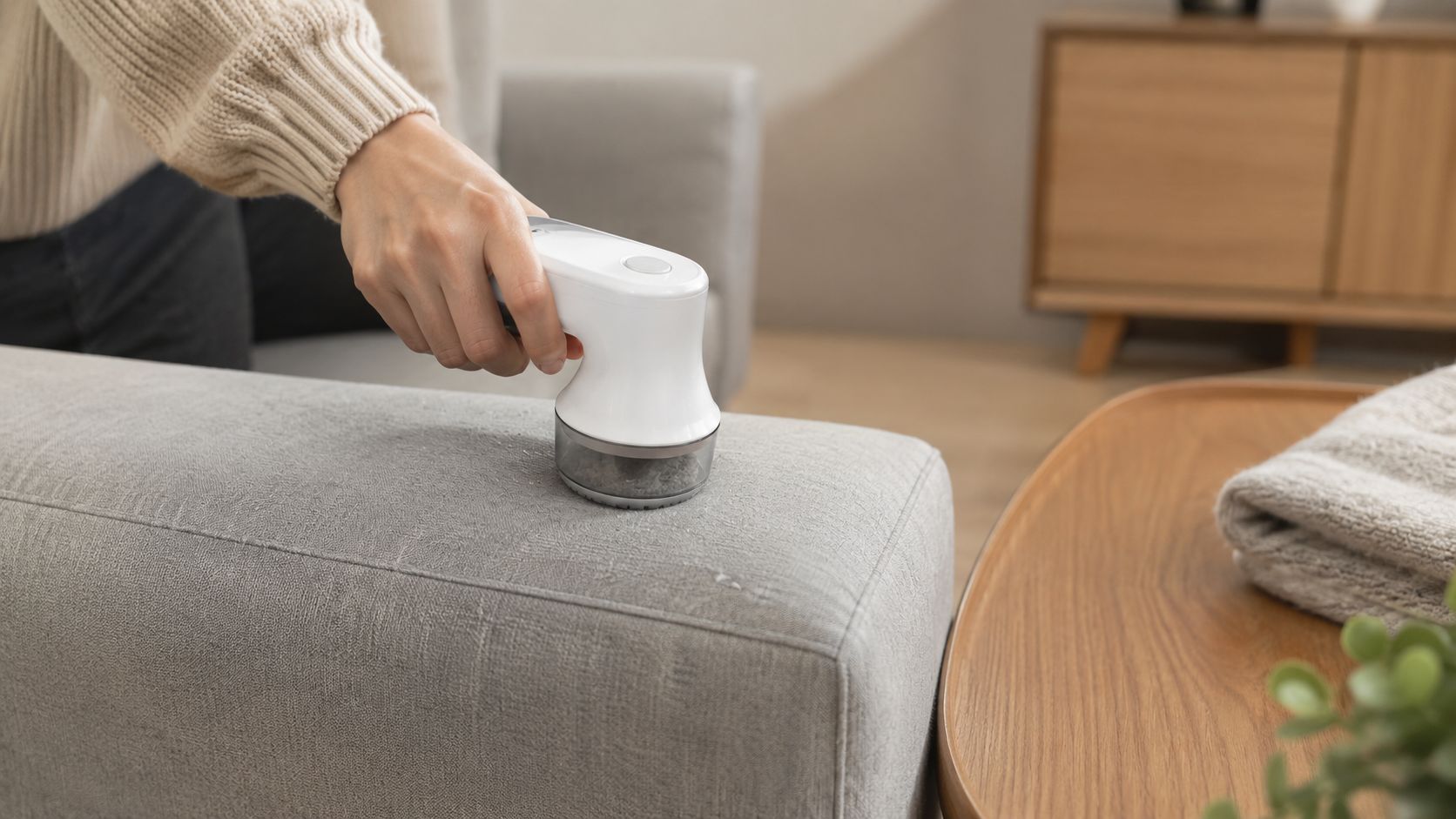
The key is to work on a flat, supported area and avoid pressing hard. A light touch is enough for most sofa covers, and a guard on the shaver helps prevent over-cutting. For delicate upholstery-style fabrics, a comb gives you more control than a machine, especially on raised pile or finer surfaces.
If you want a simple grab-and-go maintenance item, the reusable lint sticky roller is useful for loose fluff between deeper de-pilling sessions. For a more polished finish on a cover that's already smooth, steaming for professional results is worth looking at, as long as you keep the heat gentle and don't treat steam like a cure for real fibre damage.
A sensible routine is a monthly check on the arm rests and seat fronts, then a quick clean-up if light pills have appeared. That's enough for most homes, because the point is to stop small pills from becoming a rough, tired-looking surface. If you want a practical housekeeping rule, remove them before they spread and anchor more fibres.
The Sofa Cover Crafter makes washable, protective sofa covers, throws, and cushion covers that suit real homes, not showroom life. If you want help choosing a cover that's easier to care for and less likely to wear badly under everyday use, visit The Sofa Cover Crafter and look for a design that matches your sofa, your routine, and the way your household lives.
