


A Japandi living room is built in a set order: palette first, floor and light second, then texture on the sofa you already own. That order matters, because the rooms that go wrong usually go wrong on lighting and clutter rather than on the sofa itself. The evidence for working with what's there is blunt: the UK Government's Waste Prevention Programme for England reported that around 10 million furniture items were thrown away each year and that only 17% of sofas discarded annually were reused (UK Government furniture-waste programme).
Texture is the lever that does the work other styles hand to colour. Off-white, oatmeal and sand carry the base, natural materials supply the honesty, and variations in weave and relief supply the interest. Low furniture, a clear floor and diffused light finish the job, and none of it needs a builder.
A covered sofa in an over-lit, crowded room still reads wrong. Settle the palette and the floor before you spend anything on textiles, and the throw and cushions become the last five per cent rather than the whole plan.
Table of Contents
- What Is a Japandi Living Room?
- Which Palette Suits a Japandi Living Room?
- How to Arrange Furniture and Lighting for a Calm Room
- Can a Stretch Sofa Cover Turn an Existing Sofa Japandi?
- How Do You Layer Texture Without Clutter?
- Can Japandi Work in a Rental or Family Home?
What Is a Japandi Living Room?
A Japandi living room brings Japanese restraint together with Scandinavian comfort. Its defining feature is balance: simple forms, practical furniture and tactile materials create a room that feels calm rather than bare.
The style draws on Japanese craft and Scandinavian ideas of comfort. Hygge and wabi-sabi both value a sense of ease, though one centres on cosiness and the other on the beauty of imperfection. Together, they make room for natural materials and considered choices without requiring a strictly minimalist interior.
UK living rooms are often modest in size, so bulky furniture can dominate quickly. A compact layout, furniture with a lighter visual footprint and a clear route across the room help it feel more open. The trade-off is straightforward: fewer, better-scaled pieces leave less space for storage, so choose furniture that serves a clear purpose.
| Element | Japandi target | Avoid |
|---|---|---|
| Palette | Off-white, oatmeal, sand, warm grey and muted green with one dark accent | Cool white walls with bright primary colours |
| Materials | Pale or dark wood, linen, paper, stone, jute and ceramic | Glossy plastics and high-shine metal finishes |
| Texture | Three or more textures within one tonal family | Matching colours with a single flat fabric |
| Furniture | Low-profile pieces with a clear floor | Stacked side tables and objects on every surface |
| Light | Layered, warm and diffused from several sources | One bright central ceiling light |
| Pattern | Texture does the work that pattern does in other styles | Busy prints on the sofa and rug together |
Use the table as a quick check before buying anything. In a small room, furniture scale and the amount of visible floor matter as much as the palette.
Which Palette Suits a Japandi Living Room?
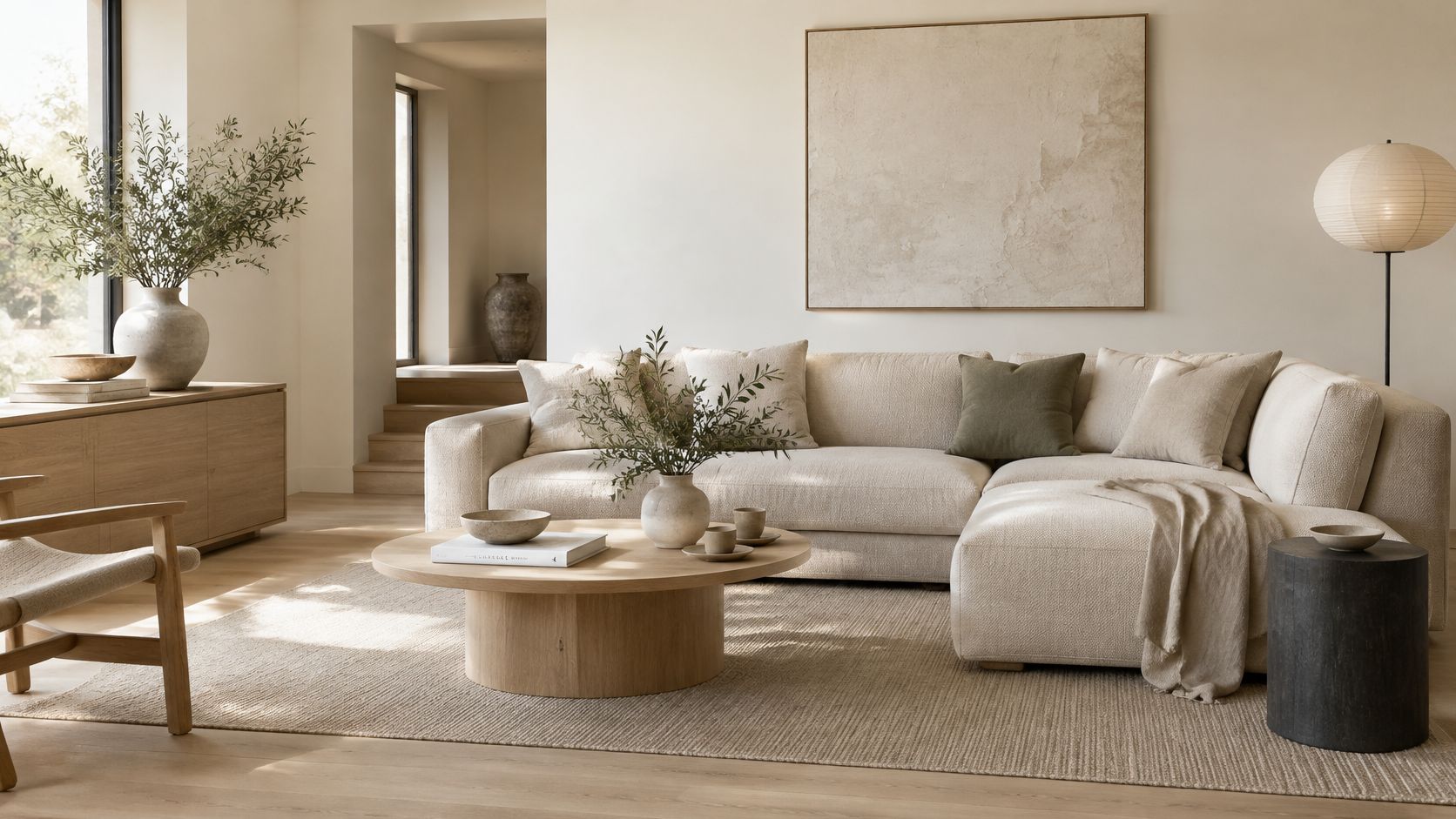
A Japandi palette works best when texture carries more weight than colour. Keep the main tones close together, then use one deeper shade to give the room definition. Oatmeal, sand, caramel and chocolate sit naturally alongside off-white and warm grey; muted green can provide a restrained accent.
Warmer browns now sit alongside oat, stone and beige in Japandi schemes. A caramel or chocolate cushion or throw introduces depth without committing a whole wall to a dark colour.
Build the Palette in Four Steps
- Choose a warm neutral family. Oatmeal, sand and caramel create variation without making the room feel busy. If the sofa is already beige, change its texture rather than adding more shades of beige.
- Use off-white or warm grey for larger surfaces. Check a fabric or paint sample in the room's own light. Cool grey can sit awkwardly beside warm timber, while a warmer grey keeps the transition gentler.
- Add one muted green accent. Choose a cushion, throw or glazed pot. Keep the green to one or two small items so it supports the neutral base rather than competing with it.
- Give the scheme a dark anchor. A charcoal cushion, black lamp or dark timber detail adds definition and stops pale tones from looking washed out.
A neutral room needs tonal variation to avoid looking flat. A dark accent provides contrast, while differences in fabric and surface finish add interest without relying on a bold colour or busy print.
For a wider selection of living room colour scheme ideas, compare the options before settling on a restrained Japandi palette.
If the sofa feels too cool for the scheme, a neutral cover can shift its appearance without replacing it. The Sofa Cover Crafter's Luma Sofa Cover in Light Grey is one option. A removable cover also makes it easier to adjust the room's look later, which is useful in a rental or a family home.
How to Arrange Furniture and Lighting for a Calm Room
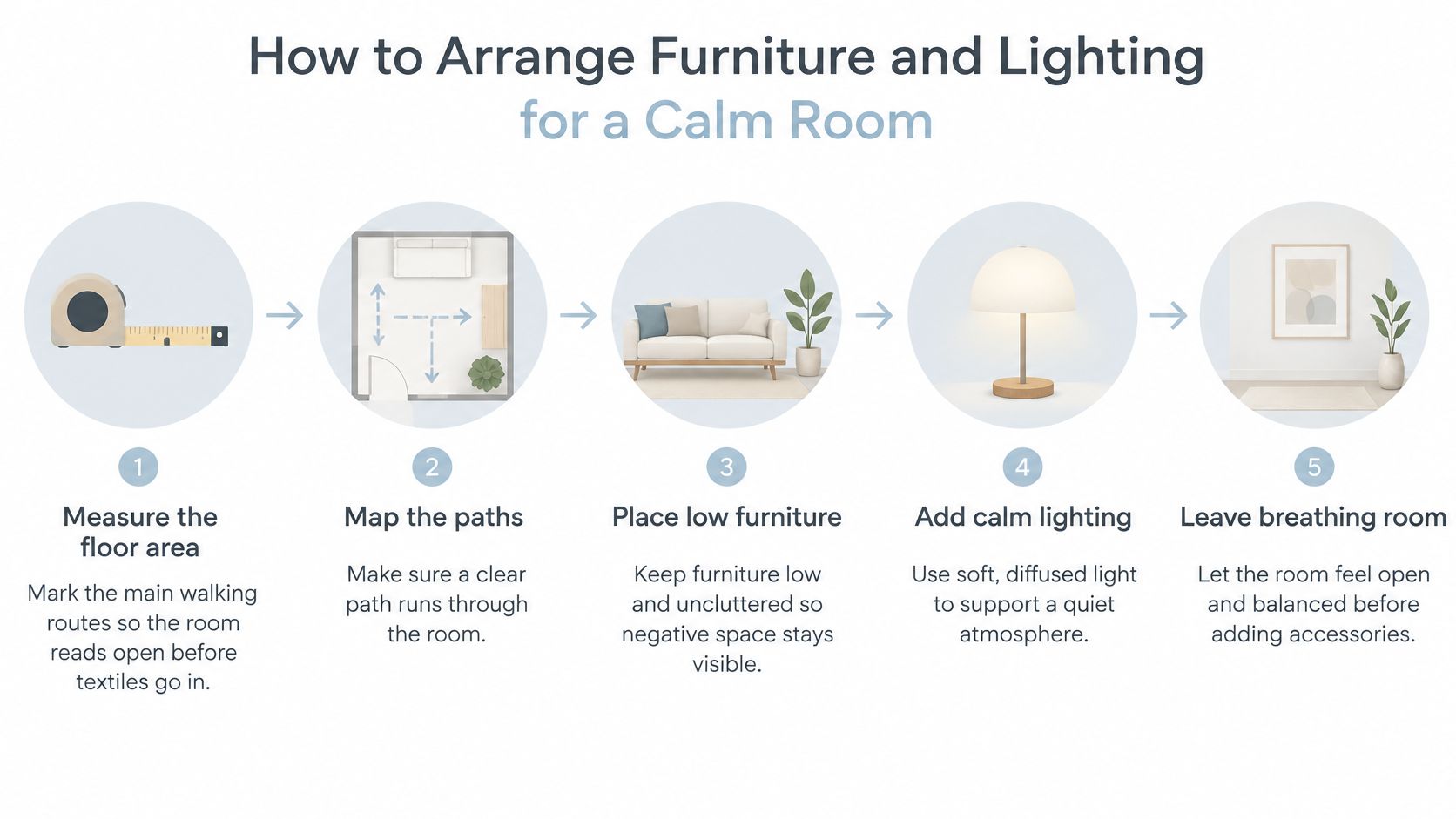
A calm Japandi room is arranged before it's lit: a clear walking route, low furniture with floor visible around it, one flat rug, and light from three layers instead of a single ceiling fitting. Negative space is a material in this style, and it's the only one that costs nothing.
- Measure the floor area and mark the routes. Use painter's tape on the carpet to lay out the path from door to window. If the path has to weave, something is too big.
- Map the seating and reading positions before moving anything heavy. Where you sit determines where the lamps go, and lamps influence the mood more than the sofa does.
- Choose low, uncluttered pieces. A low sofa frame, a low coffee table and one timber side table. Height, not colour, is what breaks the calm.
- Keep the floor clear with one low natural rug. Jute or flatweave, wide enough that the front legs of the seating rest on it. One rug, not a layer of three.
- Leave the surfaces emptier than feels comfortable. Then live with it for a week before adding anything back.
Set the Light in Three Layers, Then Check the Numbers
Build ambient light first, then low table or floor lamps for evening comfort, then directional light for reading or for grazing timber and ceramics. Choose warm-white LEDs, dim them where the fittings allow, and spread the lamps across several circuits so the room can drop to a subdued mood in the evening. If you're specifying new fittings, Energy Saving Trust guidance expects qualifying low-energy lamps to deliver at least 45 lumens per circuit watt (Energy Saving Trust lighting guide).
The common failures are easy to name. One central pendant flattens a room and removes the shadow that gives Japandi its calm. Pale walls get over-lit until they read grey. Untreated bulbs at seated eye level create glare that no amount of styling recovers from.
Test the lamp positions at night before you fix anything to a wall, and confirm the dimmer is compatible with the LED drivers you've chosen. Furniture, rugs, lamps and timber come from other suppliers; the textiles are where we come in.
Can a Stretch Sofa Cover Turn an Existing Sofa Japandi?
A neutral stretch cover can give an existing sofa a Japandi look without replacing the furniture. Texture matters more than a new colour: choose a restrained shade with a woven surface, and check the measurements carefully. Corner and L-shaped sofas need a cover designed for that configuration.
Reusing a sofa also avoids the cost of replacing it. A cover changes the surface, not the structure, so check the frame and cushions before ordering.
Check the Sofa Before You Choose the Cover
Photograph worn areas and stains, then press the frame and seat cushions to check their condition. A cover can refresh the appearance and protect the upholstery, but it cannot repair a damaged frame or restore collapsed foam.
Write down these measurements:
- Width, arm to arm, including any outward curve.
- Seat depth, from the front edge to the back cushion.
- Arm height and back height, to check how the cover will sit.
- Cushion count, and whether the back cushions are fixed or loose.
Compare your measurements with the product page's sizing guide. A cover that is too small can pull at the corners; one that is too large may need frequent adjustment.
Corner Sofas, L-Shapes and Recliners
The Crosshatch Sofa Cover and Luma Sofa Cover have corner and L-shaped versions. For other configurations, check the product sizing guide rather than assuming a standard cover will fit. Recliners also need a product page that specifically confirms compatibility. Rounded or sculpted arms can be harder to cover neatly than straight arms.
The Cover That Carries the Japandi Look
The Crosshatch Sofa Cover in Eggshell pairs a near-white shade with a cross-hatched texture rather than a print. That subtle surface detail gives the sofa visual interest without adding a strong pattern. It is also our second most-ordered sofa cover: 663 units, 10% of sofa-cover units ordered. Compare the Crosshatch Sofa Cover in Eggshell with other neutral options to find a shade that works with your sofa and room.
A limited palette keeps the upholstery from competing with timber and other natural finishes. Use one base neutral, then add a deeper shade or muted green if the room needs contrast.
| Sofa cover | Colours | Japandi role |
|---|---|---|
| Crosshatch Sofa Cover | Eggshell, Beige, Coffee, Grey | Cross-hatched texture; Eggshell works as an off-white base; corner/L-shape version available |
| Luma Sofa Cover | Beige, Light Grey, Neutral Grey | Warm and cool neutral options; corner/L-shape version available |
| Crossmere Sofa Cover | Beige, Cloud Grey, Green | Green option for a muted accent |
| Arquette Sofa Cover | Beige, Milk Tea, Cloud Grey | Milk Tea provides a warm oatmeal tone |
| Cordelle Sofa Cover | Beige, Grey, Green | Grey and green options for a restrained palette |
| Classic Stretch Sofa Cover | Linen Beige, Clay Grey, Alabaster White | Alabaster White suits an off-white base; Linen Beige is a colour name |
Grey and beige both suit a Japandi room. Grey gives a cooler, more contemporary look, while beige brings warmth alongside timber.
Keep the Sofa Neutral and Let the Textiles Move
Set the main sofa colour with a neutral cover, then use removable throws and cushion covers for smaller changes. This approach keeps the room's largest surface calm while making it easier to adapt the styling. Our sofa throws come in 180 x 130 cm, 180 x 230 cm, 180 x 300 cm and 180 x 420 cm; the smallest suits a single seat or an accent layer over one arm.
Check the care label before washing, as instructions vary between covers. Classic Stretch Sofa Cover in Linen Beige names the colour, not the fabric.
For help with sizing, tucking and adjustment, read how stretch sofa covers fit and stay in place. The sofa covers collection lets you compare available sizes and shades.
What a Cover Won't Fix
A cover cannot fix a sagging seat, cracked frame or sofa that overwhelms the room. Pale upholstery can also show pet hair, so consider your household before choosing an off-white shade. Check the sofa's condition and dimensions first; a cover changes its surface, not its shape or capacity.
How Do You Layer Texture Without Clutter?
Texture gives a Japandi room depth without relying on a busy colour scheme. As the store's owner puts it: "Texture, not colour... A sofa with three textures looks more expensive than one with three matching colours, because each texture catches the light differently." Start with a neutral sofa cover, then add a throw and a small number of cushions in varied weaves. Keep their tones related, but avoid choosing every piece in the same texture.
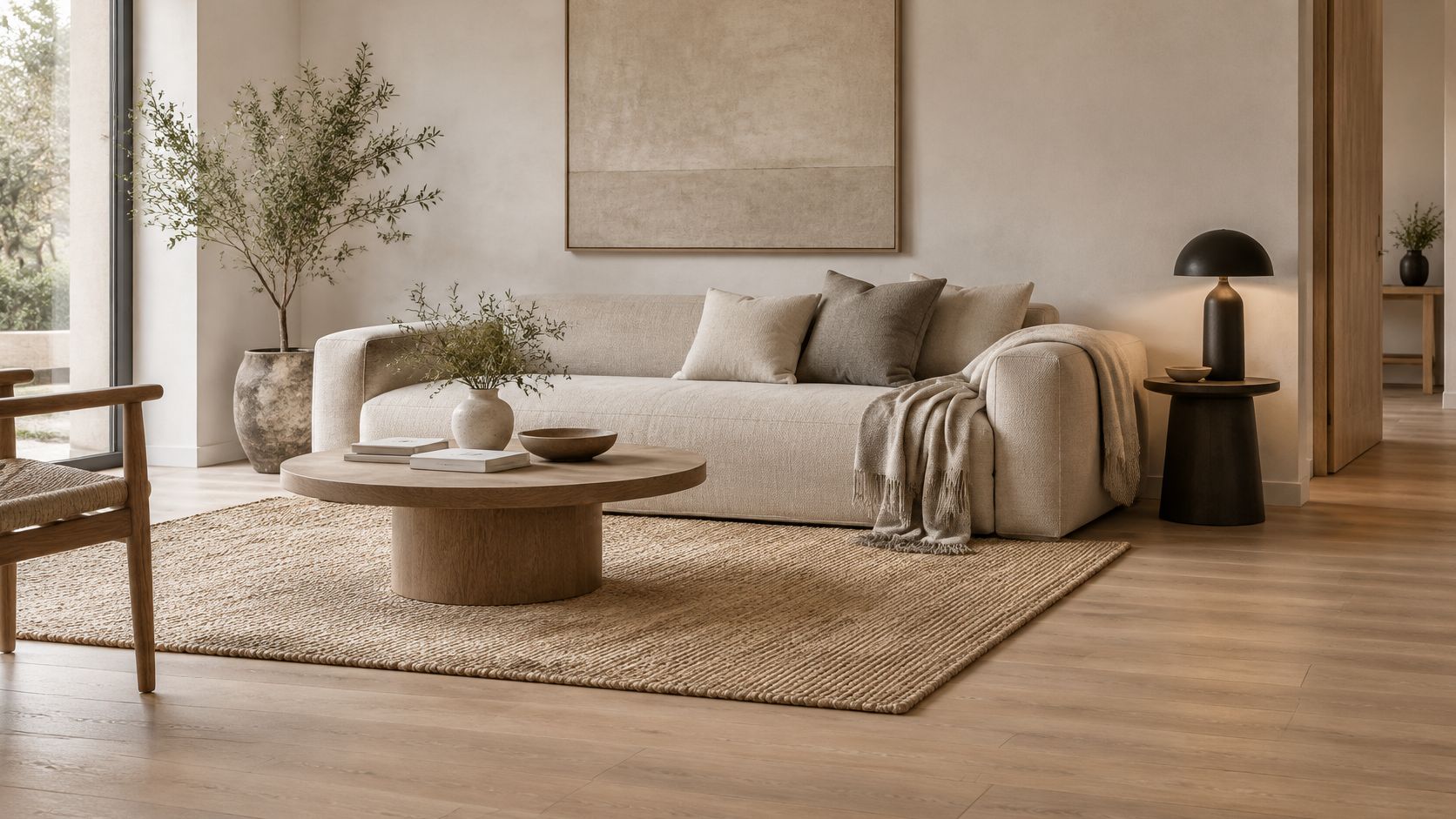
- Set the base with a neutral cover. It gives the textiles a consistent background and lets changes to the room stay simple.
- Add one throw. The Mousoon Sofa Throw in Milk Tea provides a soft, warm neutral; it accounts for 425 units, 10% of the units ordered in the Sofa Throw type. Fold it loosely over one arm rather than spreading it across the sofa. The Norka Sofa Throw in Moon Beige or Eggshell offers a cooler alternative; browse the sofa throw collection for the other neutral shades.
- Use two or three pillow covers. The Crosshatch Pillow Cover in Coffee brings depth to a neutral scheme. A charcoal cushion can add a darker note if the rest of the palette needs definition. All our pillow covers are 45 x 45 cm.
- Change texture with the seasons. Eggshell and Cream White keep the arrangement light, while Caramel, Khaki and Olive Green bring in deeper tones. Keep the sofa cover steady and swap removable textiles when you want a change.
| Piece | Colours | Japandi role |
|---|---|---|
| Mousoon Sofa Throw | Milk Tea, Off-White | Milk Tea adds a soft warm neutral; Off-White gives a lighter layer |
| Norka Sofa Throw | Moon Beige, Eggshell | A loosely folded neutral layer over one arm |
| Coveri Sofa Throw | Beige, Caramel, Khaki, Green Tea | Caramel and Khaki add depth; Green Tea brings in muted green |
| Elaris Sofa Throw | Cream White, Olive Green, Cloud Grey | Cream White keeps the scheme light; Olive Green adds a deeper accent |
| Crosshatch Pillow Cover, 45 x 45 cm | Eggshell, Beige, Coffee | Coffee provides a deeper neutral |
| Luma Pillow Cover, 45 x 45 cm | Beige, Neutral Grey | Neutral Grey offers a cooler counterpoint |
| Crossmere Pillow Cover, 45 x 45 cm | Beige, Cloud Grey | Soft layering with gentle contrast |
Keep decorative textiles to a few chosen surfaces, and leave space for the sofa and room to breathe. Removable throws and pillow covers make it easier to refresh the look without committing to more permanent changes. For more detail on how different weaves read in a room, see this guide to the texture of fabrics.
Can Japandi Work in a Rental or Family Home?
Japandi can suit a rental or family home without permanent changes. A neutral stretch cover softens the sofa's appearance, while removable throws and cushion covers bring in texture and protect the original upholstery. The trade-off is fit: check your sofa's shape and dimensions before ordering, especially if it has an unusual configuration.
Furniture makes up a significant share of household waste, so keeping a sofa in use for longer is a practical form of reuse. A survey of British adults found 84% buy second-hand items, 55% do so at least every six months, and 48% named furniture as a category where they would like to learn repair skills (survey on second-hand shopping and repair). These figures point to interest in reuse, not a guarantee that every refresh will suit every household.
Families, Pets and Spills
For children, choose a mid-tone neutral if you want everyday marks to show less than they would on pure off-white. Check the care instructions before washing, so you know how to handle the cover after a spill.
For pets, use a throw that can be lifted off quickly and washed separately. Choose its colour with shedding in mind. Velvet offers a soft touch and a premium look, but it is not a waterproof option. Only products in the Waterproof line are waterproof, so check the product details if spill protection is a priority.
Landlords, Hosts and the Wear Question
In a rental or guest space, removable textiles make it easier to refresh the room without altering the furniture. Keep a record of the room's condition and follow a repeatable cleaning routine between occupants. Natural wear can suit Japandi's relaxed character, but clean, well-kept textiles still matter.
A neutral cover lets texture carry the style while the sofa stays in use. The Sofa Cover Crafter offers sofa covers, throws and pillow covers designed to refresh a sofa without replacing it. Keep the sofa itself neutral and let the throw and cushions carry the season, and choose removable pieces that fit your household's care routine and rental needs.
