



You can usually remove wrinkles from a sofa cover at home with steam, washing and drying, or a quick local fix, but the right method depends on the fabric. Stretch spandex behaves very differently from jacquard weave, so forcing the same approach on both often leaves one smoother and the other worse. If you're staring at a creased cover right now, start by checking the care label, then choose the fastest method that matches the fabric and the kind of crease you're seeing.
Key Takeaways How to Remove Wrinkles: Expert Sofa Care Tips 2026
- Match the method to the fabric: Check the care label and blend before steaming or washing.
- Think about tension: Wrinkles along a seam often need the cover's tension adjusted.
- Use low heat: Stretch covers recover best with gentle handling.
Table of Contents
- Key Takeaways How to Remove Wrinkles: Expert Sofa Care Tips 2026
- Why Wrinkles Form on Sofa Covers and What to Do First
- Steaming Versus Ironing Sofa Covers
- Washing and Drying Techniques That Smooth Stretch Spandex
- Quick Fixes With a Hairdryer and Damp Towel
- Installing and Tensioning Spandex and Jacquard Covers Smoothly
- Long-Term Maintenance and Prevention Habits
Why Wrinkles Form on Sofa Covers and What to Do First
Most sofa cover wrinkles come from compression, uneven drying, and poor tension at install, and the first fix is to match the method to the fabric. Stretch spandex usually responds well to gentle heat and re-tensioning, while jacquard needs more controlled smoothing because the weave holds shape less forgivingly.
Start with the cover you actually own
A stretch cover is built to move with the frame, so it can usually recover from light creasing if you handle it with low heat and even pulling. A jacquard sofa cover is more structured, so it keeps packaging folds and install creases longer, especially across broad flat panels and seams.
Before you do anything, check the care label and the blend. If the cover allows machine washing, a careful wash-and-dry reset often does more than trying to chase wrinkles one panel at a time.
Practical rule: If the wrinkle runs along a seam or a fold line, think about tension first. If the wrinkle sits across a whole panel, think about heat and moisture first.
The main choices are straightforward. Steam works well for light, local creases. Wash-and-dry is the better reset for general wrinkling. Quick fixes like a hairdryer or damp towel are for one stubborn spot when you do not want to pull the whole cover off.
For a dark, plush fabric, the Sofa Cover - Velvet - Dark Green - Adaptable & Expandable fits the kind of cover that benefits from careful handling, because velvet shows flattening and tension marks more clearly than a plain matte weave.
Steaming Versus Ironing Sofa Covers
A garment steamer is usually the safer choice for stretch spandex, while ironing works better for structured jacquard and deep packaging creases. The wrong heat source can scorch synthetic fibres, leave shine marks, or flatten elastic recovery, so the choice matters more than many people expect.
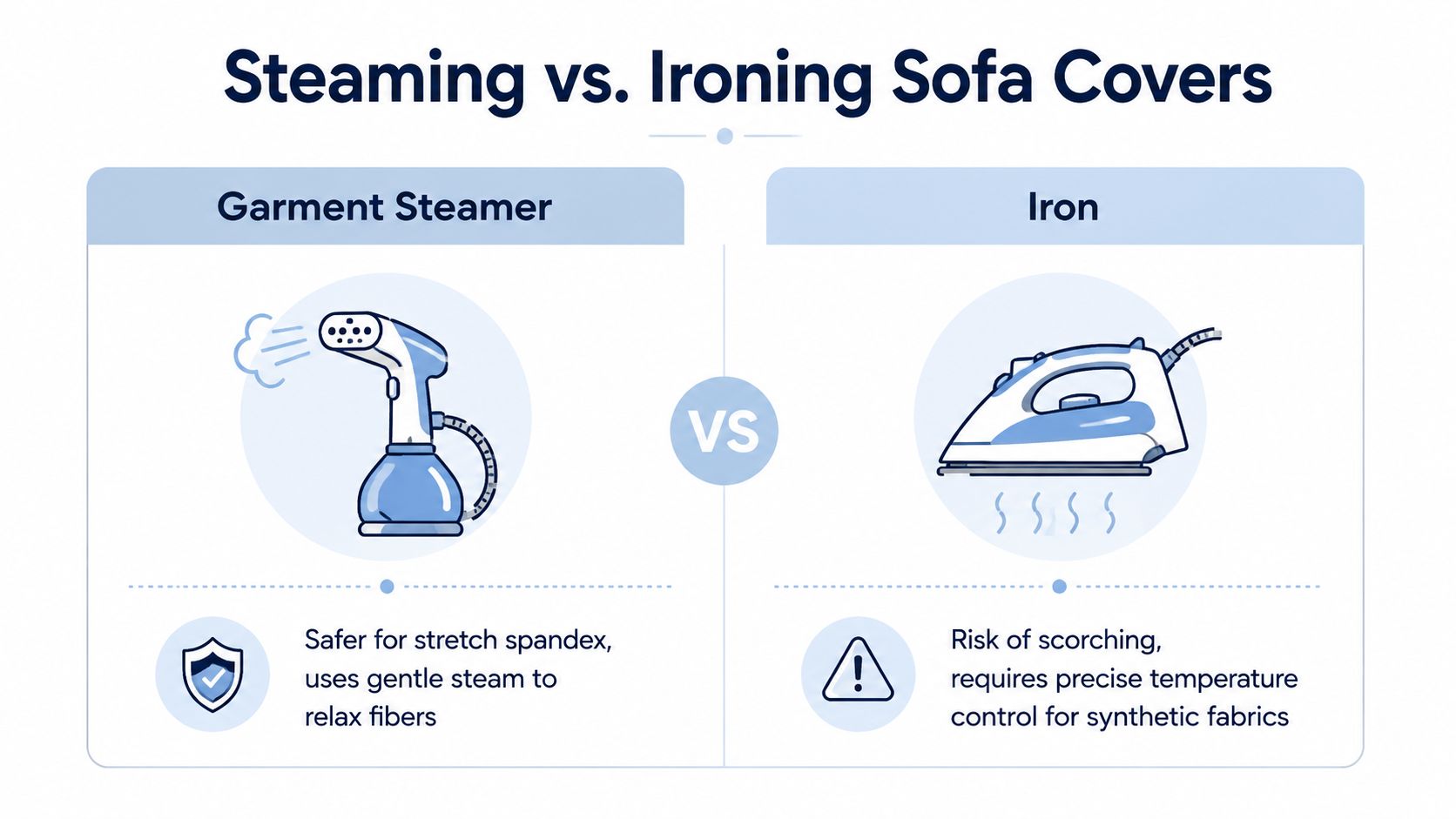
Why steam usually wins on stretch covers
A hand-held steamer or vertical garment steamer relaxes fibres without pressing them flat, which is exactly what a spandex blend needs. Move the steam head slowly, keep it a little away from the surface, and smooth the cloth with a flat hand as the fibres loosen.
Steam is also the easier choice when the goal is to freshen a sofa cover before guests arrive. Light creases can often lift quickly, while harder folds usually need more patient passes or a full wash cycle.
When an iron still makes sense
Ironing has a place on jacquard, especially when packaging folds have settled firmly into the weave. Use the lowest practical heat for the fibre content, press through a cloth, and never leave the soleplate sitting in one spot.
A steamer relaxes. An iron reshapes. On elastic-blend covers, reshaping can become damage if the temperature is too high.
That trade-off matters most on covers that need their recovery intact after installation. Ironing takes more control and more time, but it can produce a crisper finish on rigid fabric panels where the weave holds its shape.
Heat is not the only concern. Prolonged direct sunlight can fade and weaken sofa cover fibres over time, so rotate the cover when you can and keep the sofa away from harsh window exposure to preserve colour and elasticity. For dark, plush fabric, the Sofa Cover - Velvet - Dark Green - Adaptable & Expandable fits the kind of cover that benefits from careful handling, because velvet shows flattening and tension marks more clearly than a plain matte weave.
Washing and Drying Techniques That Smooth Stretch Spandex
A careful wash cycle is the cleanest way to reset a stretch spandex sofa cover, and a rough cycle will usually add more creasing instead of removing it. Gentle agitation, low spin, and controlled drying keep the elastic fibres from packing into new fold lines.
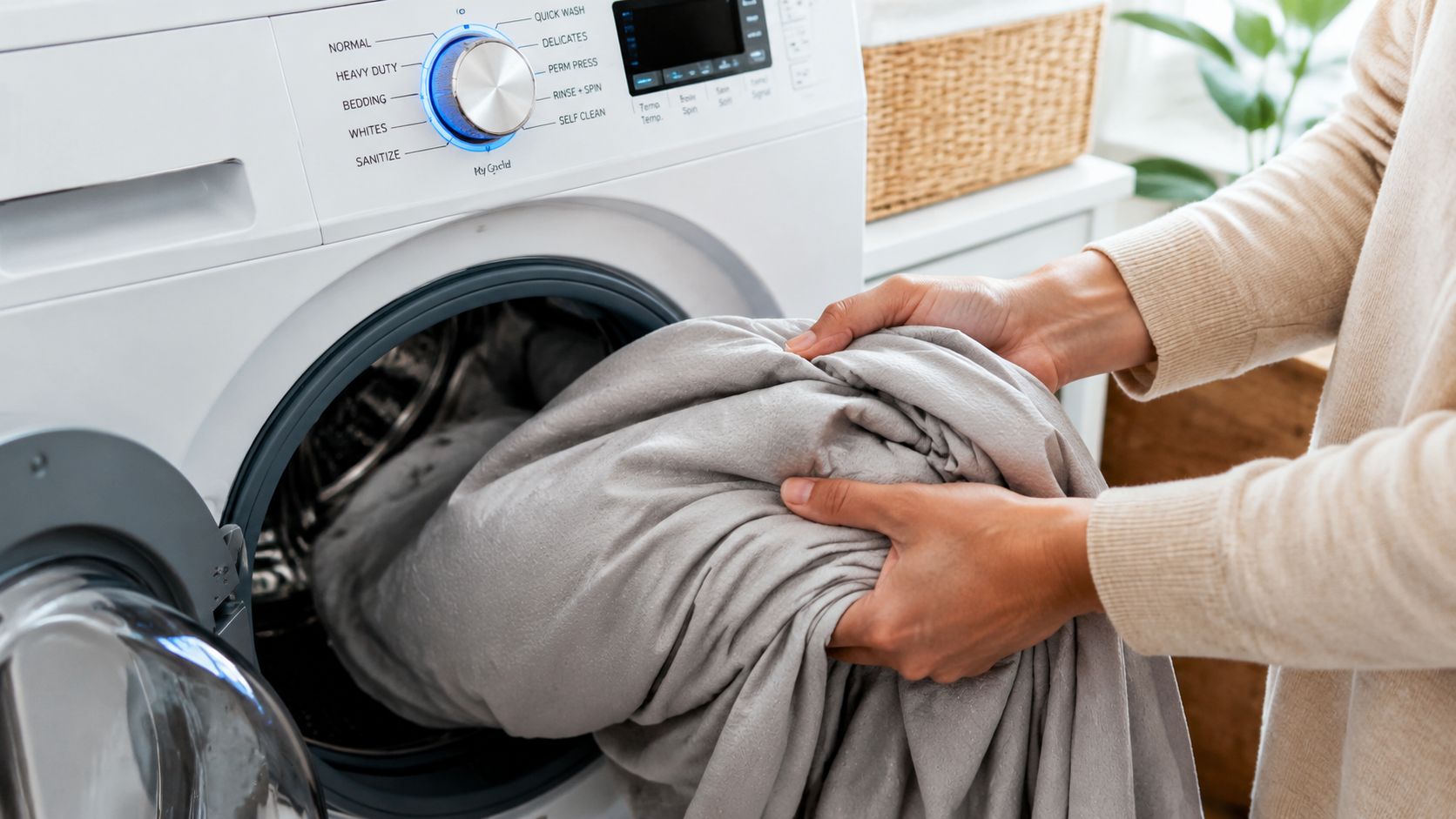
Use the wash cycle to relax, not punish, the fabric
Pick a gentle machine programme, use cool to lukewarm water, and choose a mild detergent. High spin speed compresses the fabric against the drum wall, which is exactly how fresh creases get set into a cover that was only slightly wrinkled to begin with.
If the cover is large, a balanced load matters. Similar-weight laundry helps the drum move evenly, while a badly unbalanced load tends to twist and bunch the cover in the wash.
Dry with tension in mind
Low tumble heat can soften wrinkles, especially if you add dryer balls to keep the cover from baling up. Flat drying also works well, particularly for larger covers that would otherwise stretch in the wrong direction on a line.
If you want the quickest practical smooth-out, pull the cover out while it is still a little damp, smooth it with your hands, and put it back on the sofa so it finishes drying under light tension. That approach works because the fabric dries in the shape you give it.
For a deeper cleaning reference that pairs well with this routine, use best way to clean fabric furniture from Canes Cleaners as a broader upholstery-care resource. For installation follow-up and washing-related troubleshooting, the internal guide on sofa cover cleaning is a useful companion.
Quick Fixes With a Hairdryer and Damp Towel
A hairdryer or damp towel can remove a single crease on a sofa cover fast, without dragging out an iron or remaking the whole seat. These fixes are best for one local wrinkle, not for deep packaging folds or covers that have been badly overstretched.
The hairdryer method
Hold the dryer on low to medium heat about 20 centimetres from the fabric, then smooth the crease outward with a flat palm. Work in short bursts of 30 to 60 seconds so the fabric warms evenly without getting hot enough to distort the surface.
A flat hand matters more than fingertips here. Fingertips can pull stretch spandex off grain, which leaves a small ripple where the original crease used to be.
The damp towel press
Lay a clean, wrung-out tea towel over the wrinkle and press gently so the moisture loosens the fibres. Keep the towel damp, not wet, because too much water can soak the foam beneath and make the cover dry unevenly.
Test on a hidden seam first, especially on darker or textured fabric. If the crease is still visible after a couple of passes, stop and move to steam or a full wash rather than overworking the area.
These quick fixes are ideal when the living room needs to look tidy fast. They are not a cure for a cover that has been installed with bad tension, and they won't fix permanent fold memory from being packed too tightly for too long.
Installing and Tensioning Spandex and Jacquard Covers Smoothly
A wrinkled sofa cover is often a poorly installed one, and the answer is usually better tension rather than more heat. Spandex and jacquard need different installation rhythms, because one stretches into place while the other has to be guided into position.
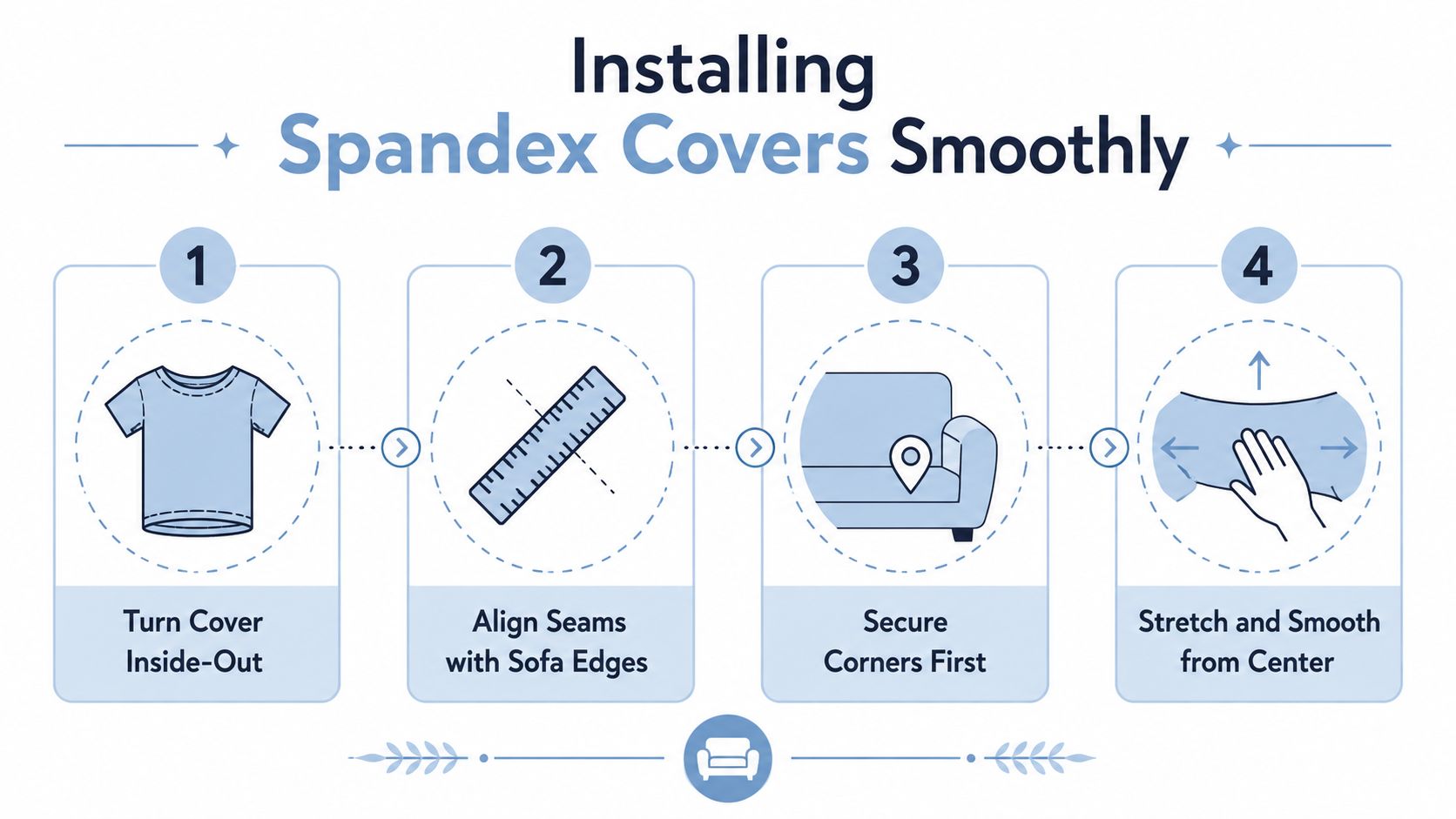
Spandex needs even pull, not brute force
Turn the cover inside out, line up the seams with the cushion corners, then work around the perimeter and pull evenly. Once the main shell is seated, tuck the foam inserts, the small rods or strips that fill the gap between the cushion and the frame, along each seam before flipping the cover right side out.
That sequence keeps the fabric balanced from the start. If one side is pulled tight before the other is anchored, the cover twists and the wrinkles stay baked into the fit.
Jacquard needs guided tension
A jacquard sofa cover has less give, so secure the back corners first, then the front corners, then distribute the remaining tension along the sides. If you drag diagonally across the frame, the backrest often ends up with smile-shaped creases that are hard to smooth out later.
Under-sofa clips help on smooth upholstery, especially on leather bases where the hem tends to slide. If the cover includes them, use them, because they hold the edge in place and reduce the slow sagging that creates recurring wrinkles.
Fit reality matters: a stretch cover made for a standard three-seater will not genuinely fit an L-shaped configuration. Forcing that kind of mismatch creates distortion, not a smooth finish.
If the sofa is a corner shape, the right answer is a corner-sofa-specific cover or a made-to-measure option. For installation trouble-shooting, the internal guide on installation troubleshooting is worth using alongside a fresh install.
Long-Term Maintenance and Prevention Habits
Wrinkle-free covers stay wrinkle-free because of routine, not because of one heroic cleaning day. A stretch spandex sofa cover or jacquard sofa cover holds its shape much better when you smooth it often, rotate the cushions, and keep the storage conditions sensible.
Build a simple maintenance rhythm
For family or pet households, wash the cover every four to six weeks. For guest-only rooms, every eight to twelve weeks is usually enough, provided the fabric stays clean and the fit remains stable.
A quick weekly pass with a dry hand across the seat and back does more than it sounds like it should. It resets small creases before they lock in, and it keeps the seams from drifting out of alignment.
Store spare covers the right way
Fold the cover along its original seams and keep it in a breathable cotton bag. Vacuum-sealed plastic traps moisture and presses the folds harder into the cloth, which is the opposite of what you want for wrinkle control.
If you manage rentals or short stays, keep a spare cover ready and inspect the foam inserts monthly. A missing insert is one of the quickest ways for sag wrinkles to come back, especially in a busy living room where cushions are moved often.
For hosts who want a fabric-specific care reference, the internal note on wrinkle-resistant covers fits neatly with a preventative routine. It pairs well with a broader fabric-care approach, especially when a cover has to look tidy between bookings.
The Sofa Cover Crafter makes it easier to keep sofa covers looking smooth, fitted, and ready for real life, whether you're dealing with stretch spandex, jacquard, or a washable velvet finish. If you want covers, throws, and practical fitting details that help with everyday wrinkle control, visit The Sofa Cover Crafter and choose the style that suits your sofa and your routine.
