


Your sofa looks tired, the budget is tight, and a full reupholster is out of the question. Cushion covers cheap solve that problem fast, especially when you're buying 45cm x 45cm covers only, with the pad you already own staying put, and the entry price starts from £7.90 across the Classic Stretch Pillow Cover range in 21 colours. That low price doesn't buy a new cushion, it buys a new surface, which is the whole point when you want a room to look deliberate without spending like you're replacing the furniture.
Table of Contents
- What Cushion Covers Cheap Really Buys You
- Woven Jacquard or Printed Face, and Why It Matters at the Same Price
- Does a 45cm Pillow Cover Fit Any Pad on the Sofa
- Plain Covers Plus One Patterned Cover for a Planned Look
- How to Keep Cheap Covers Looking Good Past the First Wash
- Why the Cheapest Cover Is Not Always the Lowest-Cost Choice
- Safety, Returns and the Questions Worth Asking Before You Buy
- Beyond Scatter Covers and the Right Way to Finish
What Cushion Covers Cheap Really Buys You
A cheap cushion cover buys you a visible change, not a bigger cushion. The insert is the bulky part of a cushion, so a cover-only purchase lets you keep the pad, change the look, and put last season's covers back on later when the room needs a reset.
The entry price sits from £7.90 across several families of pillow covers, including Classic Stretch Pillow Cover, Crosshatch, Flecked, Linear Geometric, Diamond Jacquard, Original Jacquard, and the Printed range, which includes Tonda, Cherury, Vintage Printed, and Geo Chic. Every pillow cover is 45cm x 45cm, sold as 1 piece or 2 pieces, and sold as a cover only, so the money goes into the surface you see.
That's why cheap doesn't mean pointless. A new cover changes colour, pattern, and texture for a fraction of the cost of changing the cushion itself, and that matters most in rental flats, family rooms, and guest spaces where the sofa needs to look intentional without a full refurb.
If you're comparing cushion details as well as cover style, cushion zip buying tips is a useful sewing-side reference for understanding closures and how they affect everyday use.
Practical rule: buy the cover when the insert is still sound, buy the insert when the cushion has lost shape.
The right way to think about cushion covers cheap is simple. You're not shopping for a downgrade, you're shopping for a controlled change of surface, and that's what makes the spend work.
Woven Jacquard or Printed Face, and Why It Matters at the Same Price
The construction matters more than the sticker price when two covers sit in the same entry bracket. Jacquard families have the pattern woven into the cloth, while printed families carry the design on the face of the fabric, where washing, rubbing, and sunlight act on the surface. For a plain-language explanation of the weave itself, see what jacquard fabric means.
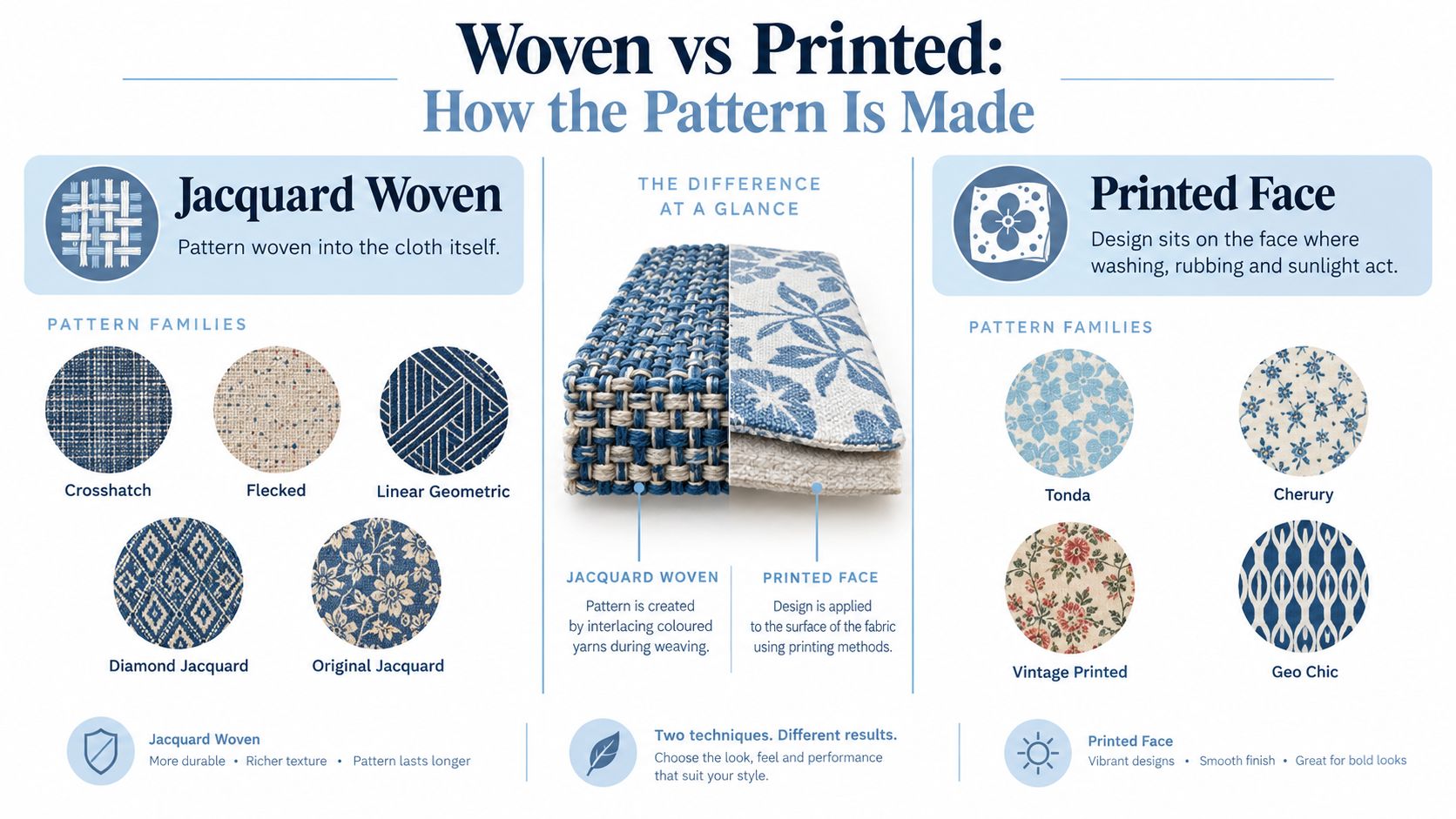
That difference is about the look and the feel. Diamond Jacquard and Original Jacquard are woven constructions, while Tonda, Cherury, Vintage Printed, and Geo Chic are printed faces. Woven jacquard usually reads as more textured and quieter to the eye, while printed fabric gives a bolder graphic statement.
A simple buying rule helps here.
- Choose woven jacquard when you want the pattern to feel built into the cloth.
- Choose printed fabric when you want the design to sit on the face and read louder from across the room.
- Choose based on style, because the same price can buy two very different looks.
The same price can buy two very different looks, and choosing between them on style is the value move.
Does a 45cm Pillow Cover Fit Any Pad on the Sofa
A 45cm x 45cm pillow cover fits a 45cm pad, and it doesn't magically fit a much larger insert. The Classic Stretch Pillow Cover is a plain stretch cloth designed to grip a 45cm pad snugly, so the right match matters more than the promise of stretch.
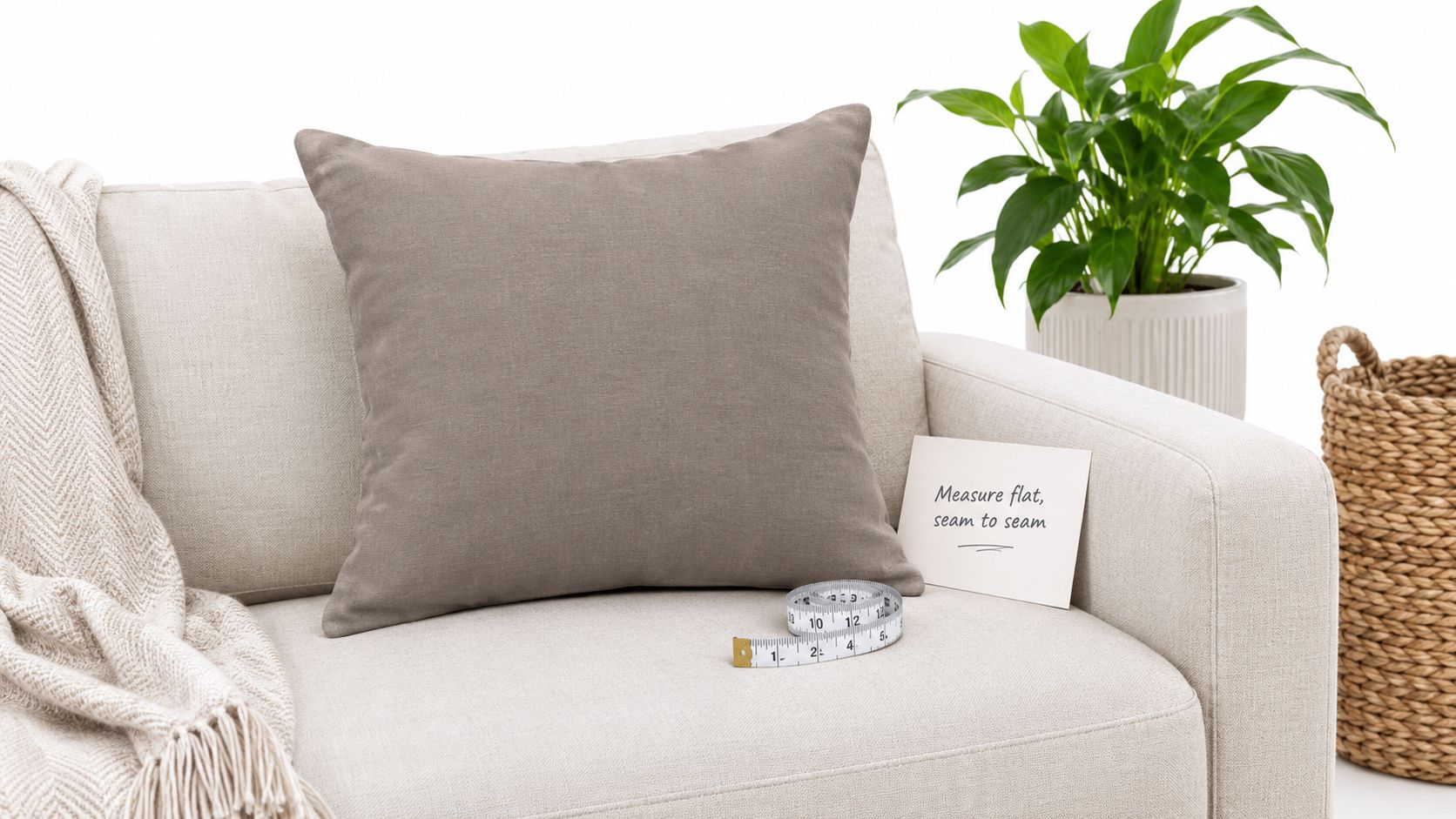
Measure the pad flat, seam to seam, and use the widest measurement. Do not guess from loft, puffiness, or how full the insert looks in the hand. A cover that fits the flat measurement gives a clean shape, while a 45cm cover pulled over a much larger pad, such as 55cm, sits strained, flattened, and visibly undersized.
That's the point people miss when they chase the cheapest option. A tight-looking cover is good only when the numbers match, because a strained fit makes even a neat fabric look wrong. The same rule applies whether you're dressing one scatter cushion or swapping several around the room.
Measuring rule: lay the insert flat, measure seam to seam, and buy for the insert you own, not the one you wish you had.
For buyers comparing fuller sofa-cushion formats, the sizing logic is different again, which is why the larger cushion covers 55 cm x 55 cm guide is the better reference when the insert itself is oversized.
Plain Covers Plus One Patterned Cover for a Planned Look
A sofa looks most finished when one patterned cover leads and the plain covers support it. That's the cheapest route to a planned result, because the pattern gives the room a colour story and the plain Classic Stretch covers pull one or two colours out of that story without making the arrangement busy.
Use Linen Beige or Clay Grey when the patterned cover is warmer or more grounded. Use Cherry Red or Night Blue when the printed design has stronger contrast or a cooler edge. The point isn't to match everything exactly, the point is to make the cushions feel chosen rather than assembled.
- Do keep the pattern count to one on the same sofa.
- Do let the plain covers borrow a shade from the patterned cover.
- Don't mix two bold prints on the same seating group.
- Don't scatter random colours and hope the eye will forgive the mismatch.
A few covers used with intent beat a pile of covers used at random. That's how a small spend starts to look more considered than a much bigger one.
How to Keep Cheap Covers Looking Good Past the First Wash
Cheap covers only stay cheap if they keep working after the first clean, and that's the standard to aim for with every washable cover.
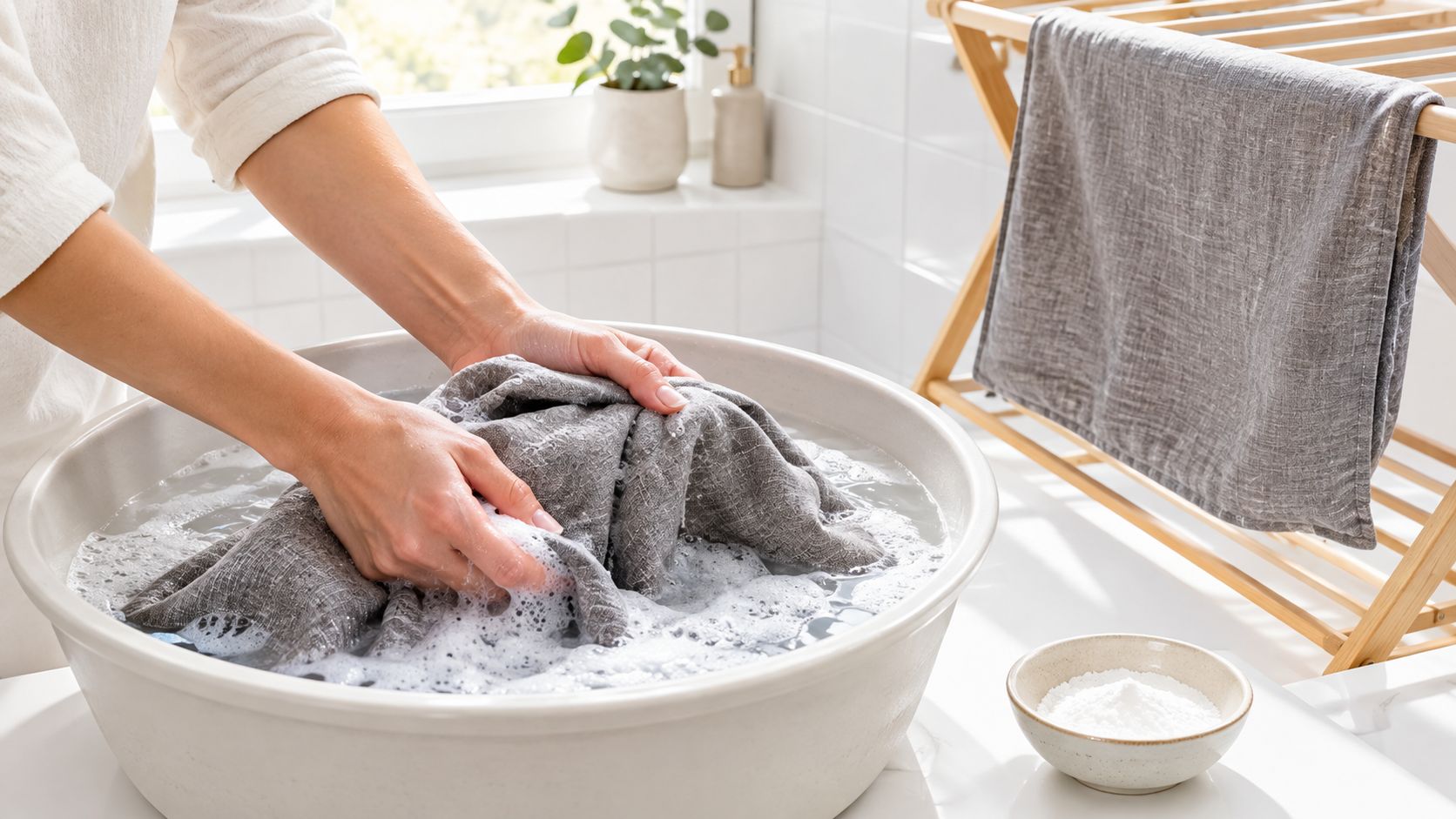
Start with the sewn care label on the cover, not with a rule of thumb. Wash at the setting the label gives, and never hotter than it allows. Heat can shrink fabric, soften colour, or distort trims, so the label beats habit every time.
Before washing, check the closure and turn the cover the way the maker expects. That keeps the shape cleaner and reduces strain on the seam and fastening. Air-drying is the safer default when the fabric and label allow it, because aggressive heat does more damage to a budget cover than most buyers expect.
The wrong instinct is to treat a cheap cover like a throwaway. The right instinct is to keep it in rotation, wash it carefully, and let it do its job for more than one season.
Care rule: the sewn label is the contract. Follow its wash setting, not habit.
How to wash sofa covers without shrinking is the sensible next check if you want a more general washing reference before you buy.
Why the Cheapest Cover Is Not Always the Lowest-Cost Choice
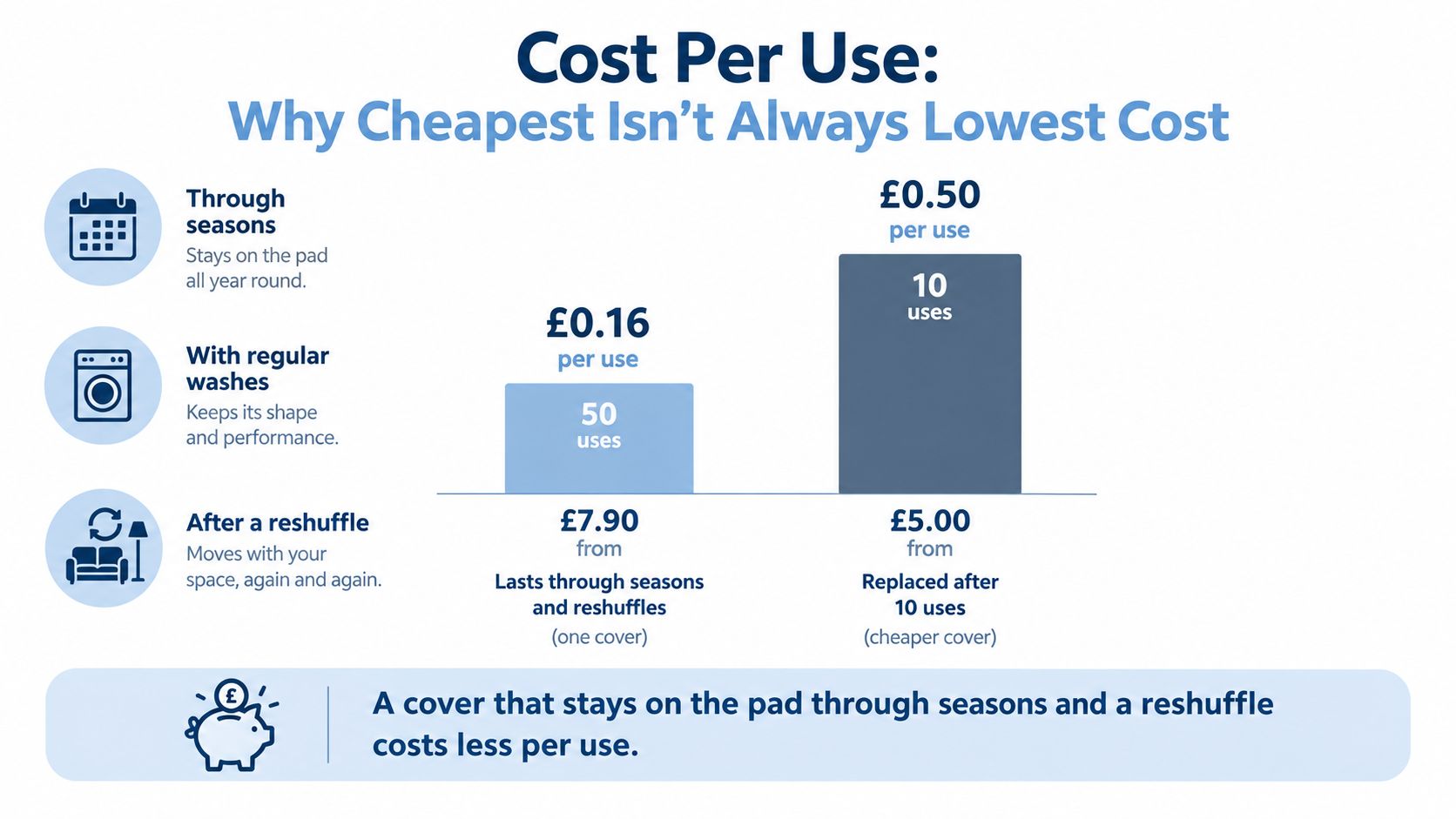
The lowest sticker price can be the wrong deal if the cover doesn't stay in use. A cover that survives washing, stays neat on the pad, and keeps the room looking fresh costs less per use than a cover that gets replaced after a short run.
Piper D., on the Classic Stretch Pillow Cover in Clay Grey: “Feels super soft, and you can tell it’s made well; the stitching's spot on too. Price wise, it's a good value for what you get—totally worth it!”
That's the value case in one line. A low-cost cover earns its place when the stitching, finish, and look all hold together well enough that the room reads as styled, not patched up.
That matters in the UK because household waste still shows how quickly furniture and textiles can end up on the wrong side of the life cycle. WRAP estimated that roughly 1,590,000 tonnes of bulky waste were collected across the UK in 2010/11, with furniture making up about 42% and textiles about 19% of that total. The government's waste prevention programme for England reported that more than 1 million tonnes of textiles entered England's household and commercial residual waste in 2017, including around 430,000 tonnes of non-clothing textiles, and that furniture, furnishings and carpets were associated with 8.7 MtCO2e of UK consumption-based greenhouse-gas emissions in 2019.
WRAP's bulky household items report, the government's waste prevention programme
That's why a washable, well-fitting cushion cover is worth taking seriously. If a cover protects the insert from stains, pet wear, and everyday abrasion, and stays usable through cleaning, it delays disposal and keeps the cushion doing its job.
The cheapest item on the page is not automatically the lowest-cost choice once you count replacement frequency, poor fit, and damage from forcing the wrong size. Cheap only turns into value when the cover keeps looking right long enough to justify the purchase.
Safety, Returns and the Questions Worth Asking Before You Buy
Fire-safety rules still apply to cushions in the UK. The Furniture and Furnishings (Fire) (Safety) Regulations 1988 cover upholstered furniture, including cushions and loose covers, and a cover should never hide the sofa's permanent fire-safety label.
For online orders in the UK, the Consumer Contracts Regulations give buyers a 14-calendar-day cancellation period starting the day after delivery. After you notify the seller, you normally have a further 14 days to return the goods, and the seller must refund the money within 14 days of receiving the return or proof that it was sent back, along with standard delivery charges, although return postage can still fall to the customer unless the retailer says otherwise.
Before checkout, confirm four things and avoid hassle later:
- Size: the cover matches the pad you own.
- Family: Classic Stretch, Jacquard, or Printed fits the look you want.
- Closure: the fastening suits how often the cover will be removed.
- Format: the listing is cover only, not a bundle with inserts.
That short check is cheaper than a return, and a return is always more annoying than choosing carefully in the first place.
Beyond Scatter Covers and the Right Way to Finish
If the seat cushions and back cushions need covering, not the scatter pads, the Sofa Cushion Covers range is the right next stop, with Standard, Deep, and Chaise size bands from £12.90 and the same cover-only logic, so the existing pads stay in place while the look changes.
The value formula stays the same either way. Cover, not cushion, woven jacquard versus printed face, measure the pad before you buy, plain covers plus one patterned cover, and the care label is the contract. The cheapest cover only wins when it stays useful, fits properly, and makes the room look chosen.
If you want a low-cost refresh that still feels considered, shop the cover first and the colour story second. Browse our pillow covers for cover-only options, compare the 45cm scatter range with the larger sofa-cushion sizes, and pick the construction that matches how you live with the sofa.
