



When it comes to the best material for sofa covers, you’re really looking for that sweet spot where durability, comfort, and style all meet. For a busy home full of kids and pets, a synthetic fabric like microfibre or polyester is a lifesaver with its amazing stain resistance. But if you're after a softer, more breathable feel for everyday lounging, natural materials like cotton are hard to beat.
So what happens if you adore the breezy look of linen but you live with a toddler and a golden retriever? This is where a high-quality sofa cover becomes your secret weapon. Modern sofa covers are a world away from the baggy, ill-fitting sheets of the past.
Today’s best options, often made from clever spandex blends or elegant jacquard weaves, are designed to fit snugly over your sofa. They provide a protective layer without forcing you to compromise on style, letting you enjoy the aesthetic of a high-maintenance fabric with the practicality of a performance one. For a deeper dive, learn more about the best sofa fabric choices for different lifestyles in our dedicated guide.
This approach really does offer the best of both worlds. You get the exact sofa you love, and the cover takes all the hits from daily life. When a spill inevitably happens, you just whip the cover off and pop it in the wash, leaving your sofa completely pristine underneath.
Finding the Perfect Fabric for Your Sofa Cover
Choosing the right material for a sofa cover can feel a bit overwhelming, but it's really all about matching the fabric to your life. This isn't just about picking a colour that goes with your curtains; it’s about finding a textile that can handle the reality of your day-to-day.
Think of it like dressing your sofa for the occasion. A home buzzing with family life needs a tough, washable workhorse—a fabric that can take on spills, pet hair, and constant use without throwing in the towel. In contrast, a sofa that sits quietly in a more formal room can get away with something a bit more luxurious and high-maintenance.
This guide will walk you through it all, step by step. We'll explore the most popular materials out there, from breezy natural fibres to hard-wearing modern synthetics. The goal is to give you the confidence to weigh up the pros and cons of each, so you can find that perfect balance for your home.
Before we dive in, here are a few things to get you thinking:
- Lifestyle: Do you have pets? Kids? Are you a frequent host? Your answers will point you towards more durable, easy-clean options.
- Comfort: How do you want it to feel? Some people crave the cool, soft touch of cotton, while others prefer the plush, cosy warmth of velvet.
- Aesthetic: What’s the vibe you're going for? Linen gives off a relaxed, elegant feel, while a bold jacquard can create a more traditional, formal look.
- Maintenance: How much effort are you willing to put in? For many, a machine-washable fabric is a non-negotiable must-have.
Keep these points in mind as we explore the different fabrics. And for more practical tips on giving your furniture a fresh new look, check out our guide on how to cover a couch. By the time you're done here, you’ll be ready to pick a cover that not only protects your sofa but also perfectly suits your home.
The Enduring Appeal of Natural Fibre Covers
There's something about natural fibres that just feels right, isn't there? When you're picking out a sofa cover, materials like cotton, linen, and wool have a timeless charm that's genuinely hard to beat. They offer a certain softness and breathability that synthetic fabrics often try to imitate but can never quite capture.
Think of a cotton sofa cover as being like your favourite, perfectly worn-in t-shirt. It’s comfortable, familiar, and just right for curling up on. This versatility means it looks just as good in a busy family room as it does in a more formal living space. Plus, its breathable nature means you won't get that sticky feeling on a hot summer's day.
Linen, on the other hand, is all about relaxed, airy elegance. It has a beautiful, slightly textured weave that adds a touch of sophistication without feeling stuffy. Yes, it does wrinkle, but for many, that's part of its appeal – it creates a chic, lived-in look that feels both inviting and stylish.
These materials connect us to a sense of classic comfort, and for good reason.
As you can see, being hypoallergenic and wonderfully soft to the touch are just a couple of the reasons people are consistently drawn to natural fibres for creating a truly cosy home.
Weighing the Pros and Cons
Of course, while we love the feel of natural fabrics, we have to be practical. They tend to be more absorbent than their synthetic cousins, which means you'll want to tackle any spills quickly to prevent them from setting in.
That said, don't mistake them for being delicate. A heavy cotton canvas or a sturdy twill weave is a fantastic all-rounder for a busy household, holding its own against the rigours of daily life. These tighter weaves are much more resilient to the friction that comes with constant use.
It's clear people still love these classic materials. In fact, forecasts for the UK furnishing market show a steady rise, with an expected compound annual growth rate of 2.6%, hitting a wholesale value of around $296 million by 2035.
Making the Right Choice for Your Home
So, is a natural fibre sofa cover the right fit for your home? It all comes down to balancing the look you want with the life you live.
- For Family Life: A durable, machine-washable cotton is often the perfect compromise, giving you both softness and practicality.
- For a Formal Space: A beautiful linen cover can create a stunning focal point in a room that sees less daily chaos.
- For Allergy Sufferers: Since they're naturally hypoallergenic, these fabrics are a godsend for anyone with sensitive skin.
The real secret is to match the fabric’s personality to the room's purpose. A robust cotton is a workhorse for high-traffic areas, while a more refined linen is perfect for adding a touch of elegance to a quieter, more grown-up space.
Choosing the right fabric is one of the most important steps in getting the look and feel of your room just right. If you want to explore the options in more detail, our guide on the best fabric for your sofa is a great place to start. In the end, natural fibres offer a connection to comfort and quality that keeps them a beloved choice in homes everywhere.
High-Performance Synthetic Sofa Covers
When your home is less of a show-home and more of a real, lived-in space filled with kids, pets, and the occasional spilled drink, you need a sofa cover that can keep up. This is exactly where high-performance synthetic fabrics come into their own. Think of them as the superheroes of the upholstery world, engineered specifically to defend your furniture from the realities of daily life.
Unlike natural fibres which tend to soak up messes, synthetics like polyester and microfibre act more like a force field. They’re built for resilience, offering a seriously practical solution for anyone who wants a stylish home without constantly worrying about stains and wear.
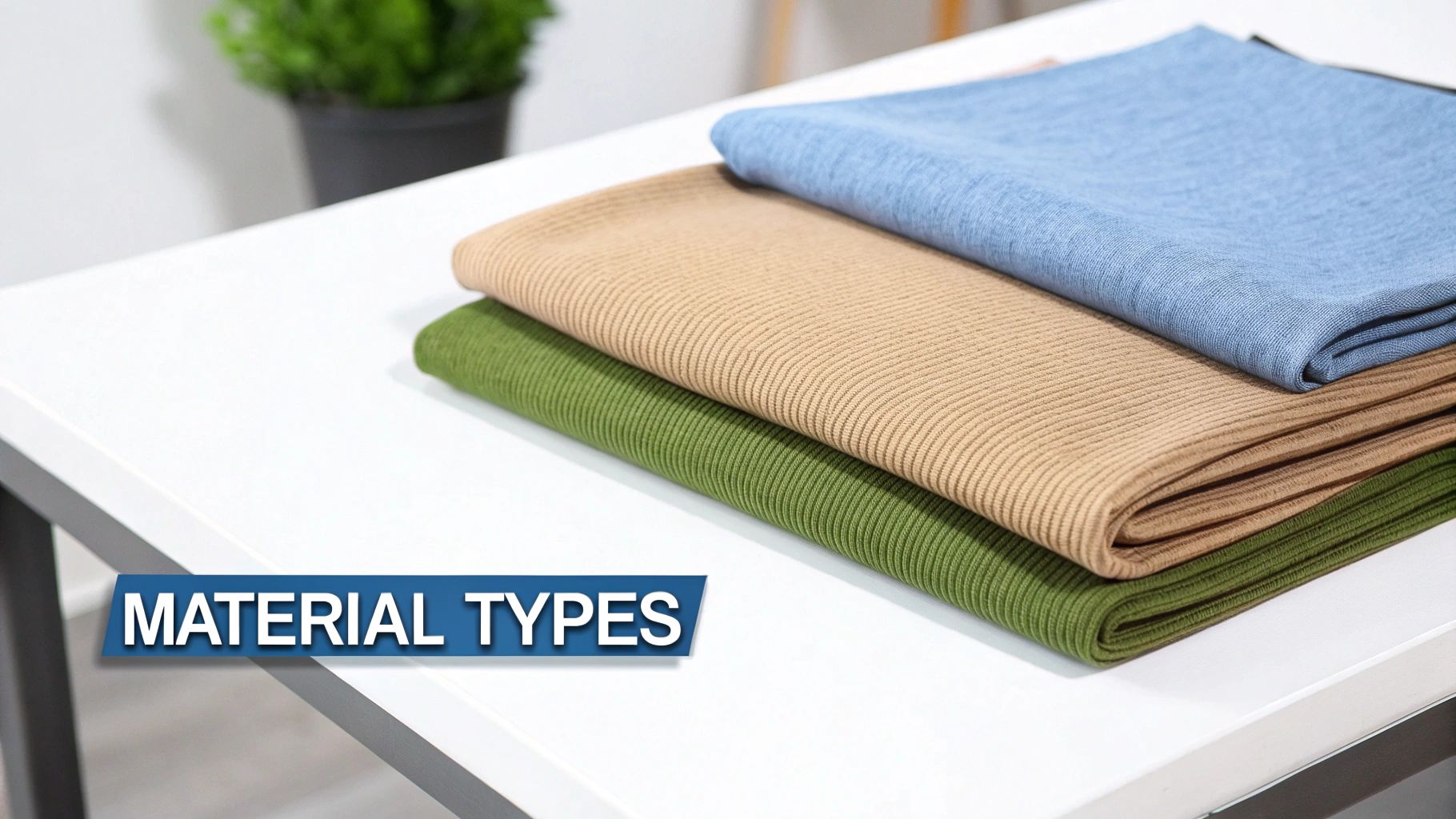
Polyester: The Everyday Champion
There’s a good reason polyester is one of the most popular choices for sofa covers. It’s the trusty workhorse of fabrics – incredibly durable, affordable, and more than capable of handling daily life. One of its best features is its resistance to fading, making it a brilliant choice for a sofa that sits in a sunny spot by a window.
Polyester is also naturally wrinkle-resistant, which means your sofa stays looking neat and tidy with very little fuss. While older versions had a reputation for feeling a bit plasticky, modern polyester blends have come a long way, offering a much softer and more comfortable feel than you might remember.
At its core, polyester’s biggest selling point is that it’s low-maintenance. It shrugs off stains, is a doddle to clean, and holds its shape and colour brilliantly over time, making it fantastic value for any busy household.
Microfibre: The Soft and Mighty Protector
Imagine a velvet glove wrapped around an iron fist – that's microfibre. It has this wonderfully soft, almost suede-like feel that’s a pleasure to touch, but don't let that fool you. Its performance is nothing short of formidable. The fibres are woven incredibly tightly together, creating a dense barrier that liquids find almost impossible to get through.
This super-tight weave makes microfibre a godsend for pet owners. It’s tough enough to stand up to claws and doesn’t trap pet hair like fabrics with a looser weave do. When spills happen, they tend to bead up on the surface, giving you that crucial window to grab a cloth and wipe them away before they have a chance to set.
Let’s quickly sum up what makes these synthetic warriors so great:
- Exceptional Durability: They are literally engineered to withstand high traffic, constant friction, and frequent use without looking worn out.
- Stain Resistance: The fibres are non-porous, which helps them repel spills and makes clean-ups far less of a drama.
- Fade Resistance: The dyes used in synthetics are more stable, meaning colours stay bold and true, even in a sun-drenched room.
- Affordability: You’re getting top-tier performance at a much more budget-friendly price compared to most natural or luxury materials.
Synthetic Fabric Comparison Guide
This quick-glance table breaks down the most popular synthetic choices, helping you pinpoint the best material for your home based on what really matters.
| Fabric Type | Durability | Stain Resistance | Fade Resistance (Sunlight) | Best For |
|---|---|---|---|---|
| Polyester | Excellent | Very Good | Excellent | Busy families, sunny rooms, all-around use. |
| Nylon Blend | Superior | Good | Good | High-wear areas, homes with active kids. |
| Microfibre | Very Good | Excellent | Very Good | Pet owners, households prone to spills. |
At the end of the day, choosing a synthetic fabric is a smart, forward-thinking decision. It allows you to prioritise longevity and ease of care without sacrificing style, ensuring your sofa remains a centrepiece of your home for years to come, no matter what life throws its way.
A Few Things to Keep in Mind
As brilliant as synthetic sofa covers are, there are a couple of small trade-offs. They aren’t as breathable as natural fibres like cotton or linen. This might be something to consider if you live in a warmer climate or simply prefer a fabric that feels cooler against the skin.
Also, some lower-quality synthetics can be prone to "pilling" – those annoying little bobbles of fabric that appear after a lot of use. The easy way to avoid this is to opt for a high-quality, high-denier polyester or microfibre from the start. It ensures your cover will stay smooth and look great for years.
Ultimately, if you need a low-maintenance, high-protection solution that can handle pretty much anything your family throws at it, synthetics are an unbeatable choice.
Elevating Your Space with Jacquard and Velvet
Sometimes, a sofa cover is about more than just everyday protection. It's a chance to make a powerful design statement and completely transform the feel of your living room. If you want to dial up the sophistication or create a genuinely inviting sanctuary, jacquard and velvet are the two materials that really deliver, offering a feast for the eyes and a delight to the touch.
These fabrics go beyond a simple colour change. They bring texture and depth into play, turning your sofa into an intentional, stylish centrepiece.
The Artistry of Jacquard
The best way to think of jacquard is not just as a fabric, but as a piece of woven art. Unlike printed designs that are stamped onto the surface, jacquard patterns are woven directly into the material on a special loom. This process creates wonderfully intricate, often multi-toned designs with a slightly raised texture you can both see and feel.
This built-in texture gives jacquard covers a substantial, high-quality feel in your hands. It adds a bit of visual weight and complexity to your space, effortlessly making your décor feel more considered. A jacquard cover might introduce a subtle damask or floral pattern that catches the light beautifully, making your sofa look far more luxurious and thoughtfully styled.
Jacquard’s strength is its integrated design. Because the pattern is part of the fabric’s structure, it won't just fade or wear off over time. This makes it a durable and elegant choice for adding lasting character to your furniture.
That tight weave also provides a surprising level of durability, making it a brilliant option for homes that want style without having to be overly precious. It holds its own against snagging and keeps its shape incredibly well, proving that a sophisticated look can also be a practical one.
The Timeless Allure of Velvet
Velvet has an appeal that’s impossible to ignore, instantly bringing to mind feelings of warmth, comfort, and a touch of luxury. Its distinctively plush, soft-to-the-touch surface comes from its dense, evenly cut fibres, which have a beautiful pile that plays with the light. It's this quality that gives velvet its signature sheen and rich depth of colour.
Choosing a velvet sofa covering is the perfect move for crafting a cosy, inviting atmosphere, especially during those cooler autumn and winter months. It’s the kind of material that just encourages you to curl up and relax, turning your living room into a proper retreat from the world.
But don’t mistake its softness for fragility. Modern velvet covers are engineered for the realities of daily life. They’re often made from durable polyesters that are surprisingly easy to clean and look after, completely busting the old myth that velvet is too delicate for a busy home. It offers that perfect blend of indulgent comfort and everyday practicality, letting you enjoy a touch of luxury without the worry.
Trending Now: Luxurious and Eco-Friendly Fabrics
Choosing a sofa cover isn’t just a practical decision anymore; it’s a statement about your personal style and what you care about. Right now, two major trends are influencing how we think about furniture fabrics, putting the spotlight on both lavish textures and environmental responsibility. You can get that high-end, designer look and feel good about your choice.
On the one hand, we're seeing a real love for materials that feel incredible to the touch. Think plush velvets and buttery-soft faux suedes. These fabrics aren’t just about looking good; they’re about creating a sensory experience, turning your sofa from a simple piece of furniture into the undeniable centrepiece of your room. They bring a depth and warmth that can instantly make a space feel more glamorous.
The Move Towards Greener Materials
At the same time, a powerful shift towards sustainability is changing the game in home furnishings. As we all become more mindful of our environmental impact, the demand for eco-friendly sofa covers has shot up. This isn't about settling for second best, either. It’s about finding materials that are beautifully crafted and responsibly sourced.
This conscious consumerism has pushed some brilliant alternatives into the spotlight:
- Organic Cotton: It has all the soft, breathable comfort you expect from cotton, but it's grown without harsh pesticides, making it a much gentler choice for the planet.
- Recycled Polyester: This is where smart thinking meets style. Often made from recycled plastic bottles, this fabric rescues waste from landfill and turns it into something durable and fantastically stain-resistant.
- Bamboo Fabric: Renowned for its silky texture and sustainable credentials, bamboo is a fast-growing wonder plant that needs very few resources to thrive.
These options are solid proof that you don't have to sacrifice style to support a healthier planet.
Matching Your Sofa to Your Style and Values
The best part? These two trends are increasingly overlapping. It's now easier than ever to find a sumptuous velvet made from recycled fibres or an organic cotton woven into a sophisticated, modern design. This convergence means you can truly align your home's aesthetic with your personal values.
In fact, sustainability has become a huge factor for UK shoppers. Recent reports show a clear preference for fabrics like organic cotton and recycled polyester, alongside a continuing desire for luxurious textures. You can dive deeper into what's shaping the market by exploring the current UK sofa cover trends.
Your sofa cover is an opportunity to tell a story. Whether you choose the unapologetic opulence of a rich velvet or the quiet elegance of an organic linen, you're making a statement about what matters to you.
Ultimately, today's trending fabrics give you the best of both worlds. They offer a simple, effective way to breathe new life into your living space, protect your furniture for years to come, and make a conscious choice you can be proud of.
How to Properly Care for Your Sofa Cover
https://www.youtube.com/embed/BBrMeY3W3Q0
You’ve made a smart choice by getting a quality sofa cover, but keeping it looking great for years to come all comes down to how you care for it. The best piece of advice I can give is simple: always, always check the care label first.
Think of that little tag as your cover’s personal instruction manual. Following its guidance is the single best way to avoid common laundry mishaps like shrinking, colour bleeding, or accidentally damaging the fabric's texture.
Everyday Cleaning and Washing
A quick look at the label will save you a world of trouble later on. You’ll find that most hard-wearing synthetic fabrics, like polyester or microfibre, are designed with real life in mind. For these, a gentle cycle in the washing machine with cold water and a mild detergent is usually all it takes to freshen them up.
Natural fibres, on the other hand, need a bit more TLC. Materials like cotton and linen are notorious for shrinking if they get too hot, so stick to a cool wash and a low tumble dry. Even better, let them air-dry to perfectly preserve their shape and feel.
Tackling Common Stains
Let’s be honest, spills are just a part of life. The secret to winning the battle against stains is speed. As soon as a spill happens—whether it’s coffee, wine, or juice—grab a clean, dry cloth and gently blot the area. Whatever you do, don't rub! Rubbing just grinds the stain deeper into the fabric’s weave.
Got an oily mark from a pizza slice or greasy fingers? Bicarbonate of soda is your secret weapon. Sprinkle a little over the stain, let it sit for about 20 minutes to soak up the oil, and then gently brush it away before treating the spot with a mild cleaning solution.
A Pro Tip: Before you go all-in with any cleaning product, always test it on a small, hidden spot first, like an inside seam. This quick check ensures it won't discolour or damage the fabric before you apply it somewhere more obvious.
Quick Guide to Sofa Cover Care by Material
To make things even easier, here’s a quick-reference table for cleaning some of the most popular sofa cover materials. It's a handy cheat sheet for those moments when you need to act fast.
| Material | Washing Instructions | Stain Removal Tip |
|---|---|---|
| Polyester | Machine wash cold, gentle cycle. | Use a mix of mild soap and water. |
| Cotton | Machine wash cool to prevent shrinking. | Blot with a damp cloth and mild detergent. |
| Velvet | Spot clean or professional dry clean. | Gently brush with a soft-bristled brush. |
| Linen | Gentle machine wash or hand wash cold. | Blot with a solution of water and white vinegar. |
A little bit of care goes a long way, and following these simple guidelines will help you get the most out of your sofa cover.
If you love the idea of hassle-free maintenance, you might want to explore our full range of machine washable couch covers, which are designed for the ultimate convenience without ever sacrificing style.
Getting the Fit Right
The right fabric is only half the job—a cover that's the wrong size or badly fitted will look untidy no matter how good the material is. Here's how to get a snug, wrinkle-free result every time.
Measure for a Flawless Fit
There’s nothing worse than a cover that constantly slips, bunches, or looks baggy. A perfect, snug fit all starts with accurate measurements. Don't just eyeball it; grab a tape measure to make sure you get that crisp, professional finish.
Measure the length, height, and depth of your sofa, paying close attention to the shape of the armrests and any unique curves. For L-shaped or corner sofas, the trick is to measure each section separately, as if they were two different pieces of furniture. This ensures you order the right sizes for a seamless combination.
Achieving a Wrinkle-Free Finish
The first step to getting that professional, upholstery-like look is to use the complimentary non-slip foam inserts that come with your cover. Think of these as the anchors for your new look.
Simply push them deep into the crevices between your sofa’s cushions and its frame. This simple action locks the fabric in place, stopping it from shifting or bunching up, even with daily use.
Next, you’ll find some discreet securing clips or ties. These go underneath the sofa, completely out of sight, and pull the entire cover taut from all angles. It’s this combination of anchoring from within and tension from below that ensures a smooth, snug fit that hugs every contour of your furniture.
A secure fit is the foundation of a great-looking sofa cover. Using foam inserts and under-sofa clips prevents the frustrating slipping and bunching that can make a cover look untidy. It’s a simple system designed for a lasting, polished appearance.
Matching Your Sofa Cover to Your Lifestyle
Choosing the perfect sofa cover is less about just picking a colour and more about finding the right partner for your home’s unique rhythm. It’s a balancing act, really—a decision that marries your day-to-day life with your design dreams. Once you get a feel for how different fabrics stand up to real-world use, you can pick a cover that feels like it was made just for you.
Think of it this way: your sofa cover should work with your life, not against it. A bustling family home with kids and pets is a world away from a quiet, formal sitting room, and your fabric choice needs to reflect that reality.
For Homes with Young Children
When children are in the picture, durability and cleanability become non-negotiable. Sofas in family homes have to withstand absolutely everything—from sticky fingers and spilled juice to being used as an impromptu fort.
Your best bets are going to be synthetic microfibres or performance fabrics that have been treated for stain resistance. These materials are engineered to repel liquids, giving you a crucial window to blot up messes before they have a chance to set in. A tightly woven polyester is another fantastic, budget-friendly option that stands up well to friction and frequent cleaning.
For Pet Owners
Pets bring so much joy, but they also introduce their own unique set of challenges, like fur, claws, and the occasional accident. The right sofa material can make living peacefully with your four-legged friends a whole lot less stressful.
Leather is a brilliant choice, as it doesn’t trap pet dander and you can easily wipe fur right off. For those who prefer fabric, microfibre is a top contender because its tight weave is great at resisting snags from claws and makes hair removal simple. For an extra layer of defence, you might be interested in our guide on choosing the best couch protectors for pets.
For Rental Properties and Landlords
In a rental or a holiday let, furniture has to be exceptionally robust to handle frequent turnover and varying levels of care. The goal here is maximum longevity with minimum faff and maintenance.
Opt for dark-coloured, heavy-duty polyester or even commercial-grade synthetic blends. These materials are built to last and are very forgiving when it comes to hiding minor marks. Most importantly, a landlord's secret weapon is pairing a durable sofa with a machine-washable sofa cover, allowing for a fresh, hygienic reset between every single tenant.
With the UK's residential furniture market forecast to hit £18.8 billion by 2025, it's clear that a sofa is a major investment for any household. This makes protective solutions like sofa covers increasingly vital, not just for extending the furniture's life but for adapting to new design trends and safeguarding that initial investment against daily wear and tear. You can discover more insights about the growing furniture market on insidermedia.com.
Got Questions About Sofa Covers? We’ve Got Answers
Choosing the right sofa cover can feel like a big decision, and it’s natural to have a few questions. We’ve been there. To help you out, here are our answers to some of the queries we hear most often, helping you feel confident in your choice.
What’s the Best Sofa Cover Material if I Have Pets?
When pets are part of the family, you need a cover that can handle everything from muddy paws to sharp claws. Your best bet is a tightly woven synthetic fabric.
Think along the lines of a tough polyester canvas or a quality microfibre. The tight weave is the real hero here – it resists snagging and tearing far better than looser fabrics. As a bonus, pet hair tends to sit on the surface instead of weaving its way in, making clean-up a breeze. Most are also machine washable, which is a lifesaver for dealing with dirt and those inevitable pet odours.
Can I Put a Stretch Sofa Cover on My Leather Sofa?
Yes, you certainly can. It’s a great way to change up the look or protect the leather. There's just one little trick to making it work perfectly.
Leather is naturally smooth, which means a stretch cover can sometimes slip and slide around. To stop it from bunching up, you’ll need to create a bit of grip. You can use some non-slip padding (like the kind you’d put under a rug) or simply tuck the foam inserts that often come with the cover deep into the crevices. This creates enough friction to hold it all snugly in place.
Pro Tip: The key is to create friction between the smooth leather and the fabric cover. The foam inserts or a non-slip mat placed under the cover work wonders to keep it looking neat and tailored.
How Do I Measure My Sofa Correctly for a Cover?
A great fit starts with great measurements. It sounds daunting, but it’s actually just three quick steps. Grab your tape measure and let’s get it done.
- Get the Width: Measure your sofa from the outer edge of one armrest all the way across to the outer edge of the other. This is usually the widest point.
- Check the Depth: Now, measure a seat cushion from its front edge right to the back where it touches the sofa’s frame.
- Find the Height: Finally, run your tape measure from the floor up to the very top of the sofa’s back.
With these three measurements in hand, you can confidently compare them against the sizing chart on the product page and find your perfect match.
Will a Cover Fit My L-Shaped or Corner Sofa?
Yes, absolutely. L-shaped and corner sofas might seem tricky, but modern covers are designed specifically for them. You won't find one giant, awkward cover; instead, you'll simply order two separate pieces that correspond to each section of your sofa.
Our guides walk you through exactly how to measure each part. This ensures you get two covers that come together for a seamless, almost custom-made finish. The high-stretch fabric helps both pieces blend together perfectly.
How Do I Stop the Cover From Slipping or Bunching?
Ah, the dreaded slip. It’s a common concern, but one we've solved. It all comes down to a clever three-part system. First, the high-stretch fabric itself provides a snug base that grips the furniture.
Second, every cover comes with complimentary foam inserts. You push these deep into the sofa's crevices, which anchors the fabric securely and stops it from shifting about.
We’ve engineered our covers to solve the exact problem of slipping and bunching. A three-part system of high-stretch fabric, foam inserts, and discreet ties ensures your cover stays smooth and wrinkle-free, even with daily use.
Finally, there are discreet ties that go underneath the furniture, pulling everything taut for that smooth, professional finish. This combination ensures your cover stays exactly where you put it.
Ready to give your sofa a fresh new look while keeping it protected? Have a look at the beautiful and practical collections over at The Sofa Cover Crafter. You’re sure to find the perfect fit for your home.