



Settee and chair covers are one of the smartest, most practical ways to protect your furniture from the daily grind of spills, stains, and general wear. Beyond that, they’re a brilliantly quick and affordable way to give your room a complete style overhaul.
Think of them as a new outfit for your furniture—instantly changing its whole look without the cost or commitment of buying a brand-new piece.
Giving Your Furniture a New Lease on Life

It can be a bit disheartening staring at a beloved sofa that’s seen better days. Scratches from the cat, a bit of sun-fading, and the ghosts of spills past can make even the sturdiest furniture feel tired. But before you even consider the expense and waste of buying new, there's a much smarter solution.
Settee and chair covers are so much more than just a protective layer; they're a powerful tool in your interior design kit. They offer a sustainable, affordable, and incredibly stylish way to breathe new life into your living space in an instant. This guide is here to walk you through everything you need to know.
A Fresh Start for Any Room
Whether you’re dealing with energetic kids, a shedding dog, or just fancy a seasonal style update, furniture covers are a wonderfully versatile fix. They give you the power to transform your home's entire vibe without any long-term commitment.
Just think about the key advantages:
- Instant Protection: Shield your furniture from everyday hazards like spilt drinks, pet fur, and general wear, preserving the original upholstery underneath.
- Cost-Effective Makeover: Get the look of brand-new furniture for a fraction of the price. It's one of the most budget-friendly living room makeover ideas you'll find.
- Effortless Style Updates: Change your decor with the seasons or whenever inspiration strikes. You can switch from a light, airy colour in summer to a rich, cosy texture for winter.
- Easy Maintenance: Most modern covers are machine washable, making clean-ups completely stress-free. There's no need to worry about calling in costly professional cleaners.
Once you start thinking of furniture covers as a design choice rather than just a necessity, you unlock a world of creative possibilities for your home. It’s a simple change that delivers a massive impact.
Choosing the Perfect Material and Fit
Picking the right settee and chair covers is a bit like choosing a new coat. The material is crucial for feel and function, and the fit has to be just right, otherwise, the whole look falls flat. Get these two things spot on, and your furniture will look impeccable; get them wrong, and it can look sloppy and untidy. Let’s walk through how to make the right call.
The fabric you choose sets the tone for the entire room, dictating not just the look but also how durable and comfortable your covers will be. Before you fall in love with a particular texture or colour, have a real think about how the room is actually used day-to-day.
A bustling family living room, complete with kids and a dog, needs something far more resilient than a formal sitting room that’s only used on special occasions. This practical reality should always be your starting point.
Finding Your Ideal Fabric
The world of fabrics for settee and chair covers is wonderfully varied. You can find everything from classic, natural fibres to modern textiles engineered to handle the rigours of a busy home. Let’s break down some of the most popular choices.
- Cotton Blends: A fantastic all-rounder. Cotton is soft, breathable, and generally a breeze to wash, making it a super practical choice for most homes. Its natural feel brings a relaxed, comfortable vibe to any space.
- Polyester & Spandex Blends: If you’re after durability and a snug fit, this is your best bet. The spandex gives it incredible stretch, hugging the shape of your furniture, while the polyester is brilliant at resisting wrinkles, stains, and fading. It’s the go-to for high-traffic areas.
- Velvet: For a touch of pure luxury and warmth, nothing beats velvet. It has a beautiful, rich texture that can make any piece of furniture look and feel more expensive. Modern velvets are also surprisingly tough, adding a cosy, inviting feel that’s still practical.
Sustainability is also becoming a huge factor for many UK households. We're seeing a growing preference for removable, washable covers made from recycled fabrics as a simple way to reduce waste. This lines up with wider furniture market trends, which you can explore in more detail to see the latest market trends and projections.
To make things a little clearer, here’s a quick-reference table comparing some of the most common materials you'll come across.
Comparing Common Cover Materials
This table breaks down the key characteristics of popular fabric choices, helping you see at a glance which one might be the best fit for your home and lifestyle.
| Material | Key Features | Best For | Care Level |
|---|---|---|---|
| Cotton Blend | Soft, breathable, natural feel, generally machine washable. | Casual, comfortable living spaces; homes with sensitive skin. | Easy |
| Polyester/Spandex | Highly durable, wrinkle-resistant, stretchy for a snug fit. | Busy family homes with kids and pets; modern furniture shapes. | Very Easy |
| Velvet | Luxurious texture, rich colour depth, surprisingly durable. | Adding a touch of elegance; creating a cosy, inviting feel. | Moderate |
| Jacquard | Woven patterns, thick and hard-wearing, textured finish. | Traditional décor; hiding minor wear on original upholstery. | Moderate |
| Microfibre | Tightly woven, resists pet hair and claws, very easy to clean. | Pet owners and families with young children. | Very Easy |
As you can see, matching the fabric's strengths to your daily life is the secret to finding a cover you'll be happy with for years to come.
Securing the Perfect Silhouette
Once you've landed on a material, the next critical step is getting the fit just right. A well-fitting cover should hug the contours of your furniture, looking almost like it’s the original upholstery. A poor fit, on the other hand, will constantly slip, bunch up, and just look messy.
There are generally three types of fit to choose from:
- Ready-Made Universal Covers: These are the most common and budget-friendly option. Made from high-stretch fabrics, they’re designed to fit a range of standard furniture shapes and sizes. A brilliant, quick solution for most conventional settees and chairs.
- Semi-Custom Covers: A great middle-ground. These covers are often made for specific, popular furniture models from big retailers like IKEA. You might find a cover designed just for an Ektorp sofa, for instance. They give you a much more precise fit than universal options without the higher cost of a fully custom piece.
- Bespoke (Custom-Made) Covers: This is the premium choice. A made-to-measure cover is created from a template of your exact piece of furniture, guaranteeing a flawless, tailored finish. It’s the best option for unusually shaped furniture or if you're aiming for that high-end, seamless look.
The secret to a professional finish isn't just the cover itself, but how snugly it fits. A tight, secure fit is non-negotiable if you want to avoid the dreaded 'sheet thrown over a sofa' look. Always take the time to measure your furniture properly before you buy.
How to Measure for a Flawless Fit
Let’s be honest, an ill-fitting cover is the number one reason people feel let down by their purchase. Getting the measurements right is the secret to that sharp, professional look, but it can feel like a bit of a faff. This simple guide cuts through the guesswork, giving you the confidence to order the perfect size every single time.
Think of it like getting a suit tailored; even the most beautiful fabric will look untidy if the dimensions are off. A flexible tape measure is your best friend here. Don't even think about using a rigid metal one—it just can’t follow the curves and contours of your furniture, which will lead to frustratingly inaccurate readings.
This infographic breaks the whole selection process down into three simple steps.
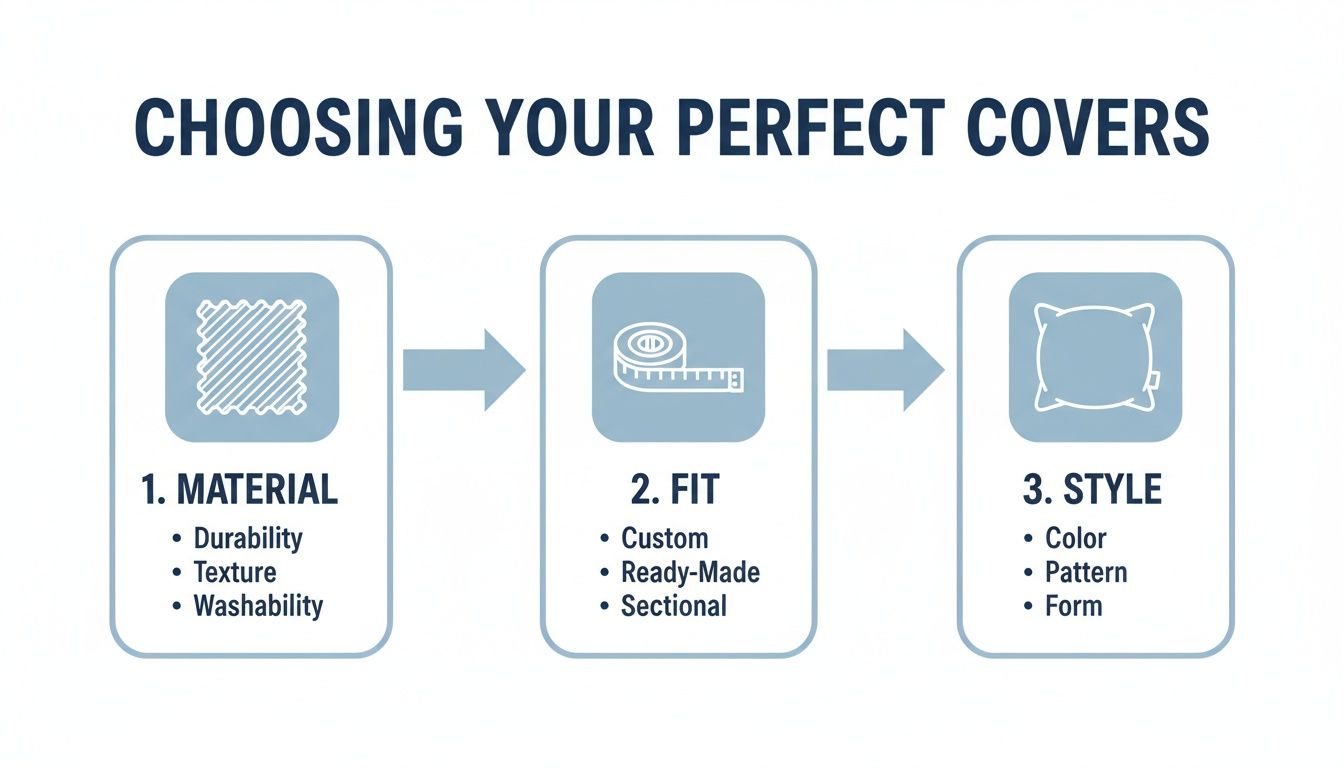
As you can see, nailing the fit is the central pillar that connects your choice of material to the final style you're trying to achieve.
Key Measurements You Cannot Skip
While different furniture styles need slightly different approaches, there are a few non-negotiable dimensions you’ll always have to take. Getting these sorted first will make the whole process much smoother.
- Seat Width: Measure the widest part of your seating area, going from the inside of one armrest to the other. This is the most critical measurement for most settee and chair covers.
- Back Height: Start from the very top of the backrest and measure straight down to the floor. This makes sure your cover won’t end up awkwardly short.
- Armrest Length: Measure from the front of the armrest all the way to the back. For chairs with curved or sloped arms, make sure your tape measure follows the curve.
- Cushion Depth: Don’t forget this one! Measure from the front edge of the seat cushion to where it meets the backrest.
A common mistake is pulling the tape measure too tight. It should be snug against the upholstery but not stretched, as this can trick you into ordering a cover that's just a bit too small. For a more detailed walkthrough, check out our guide on how to measure your sofa for a perfect fit.
Measuring Different Furniture Types
Not all furniture is created equal. A wingback chair has unique curves that a standard armchair doesn't, and a recliner needs that extra bit of fabric to accommodate its movement.
Standard Settee or Armchair:
Just follow the key measurements listed above. Pay close attention to the overall width, including the outside of the armrests, as this is often how ready-made covers are sized.
Wingback Chair:
In addition to the standard measurements, you absolutely must measure the height and width of the "wings." Measure from the highest point of the wing down to where it joins the armrest.
Recliner:
Measure the back, seat, and arms just as you would for a standard chair. Crucially, you also need to measure the circumference of the entire back of the chair to ensure the cover has enough fabric to stretch around it comfortably. Always check the product details to confirm a cover is actually designed for recliners.
Installing and Styling Your New Covers
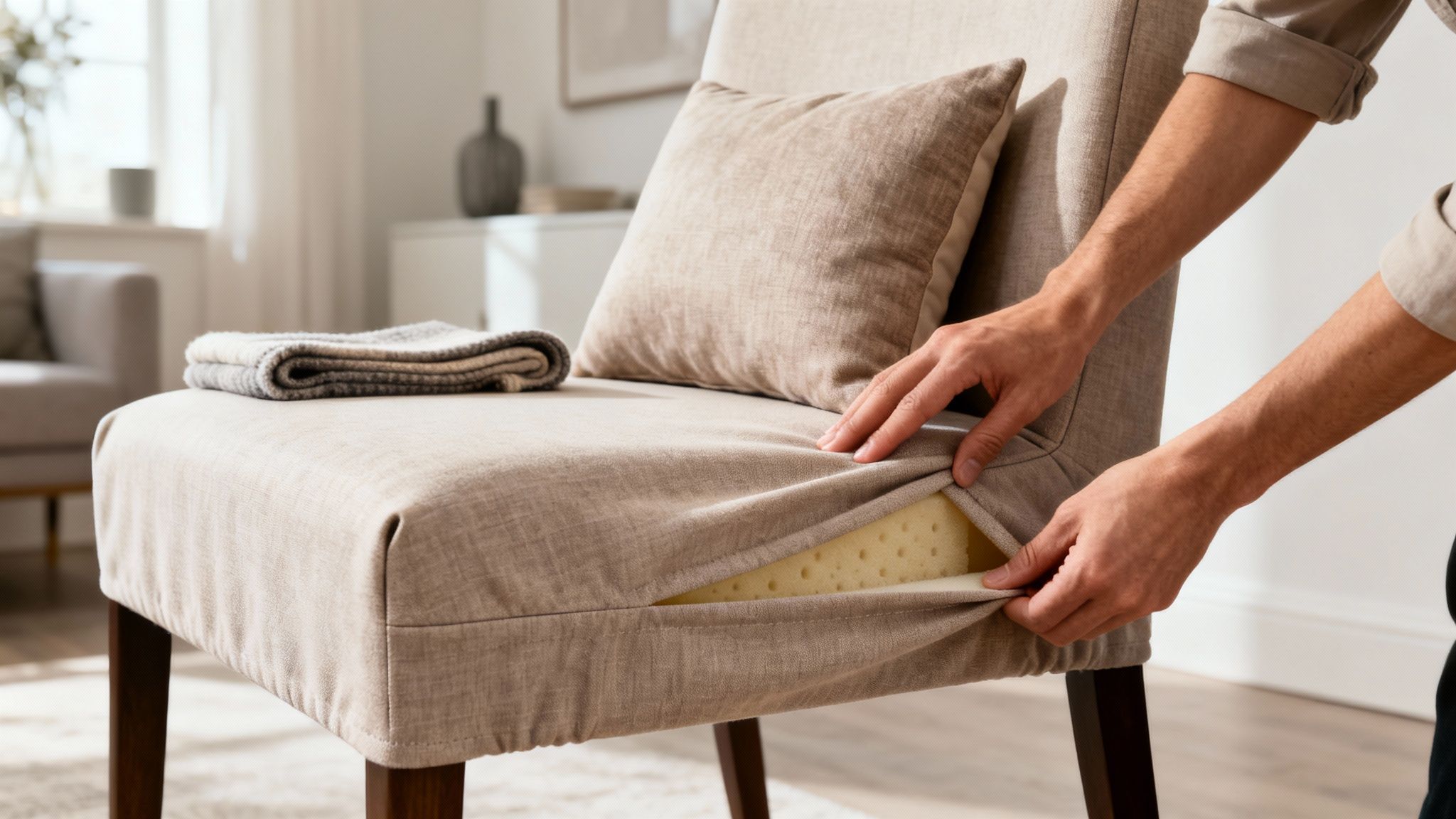
So, your new covers have arrived. This is the fun part—where the real transformation begins. A great installation is what separates a smooth, tailored finish from a saggy, frustrating mess. With a few simple tricks, you can avoid common issues like slipping and bunching, and get a look that feels more like brand-new upholstery than a temporary cover.
The secret is to work methodically. Don't just chuck the cover over the top and hope for the best. Start by finding the tag that marks the back, drape it over your furniture, and begin smoothing it down from the top of the backrest. Work your way forward over the arms and down onto the seat, making sure the fabric is spread out evenly from the get-go.
Once the cover is roughly in place, the magic is all in the details. Systematically start tucking any excess fabric deep into the crevices between the arms, back, and seat cushions. Seriously, the deeper you can get that fabric tucked in, the more secure and crisp the final fit will be.
Many high-quality settee and chair covers come with little foam inserts or tuckers. Don't ignore these! Pushing them firmly into the gaps after you’ve tucked the fabric is the pro move. It locks everything in place and gives you that sharp, wrinkle-free appearance that actually lasts.
From a Snug Fit to a Cohesive Style
With your cover perfectly installed, it's time to bring it into the fold of your room's overall style. Think of your newly covered settee or chair as a fresh canvas, just waiting for you to accessorise and make it your own.
Start by adding cushions and throws that either complement or contrast with your new cover. If you’ve gone for a neutral shade like grey or beige, you can introduce pops of vibrant colour or bold patterns with your accessories. On the flip side, if your cover is the statement piece, use more muted cushions to create a calm, balanced look.
Here are a few styling ideas to get you started:
- Create Harmony: Match the colour or pattern of your new covers with other textiles in the room, like your curtains or a rug. This creates a really unified and intentional design that looks professionally styled.
- Play with Texture: If you have a smooth polyester cover, add a chunky knit throw or a couple of velvet cushions. This introduces depth and a cosy, tactile feel to the space that just begs you to curl up.
- Seasonal Switches: Accessories are the easiest way to update your look for the seasons. Think light, bright cushions for spring and rich, warm-toned throws for autumn and winter.
This growing interest in customisable home furnishings is a huge part of the UK furniture industry's expansion. It's projected to grow at a 3.20% compound annual growth rate through 2033, driven largely by people updating their household interiors. You can learn more about these UK furniture industry insights and see how consumer trends are shaping the market. Your stylish new covers are part of a bigger picture of home personalisation.
Care and Maintenance to Keep Covers Looking Fresh
So you’ve invested in a beautiful new cover for your settee or armchair. To get the most out of it, a little bit of proper care is essential for keeping it looking vibrant and feeling soft for years to come. Think of it like a quality jumper in your wardrobe; a little routine maintenance goes a long way in preserving its colour, shape, and texture.
Your first port of call should always be the care label. This tiny tag is your instruction manual, clearly stating whether a cover is machine washable or needs the specialist attention of a dry cleaner. Ignoring this can lead to unfortunate mishaps like shrinkage or colour bleeding, so it’s a step you really can't afford to skip.
Your Routine Upkeep Checklist
For day-to-day freshness, a simple routine makes all the difference. Regular upkeep stops dirt and grime from embedding deep into the fabric fibres, which makes those deep cleans much easier when the time comes.
- Regular Vacuuming: Once a week, use the upholstery attachment on your vacuum cleaner to lift away dust, crumbs, and pet hair. This simple action stops abrasive little particles from wearing down the fabric over time.
- Plump and Rotate: If your covers are on separate cushions, give them a good fluff-up regularly to help them keep their shape. Rotating them also ensures they wear out evenly, not just in one favourite spot.
- Immediate Spot Treatment: Deal with spills the moment they happen. Gently blot the area with a clean, dry cloth—never, ever rub, as this will just push the stain deeper into the fabric.
The most effective way to handle a fresh stain is with quick, gentle blotting. This simple action can prevent a minor accident from becoming a permanent mark on your otherwise pristine settee and chair covers.
Tackling a Deeper Clean
When it’s time for a more thorough wash, approaching it correctly will ensure your covers come out looking as good as new. The convenience of easy-to-clean furniture is a huge priority for many of us, with a large percentage of UK households prioritising washable options. This focus on hygiene is a major factor in the home furnishings market, and you can discover more insights about UK furniture market trends on mordorintelligence.com.
For machine-washable covers, always use a cool, gentle cycle (around 30°C) with a mild detergent. Avoid any harsh chemicals or bleach, which can wreck the fabric's elasticity and strip out the colour. To prevent shrinkage and protect delicate fibres, it’s always best to air-dry your covers away from direct sunlight or intense heat. If you absolutely must use a tumble dryer, make sure you select the lowest heat setting available.
For more detailed tips, check out our complete guide on the benefits and best practices for machine washable sofa covers.
Your Settee and Chair Cover Questions Answered
Jumping into the world of settee and chair covers can feel like untangling a string of fairy lights. From figuring out what works on a leather sofa to getting that perfect, non-slip finish, it's only natural to have a few questions. To make sure you find the perfect cover without any fuss, I've put together some straightforward answers to the questions I hear most often.
We've gathered the key concerns that pop up time and again, giving you practical solutions so you can choose and use your new covers with complete confidence.
Can I Use Covers on a Leather Sofa?
Yes, you absolutely can, and it’s a brilliant move for protecting your leather from scratches, pet claws, or sun damage. There's just one little catch to be aware of: leather's smooth surface can make some fabric covers slip and slide all over the place.
The trick is to look for settee and chair covers designed with this in mind. The best ones will have either a non-slip backing or adjustable straps that anchor the cover firmly in place. It's also a good idea to pick a breathable fabric; this stops any moisture from getting trapped between the cover and the upholstery, keeping your leather sofa in prime condition.
Will a Cover Fit Any Dining Chair?
That's a great question, especially since dining chairs come in a dizzying array of shapes and sizes. The short answer is no, not every cover is universal. A cover made for a simple, straight-backed parsons chair probably won't fit a chair with a curved back or chunky wooden arms.
The key is to pay close attention to the product description and measurements before you buy. If you've got unconventionally shaped chairs, your best bet is to look for covers made from high-stretch fabrics like a polyester-spandex blend. This material has far more give and can mould itself to unusual contours, giving you a much neater, custom-like finish.
Always double-check the recommended chair dimensions provided by the manufacturer. Taking a moment to measure your chair's back height and seat width can save you the hassle of a return and ensure a perfect, tailored look from the start.
How Do I Stop My Cover from Coming Untucked?
This is one of the most common frustrations, but thankfully, there’s an easy and incredibly effective fix. The secret weapon against slipping and untucking is to use foam tucking grips, sometimes called ‘sofa tuckers’. These are simple, lightweight foam cylinders that work wonders.
Here’s how to use them for a secure, lasting fit:
- First, drape your cover over the furniture and smooth it out.
- Next, push as much of the excess fabric as you can deep into the crevices between the cushions and the sofa frame.
- Finally, shove the foam grips firmly into those same crevices on top of the tucked fabric.
These grips create friction and hold the material securely in place, even with daily use. It's a small step that makes a massive difference in achieving that crisp, professional look.
Are Waterproof Covers Really Effective Against Spills?
High-quality waterproof covers are incredibly effective, but it helps to understand how they work. They aren’t completely impenetrable like a plastic sheet. Instead, they usually have a special coating or a membrane that repels liquid, causing it to bead up on the surface.
This gives you a crucial window of time to grab a cloth and wipe up a spill before it has a chance to soak through to the upholstery beneath. They offer fantastic protection against everyday accidents, like a tipped-over cup of tea or a splash of juice.
However, for very large spills, or if liquid is left to sit for an extended period, some moisture might eventually seep through, particularly around the seams. The best practice is always to clean up messes as promptly as you can. For households with pets or small children, they are an absolute game-changer in protecting your furniture investment.
Ready to give your furniture a stylish and protective upgrade? Explore the beautiful and practical collection at The Sofa Cover Crafter and find the perfect fit for your home today. Visit us at https://thesofacovercrafter.co.uk.