



A high-quality sofa cover elastic is the secret ingredient that blends perfect stretch with real durability, turning a well-loved sofa into a fresh centrepiece. Its whole purpose is to give you a snug, wrinkle-free fit that looks just like brand-new upholstery, offering a smart and affordable alternative to the huge expense of reupholstering.

Why an Elastic Cover Is a Smart Home Upgrade
If you've ever battled with a loose, constantly shifting slipcover, you know the frustration all too well. A well-designed elastic cover gets rid of that headache for good, offering a seamless fit that actually stays put. It's more than just a piece of fabric; it’s a genuinely practical solution for modern living, designed to protect your furniture while giving your interior a quick style refresh.
The real beauty of a modern sofa cover lies in how versatile it is. It’s an instant fix for a whole host of common household headaches:
- Pet-Proofing Your Furniture: It protects against claws, fur, and the occasional muddy paw print.
- Family-Friendly Living: It acts as a barrier against spills, stains, and sticky fingers from the kids.
- Cost-Effective Makeover: It lets you change your living room’s colour scheme seasonally, or whenever you fancy a new look, without having to buy new furniture.
This demand for adaptable home solutions is definitely on the rise. The UK home furnishings market was valued at around USD 23.47 million in 2023 and is expected to grow significantly. This reflects a huge consumer appetite for products that offer both style and practicality—like a perfectly fitting sofa cover. You can discover more insights about the UK home furnishings market and its projected growth.
The Secret to a Perfect Fit
What makes a sofa cover truly effective is the quality of its elastic components. We're not just talking about a simple elasticated hem. The best covers integrate bi-elastic fibres that stretch both vertically and horizontally, hugging every curve and corner of your sofa. This clever technology ensures the cover adapts to all sorts of sofa shapes, from a classic two-seater to a sprawling sectional.
A great sofa cover shouldn't look like a cover at all. The goal is to achieve a finish so smooth and tailored that it looks like the sofa's original upholstery, and the right elastic is key to making that happen.
When you combine this with handy accessories like foam inserts and under-sofa clips, the elastic provides all the tension you need to keep everything tucked, taut, and tidy.
Choosing the Right Fabric and Material
Picking the perfect sofa cover elastic is about so much more than just landing on a new colour. The material you choose has a huge impact on the cover's durability, how it feels, and, most importantly, how well it stands up to the rigours of your daily life—from pets and children to the occasional spilt drink.
The fabric is your first line of defence and your main tool for a style refresh. So, take a moment to think about how you actually use your living room. Is it a high-traffic hub for family movie nights, or a calmer, more formal space for guests? Your answer will point you straight towards the ideal material.
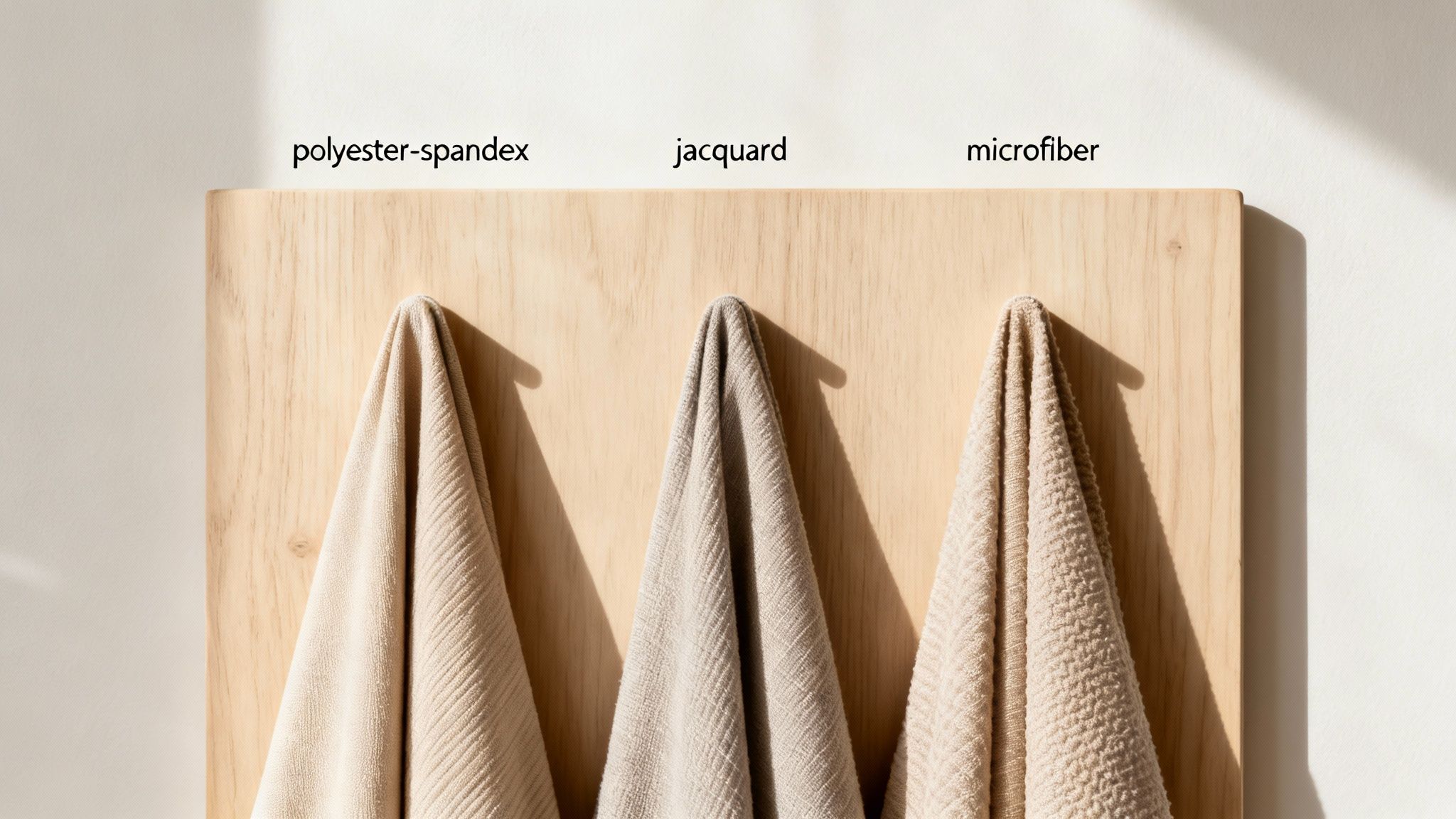
Common Elastic Cover Materials
Let's break down the most popular fabric options you’re likely to come across. Each one offers a different blend of stretch, texture, and practicality.
-
Polyester-Spandex Blends: This is the real workhorse of elastic covers. The polyester brings strength and wrinkle resistance to the party, while the spandex provides that all-important bi-elastic stretch for a seriously snug, form-fitting look. It’s a brilliant all-rounder for most households.
-
Jacquard: If you're looking to add a bit of texture and visual depth, jacquard is a superb choice. These covers have intricate woven patterns that feel a little more luxurious and are fantastic at hiding minor lumps and bumps in the sofa underneath. They usually have excellent stretch and a thicker, more substantial feel.
-
Microfibre: Famous for its incredibly soft, almost velvety touch, microfibre is both comfortable and surprisingly tough. Its dense weave makes it resistant to stains and a go-to choice for homes with pets, as fur doesn't seem to cling to it as easily as other fabrics.
Making a smart material choice is key, and you can explore more options in our detailed guide on the best fabric for a sofa.
Matching Fabric to Your Lifestyle
Your day-to-day routine is the ultimate test for any sofa cover. A family with young children, for example, is going to prioritise machine-washability and stain resistance above everything else. In that scenario, a robust polyester or microfibre cover is a practical, stress-free solution.
For pet owners, durability is completely non-negotiable. You’ll want to look for tightly woven fabrics that can resist snagging from claws. Many modern covers are now marketed as "pet-friendly," which is a good indicator that they’re built to withstand the extra wear and tear from our furry family members.
To make the decision a little clearer, this table breaks down how the most common materials stack up against different lifestyle needs.
Sofa Cover Material Comparison
| Material Type | Best For | Key Features | Care Instructions |
|---|---|---|---|
| Polyester-Spandex | Busy families and achieving a sleek, modern fit. | Very stretchy, durable, wrinkle-resistant, holds colour well. | Typically machine washable on a cool, gentle cycle. |
| Jacquard | Adding texture and a more decorative, premium look. | Woven pattern, thicker feel, good stretch, hides imperfections. | Check the label; often machine washable but may need gentle care. |
| Microfibre | Homes with pets and children. | Extremely soft, stain-resistant, pet hair doesn't cling easily. | Machine washable and quick-drying. |
Looking at the options side-by-side, it's easy to see how your specific home life—be it chaotic and busy or calm and quiet—can lead you to the perfect fabric choice.
This focus on real-world functionality is a growing trend. Elastic sofa covers are a direct response to UK consumer demands for home products that are both adaptable and hygienic. The UK home furniture market, valued at over £15 billion in 2024, is increasingly shaped by how much we all care about product performance and sustainability.
Key Takeaway: The best fabric isn't just about looks; it's a practical decision. Prioritise materials that simplify your life, whether that means easy cleaning, superior durability, or a softer touch for ultimate comfort.
Ultimately, the right material choice ensures your new cover not only looks fantastic but also performs beautifully for years to come.
How to Measure Your Sofa Accurately
Guessing your sofa's measurements is the quickest way to end up with an elastic cover that's either frustratingly baggy or impossible to stretch on. Taking a few minutes to measure properly is the single most important step to guarantee that seamless, upholstered look you're after.
Think of it as creating a custom map of your sofa. The goal isn't just to get a rough idea; it's about capturing the key dimensions that we use for our sizing charts. Your best tool for the job is a simple fabric tape measure—it can follow the curves and contours of your furniture far better than a stiff metal one.
The Four Essential Measurements
To make sure your new cover fits like a glove, you need to focus on four critical areas. Don't just measure the seating area; a stretch cover is designed to hug the entire shape of your furniture, from edge to edge.
These are the numbers that will give you the complete picture:
- Total Width: This is the most crucial measurement of all. Go from the outer edge of one armrest, straight across the front of the sofa to the outer edge of the other. Make sure you include the full width of both arms in this.
- Backrest Height: Start your tape measure on the floor and run it up to the very top of the sofa's back. This tells you if the cover has enough fabric to drape over the back without pulling up at the bottom.
- Armrest Depth: Measure from the very front of the armrest straight back to where it meets the main body of the sofa. This ensures the arm sections will fit correctly.
- Seat Cushion Depth: Finally, measure a single seat cushion from its front edge to the back, where it tucks into the sofa frame.
A common mistake is only measuring the seating width between the arms. An elastic cover is designed to stretch over the entire piece of furniture, so the total arm-to-arm width is the number you need for sizing charts.
Dealing with Unique Sofa Shapes
Not all sofas are simple two or three-seaters, of course. If you have an L-shaped or sectional sofa, the process is slightly different but just as straightforward.
You'll essentially treat each section as a separate sofa. Measure the width and depth of each individual piece, and then you can purchase the corresponding covers needed for each part.
For sofas with unusually deep seats or a high camelback, pay close attention to the manufacturer's maximum stretch recommendations. Most sizing guides provide a range (e.g., 180-230 cm). If your measurements fall at the high end of that range, you'll know the fit will be snug and secure, which is exactly what you want.
For a more detailed walkthrough, our comprehensive guide on how to measure a sofa offers extra tips and visuals to help you get it spot on.
Installing Your Sofa Cover for a Wrinkle-Free Finish
Right, this is the fun part – where your sofa gets its stunning new look. Getting that professional, wrinkle-free finish is much easier than you might think. It’s all about working with the fabric's stretch, not against it, to create a smooth, taut appearance that looks just like the original upholstery.
First up, give your sofa a quick clean. Vacuum up any crumbs, dust, and pet hair lurking in the crevices and on the surfaces. A clean base stops any lumps and bumps from showing under the new cover and helps the fabric grip properly. It’s a small step that makes a massive difference to the final result.
This diagram is a handy reminder of the key measurements we talked about, making sure you’re starting on the right foot.
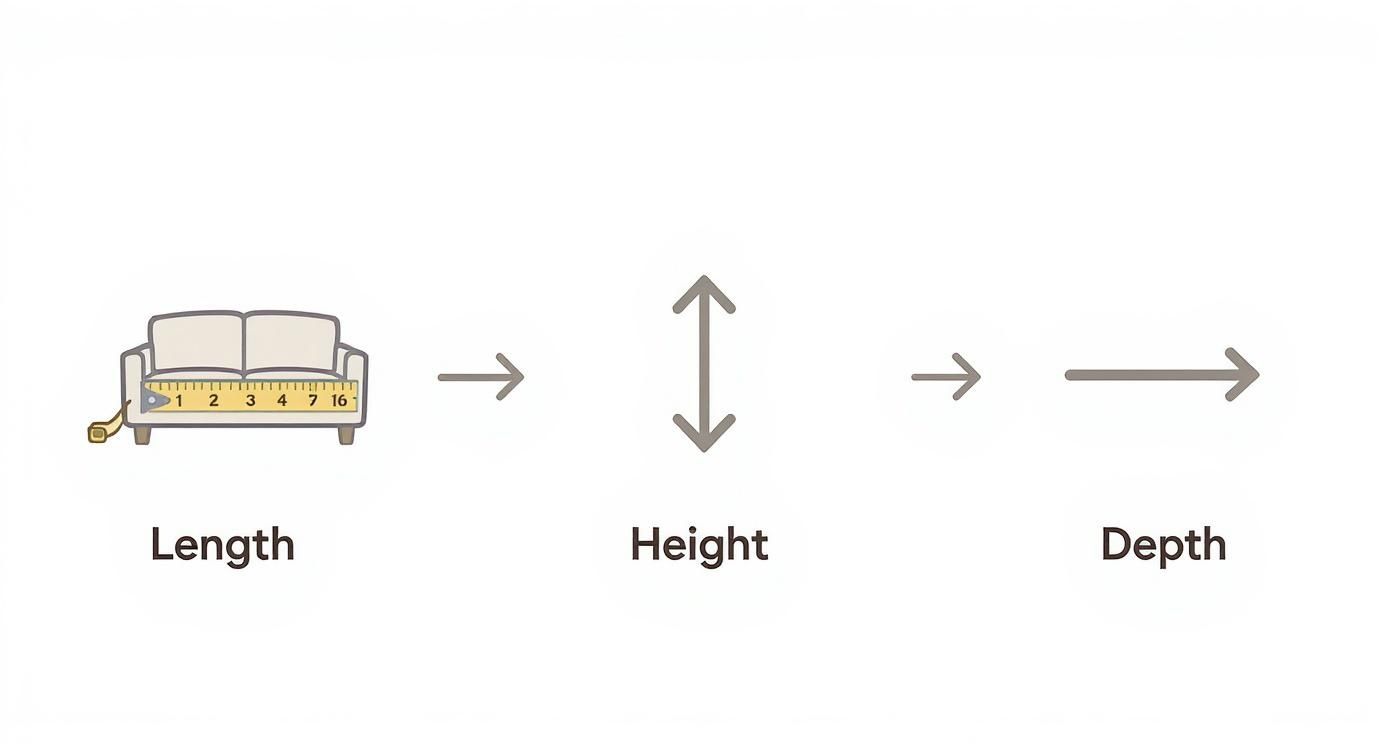
It just reinforces why capturing the sofa's complete dimensions—length, height, and depth—is so important for ensuring the sofa cover elastic can do its job properly.
Finding Your Starting Point
Before you start stretching anything, have a rummage for the tag on the inside of the cover. This tag is almost always meant to be placed at the centre back of your sofa. This is your anchor point, the place you’ll work from.
Once you’ve found it, drape the cover over your sofa, lining the tag up with the back. Gently pull the fabric forward over the backrest, and then down over each of the armrests. The key here is to avoid pulling one side too tightly before the other; work evenly to keep the whole thing balanced.
The Art of Tucking and Securing
The real secret to a seamless, just-upholstered look is all in the tucking. This is where you banish any slack and lock the fabric deep into the sofa's frame. Your cover probably came with little foam cylinders or cardboard inserts—these are your best friends.
Start by pushing the excess fabric down into the gaps between the seat cushions and the sofa’s back and arms. Once you've pushed some fabric into a crevice, shove one of the foam anchors in on top of it. Work your way methodically along the entire length of each gap until the fabric is held securely.
Don't panic if you've lost your foam anchors or just need some extra grip. Tightly rolled-up magazines or even sections of a foam pool noodle are brilliant DIY alternatives that work just as well to stop the cover from slipping.
This meticulous tucking is what creates the tension needed for that sharp, professional finish. For an even more detailed walkthrough, you can find extra tips in our full sofa cover installation guide.
Final Adjustments with Under-Sofa Straps
Many high-quality covers come with elastic straps or ties that fasten underneath the sofa. These are not optional! They’re absolutely essential for creating that final layer of tension that prevents the cover from riding up or coming untucked with daily use.
Tilt your sofa forward slightly so you can get to the underside. Find the corresponding loops or ties on each side of the cover and fasten them together securely. You should feel the entire cover tighten slightly across the surface as you do this. It's this final step that really locks everything in place, ensuring all your hard work lasts.
The demand for functional home upgrades like this reflects broader market trends. In 2025, the UK furniture market is estimated to be worth approximately £18.78 billion, with growth driven by people spending more on home improvements. Products like a versatile sofa cover elastic are so popular because they offer a practical, affordable way to protect and update valuable furnishings.
Right, you've got your cover looking absolutely perfect. The final step is keeping it that way. A little bit of care will go a long way in keeping your sofa cover elastic looking fresh and vibrant, season after season.
Consistent maintenance does more than just preserve the colour; it protects the fabric's stretch memory. That's what ensures it continues to hug your sofa's curves perfectly for years to come.
The good news is that most modern covers are designed for real life, which means they’re incredibly easy to look after. A few simple habits are all it takes to protect your investment and keep your refreshed sofa as the centrepiece of your living room.
Decoding the Care Label
Before you do anything, find the care label. This little tag is your ultimate guide, providing specific instructions straight from the manufacturer on how to wash and dry the fabric without causing any damage. Ignoring it is a fast track to shrinking, fading, or even a loss of elasticity.
Typically, you'll find recommendations for:
- Washing Temperature: Most polyester-spandex blends do best in a cool wash, around 30°C. Hot water is the enemy of elastic fibres and can cause permanent damage.
- Detergent Type: A mild, non-bio detergent is usually the safest choice. It's gentle on the fabric's colour and integrity.
- Drying Method: Many covers should be air-dried. A hot tumble dryer can weaken the elastic, so it's best to avoid it unless the label explicitly says it's okay.
Handling Everyday Spills and Stains
For minor spills like a dropped biscuit or a splash of tea, you don't always need to resort to a full machine wash. The secret to effective spot cleaning is acting quickly.
Gently blot the spill with a clean, damp cloth. Always work from the outside of the stain inwards to stop it from spreading. For more stubborn marks, a small amount of diluted washing-up liquid can be dabbed on, but always test it on a hidden area first, like an inner seam.
For busy households, a weekly routine can make all the difference. Take five minutes to smooth out the fabric and re-tuck the foam inserts. This simple reset prevents slack from building up and maintains that crisp, just-fitted appearance day after day.
This regular adjustment is especially important for high-traffic sofas where kids and pets are constantly on the move. It keeps the cover looking taut and stops small wrinkles from turning into major creases. Follow these straightforward tips, and your sofa cover will remain a stylish and practical feature in your home.
Your Sofa Cover Questions, Answered
Even after finding what seems like the perfect cover, you might still have a few questions. Getting that flawless, just-upholstered look is easy once you know a few tricks of the trade, so let’s tackle some of the most common queries I hear all the time.
Think of this as your go-to guide for troubleshooting any little fit issues. From stopping a cover from sliding on slippery leather to finally getting it to stay tucked in, these practical solutions will solve any minor headaches.
Will It Work on a Leather Sofa?
This is probably the number one concern, and the short answer is yes—but you have to be smart about it. The smooth, non-porous surface of leather doesn't have the same natural friction as fabric, which can cause a standard sofa cover elastic to slide around. The secret to success is creating extra grip.
To get around this, your best bet is to find a cover with a textured or non-slip backing. More importantly, those under-sofa straps aren't just a suggestion; for leather, they're essential. Pulling them good and tight creates the tension needed to hold everything securely.
For a leather sofa, your most valuable tool is the foam anchor. Be really diligent about pushing them as deep as they'll go into the crevices between the cushions and the frame. This single action is what mechanically locks the fabric in place, giving you the grip the leather surface is missing.
How Do I Stop the Cover from Coming Untucked?
There’s nothing more annoying than having to constantly re-tuck your sofa cover. If you find the fabric is popping out of the crevices every time someone sits down, the problem almost always comes down to the anchors.
Those foam inserts that come with your cover are designed specifically to be wedged deep into the gaps, creating a firm hold that stops the fabric from pulling loose. Don't be gentle; make sure you're pushing them down as far as they will possibly go. For sofas with particularly deep gaps, you might find you need a bit more bulk to get a really secure fit.
If you need some extra grip, here are a few brilliant DIY alternatives that work a treat:
- Rolled-Up Magazines: Roll them tightly, secure them with a rubber band, and you've got a firm, solid anchor.
- Foam Pipe Insulation: This stuff is cheap, can be cut to any length, and has a slightly grippy texture that’s perfect for the job.
- Cut-Up Pool Noodles: An excellent, lightweight option that can be cut into custom lengths for a perfect fit in any gap.
Can I Use a Cover on a Recliner Sofa?
You absolutely can, but—and this is critical—you must buy a cover that is specifically made for recliners. A standard one-piece sofa cover will completely bind the footrest and backrest mechanisms, making it impossible for the chair to move. It’s a recipe for frustration.
Recliner covers are sold in multi-piece sets, usually with separate pieces for:
- Each backrest
- Each seat and footrest
- The armrests
- The centre console (if there is one)
This clever design allows every section of the sofa to move independently without pulling the rest of the cover out of place. Always, always check the product description to confirm it is ‘recliner compatible’ before you buy. Using the wrong type of cover will only end in a poor fit and a waste of money, so it’s vital to choose one designed for the job.
Ready to give your sofa a fresh, stylish, and protected new look? Explore the beautiful and practical collection at The Sofa Cover Crafter. Find your perfect fit and transform your living space today.