



So, what’s the best fabric for a sofa? For most homes, the strongest all-round options are microfibre, performance polyester blends, and protected leather. They handle spills, friction, and daily use better than more delicate weaves. Linen, cotton, velvet, and chenille can still be excellent choices—but only when their trade-offs suit the room, the household, and the amount of maintenance you’re realistically willing to do.
Key Takeaways So, what’s the best fabric for a sofa?
- Judge by real use: Durability, cleaning ease and comfort decide how a fabric ages.
- Practical beats showroom-soft: Fabrics that feel slightly too practical in the shop often serve best later.
- Think pets and kids: Consider snagging, fur, crumbs and stains before you choose.
Table of Contents
- Key Takeaways So, what’s the best fabric for a sofa?
- Finding the Perfect Fabric for Your Sofa
- Core Factors to Consider
- How We Evaluated Sofa Fabrics
- The evaluation method
- What would disqualify a fabric from a general recommendation?
- Natural vs Synthetic Sofa Fabrics Explained
- The Appeal of Natural Fabrics
- The Power of Synthetic Fabrics
- An In-Depth Guide to Popular Sofa Fabrics
- Sofa fabric comparison at a glance
- Understanding fabric durability: the Martindale test
- Leather
- Linen
- Cotton
- Velvet
- Chenille
- Microfibre
- Polyester and synthetic blends
- Jacquard Weave
- Spandex Blend (for Covers)
- Wool
- Waterproof Fabric
- Performance Sofa Covers as a Practical Fabric Upgrade
- Matching Your Sofa Fabric to Your Lifestyle
- Quick picks by household type
- Best for pets
- Best for children
- Best for low maintenance
- Best for hot rooms
- Best for formal rooms
- Best for long-term durability
- Sustainable and Innovative Sofa Materials
- Making Sense of Eco-Friendly Fabric Labels
- The Next Wave of Sofa Materials
- Maintaining Sofa Fabrics for Long Term Use
- Your Final Checklist Before You Buy
- The Last-Minute Litmus Test
- Your Sofa Fabric Questions, Answered
- What type of sofa material is best?
- Which fabric is best for sofa upholstery?
- What is the most durable fabric on a sofa?
- Is leather or fabric better for families?
- Is microfibre a good choice for sofas?
- Are linen sofas a bad idea for everyday use?
- What rub count should a sofa fabric have?
- Which sofa fabrics are best for hot weather?
- Frequently Asked Questions
- What type of sofa material is best for most homes?
- Which fabric is best for sofa upholstery if I want low maintenance?
- What is the most durable fabric on a sofa?
- Is leather or fabric better for families with kids?
- What sofa fabric is best for pets?
- Are synthetic blends better than natural fibres?
- Should I choose a washable slipcover instead of fixed upholstery?
Finding the Perfect Fabric for Your Sofa
The wrong sofa fabric usually fails in a predictable way: it looks gorgeous in the showroom, then starts showing marks, pulls, heat discomfort, or cleaning frustration once real life kicks in. The right choice is less about chasing a single “best” material and more about matching fabric performance to the way your home works.
I kept coming back to one simple rule while revising this guide: the fabric that feels slightly too practical in the showroom is often the one you end up appreciating most after a year of use. That is especially true in homes with children, pets, heavy evening lounging, or lots of sunlight.
Core Factors to Consider
Before comparing specific materials, focus on the criteria that decide whether a sofa will age well in your home.
-
Durability and Longevity: For upholstery, this means looking beyond appearance and checking abrasion performance, weave tightness, fibre strength, and whether the fabric is intended for light domestic use or busy, high-traffic seating.
-
Maintenance and Cleaning: Some sofas forgive delayed clean-up; others punish it. Cleaning codes, stain resistance, removable covers, and whether a spill beads up or soaks in all matter more than marketing language.
-
Aesthetics and Comfort: Texture, breathability, warmth, sheen, and how a fabric sits in natural light all change the day-to-day experience of using the sofa.
Your sofa is one of the hardest-working pieces of furniture you own. The best choice is rarely the most luxurious fabric in isolation; it is the one that still looks good after weekends, guests, naps, and accidental spills.
If your current sofa frame is still in good nick, you might be interested in learning how to cover a couch for a fresh look without the big price tag.
How We Evaluated Sofa Fabrics
Sofa materials are compared using the criteria upholstery buyers need, not just showroom descriptions.
The evaluation method
We assessed each fabric type against six practical factors:
-
Abrasion durability: using the Martindale idea of rub resistance, the standard commonly used in UK and European upholstery testing. The Martindale test overview from Abbyson explains how repeated rubbing is used to estimate wear performance.
-
Cleaning and stain response: whether the fabric typically falls into easy-care upholstery categories, how quickly it absorbs spills, and whether spot cleaning with water-based products is usually acceptable. Cleaning codes such as Code W, S, WS, and X are outlined by Castlery.
-
Comfort and heat retention: whether the material feels cool and breathable or warm and insulating in everyday use.
-
Pet and child tolerance: whether claws catch, fur clings, crumbs embed, or stains become hard to remove.
-
Visual ageing: how quickly the fabric tends to show creasing, pile marks, fading, pilling, or surface wear.
-
Value at typical market prices: not just purchase cost, but how likely the fabric is to stay serviceable long enough to justify that cost.
What would disqualify a fabric from a general recommendation?
I would not recommend a sofa fabric as a broad default if it combines low abrasion resistance, difficult cleaning, high snag risk, and visible wear without giving a clear lifestyle benefit in return. That is why delicate natural fabrics can still be beautiful recommendations for low-traffic or formal rooms, but they are not universal picks.
One thing that stood out to me: buyers often overvalue initial softness and undervalue recoverability. A fabric that springs back, hides wear, and cleans without drama tends to age better than one that simply feels lovely on day one.
Natural vs Synthetic Sofa Fabrics Explained
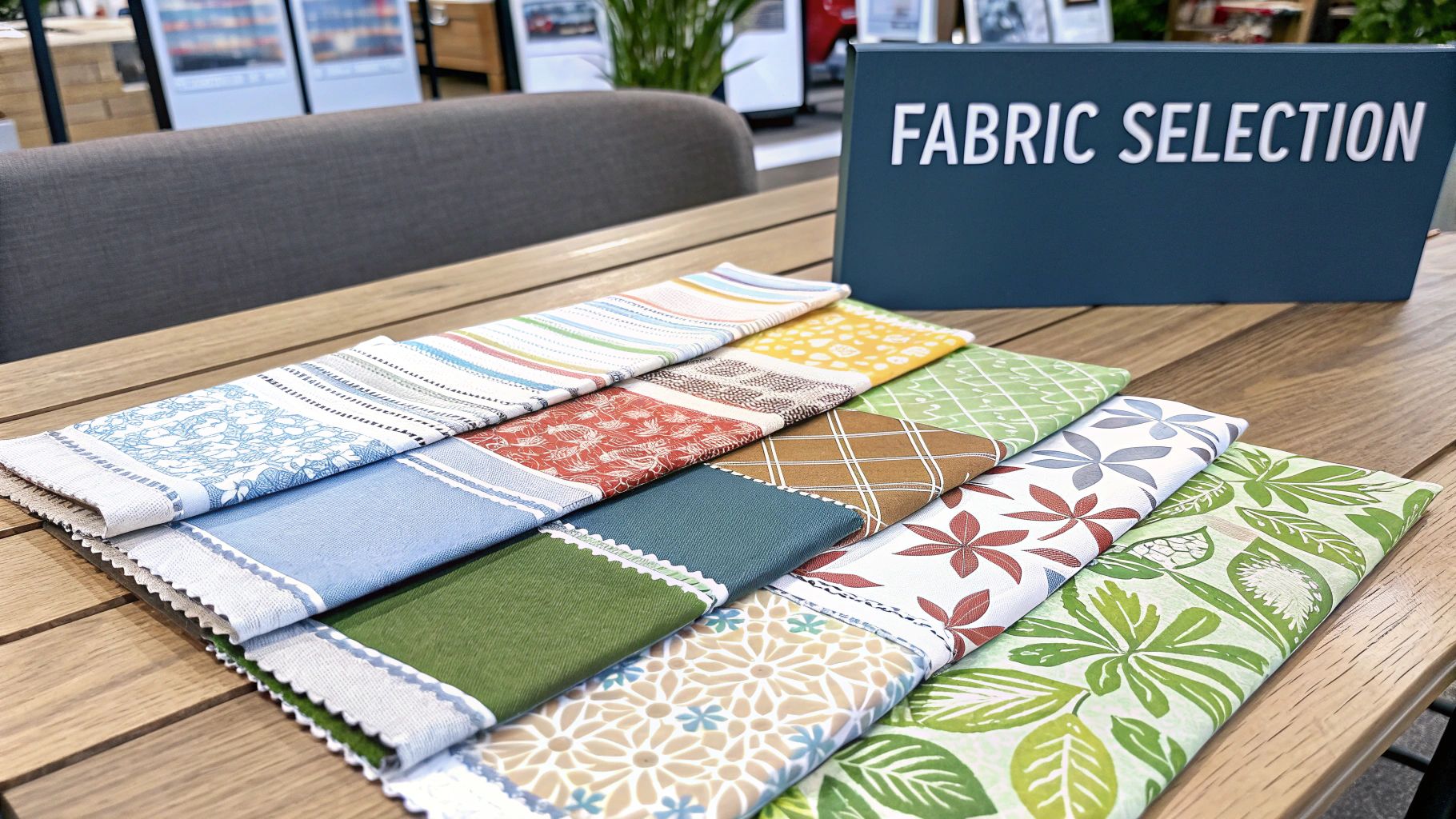
When you start looking at sofa fabrics, you'll find that every option, from rugged leather to plush velvet, falls into one of two main camps: natural or synthetic. Getting your head around this basic difference is the first real step in picking the right material, as it affects everything from how the sofa feels to sit on to how it copes with a spilt cup of tea.
It’s a bit like choosing a t-shirt. You might pick a cotton one because it’s soft and breathable on a warm day, even though you know it’ll wrinkle. Or you might go for a polyester sports top that wicks away moisture and keeps its shape, no matter how many times you wash it. Sofa fabrics work on a similar principle, with each family having its own set of pros and cons.
The Appeal of Natural Fabrics
Natural fabrics are exactly what they sound like – materials derived from plants and animals. For centuries, they’ve been the go-to choice for upholstery, loved for their unique textures, breathability, and classic look. There's a certain "lived-in" quality to them that many people find comforting and stylish.
The most common natural fibres you’ll come across are:
- Cotton: Soft, versatile, and breathable. It can be woven into a casual canvas or a more luxurious velvet, making it a real chameleon.
- Linen: Known for its relaxed, slightly crumpled look, linen is strong and becomes softer over time. It brings a lovely touch of rustic elegance to a room.
- Wool: A seriously durable and resilient fibre. Wool is naturally flame-retardant and brilliant at resisting wrinkles and fading.
- Leather: Technically a hide rather than a fibre, leather is prized for its toughness, the beautiful way it ages, and its timeless, refined feel.
The main draw of natural fabrics is how they look and feel. They tend to be more breathable, which makes them much more comfortable for long lounging sessions, especially when it’s warm. The downside? They can be more prone to staining, fading in direct sunlight, and showing wear and tear unless they’ve been treated.
The Power of Synthetic Fabrics
Synthetic fabrics, on the other hand, are man-made materials, engineered through chemical processes. They are designed from the ground up to deliver specific benefits, especially for durability and easy cleaning. Think of them as the workhorses of the upholstery world.
This family is all about solving problems. Need a sofa that can stand up to a family with small children and a muddy dog? A synthetic blend is almost always the answer. The tightly woven fibres create a surface that's less absorbent, making it much harder for spills to sink in.
Synthetic fabrics were first created to copy the best bits of natural fibres while improving on their weaknesses. The aim was to produce materials that were strong, stain-resistant, and more affordable—perfectly practical for busy, modern homes.
The key players in the synthetic team include:
- Polyester: One of the most common sofa fabrics out there. It’s highly durable, resists fading and wrinkling, and is generally a breeze to clean.
- Nylon: You’ll often find this blended with other fibres to add exceptional strength and resistance to scuffs and scrapes.
- Acrylic: Developed as an alternative to wool, acrylic is great at resisting fading and staining, making it a smart choice for a sofa in a sunny spot.
- Microfibre: This is a type of polyester with a very fine, soft texture. It's famous for its velvety feel and impressive stain resistance.
The biggest win for synthetics is their performance. Many modern fabrics are treated with technologies like Crypton, which creates a moisture-proof barrier that makes spills bead up instead of soaking in. I’ve heard from clients who have wiped melted chocolate and red wine off their performance fabric sofa with nothing more than a damp cloth.
While they might not always have the same luxurious, organic feel as a natural linen, their practicality is unmatched for a busy home. In the end, choosing the best fabric often comes down to balancing the timeless charm of naturals with the real-world reliability of synthetics.
An In-Depth Guide to Popular Sofa Fabrics
Choosing upholstery gets easier once you stop treating fabrics as isolated personalities and start comparing them on the same decision points: durability, stain resistance, cleaning effort, comfort, heat, pet tolerance, and price. The buyer who wants a cool, elegant sofa in a calm sitting room needs a very different answer from the buyer who needs something to survive snacks, claws, and nightly use.
Sofa fabric comparison at a glance
| Fabric Type | Durability | Stain Resistance | Maintenance | Texture & Heat | Pet-Friendliness | Typical Cost |
|---|---|---|---|---|---|---|
| Protected Leather | Excellent | Very good | Wipe-clean, periodic conditioning | Can feel cool in winter and warm in summer | Good against hair, mixed against claws | ££££ |
| Linen | Fair to good | Poor unless treated | Higher-maintenance | Cool, airy, breathable | Poor for claws and frequent spills | £££ |
| Cotton | Fair to good | Fair unless treated | Moderate | Soft, breathable, comfortable | Mixed; depends on weave | ££ |
| Velvet | Good to very good in performance versions | Fair to very good | Moderate, pile needs care | Warm, plush, formal | Mixed; pet hair and marks can show | £££ |
| Chenille | Good to very good | Good | Moderate | Soft, cosy, warmer feel | Mixed to poor for snagging | ££ |
| Microfibre | Excellent | Excellent | Easy | Soft, slightly warm | Excellent | ££ |
| Polyester / Synthetic Blends | Good to excellent | Good to excellent | Easy to moderate | Varies by weave | Usually good | ££ |
Use the table as a filter, then check the details below. A fabric can move up or down dramatically depending on weave, protective finish, and whether it is a pure fibre or a blend.
| Fabric Type | Durability | Stain Resistance | Best For | Typical Cost |
|---|---|---|---|---|
| Leather | Excellent | Very Good | Long-term investment, allergy sufferers | ££££ |
| Linen | Good | Poor | Formal living rooms, elegant style | £££ |
| Cotton | Good | Fair (improves with treatment) | Versatility, families (with slipcovers) | ££ |
| Velvet | Good to Excellent (Performance) | Poor to Very Good (Performance) | Statement pieces, luxurious feel | £££ |
| Chenille | Very Good | Good | Busy family rooms, ultimate comfort | ££ |
| Microfibre | Excellent | Excellent | Homes with kids and pets, high traffic | ££ |
Understanding fabric durability: the Martindale test
The Martindale test is the abrasion standard most upholstery shoppers in the UK will encounter. It measures how many cycles of rubbing a fabric can withstand before visible breakdown occurs. The Textile Institute explains Martindale abrasion testing and why higher counts generally indicate better suitability for heavy use.
As a rough guide:
-
10,000 to 15,000 rubs: decorative or occasional seating
-
15,000 to 25,000 rubs: light domestic use
-
25,000 to 30,000 rubs: solid everyday domestic use
-
30,000 to 40,000+ rubs: heavy domestic use and stronger family-room performance
One of the more useful fresh benchmarks here is that high-traffic family upholstery is commonly expected to reach around 40,000 rubs, especially when marketed for busy homes, according to this sofa fabric guide.
Leather
Leather remains the benchmark for longevity when buyers want a sofa that can age rather than wear out. Well-maintained leather sofas commonly outlast standard fabric sofas, with a typical lifespan often placed around 15 to 25 years, compared with roughly 7 to 10 years for many fabric sofas, as noted in this Bassett overview of sofa materials. The Leather Working Group also provides useful context on leather production and grading through its industry standards work.
Where leather performs well
-
Strong resistance to abrasion and pilling
-
Easy surface cleaning for most spills
-
Less likely to trap dust, dander, and odours than many woven fabrics
-
Good long-term value when the hide quality is decent and the frame is solid
Where leather underperforms
-
Can scratch, especially from sharp claws or buckles
-
Lower tactile comfort in very hot or very cold rooms
-
Requires conditioning and proper care to avoid drying and cracking. The Furniture Clinic leather care guide covers the maintenance basics well.
Verdict: Best for buyers who want durability, easy wipe-down cleaning, and a sofa that improves visually with age. Avoid it if you dislike temperature shifts, want a soft textile feel, or know claw marks will bother you.
Linen
Linen offers one of the best textures in upholstery when you want a relaxed, airy, natural look. Flax fibres are strong, breathable, and visually elegant, which is why linen keeps turning up in higher-end and coastal-inspired interiors. The problem is that pure linen asks more of the owner than they expect.
Where linen performs well
-
Excellent breathability in warm rooms
-
Attractive slubbed texture and soft matte finish
-
Works beautifully in calm, lower-traffic spaces
Where linen underperforms
-
Wrinkles easily
-
Absorbs spills quickly unless treated
-
Can fade in prolonged sun exposure
-
More likely to show use patterns than performance synthetics
Verdict: Best for formal rooms, adult households, and buyers who love natural texture more than easy maintenance. Avoid pure linen for the main family sofa unless you are choosing a performance linen blend.
Cotton
Cotton is one of the easiest upholstery materials to like because it feels familiar, breathable, and comfortable from day one. It is also highly versatile: canvas, brushed cotton, denim-style weaves, and cotton velvets all behave differently.
Where cotton performs well
-
Soft, breathable, and generally comfortable in all seasons
-
Broad range of colours, patterns, and price points
-
Can be practical in slipcovered designs
Where cotton underperforms
-
Untreated cotton absorbs spills quickly
-
Can wrinkle and fade with use and sun exposure
-
Lighter weaves are less resilient than tighter constructions
Verdict: Best for casual homes, removable covers, and buyers who want softness without paying linen or leather prices. Avoid loose-weave or untreated cotton if the sofa will be a heavy-use family seat.
Velvet
Velvet is no longer automatically a fragile, formal-only choice. A major shift in recent years is the growth of performance velvet made from polyester or mixed fibres rather than silk. According to this guide from The Inside, modern velvet upholstery often reaches 30,000 to 40,000 rubs, and UK demand increased sharply between 2020 and 2024 as buyers leaned into softer, more cocooning interiors.
Where velvet performs well
-
Rich colour depth and strong visual impact
-
Comfortable, warm, and inviting feel
-
Modern performance versions are far more durable than many buyers assume
Where velvet underperforms
-
Shows pressure marks and pile changes
-
Pet hair and lint can be visible
-
Traditional or low-grade velvet can still be maintenance-heavy
Verdict: Best for statement sofas, formal living spaces, and renters or decorators who want visible style payoff. Avoid it if you dislike pile marks or want the easiest possible pet-hair maintenance.
Chenille
Chenille is a comfort-first upholstery fabric with a soft, textured hand that makes a sofa feel instantly inviting. Modern chenille is often synthetic or blended, which improves durability over older versions made with more delicate yarn structures.

Where chenille performs well
-
Plush, warm, cosy seating feel
-
Good visual softness without the sheen of velvet
-
Better family-room practicality than many luxury-feel fabrics
Where chenille underperforms
-
Can snag if claws catch the yarn
-
Pile can flatten in favourite seating spots
-
Cleaning usually needs more care than a true easy-clean microfibre
Verdict: Best for snug family rooms and buyers who prioritise comfort. Avoid it if your pets scratch furniture or you want the lowest-maintenance upholstery available.
Microfibre
Microfibre remains one of the smartest upholstery choices for busy households because its ultra-fine fibres create a dense surface that resists snagging and slows spill absorption. Family-focused upholstery sales have increasingly moved toward microfibre and performance polyester blends, which together account for a large share of newer upholstery demand in major markets since 2019, according to this Povison buying guide. Many are engineered to suit Code W cleaning expectations, meaning water-based spot cleaning is generally acceptable when the manufacturer confirms it.
Where microfibre performs well
-
Excellent stain resistance and easy spot cleaning
-
Strong pet performance because claws struggle to catch the surface
-
Usually very good abrasion durability for the price
-
Comfortable without feeling overly delicate
Where microfibre underperforms
-
Can build static and attract lint
-
Some versions hold heat more than linen or cotton
-
Water marks may need brushing or even cleaning to blend out
Verdict: Best for families, pet owners, and anyone who wants low-stress upholstery. Avoid it only if you strongly prefer a natural-fibre look or want a cooler, airier seat in a hot room.
Polyester and synthetic blends
This is the category that deserves more credit than it usually gets. “Polyester blend” is not a downgrade by default; often, it is the reason a sofa becomes more practical. Blending polyester with cotton, linen, acrylic, or nylon can improve abrasion resistance, reduce wrinkling, stabilise colour, and make water-based cleaning more realistic. That is why many fabrics marketed as linen-look, cotton-look, or performance velvet are really blend-driven products.
Where synthetic blends perform well
-
Better stain resistance than many pure natural fibres
-
Improved wrinkle resistance and shape retention
-
Often lower cost than premium natural upholstery
-
Huge range of finishes, from matte woven looks to plush textures
Where synthetic blends underperform
-
Quality varies widely by manufacturer
-
Some cheap versions feel flat or plasticky
-
Breathability may not match pure linen, wool, or cotton
Verdict: Best for buyers who want the look of natural upholstery with fewer compromises. Avoid low-spec blends that have no stated abrasion rating, no cleaning code, and no clear fibre breakdown.
I’d go further here: for most mixed-use homes, a good synthetic blend is often the most sensible compromise in the entire market. It may not sound as romantic as linen or as aspirational as leather, but it often wins once durability, cleaning, and price are judged together.
Jacquard Weave
Jacquard is not a fibre like cotton or polyester. It is a weave. That matters, because the structure of the fabric changes both the look and the longevity.
With jacquard, the pattern is woven in rather than printed on the surface. That gives it a richer look and usually better visual depth. Even when the pattern is subtle, the sofa reads as more considered.
It is a good answer for anyone who finds plain covers too flat but does not want a loud print. A small geometric or textured jacquard can disguise everyday wear better than a solid block colour.
This kind of woven structure also suits rooms that need interest without clutter. You can keep the palette simple and still add detail through the sofa itself.
A jacquard sofa cover is one of the best ways to make an ordinary sofa look less ordinary. It is especially effective on basic rental furniture, neutral family sofas, and older pieces that need visual texture.
Blended cover fabrics with jacquard textures have become more popular because they combine decorative surface interest with stretch and easier fitting. One set of market data projects the UK sofa fabric market to grow at a 4.7% CAGR to 2033, with polyester-spandex blends leading much of that practical, stretch-focused demand.
Choose jacquard when:
- the room feels visually flat
- you want pattern without committing to florals or stripes
- pets or children make smooth fabrics look tired quickly
Jacquard also tends to pair well with simple accessories. Let the weave do the work, then keep the rest of the styling quieter.
Spandex Blend (for Covers)
A sagging slipcover can make a decent sofa look tired in one afternoon. Spandex blends solve that problem better than almost any other cover fabric because they stretch, recover, and stay closer to the shape of the furniture.
That fit is the whole point.
Blended with polyester or another base fibre, spandex helps a cover grip the frame instead of pooling at the arms or bunching across the seat. It is especially useful on sofas that are hard to dress neatly. Recliners, corner units, sofa beds, extra-deep seats, and rounded arms all benefit from a fabric with real elasticity.
The trade-off is that spandex is rarely about luxury texture. It is about fit, speed, and practicality. If the goal is a clean, well-fitting look without paying for custom upholstery, this fabric earns its place.
For cover fabrics, stretch recovery matters as much as appearance. The textile industry notes that elastane is valued for its ability to extend and return to shape, which is exactly what helps a sofa cover stay smooth after people sit down and get back up, as explained by Britannica's overview of spandex fibre.
That does not mean every spandex cover performs the same way. Fabric weight, knit density, and the percentage of stretch fibre all affect how tidy the finished result looks. Cheap versions can go shiny, thin, or loose quickly.
A better-quality spandex blend cover from The Sofa Cover Crafter is the practical way to get the sleek, upholstered look of a newer sofa without replacing the one you already own. It works well for renters, family rooms, and anyone trying to smarten up an awkward sofa shape on a sensible budget.
Wash on a cool setting and skip high dryer heat. Heat wears down elasticity, and once that recovery drops, the cover starts to sag and twist.
Wool
Wool is often overlooked because people assume it will feel formal, rough, or expensive. Sometimes it is. But as an upholstery fibre, wool has a lot going for it.
Wool is resilient and has a cosy, grounded look that suits both classic and contemporary interiors. It also layers beautifully with wood, stone, and matte painted finishes, which is why it often works so well in calm, neutral rooms.
The trade-off is cost and care. Full wool upholstery is usually not the easiest route for a busy family sofa, especially if you want simple machine-wash maintenance.
Texture is also important. Some wool fabrics feel soft and brushed. Others feel drier and more structured. Always think about how you want the sofa to feel, not just how you want it to look.
For many homes, the better move is to create the wool effect through accessories and layering. A wool-blend throw over a clean, washable cover gives you that warm, high-end texture where it counts visually.
This works especially well in autumn and winter. A plain cover underneath keeps cleaning manageable, and the wool layer changes the room’s mood without asking for a major furniture purchase.
Use wool accents when:
- your room feels too smooth or flat
- you want more warmth without darker colours
- your sofa needs a seasonal update
- you like natural textures but not high-maintenance upholstery
A soft-wash wool blend is usually the easiest starting point if you are worried about scratchiness.
Waterproof Fabric
Some homes do not need delicate fabric advice. They need protection. If there are toddlers, pets, guests, or regular spill risks, waterproof fabric becomes less of a nice idea and more of a practical necessity.
A proper waterproof cover is different from a fabric that resists a few droplets. It includes a barrier layer designed to stop liquid reaching the upholstery underneath. That distinction matters if you are trying to protect a sofa you cannot afford to replace.
This is particularly useful for:
- family sofas used every day
- rental properties
- Airbnb turnover between guests
- recliners and sofa beds that are harder to deep clean
- homes where drinks and snacks regularly end up on the sofa
The practical case for high-performance fabrics is strong. In commercial seating guidance, the wrong fabric choice leads to premature failure too often, and durable synthetics remain a leading option because they are easier to maintain and more cost-effective than many natural alternatives.
A waterproof cover gives an ordinary sofa many of the benefits people associate with performance upholstery. It does not make the sofa indestructible, but it buys you time and dramatically reduces the damage from everyday accidents.
Use it proactively, not after the first disaster. Once spills soak into the original upholstery, the job gets much harder.
For more on this option, take a look at sofa waterproof covers.
If you want the room to feel softer, layer a decorative throw or textured cushion on top. That way, the protection stays in place while the styling still feels considered.
Performance Sofa Covers as a Practical Fabric Upgrade
One of the most effective ways to achieve the benefits of the best sofa fabric without replacing your sofa entirely is by using a high quality performance sofa cover. Modern sofa covers are designed to behave like upholstery rather than loose protective layers, making them both practical and visually appealing.
Performance sofa covers made from polyester and elastane blends provide excellent stretch, durability and shape retention. The fabric adapts closely to the sofa’s contours, creating a fitted look while protecting the original upholstery underneath. This makes them especially useful for households dealing with spills, pets or frequent use.
A good example of this approach is the range of performance sofa covers available from The Sofa Cover Crafter’s cover material guide.
These covers are designed for everyday living, combining stain resistant fabrics with flexible construction to suit different sofa shapes. For homeowners looking to extend the life of their sofa or refresh its appearance, performance covers offer a reliable and cost effective solution.
Using a sofa cover also allows you to change colours or textures over time, which adds flexibility without committing to permanent upholstery choices.
Matching Your Sofa Fabric to Your Lifestyle
A sofa fabric only feels “right” when it fits the habits of the people using it. Many buying decisions become much simpler if, rather than ranking fabrics in the abstract, you ask what your room and household will demand from them every week.

Quick picks by household type
-
Best for pets: microfibre, protected leather, tight-weave polyester
-
Best for children: microfibre, performance polyester blend, washable cotton slipcover
-
Best for low maintenance: protected leather, microfibre, tight-weave synthetic blend
-
Best for hot rooms: linen blend, cotton, breathable wool blend
-
Best for formal rooms: velvet, linen, top-grain leather
-
Best for long-term durability: protected leather, microfibre, high-rub-count polyester blend
If you need an answer in under a minute, start there. Then use the details below to rule out what does not fit.
Best for pets
The safest upholstery choices for pet-owning homes are microfibre, protected leather, and tight-weave performance polyester.
-
Microfibre is the easiest all-round recommendation because the tight surface resists snagging and usually releases pet hair with brushing or vacuuming.
-
Protected leather works well if you want quick clean-up and less trapped odour, though claws can still leave visible scratches.
-
Tight-weave polyester blends are strong practical choices when they have a clear abrasion rating and easy-care cleaning code.
Avoid if: the fabric has loops, a loose weave, or a raised texture that gives claws something to catch. Chenille and some open-weave linens can disappoint quickly in homes with active cats.
Best for children
For homes with younger children, the most forgiving options are microfibre, performance polyester blends, and washable cotton slipcovers.
-
Microfibre buys you precious reaction time because spills tend to sit on the surface rather than instantly soaking in.
-
Performance polyester blends often combine stain resistance with strong rub counts, which is ideal for snack-time accidents and constant use.
-
Cotton slipcovers are not the strongest upholstery in pure technical terms, but they are practical if the covers can be removed and washed.
Avoid if: you know spills will not be treated immediately. Pure linen and untreated cotton can become frustrating very quickly during the sticky-finger years.
Best for low maintenance
If your priority is minimum fuss, go with protected leather, microfibre, or a smooth synthetic blend.
-
Protected leather usually needs only regular dusting and occasional conditioning.
-
Microfibre is among the easiest textiles to spot-clean.
-
Smooth synthetic blends often resist pilling, wrinkling, and visible surface wear better than softer, looser natural fabrics.
For the ultimate easy-care solution, have a look at our guide on machine washable couch covers. They offer a simple way to keep your sofa looking fresh all the time.
Avoid if: you do not want to manage specialist cleaning products or regular fabric brushing. Velvet and delicate natural fibres usually ask for more upkeep.
Best for hot rooms
In sunny spaces or naturally warm rooms, the best choices are linen blends, cotton, and wool blends.
-
Linen blends give you breathability without as much creasing as pure linen.
-
Cotton remains a comfortable, skin-friendly option in warmer weather.
-
Wool blends can regulate temperature better than many people expect, though they are less common in mass-market sofas.
Avoid if: you dislike heat build-up. Plush synthetics, chenille, and some dense velvets can feel too warm in bright loft-style rooms or conservatories.
Best for formal rooms
For rooms that prioritise appearance over hard daily use, choose velvet, linen, or top-grain leather.
-
Velvet gives the strongest visual drama and depth of colour.
-
Linen creates a refined but relaxed look.
-
Top-grain leather suits more structured, classic spaces and ages attractively.
Avoid if: the “formal” room will become the house’s main TV and snack zone. This is one of the most common mismatches I see in sofa buying: people choose a showpiece fabric for a room that ends up carrying family-room traffic.
Best for long-term durability
If you want a sofa that can go the distance, the strongest picks are protected leather, microfibre, and high-rub-count polyester blends.
-
Protected leather offers the longest service life when cared for properly.
-
Microfibre is hard to beat for heavy everyday use at a mid-range budget.
-
Performance polyester blends can outperform pure natural fibres when abrasion, stain resistance, and shape retention matter most.
Avoid if: your priority is delicate texture above all else. The fabrics that feel most romantic at first touch are not always the ones that last best in a heavily used room.
Sustainable and Innovative Sofa Materials
For many of us, choosing the best fabric for a sofa is no longer just about the right colour or feel. It's about making a choice that sits well with our conscience, too. We’re looking for materials that not only look and feel fantastic but are also kinder to the planet.
The good news is that you don't have to choose between style and sustainability. The furniture world is full of brilliant, eco-friendly options, from organic natural fibres to clever high-tech textiles made from recycled materials. Finding a beautiful, responsibly made sofa is easier than ever.
Making Sense of Eco-Friendly Fabric Labels
When you start browsing for a sustainable sofa, you'll probably spot a few different certification labels. Think of these as a trusted stamp of approval, helping you see past the marketing fluff and find fabrics that meet high environmental and ethical standards.
Here are a couple of the most common ones to look for:
-
GOTS (Global Organic Textile Standard): This is the top certification for organic fibres like cotton and linen. It’s your guarantee that the material was grown without nasty pesticides and processed with a light touch on the environment. You can check the standard directly through GOTS.
-
OEKO-TEX Standard 100: This one is all about your health. It certifies that every single thread and button has been tested for harmful substances, so you know it's completely safe to have in your home. The certification criteria are explained by OEKO-TEX.
Choosing a certified fabric means you're not just getting a beautiful material; you're supporting a healthier supply chain for both people and the planet. It’s a simple way to ensure your comfort doesn't come at an environmental cost.
The Next Wave of Sofa Materials
It's not all about the traditional organic options, either. Some exciting innovations are changing what’s possible for our living rooms. The growing demand for sustainability has pushed many UK furniture makers to embrace recycled textiles in their upholstery. This has led to the rise of fantastic materials like recycled polyester and bio-based polymers, which deliver on durability while shrinking their environmental footprint.
If you want a broader look at how brands think about responsible production and longevity, this piece on sustainable manufacturing from Ecuadane is a useful companion read.
One of the most impressive developments is happening with performance fabrics. In the past, getting a stain-resistant sofa often meant using some pretty harsh chemical treatments. Not anymore.
Brands like Crypton are leading the charge with eco-friendly technology. Their fabrics, such as the popular Performance Everydaylinen™, offer incredible protection against stains and spills using processes that are completely free from potentially harmful chemicals. This means you can finally have a sofa that stands up to real life without worrying about what you’re bringing into your home. It's the perfect blend of practicality and peace of mind.
Maintaining Sofa Fabrics for Long Term Use
Even the best sofa fabric benefits from regular care. Simple habits can significantly extend the lifespan of your upholstery. Vacuuming weekly removes dust and debris that can damage fibres over time. Rotating cushions helps distribute wear evenly and prevents sagging.
Spills should always be blotted immediately rather than rubbed. Rubbing pushes liquid deeper into the fabric and can permanently alter texture. For removable covers, following washing instructions carefully helps preserve elasticity and colour.
Washing covers at low temperatures with mild detergent and allowing them to air dry prevents shrinkage and fibre damage. These small steps keep your sofa looking fresh and comfortable for many years.
Your Final Checklist Before You Buy
Alright, you’ve done the research and have a good feel for what might work in your home. Before you take the plunge and commit, let’s run through one last quick check to make sure you're making a choice you'll love for years to come.

This isn’t just about ticking boxes; it's about being absolutely sure.
The Last-Minute Litmus Test
- Have You Tested a Swatch? I can't stress this enough: always get a physical sample. Digital screens can be deceiving. See how the colour looks in the morning light versus under your lamps at night. Drape it over your current sofa, feel it against your skin – get a real sense of it.
- Do You Understand its Durability? Ask about the Martindale rub count. It sounds technical, but it’s just a measure of how much wear and tear the fabric can take. For a family sofa that sees a lot of action, you’ll want a score of at least 25,000.
- Are You Clear on Cleaning? Check the cleaning codes and be honest with yourself. Are you prepared for professional cleaning, or do you need something you can tackle with a damp cloth? Knowing this upfront saves a lot of headaches later.
Thankfully, choosing a sofa fabric is easier than ever. Modern production has given us incredible stain-resistant finishes and durable treatments that all meet strict UK safety standards. It’s a fascinating area where technological advancements are shaping the UK textile market.
And remember, if your beloved sofa’s cushions start looking a bit tired down the line, a fresh set of sofa cushion covers can be a brilliant and simple way to give it a new lease of life.
Your Sofa Fabric Questions, Answered
Good sofa choices usually come down to the same handful of questions: what lasts, what cleans easily, what feels comfortable, and what suits family life. Here are the short answers that matter most.
What type of sofa material is best?
For most households, the best all-round sofa materials are microfibre, performance polyester blends, and protected leather. They strike the strongest balance between durability, cleaning ease, and everyday comfort. Linen, cotton, and velvet can still be excellent, but they work best when your room and lifestyle match their maintenance needs.
Which fabric is best for sofa upholstery?
If you want upholstery that performs well across the widest range of homes, microfibre and high-quality synthetic blends are usually the strongest fabric choices. They often deliver better stain resistance and abrasion performance than pure natural fibres, especially in family rooms. The exact winner depends on whether you prioritise low maintenance, cool comfort, or long-term visual luxury.
What is the most durable fabric on a sofa?
In real-world buying terms, protected leather is often the most durable sofa covering overall, especially for lifespan, while microfibre and performance polyester blends are the strongest textile contenders for heavy daily use. Leather commonly lasts 15 to 25 years with proper care, according to this Bassett materials guide. For woven upholstery, a high Martindale rating is the key benchmark to check.
Is leather or fabric better for families?
Neither is automatically better; it depends on what kind of mess and wear your family creates. Leather is excellent for quick wipe-clean maintenance and longevity, but it can show scratches. Fabric—especially microfibre or performance polyester—is often better for softer comfort, better traction, and lower stress around spills and pet use.
Is microfibre a good choice for sofas?
Yes. Microfibre is one of the most practical sofa materials for homes with pets, children, or heavy daily use. Its tight weave helps resist stains and snagging, and many versions are suitable for water-based spot cleaning when the manufacturer's care label confirms it.
Are linen sofas a bad idea for everyday use?
Not necessarily, but pure linen is usually a poor fit for chaotic family spaces. It breathes beautifully and looks elegant, yet it wrinkles easily and does not forgive spills. A linen-polyester blend is often the smarter route if you want the linen look without the full maintenance burden.
What rub count should a sofa fabric have?
For a main household sofa, 25,000 rubs is a sensible baseline and 30,000 to 40,000+ is stronger for busy homes. The Martindale test is the usual way this is measured in UK upholstery. Lower scores can be fine for occasional seating, but they are not ideal for a sofa that sees daily use.
Which sofa fabrics are best for hot weather?
Linen blends, cotton, and some wool blends are usually the most comfortable in warmer rooms because they breathe better than dense plush synthetics. If you dislike heat build-up, choose a matte woven fabric over chenille or heavy velvet. It is one of those trade-offs buyers notice only after living with the sofa for a full season.
Frequently Asked Questions
What type of sofa material is best for most homes?
For most homes, microfibre, performance polyester blends, and protected leather are the safest picks because they balance comfort, durability, and easier cleaning. They are also more forgiving of spills and abrasion than delicate natural weaves. If you want one default answer, start with those three.
Which fabric is best for sofa upholstery if I want low maintenance?
Protected leather and microfibre are usually the easiest materials to live with. Leather wipes down quickly, while microfibre handles spot cleaning well and resists snagging. Smooth synthetic blends are another strong option when you want a tidy look without much fuss.
What is the most durable fabric on a sofa?
Protected leather is generally the most durable sofa covering for long-term ownership. Among textile options, high-rub-count microfibre and performance polyester blends are usually the strongest choices for busy family use. Always check the Martindale rating rather than relying on fibre name alone.
Is leather or fabric better for families with kids?
Leather is great for quick clean-up, but fabric can be more forgiving in other ways. Microfibre and performance polyester are often better for reducing visible scratches, improving grip, and making the seat feel softer for everyday family use. If your children spill often and your pets climb, those fabrics usually create less stress.
What sofa fabric is best for pets?
Microfibre is one of the best options because it has a tight weave that resists claws and releases pet hair more easily than many textured fabrics. Protected leather is also practical for cleaning, but it may show scratch marks. Avoid loose weaves, open textures, and fabrics with snag-prone yarns.
Are synthetic blends better than natural fibres?
Not always better, but often more practical. Synthetic blends can improve wrinkle resistance, stain response, abrasion performance, and colour stability, which is why they frequently outperform pure cotton or linen in heavily used rooms. Natural fibres still win on certain tactile and breathable qualities.
Should I choose a washable slipcover instead of fixed upholstery?
If easy upkeep matters more than a perfectly fitted look, a washable slipcover is often the smarter choice. It can make cotton and cotton-blend sofas much more practical in family homes. This is especially useful if you expect regular spills or want an easy way to refresh the room later.
Ready to transform your sofa without the hassle or expense of buying a new one? The Sofa Cover Crafter offers a stunning collection of stylish, durable, and washable covers to instantly refresh your living room. Find your perfect fit and style today at The Sofa Cover Crafter.
