



If you want to protect your furniture from your cat, you first have to get inside their head. It's easy to see scratching as just a destructive habit, but for a cat, it's as natural and necessary as eating or sleeping. Instead of fighting it, let's work with it. Once you understand the why, you can redirect that instinct in a way that keeps your sofa safe and your cat happy.
Table of Contents
- Why Your Cat Really Scratches the Furniture
- Leaving a Scent “Calling Card”
- A Manicure and a Yoga Session in One
- Scratching Out Their Feelings
- Creating a Scratch-Friendly Home Environment
- Choosing the Perfect Scratching Post
- Choosing the Right Scratching Post for Your Cat
- Vertical vs Horizontal Scratching Styles
- The Art of Strategic Post Placement
- Enriching Their World Beyond Scratching
- Gentle Training and Safe Deterrents
- The Power of Positive Reinforcement
- Using Safe and Effective Deterrents
- The Ultimate Defence With Stylish Sofa Covers
- Why Modern Stretchy Covers Work So Well
- Practicality Meets Style
- Effortless Installation and Care
- How to Repair Existing Scratches and Snags
- Restoring Fabric Sofas
- Mending Scratches on Leather Furniture
- Your Cat-Proofing Questions, Answered
- As a Landlord, How Can I Protect My Furnished Property?
- Are Some Sofa Fabrics Better Than Others?
- My Cat Ignores the Scratching Post. What Am I Doing Wrong?
- Do Sofa Throws Work as Well as Fitted Covers?
Why Your Cat Really Scratches the Furniture
Finding a fresh set of claw marks down the arm of your favourite chair is maddening. It feels personal, like your cat is being deliberately naughty. But I promise you, it's not a rebellion. Scratching is a deep-seated instinct, a core part of what makes a cat a cat. It’s crucial for their physical health and their emotional balance.
When a cat scratches, they’re doing a lot more than just sharpening their claws. They’re leaving messages, having a good stretch, and expressing their feelings all at once. It's their version of a status update.
Leaving a Scent “Calling Card”
One of the biggest reasons for scratching is pure territory marking. Cats have scent glands in their paws, and when they drag their claws down a surface, they’re releasing unique pheromones. It’s an invisible message to any other animal that says, "This spot is mine." This is a massive part of what makes them feel secure and confident in their home.
This is exactly why they often go for the most obvious, high-traffic pieces of furniture, like the arms of your sofa or the legs of the dining table. They're not trying to ruin your best things; they’re planting their flag in the centre of the family action, where their mark matters most.
A Manicure and a Yoga Session in One
Scratching is also essential for a cat's physical health. It's how they groom their claws, helping to shed the dead outer layer (or husk) to reveal the sharp, healthy claw underneath. Without a good place to do this, their nails can become overgrown and uncomfortable.
But it’s also a full-body workout. The act of digging in and pulling back lets them have a deep, satisfying stretch, working the muscles in their paws, legs, shoulders, and back. It keeps them flexible and helps burn off a bit of pent-up energy. It’s why so many cats love a sturdy, tall scratching post – it lets them get that full, gratifying stretch.
Key Takeaway: Scratching isn't just about claws. It's a complex behaviour that covers scent-marking for security, physical stretching for health, and shedding old nail layers for maintenance. It's a non-negotiable part of being a cat.
Scratching Out Their Feelings
Finally, scratching can tell you a lot about your cat's emotional state. If you notice a sudden uptick in scratching, it could be a sign that they're feeling stressed or anxious. Big changes in their environment – a new pet, a new baby, unfamiliar visitors, or even just moving the furniture around – can trigger it.
In these moments, scratching becomes a self-soothing activity. It’s their way of releasing tension and clawing back a sense of control when their world feels a bit wobbly.
Understanding what drives this behaviour is the first step. The goal isn't to stop the scratching, but to give them a better place to do it. And when you know the 'why', picking the right solutions is much simpler. For instance, some materials are far less appealing to claws than others. You can learn more about this in our detailed guide to finding the best fabric for a sofa, which is a huge help when choosing new furniture or protecting what you already own.
Creating a Scratch-Friendly Home Environment
The secret to keeping your sofa safe isn't about stopping your cat from scratching—it's about making the right choice the most appealing one. A cat's need to scratch is a powerful, deep-seated instinct, so our goal is to create a home where that behaviour is celebrated and channelled into appropriate outlets. Think redirection, not restriction.
Imagine settling onto your sofa after a long day, only to find the arm shredded. It's a nightmare faced by 34% of UK cat owners, according to the PDSA's PAW Report. The same report highlights a major reason why: an astonishing 77% of multi-cat homes have two or fewer scratching posts, forcing cats to find other places to take out their frustrations. This really shows how vital it is to provide plenty of tempting alternatives.
First, let's get inside their heads. Understanding why they scratch is the key to solving the problem.
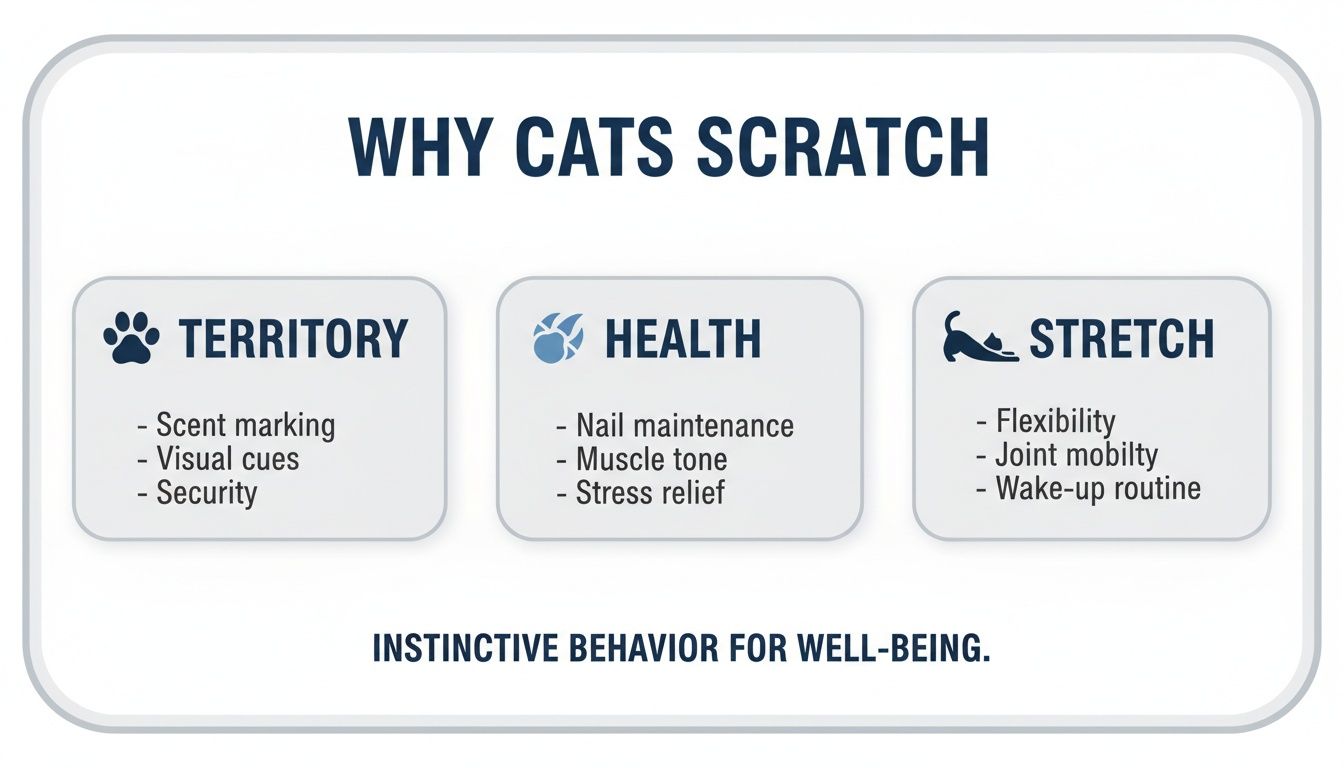
As you can see, it's all about maintaining their claws, marking their territory, and getting in a really satisfying stretch. Once you appreciate these motivations, you can start building a home that works with their nature, not against it.
Choosing the Perfect Scratching Post
Not all scratching posts are created equal, and believe me, your cat will have an opinion. The best approach is to offer a variety of surfaces and styles to see what they fall in love with. Think of it as setting up a scratching buffet.
Material is often the biggest deal-breaker. Sisal rope is a classic for a reason; its rough, durable texture mimics tree bark and provides a deeply satisfying shredding session. Cardboard scratchers are another fantastic, affordable option that many cats adore tearing apart.
A quick word of warning on carpeted posts: they can sometimes create confusion. If you teach your cat that scratching the carpet on the post is great, they might struggle to understand why scratching the carpet on the floor is suddenly a bad thing.
To help you figure out what your cat might like best, I've put together a quick comparison of the most common options.
Choosing the Right Scratching Post for Your Cat
This table breaks down the different types of scratchers to help you find the perfect match for your cat's preferences and your living space.
| Scratcher Type | Best For | Material | Pro Tip for Placement |
|---|---|---|---|
| Vertical Post | Cats who love to stretch upwards ("tree climbers"). | Sisal Rope, Wood | Place next to the sofa arm they currently target. Must be tall and stable! |
| Horizontal Pad | Cats who prefer scratching on flat surfaces like rugs. | Cardboard, Sisal Mat | Lay it flat in a high-traffic area or near their favourite nap spot. |
| Angled Scratcher | A great middle-ground for cats who enjoy both styles. | Cardboard | Position it in a main walkway or by a doorway for territory marking. |
| Cat Tree/Condo | Multi-cat homes or cats who love to climb and perch. | Sisal, Carpet, Wood | Place it in a social hub of the house, like the living room, with a view. |
Looking at the options side-by-side, it's clear that observing your cat's natural behaviour is the best way to choose a winner.
Vertical vs Horizontal Scratching Styles
Pay attention to how your cat likes to scratch right now. Do they stand on their hind legs and stretch up high against the sofa? Or do they hunker down and pull their claws along a rug? Their current habits are the best clue.
- Vertical Posts: These are perfect for "stretchers." The post absolutely must be tall enough for a full-body stretch—at least one and a half times their body length. Crucially, it has to be sturdy and stable. A wobbly post feels unsafe and will be rejected instantly.
- Horizontal Scratch Pads: These are ideal for cats who prefer scratching flat surfaces. Cardboard pads are a popular and effective choice here.
A common mistake is buying a post that’s too short or unstable. If a cat tries a post once and it tips over, they will likely never trust it again. Invest in a heavy-based, tall post to give them the security they need.
The Art of Strategic Post Placement
Where you put the scratching post is just as important as what it's made of. Hiding it away in a back room is a recipe for failure. Scratching is a social and territorial behaviour, so the posts need to be where the action is.
The golden rule? Place the post right next to the item they are currently scratching. If they're targeting the left arm of the sofa, put a sturdy sisal post right there. This makes redirecting their attention incredibly simple.
Other prime locations include:
- Near Sleeping Areas: Cats often love a good scratch and stretch the moment they wake up.
- By Entrances and Exits: A post near a doorway lets them mark their territory as they come and go.
- In Social Hubs: Position posts in the living room or other family gathering spots.
Enriching Their World Beyond Scratching
Sometimes, destructive scratching is a symptom of a bigger problem: boredom or anxiety. A cat without enough stimulation will find its own entertainment, and that often involves your furniture.
A tall cat tree or condo is a fantastic investment. These give cats a space to climb, hide, perch, and scratch—all in one. Puzzle feeders are another brilliant tool, engaging their minds by making them work for their food.
Finally, never underestimate the power of playtime. Just 15-20 minutes of interactive play with a wand toy each day can burn off excess energy and strengthen your bond. A tired, happy cat is far less likely to feel the need to shred your sofa. By making the right scratching options irresistible and their environment engaging, you're setting everyone up for success.
Gentle Training and Safe Deterrents
Once you’ve set up a tempting array of scratching posts, the next step is to gently guide your cat towards them while making your sofa seem like the most boring spot in the room. This whole process is about encouragement and clear boundaries, not punishment.
Yelling or grabbing a spray bottle might work for a second, but it usually just creates fear and anxiety. This can damage your bond and even lead to other stress-related issues.
Instead, the best approach combines positive reinforcement with safe, harmless deterrents. The goal is to make using the scratching post an incredibly rewarding experience, while simultaneously turning the arm of your sofa into a place they’d rather avoid. This two-pronged strategy teaches your cat what you want them to do, rather than just scolding them for what they shouldn’t.
The Power of Positive Reinforcement
Positive reinforcement is the absolute cornerstone of kind and effective cat training. The idea is simple: reward the behaviour you want to see, and your cat will be far more likely to repeat it. When it comes to protecting your furniture, this means turning the scratching post into a place of pure joy.
The secret is timing. You have to reward your cat the very instant they interact with their post. I always recommend keeping a little stash of their favourite high-value treats and some catnip nearby. The moment you see them even approach the post, praise them in a happy, encouraging tone. As soon as their paws touch the sisal, give them a treat. It creates a powerful and immediate positive connection.
- Praise and Treats: When they use the post, offer a small, tasty treat and tell them what a good cat they are.
- Catnip Magic: Sprinkle a little catnip on new scratching posts to make them irresistible and encourage that first sniff.
- Playtime Focus: Dangle a wand toy over and around the post to get them to pounce and dig their claws into it during a game.
Using Safe and Effective Deterrents
While you're building up the appeal of the scratching post, you also need to make your furniture a less attractive target. Deterrents should be harmless but create an unpleasant sensation that makes your cat think twice. The aim is for them to discover on their own that scratching the sofa just isn’t a satisfying experience anymore. For a really comprehensive guide on different methods, you can explore these proven strategies to stop cat scratching furniture.
Think about textures and scents that cats naturally dislike. These deterrents work because they interfere with the very things that make scratching so enjoyable for them—a good grip and a pleasant surface.
Here are some of the most effective and humane options out there:
- Double-Sided Sticky Tape: Cats absolutely detest sticky surfaces on their paws. Applying specially made, pet-safe sticky tape to the corners of your sofa or other favourite spots is a highly effective, low-cost solution.
- Citrus-Scented Sprays: Most felines have a natural aversion to the smell of citrus. A light misting of a commercial citrus-based spray (or a diluted mix of lemon juice and water) on the furniture can make the area unappealing. Just be sure to test it on an inconspicuous spot first!
- Textured Mats: Placing a textured, slightly uncomfortable mat like a plastic carpet runner (spiky side up) or a specially designed "scat mat" near the furniture can discourage them from even approaching.
A Crucial Note: Never, ever use punitive measures. Methods like shouting, clapping loudly, or spraying your cat with water create a negative association with you, not with the act of scratching. This can lead to a cat that is simply afraid to scratch in your presence but will continue the behaviour the moment you're not around.
By combining these gentle training methods with safe deterrents, you create a clear and stress-free learning environment. You're not just stopping a "bad" behaviour; you're actively teaching a better one, strengthening your relationship, and making sure your furniture stays in pristine condition. It’s a win-win for everyone involved.
The Ultimate Defence With Stylish Sofa Covers
While training and deterrents are fantastic long-term strategies, sometimes you just need an immediate, foolproof way to protect your furniture from your cat. For busy families, renters, or anyone with a particularly determined scratcher, a high-quality sofa cover is your most reliable ally. It creates a physical barrier that stops claws in their tracks. This isn't about giving up; it's about smart, effective defence.

Let’s be honest, the reality of pet ownership can get expensive. A recent survey revealed that a staggering 41% of UK pet owners end up replacing damaged household items every single year, with sofas being a prime victim of claws and chews. With owners replacing items about twice a year on average, it’s no surprise that 21% are already using sofa covers as their frontline defence.
This is where modern sofa covers really change the game, moving far beyond the loose, frustrating throws of the past.
Why Modern Stretchy Covers Work So Well
The secret to a genuinely cat-proof cover lies in its material and fit. Today’s best covers are crafted from durable, high-stretch spandex-blend fabrics. This unique composition is a cat’s worst nightmare for scratching.
The material simply gives and moves under their claws, preventing them from getting that satisfying grip and resistance they crave. When a cat can't sink its claws in deeply to pull and shred, the behaviour quickly becomes unrewarding. They lose interest and are far more likely to wander off to find their proper scratching post instead. This makes the cover not just a barrier, but a passive deterrent, too.
Beyond traditional sofa covers, a more direct approach for specific areas can be found by exploring solutions like sticky back plastic for furniture, which offers targeted protection where it's needed most.
Practicality Meets Style
Gone are the days when protecting your furniture meant sacrificing your home's aesthetic. Modern covers are designed with both function and fashion in mind, offering a chance to completely refresh your living room's look while keeping the furniture underneath pristine.
Key features to look for in a pet-friendly cover include:
- Machine-Washability: This is non-negotiable for any pet owner. A machine-washable cover means fur, muddy paw prints, and the occasional accident can be handled with a simple wash cycle, keeping your living space hygienic and fresh.
- Snug-Fit Design: Look for covers that come with clever extras like foam inserts or tucking grips. These are pushed deep into the gaps of your sofa to hold the fabric taut, stopping it from slipping or bunching up, even with an active cat jumping about.
- Variety of Colours and Textures: Whether your style is minimalist chic or cosy and traditional, there is a cover to match. You can choose from a huge range of colours and textures, like sophisticated jacquard or plush velvet, to perfectly complement your existing decor.
A well-fitted, high-quality cover doesn't just protect—it transforms. It can breathe new life into an older, slightly worn sofa, giving you a brand-new look for a fraction of the cost of replacement furniture.
Effortless Installation and Care
The best furniture protection is the kind you'll actually use. Modern stretchy covers are designed for a hassle-free installation that takes just a few minutes. The four-way stretch fabric easily pulls over your entire sofa, including the arms and back, for complete coverage. Little tags often indicate the front and back, making the whole process intuitive.
Once it's in place, the included foam inserts are tucked deep into the crevices between the cushions and the frame. This simple step is the key to a smooth, wrinkle-free finish that looks like custom upholstery and, most importantly, stays put.
Maintaining the cover is just as simple. When it's time for a clean, just pull it off, pop it in the washing machine on a gentle cycle, and it's good to go. This ease of use makes it a practical, long-term solution for any household. For more detailed guidance, you might be interested in our guide on choosing the best couch protectors for pets. It provides a comprehensive look at what makes a cover truly effective against our furry friends.
How to Repair Existing Scratches and Snags
Even with the best cat-proofing strategies, you might still be dealing with a few lingering battle scars on your furniture. It can feel disheartening to see those snags and scratches, but you’d be surprised how many are easy enough to fix yourself. Bringing your furniture back to life not only makes your space feel fresh again but also gives you a clean slate for putting those long-term protective measures in place.
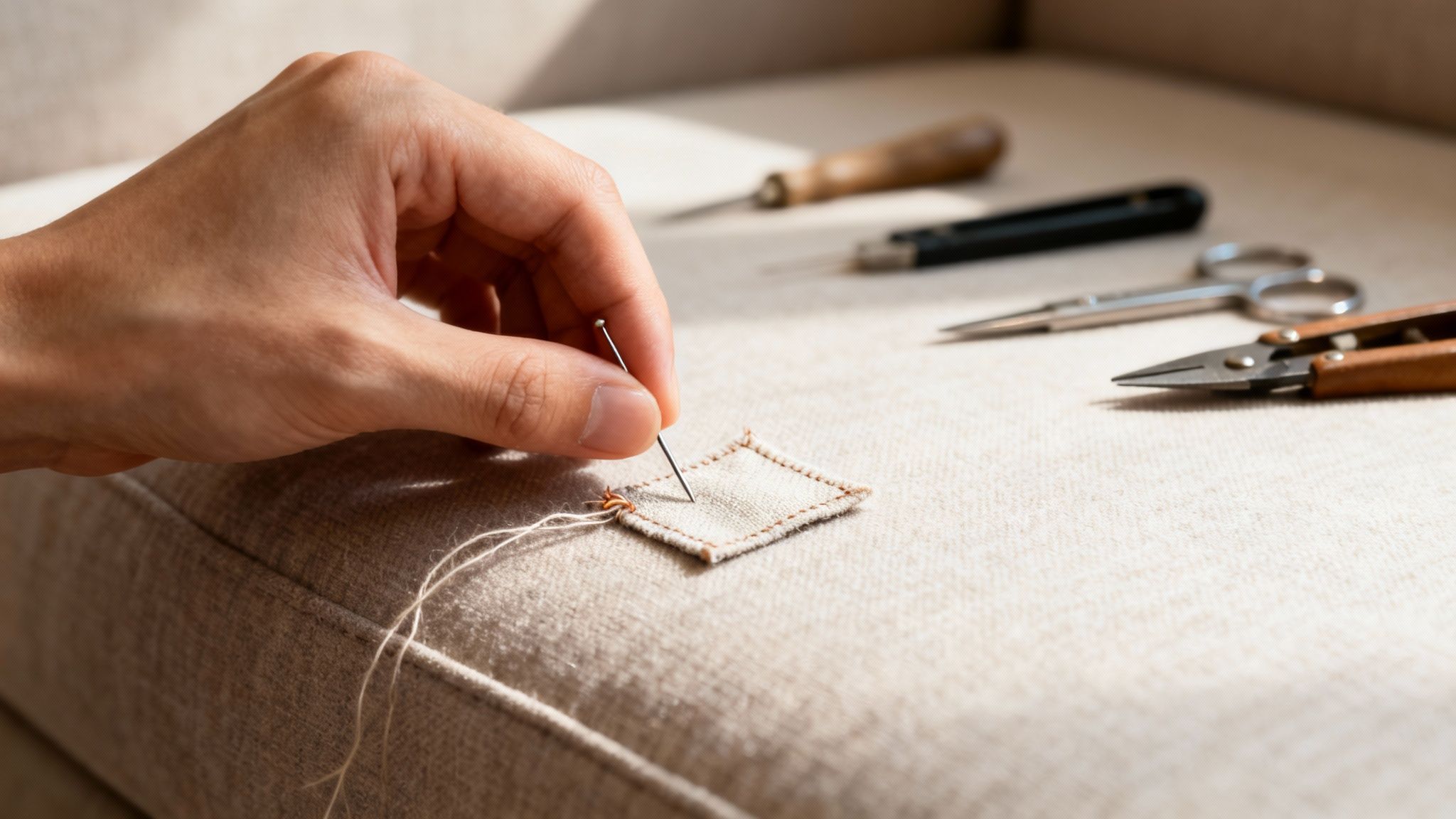
Before you start looking up expensive reupholstering services, a few simple DIY techniques can work wonders. The right approach all comes down to the material, so let's get into the specifics for fabric and leather sofas.
Restoring Fabric Sofas
On fabric furniture, cat damage usually shows up as pulled threads, little loops, and fuzzy patches where claws have repeatedly caught the weave. The key here is to be gentle and methodical.
Whatever you do, resist the urge to pull on any loose threads. This will only unravel the weave even more and make the problem a whole lot worse. Instead, find a small, sharp pair of scissors or even nail clippers.
- Trim Carefully: Snip off any fuzzy bits or long, pulled loops as close as you can to the surface of the fabric, being careful not to cut the main body of the material. This alone can instantly tidy up the appearance.
- Use Fabric Glue for Minor Snags: For small pulls where a thread has looped but is still attached, a tiny dab of clear-drying fabric glue can secure it. I find a toothpick is perfect for applying a minuscule amount under the thread before gently pressing it flat.
- Secure Patches with Upholstery Pins: If the damage is more significant, a patch might be your answer. For a nearly invisible fix, try to find a matching fabric swatch from underneath the sofa or a hidden cushion seam. You can secure it with discreet, corkscrew-shaped upholstery pins for a great no-sew solution.
Here's a quick trick for tightly woven fabrics like microfibre: you can sometimes use the smooth, rounded end of a spoon to gently "push" the surrounding fibres back over a minor scratch. It often hides it from view completely.
Mending Scratches on Leather Furniture
Leather is tough, but sharp little claws can definitely leave noticeable surface scratches. The good news is that leather is also incredibly forgiving and repairable. The goal is to blend the scratch away by restoring colour and moisture to the damaged area.
For light surface marks, sometimes all you need is a high-quality leather conditioner or cream. Just apply a small amount to a soft, clean cloth and buff the scratch using a gentle circular motion. This often rehydrates the leather enough to make minor marks disappear.
If the scratch has actually removed some of the colour, a colour-matched repair kit is your best friend. These kits typically come with a coloured balm or filler that you gently work into the scratch.
- Clean the Area: First, give the scratched surface a wipe with a proper leather cleaner to get rid of any dirt or oils.
- Apply the Colour Balm: Using the applicator that came with the kit or a soft cloth, apply a small amount of the balm directly onto the scratch.
- Buff and Blend: Gently buff the area to blend the colour seamlessly into the surrounding leather. Let it dry completely according to the instructions.
This process can make even quite obvious scratches virtually vanish. For a more detailed walkthrough, our guide on repairing scratched leather offers step-by-step instructions. By tackling these little repairs, you’re not just fixing the damage; you’re reclaiming your furniture and setting the stage for a scratch-free future.
Your Cat-Proofing Questions, Answered
Trying to get one step ahead of your cat's claws can throw up some tricky questions. Whether you're a landlord trying to protect your property, a new cat parent feeling a bit lost, or just hunting for what really works, getting clear, practical advice is key. Let's tackle some of the most common queries.
As a Landlord, How Can I Protect My Furnished Property?
For landlords, the smartest approach is twofold: get it in writing and get some physical protection in place. Your tenancy agreement should always have a clear clause outlining the tenant's financial responsibility for any pet-related damage. This manages expectations right from the start.
But honestly, prevention is always better than cure. Investing in high-quality, durable sofa covers for your furnished properties is an incredibly savvy move. They create a robust physical barrier against claws and fur, can be easily washed between tenants, and will genuinely extend the life of your furniture. It's a simple step that cuts down long-term replacement costs and keeps your assets looking their best.
Are Some Sofa Fabrics Better Than Others?
Absolutely, the fabric of your sofa makes a huge difference. Cats get a real kick out of hooking their claws into a material and getting a good pull, so anything with a tight, dense weave is naturally more resistant.
Here are a few good bets:
- Microfibre: A top contender. Its weave is so dense that it lacks the loops cats love to snag their claws into.
- Canvas: This is a tough, rugged material that can stand up to a lot of wear and tear without looking shredded.
- Velvet: It might look luxurious and delicate, but its pile has no loops, which makes it far less appealing for a cat to scratch.
On the flip side, some fabrics are practically a scratching post in disguise. Anything with a loose, open weave like tweed, linen, or chenille is an open invitation for claws to snag and shred. While picking the right fabric is a good start, your most reliable defence will always be a durable, fitted cover that shields the entire surface from top to bottom.
Pro Tip: If you're buying a new sofa and you have a cat, always ask for fabric swatches. Take them home and run your fingernail across them to see how easily they snag—it’s a surprisingly good approximation of how they'll hold up to a cat's claws.
My Cat Ignores the Scratching Post. What Am I Doing Wrong?
This is one of the most common frustrations I hear, but the fix is usually quite simple. The problem nearly always boils down to one of two things: placement or preference. A scratching post tucked away in a corner is never going to see any action.
First, move the post right next to the piece of furniture your cat is currently targeting. Scratching is a territorial behaviour, so the post needs to be in a prominent, socially significant location. Make sure it's tall enough for your cat to get a full, satisfying stretch and that it's completely stable—a wobbly post feels unsafe and will be ignored.
Then, start experimenting with different materials. If sisal rope isn't their thing, try a corrugated cardboard scratcher or even a wooden post. You can make the post more enticing by rubbing it with catnip and offering a high-value treat and lots of praise every single time they use it.
Do Sofa Throws Work as Well as Fitted Covers?
Throws are brilliant for protecting your sofa from a dusting of cat fur and for adding a cosy, decorative touch. But when it comes to scratching? They're a very light-duty solution.
A determined cat can easily push, pull, or burrow under a throw to get to the upholstery underneath. They just don't offer the comprehensive protection you need. For serious furniture defence, a full, fitted sofa cover is far more effective. It stays securely in place, covering the arms, corners, and back—all the prime targets for scratching—ensuring every vulnerable inch of your furniture is reliably shielded.
Ready to give your furniture the ultimate defence? Explore the stylish and durable collection at The Sofa Cover Crafter and find the perfect fit to protect your home. Visit us at https://thesofacovercrafter.co.uk to browse our range.