



If you need a short answer, the best sofa fabric for dogs is usually microfibre for most homes, performance fabric for muddy paws and accidents, and protected leather or faux leather if fast wipe-clean maintenance matters more than a flawless surface. For heavy shedders, smooth low-pile fabrics beat textured ones because hair stays on top instead of weaving in. For dogs that scratch or “nest,” tightly woven canvas or commercial-grade synthetics tend to outlast soft, open weaves. If budget matters, some lower-texture chenille and sturdy polyester blends can work—but only when the weave is tight and the household is relatively calm.
Key Takeaways Best Sofa Fabric for Dogs
- Match fabric to the mess: Microfibre suits most homes, performance fabric handles muddy paws.
- Test before you commit: Rub, claw-snag and spot-clean tests reveal how a fabric holds up.
- Prioritise by behaviour: Smooth surfaces for shedders, tight weave for scratchers.
Table of Contents
- Key Takeaways Best Sofa Fabric for Dogs
- Why Your Sofa Needs a Dog-Friendly Defence Strategy
- What Makes a Fabric Truly Dog-Friendly
- The swatch tests worth doing at home
- What would disqualify a fabric
- How We Evaluated Dog-Friendly Sofa Fabrics
- Sofa Fabrics That Just Don't Play Well with Dogs
- Loose weaves and delicate surfaces
- Chenille is not an automatic no
- How to shop affordable chenille in Great Britain
- Fabrics I would usually avoid
- Matching the Fabric to Your Dog's Personality
- Heavy shedding dogs
- Nesting and scratching dogs
- Muddy paws and drool-heavy dogs
- Senior dogs or incontinence issues
- Multi-dog homes
- When chenille can still make sense
- Keeping Your Pet-Friendly Sofa Looking New
- Your Weekly Cleaning Toolkit
- Tackling Common Pet Stains
- Frequently Asked Questions
- What is the best material for a couch when you have dogs?
- What type of sofa is best for dogs?
- What material is pet proof?
- What fabric is dog chew proof?
- Is chenille a good sofa fabric for dogs?
- Is leather or microfiber better for dog owners?
Why Your Sofa Needs a Dog-Friendly Defence Strategy
Choosing a sofa for life with dogs is less about finding one magic material and more about matching the fabric to the mess you live with. In most homes, microfibre is the best all-round pick; performance fabric is the easiest to clean after muddy walks or spills; protected leather suits owners who want hair and grime to wipe straight off; canvas is a practical choice for scratch-prone dogs; and chenille only makes sense when it is tightly made and your dog is unlikely to claw at the surface. UK pet ownership is still substantial, with millions of households living with dogs according to UK Pet Food's pet population data, so this is a mainstream furniture problem rather than a niche one. If you have ever watched a nice textured sofa become a fur trap in a week, the decision usually comes down to five things: snag risk, visible hair, stain clean-up, comfort, and price.
FabricScratch resistanceHair visibilityStain clean-upComfortAffordabilityMicrofibreHighLow to medium, depending on colourEasySoftGoodPerformance fabricHighLow to mediumVery easyMedium to softFair to expensiveLeather / faux leatherMediumLowVery easyMediumFair to expensiveCanvasHighMediumModerateFirmer feelGoodChenilleLow to medium, varies heavily by weaveMedium to highModerateVery softGood
A useful rule of thumb: if your dog sheds heavily, prioritise smooth surfaces; if your dog scratches, prioritise tight weave over softness; if your dog tracks in mud, prioritise cleaning code and finish over everything else. Broader upholstery advice has also shifted over time toward synthetics and protected surfaces for pet homes because they trap less fur and are easier to maintain, a pattern reflected in guidance such as Mathis Home's dog-friendly sofa advice. I tend to trust a swatch more than a showroom label: on a sample card, the fabrics that look “cosy” first are often the ones that hold onto hair the longest.
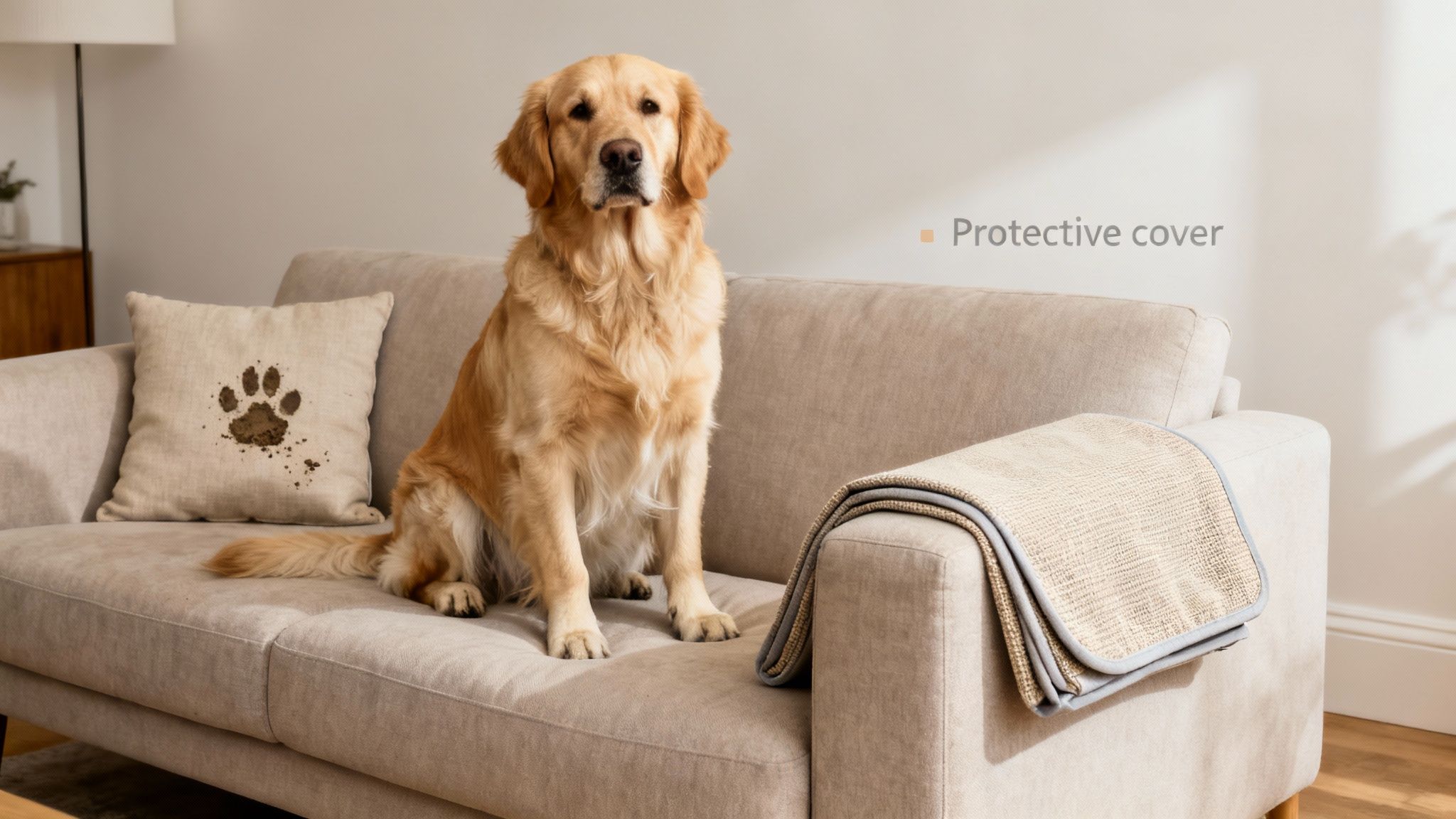
A cover can still be the simplest fix if you already own a sofa you like. It is usually cheaper than replacing upholstery, easier to wash after a bad week of wet paws, and more flexible if your priorities change between puppy stage and older-dog stage. Keep the cover idea in the background as you compare materials: the best outcome is often a decent base fabric plus a removable barrier, not perfection from upholstery alone.
What Makes a Fabric Truly Dog-Friendly
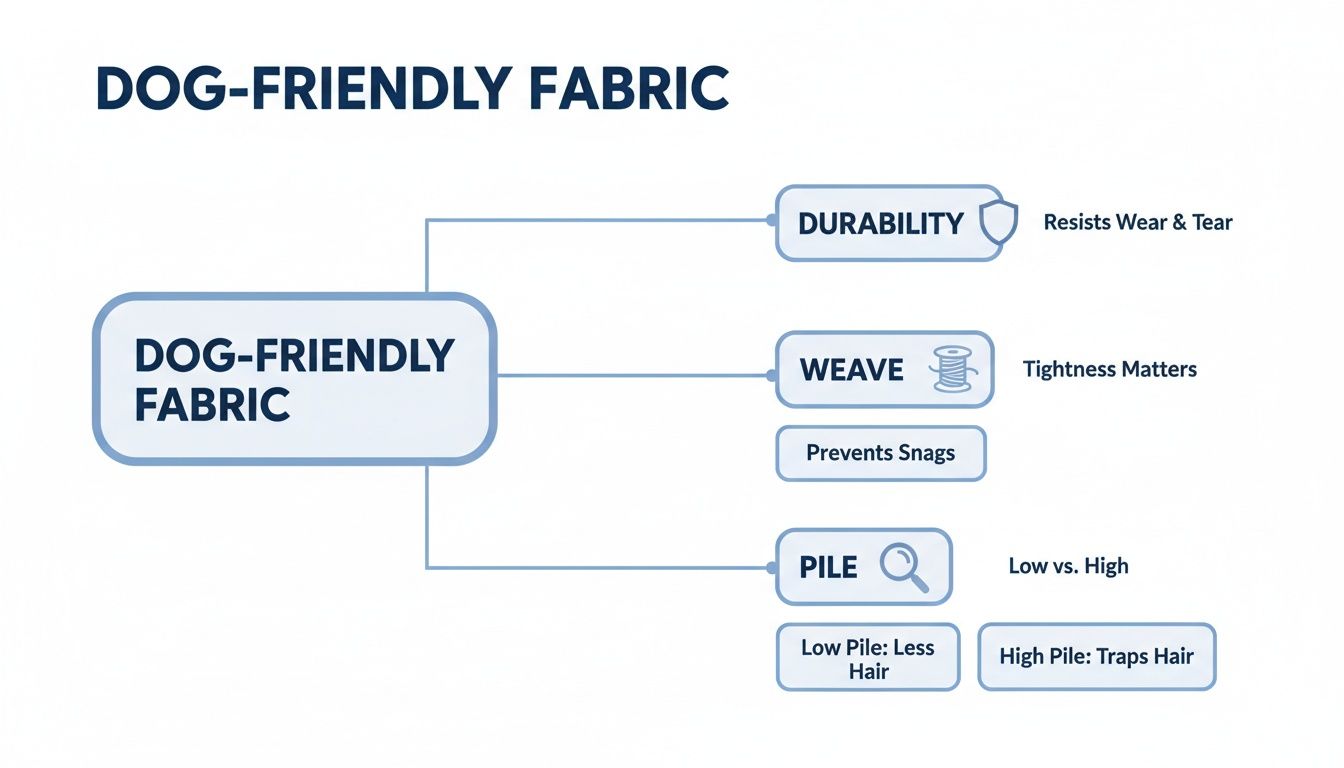
A dog-friendly fabric should pass four practical tests before it wins your money: it should resist claw snags, release hair without a fight, survive routine rubbing, and clean up predictably with the method listed on its care code. The basics still matter—tight weave, low pile, decent durability—but buyers are better served by testing a swatch at home than by relying on broad marketing terms like “family friendly” or “hard wearing.” The upholstery trade commonly uses the Martindale test to indicate abrasion resistance, and heavy domestic upholstery is typically expected to score well above occasional-use fabrics according to guidance from The Sofa & Chair Company on Martindale ratings and Sofas by Saxon. For pet homes, I would treat 25,000 rubs as a sensible floor, not a guaranteed win.
The swatch tests worth doing at home
When a sample arrives, do five quick checks before you commit.
-
Rub test: Drag the swatch briskly across itself or against denim for 20 to 30 seconds. If the surface fuzzes quickly, pills immediately, or looks tired after light friction, I would rule it out for an everyday dog sofa.
-
Claw-snag check: Use a fingernail, key edge, or the corner of a card to lightly rake across the surface. You are not trying to destroy it; you are checking whether a point catches. If it snags on the first pass, a dog claw will probably find the same weak spot.
-
Hair-release check: Press pet hair into the swatch and then brush it off by hand. In my experience, the difference here is obvious within seconds: smooth microfibre usually lets go quickly, while fluffy textures seem to grip every strand.
-
Spot-clean check: Place a tiny drop of water on the back edge of the sample. If it beads, you have time; if it darkens immediately and spreads, expect more stress after muddy paws or drool.
-
Odour hold check: Let the dampened swatch dry. If it dries stiff, marked, or musty, it is unlikely to stay pleasant in a busy pet household.
What would disqualify a fabric
I would reject any upholstery fabric that has visible loops, a long pile, unclear care information, or a low abrasion rating for a main family sofa. Cleaning codes matter because they tell you what type of spot cleaning is safe; manufacturers and cleaning references commonly use W, S, WS/SW, and X style codes to indicate whether water-based, solvent-based, both, or vacuum-only cleaning is appropriate, as outlined by Revolution Fabrics' cleaning code guide and Bassett Furniture's fabric cleaning explanation. If I see an attractive fabric with an “X” code and a soft open texture, that is usually enough for me to move on.
If you are still comparing broad categories, our guide to the texture of fabrics is useful for understanding how surface feel affects day-to-day maintenance.
How We Evaluated Dog-Friendly Sofa Fabrics
Fabrics were weighed against the problems dog owners deal with, not just showroom comfort. The ranking criteria were: snag resistance, hair release, stain response, abrasion guidance, ease of home maintenance, and price realism for ordinary buyers rather than trade-only upholstery projects.
I also treated “material” and “fabric” as separate but related decisions. Material tells you the broad family—leather, polyester, cotton blend—while fabric tells you how that material is constructed and finished. That is why a polyester performance weave can behave very differently from a polyester chenille, even if both start with synthetic fibre.
Here is the framework used throughout the article:
CriterionWhat it means in practiceWhy it matters with dogsSnag resistanceTight weave, minimal loops, low pileReduces claw catches and pulled threadsHair releaseFur stays on the surfaceMakes vacuuming and lint removal fasterClean-upWater or approved cleaner works predictablyHelps with mud, drool, and accidentsAbrasion durabilitySuitable Martindale rating for daily useBetter long-term performance on a main sofaComfortSurface is pleasant enough for daily seatingTough fabrics still need to feel livableBudget fitAvailable beyond premium designer rangesImportant for family rooms and rental homes
Three editorial notes shaped these recommendations. First, I consistently found that “soft and cosy” samples were more likely to trap hair. Second, fabrics that looked almost too plain on a hanger often performed best once I started doing snag and wipe tests. Third, leather impressed on clean-up every time, but it also showed surface marks fastest, which is why I rank it as maintenance-friendly rather than universally best.
Sofa Fabrics That Just Don't Play Well with Dogs
The fabrics that fail most often in pet homes are not always the weakest on paper; they are the ones that combine open structure, surface texture, and difficult cleaning. That usually means loose weaves, long piles, delicate natural fibres, and upholstery that needs specialist care after every mishap. The trouble with these fabrics is cumulative: one snag becomes a pull, one muddy patch becomes a shadow stain, and one season of shedding turns texture into permanent fuzz.
Loose weaves and delicate surfaces
Traditional linen-look weaves, tweeds, looped decorative cloths, silk blends, and many plush pile fabrics are risky because they create places for claws to catch and dirt to hide. Some velvets are excellent when engineered as performance upholstery, but conventional high-maintenance velvet still tends to show pressure marks, trap hair, and demand more careful cleaning than most dog owners want.
Chenille is not an automatic no
Chenille deserves a more careful answer than it usually gets. It can be a poor choice when the fabric has a loose weave, high pile, or delicate yarns that flatten and snag easily. In that form, it behaves exactly the way frustrated owners describe: it grips fur, shows wear quickly, and can end up with pulled threads after normal climbing and nesting.
But chenille is not one single construction. A tighter, lower-texture chenille or a performance chenille blend can be acceptable in a lower-scratch home, especially when comfort and budget matter more than maximum claw resistance. I would still rank it below microfibre or performance weave for active dogs, but above fragile decorative upholstery if the specification is solid. Guidance from upholstery care sources such as Plumbs on choosing upholstery fabrics and Swyft's sofa fabric advice supports this general principle: construction and finish matter as much as fibre type.
How to shop affordable chenille in Great Britain
If you are looking at chenille in the UK because it is softer and often cheaper than premium performance fabric, ask four questions before ordering:
-
What is the fibre composition? Polyester-rich blends usually cope better with repeated use than delicate natural-heavy mixes.
-
What is the Martindale rating? For a main dog sofa, look for heavy domestic territory rather than occasional-use numbers.
-
What is the cleaning code? If the seller cannot explain routine spot cleaning clearly, treat that as a warning sign.
-
Is the surface looped or cut pile? Looped texture is riskier around claws; a flatter cut-pile finish is usually safer.
That same logic applies in France as well: do not buy chenille by label alone. Buy it by construction, abrasion rating, and cleaning practicality.
Fabrics I would usually avoid
-
Looped or nubby upholstery with visible catch points
-
Delicate silk or silk-blend statement pieces
-
Porous suede in homes with muddy paws or accidents
-
Unclear-care fabrics where the retailer cannot supply proper cleaning guidance
-
Very high-pile chenille for dogs that scratch, dig, or shed heavily
Matching the Fabric to Your Dog's Personality
The best choice changes once you stop asking “What is the toughest fabric?” and start asking “What does my dog do to the sofa?” That produces better buying decisions than generic pet-friendly labels.
Heavy shedding dogs
Best pick: microfibre, protected leather, or smooth faux leather.
Avoid: tweed, fluffy chenille, and high-pile velvet.
These dogs need surfaces that let fur sit on top rather than lock into texture. Leather is especially good if your priority is quick clean-up, since pet hair does not embed in an open weave; that maintenance advantage is one reason leather keeps appearing in expert recommendations, though smooth leather can still show wear marks over time as noted by Urner's comparison of couch fabrics for dogs. On swatches, I notice dark pet hair is often less annoying on mid-tone microfibre than on heavily textured fabrics, even when the colour match is not perfect.
Nesting and scratching dogs
Best pick: tightly woven canvas, microfibre, or commercial-grade performance fabric.
Avoid: loose chenille, boucle, open linen weaves.
For dogs that circle, dig, and paw before lying down, snag resistance matters more than softness. A fabric can feel pleasant and still fail quickly if it offers a claw somewhere to catch. Canvas is not glamorous, but it behaves like a workhorse. Different qualities of sofa materials are covered in the comprehensive guide. If you want a softer hand feel, dense microfibre is the easier compromise.
Muddy paws and drool-heavy dogs
Best pick: performance fabric, protected leather, or removable washable covers.
Avoid: absorbent natural fibres with unclear stain treatment.
This is the group where cleanability beats all other traits. Performance fabrics are designed to slow absorption and simplify spot cleaning, while protected leather gives you the quickest wipe-down of the lot. If you already own a sofa that is merely average on stain resistance, a removable cover is often the practical upgrade rather than replacing the whole piece.
Senior dogs or incontinence issues
Best pick: faux leather, protected leather, or a sofa with a washable barrier layer.
Avoid: fabrics that require solvent-only cleaning or prolonged drying.
Senior-dog homes benefit from surfaces that can be cleaned immediately and repeatedly without fuss. I would lean harder toward wipeable surfaces here than in any other category, because speed matters when accidents happen. A soft absorbent upholstery fabric may feel kinder at first, but it becomes harder to live with once repeated clean-ups start.
Multi-dog homes
Best pick: performance synthetic upholstery or microfibre plus a washable cover.
Avoid: delicate statement fabrics bought mainly for look.
Multiple dogs multiply abrasion, hair, smells, and the odds that one of them is wetter or muddier than the others. Premium-spec upholstery can make financial sense because the sofa gets stressed from several directions at once. If budget is tight, I would rather buy a plain durable sofa and add a washable layer than overspend on a beautiful but fragile fabric.
When chenille can still make sense
For calm dogs that do not scratch much, and for owners who care a lot about softness on a tighter budget, a lower-texture chenille can still be reasonable. I would only choose it if the swatch passes the snag test, the Martindale rating is strong enough for everyday use, and the care code is straightforward. In other words, chenille is not pet-proof, but it can be pet-manageable in the right household.
Keeping Your Pet-Friendly Sofa Looking New
Choosing the best sofa fabric for your dog is a brilliant first step, but the key to a living room that always looks and smells fresh is a bit of simple, consistent care. Maintaining your sofa doesn't have to be a massive chore. Think of it as a small, regular tune-up that prevents bigger problems from ever starting.
Just a few minutes each week can make a world of difference. The goal is to stop dirt, fur, and odours from working their way deep into the fabric. By getting into a simple maintenance rhythm, you protect your investment and make sure your sofa stays the comfortable, inviting centrepiece it was meant to be, no matter what your furry friend gets up to.
Your Weekly Cleaning Toolkit
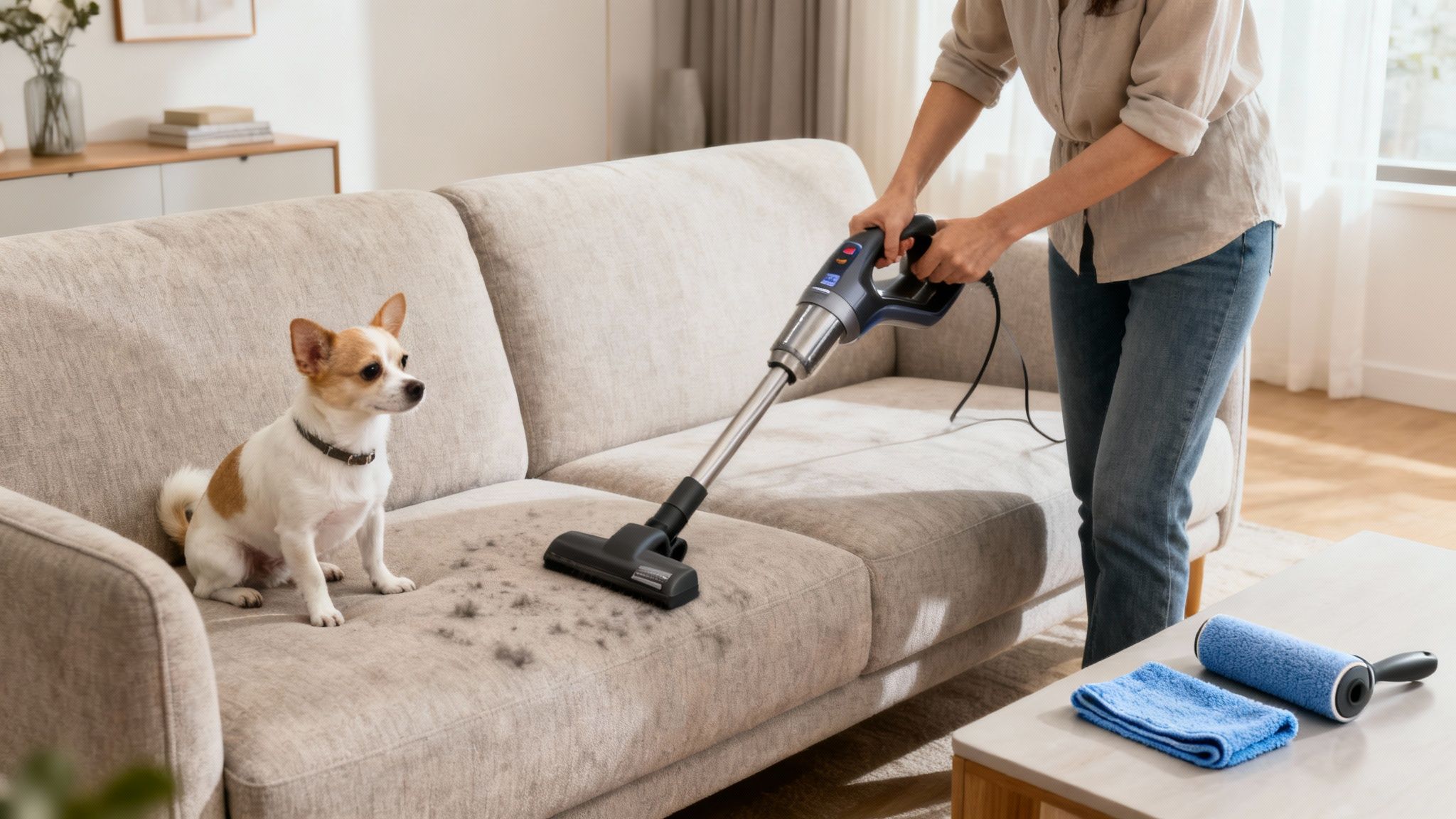
An effective cleaning routine starts with having the right tools on hand. You don’t need an arsenal of expensive products; a few key items will tackle pretty much any pet-related mess.
- Vacuum with Upholstery Attachment: This is your number one weapon against pet hair. The rubberised or bristled attachments are designed to lift stubborn fur from the fabric fibres.
- Lint Roller or Rubber Squeegee: For quick touch-ups between vacuuming sessions, nothing beats a lint roller. A simple rubber window squeegee dragged across the fabric also works wonders, gathering fur into easy-to-remove clumps.
- Microfibre Cloths: These are perfect for blotting up spills and applying cleaning solutions without leaving any lint behind.
- Pet-Safe Fabric Cleaner: Always have a trusted, pet-friendly spot cleaner ready for immediate action on stains.
Tackling Common Pet Stains
Accidents are inevitable, but they don't have to be permanent. The key is to act quickly, before the stain has a chance to set deep into the fabric's weave.
The Blotting Rule: Your immediate reaction to a wet spill should always be to blot, never rub. Rubbing just grinds the stain deeper into the fibres and can damage the fabric's texture. Gently press a clean, dry cloth onto the spill to absorb as much liquid as you can.
Once you’ve blotted the area, apply your pet-safe cleaner according to its instructions. For muddy paw prints, it's often best to let the mud dry completely first. Once it’s dry, you can vacuum up the loose dirt before treating any remaining discolouration.
If pet hair is the bigger day-to-day battle, there is also more from The Mobile Buff on dedicated hair-removal help. For the ultimate defence against deep-set stains and odours, nothing beats the convenience of a fully removable covering. You can learn more about the benefits in our guide to machine-washable sofa covers for easy cleaning. Being able to pop the entire cover in the wash eliminates all the guesswork and restores your sofa to pristine condition every single time.
Frequently Asked Questions
What is the best material for a couch when you have dogs?
For most homes, the safest shortlist is microfibre, performance synthetic upholstery, and protected leather or faux leather. They combine tight construction, easier clean-up, and lower hair retention than soft open-weave fabrics. The right choice depends on whether your biggest problem is shedding, scratching, or muddy paws.
What type of sofa is best for dogs?
A sofa with a tight-woven upholstery fabric, removable cushions, and either washable covers or clearly stated cleaning codes is usually easiest to live with. Avoid highly textured statement fabrics unless your dog is exceptionally calm. A practical frame and fabric combination will age better than a delicate sofa that looks great for six weeks.
What material is pet proof?
No upholstery is pet proof. The most resilient options are tightly woven synthetic fabrics, some commercial-grade performance fabrics, and protected leather, but all can still show wear under enough scratching, chewing, or repeated accidents. Think in terms of damage resistance and easier maintenance, not invincibility.
What fabric is dog chew proof?
There is no upholstery fabric that can be called chew proof. Thick canvas, tightly woven synthetics, and layered covers can slow damage, but a determined chewer will still get through them. If chewing is the issue, training, redirection, and keeping the dog off the sofa unsupervised matter more than fabric alone.
Is chenille a good sofa fabric for dogs?
Sometimes, but only with caveats. A tightly made, lower-pile chenille can work for calm dogs and budget-conscious buyers who want softness, while loose or fluffy chenille is a poor fit for scratchers and heavy shedders. Always check the weave, Martindale rating, cleaning code, and whether the surface is looped before buying.
Is leather or microfiber better for dog owners?
Microfibre is usually the better all-rounder because it balances comfort, scratch resistance, and easier maintenance. Leather wins on fast wipe-clean care and hair removal, but it can show scratches and scuffs more visibly. If appearance under claw wear matters a lot, I would usually pick microfibre first.
Ready to dog-proof your furniture without giving up on style? Explore the full range of durable, machine-washable, and stylish covers from The Sofa Cover Crafter. Find the perfect protective solution for your sofa today!
| Property | Why It Matters for Dog Owners | What to Look For |
|---|---|---|
| Weave | Prevents claws from snagging and creating pulls or tears. | A very tight weave with no visible loops or gaps. |
| Pile | Determines how much fur, dander, and dirt gets trapped. | A low pile or no pile at all for easy cleaning. |
| Durability | Measures how well the fabric withstands daily friction and use. | A Martindale rub count of at least 25,000. |
| Cleanability | Makes dealing with mud, drool, and accidents much easier. | Fabrics that are liquid-repellent or machine-washable. |
