



A pink cat tree can do two jobs at once: give your cat a proper place to climb, perch, and scratch, while also earning its place in a real living room. The best ones are stable under a running start, easy to clean, and visually calm enough that they don't make the whole room feel like a pet corner.
Key Takeaways How to Find the Perfect Pink Cat Tree for Your Home
- Two jobs in one: It gives cats a place to climb and scratch while looking good in the room.
- Redirects scratching: A dedicated "yes" zone protects your other furniture.
- Check materials and fit: Durable materials and the right size matter as much as colour.
Table of Contents
- Key Takeaways How to Find the Perfect Pink Cat Tree for Your Home
- How We Evaluated a Pink Cat Tree for Style, Safety, and Everyday Use
- Why a Pink Cat Tree Is a Stylish Home Essential
- Understanding Why Your Cat Needs to Scratch
- Choosing the Right Pink Cat Tree for Your Space
- Styling Your Pink Cat Tree Like an Interior Designer
- How to Keep Your Pink Cat Tree Clean and Safe
- Putting Your Own Spin on a Pink Cat Tree
- Your Pink Cat Tree Questions, Answered
- Frequently Asked Questions
How We Evaluated a Pink Cat Tree for Style, Safety, and Everyday Use
We judged a pink cat tree by how it performs in everyday home use: not in a showroom, but in a home where it has to survive claws, fur, vacuuming, and daily sightlines. First came stability. If the base is too light, the posts are thin, or the top platform sways when a cat jumps up, that tree is out. I pay extra attention to wobble because even attractive models get ignored when they feel shaky.
Next came materials and maintenance. We looked for scratch surfaces that cats actually use, fabrics that don't trap every strand of fur, and finishes that can be wiped down without fading fast. Veterinary guidance from the ASPCA on scratching behavior supports giving cats appropriate scratching outlets, while International Cat Care's home environment advice reinforces the value of elevated resting spots and secure territory.
We also weighed fit and visual impact. A good tree should work in a small flat, sit neatly beside existing furniture, and not block natural walkways. I tend to rule out oversized models with tiny perches, flimsy particleboard, exposed staples, or fabric you clearly couldn't clean after one muddy paw print. Style matters here, but only after the basics: safe structure, usable scratching zones, and a shape your cat is likely to choose without constant coaxing.
Why a Pink Cat Tree Is a Stylish Home Essential
Pet furniture no longer has to look apologetic. A well-chosen pink cat tree can sit in full view and still feel intentional, especially in homes that already use warm neutrals, pale woods, greens, or darker contrast colours. If you want inspiration beyond the usual beige towers, this roundup from FloofChonk's site is useful for seeing how cat furniture can read as part of the room rather than an afterthought.
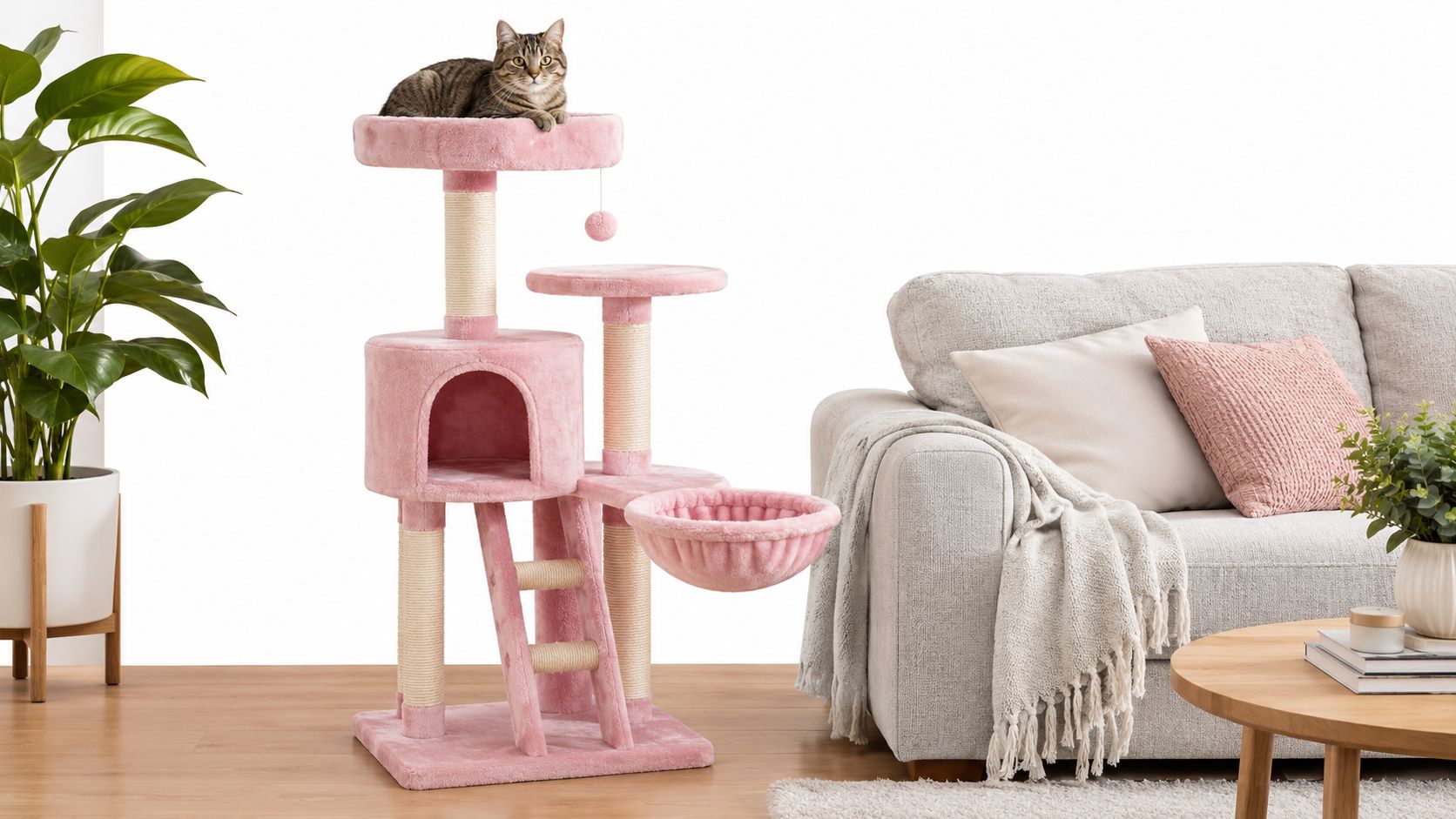
That broader shift is happening in a market that keeps getting bigger. One current estimate values the global pet furniture market at USD 4.27 billion in 2026 and projects it to reach USD 5.71 billion by 2031, according to Mordor Intelligence. In practice, that means more brands are designing cat furniture for visible spaces like living rooms instead of only for utility corners.
Fusing Function with Fashion
A cat tree earns its keep when it satisfies real feline behaviour and still works with the room around it. Cats look for height, scratch texture, and a place to watch household activity without being disturbed. When those needs are built into something visually pleasing, the tree stops feeling like clutter and starts acting like a deliberate furnishing.
Pink helps more than people expect. Blush can soften a room full of grey, dusty rose can warm oak and walnut, and brighter pink can work as a controlled accent if the rest of the palette stays simple. The move towards bolder pet accessories mirrors a wider trend in home styling, and exploring the use of pink in traditional decor shows just why this versatile colour has such staying power.
When you thoughtfully choose a cat tree, you're not just buying a product; you’re curating an environment. It’s a statement that says you care just as much about your pet’s welfare as you do about the beauty of your home.
Protecting Your Furniture in Style
One of the most practical benefits of any decent cat tree is its ability to save your other furniture from a grim fate. Your sofa, armchairs, and even your curtains are often the accidental victims of a cat’s deep-seated need to scratch. A well-placed pink cat tree gives them a far more appealing alternative.
Here are a few key advantages:
- Redirects Scratching Behaviour: It gives your cat a designated "yes" zone for scratching, steering them well clear of your sofa.
- Creates a Safe Haven: It provides your cat with its own territory to relax and watch the world go by, which can help reduce stress-related habits.
- Adds Vertical Space: In smaller homes or flats, a tall tree is a fantastic way to offer much-needed vertical space for climbing and exercise.
Ultimately, a pink cat tree is more than just another purchase; it's a savvy preventative measure. It protects your furniture, saving you from the future cost and headache of repairs or replacements. It's a simple, effective solution that keeps your cat happy and your home looking its best.
Understanding Why Your Cat Needs to Scratch
Have you ever watched your cat diligently scratching the arm of your favourite sofa and wondered what you did to deserve this? It's a common and frustrating scene, but it's a huge misconception that this is just bad behaviour. In reality, scratching is a deep-seated, instinctual need that’s absolutely vital for your cat's physical and mental health.
Think of it less as mischief and more like an essential self-care ritual. When a cat scratches, it’s doing a few really important things all at once: shedding old, dead layers from its claws, getting a fantastic stretch through its back and shoulders, and marking its patch with the scent glands in its paws. Giving them a proper place to do this isn't just a nice-to-have; it's a necessity.
A Personal Wellness Centre for Your Cat
A well-designed cat tree, like a pink one, is basically your feline's personal wellness centre. It’s a multi-purpose hub where they can satisfy some of their most important natural urges in one convenient, approved spot. Without this outlet, those instincts do not vanish, they just get redirected to the next best thing, which is often your expensive furniture.
A dedicated cat tree becomes one of the most useful tools you can own for a harmonious home. It offers an irresistible mix of textures and heights that are far more appealing to a cat than the flat, uniform surface of your sofa.
A cat tree isn't a luxury; it's a piece of essential equipment. It provides a sanctioned outlet for scratching, climbing, and perching, directly contributing to a happier, healthier, and better-behaved cat.
Ignoring this instinct can be a seriously costly mistake. For instance, a recent Feline Advisory Bureau survey found that 67% of UK cat owners experienced furniture damage within the first year of getting their pet. These mishaps led to an average repair bill of £450, a hefty sum that really highlights the financial risk of not providing a proper scratching outlet. You can discover more insights about the growing cat furniture market on businessresearchinsights.com.
A Smart Investment Against Damage
When you frame the purchase of a pink cat tree as a preventative measure, it just makes perfect sense. It’s a proactive step that protects your home furnishings from the get-go. By giving your cat an attractive alternative, you’re not just buying a piece of pet furniture; you’re investing in the longevity of your sofa, chairs, and carpets.
Here’s how a cat tree helps safeguard your home:
- Diverts Instincts: It provides a rough, satisfying surface like sisal rope, which cats instinctively prefer for a good scratch.
- Reduces Stress: A cat that has its own territory to climb and survey feels more secure, which can reduce anxiety-driven behaviours like destructive scratching.
- Protects Furnishings: It works beautifully alongside other protective measures, such as durable sofa covers, to create a solid defence for your furniture.
Ultimately, providing an appropriate place to scratch is one of the most effective ways to maintain a peaceful coexistence. A stylish pink cat tree solves a very real problem while adding a splash of personality to your decor, making it a win-win for both you and your beloved pet.
Choosing the Right Pink Cat Tree for Your Space
The fastest way to narrow the field is to treat this like a furniture purchase, not an impulse pet buy. Measure the floor area first, then compare that space with the tree's base width, height, and perch dimensions. I have found that many towers look compact in product photos but feel bulky once a cat needs room to jump on and off from the front and sides.
A simple buyer checklist helps:
- Base width: wider bases usually mean better stability, especially above 120 cm tall.
- Post thickness: thicker posts hold up better to repeated scratching and heavy cats.
- Perch size: the top bed should be large enough for your cat to curl up without hanging off the edges.
- Platform spacing: staggered steps are easier for kittens, seniors, and cautious jumpers.
- Washability: removable cushions or wipe-clean fabric save a lot of hassle over time.
The category is large enough that quality and design vary widely. In one market breakdown, cat trees and condos represented 32.5% of the global cat furniture market in 2025, making them the biggest single product type, according to DataIntelo's market report. That scale partly explains why you now see everything from narrow studio-friendly towers to oversized multi-cat activity centres.
Match the Tree to Your Cat's Personality
The best style for your cat depends less on colour and more on how they move and rest. Cats usually prefer secure elevated perches, solid scratch posts, and surfaces that let them stretch to full length. In my experience, the models that get used most are rarely the fanciest ones; they are the ones with an easy route up, one confident high perch, and scratch zones at the points where the cat naturally stops and stretches.
- For kittens: choose lower platform gaps, softer landings, and multiple easy access points.
- For large cats: prioritise oversize beds, thicker posts, and a base heavy enough to stay planted when they launch down.
- For multi-cat homes: look for at least two useful resting spots at different heights so one cat doesn't control the whole structure.
- For dedicated scratchers: full-height sisal posts matter more than tunnels, toys, or extra trim.
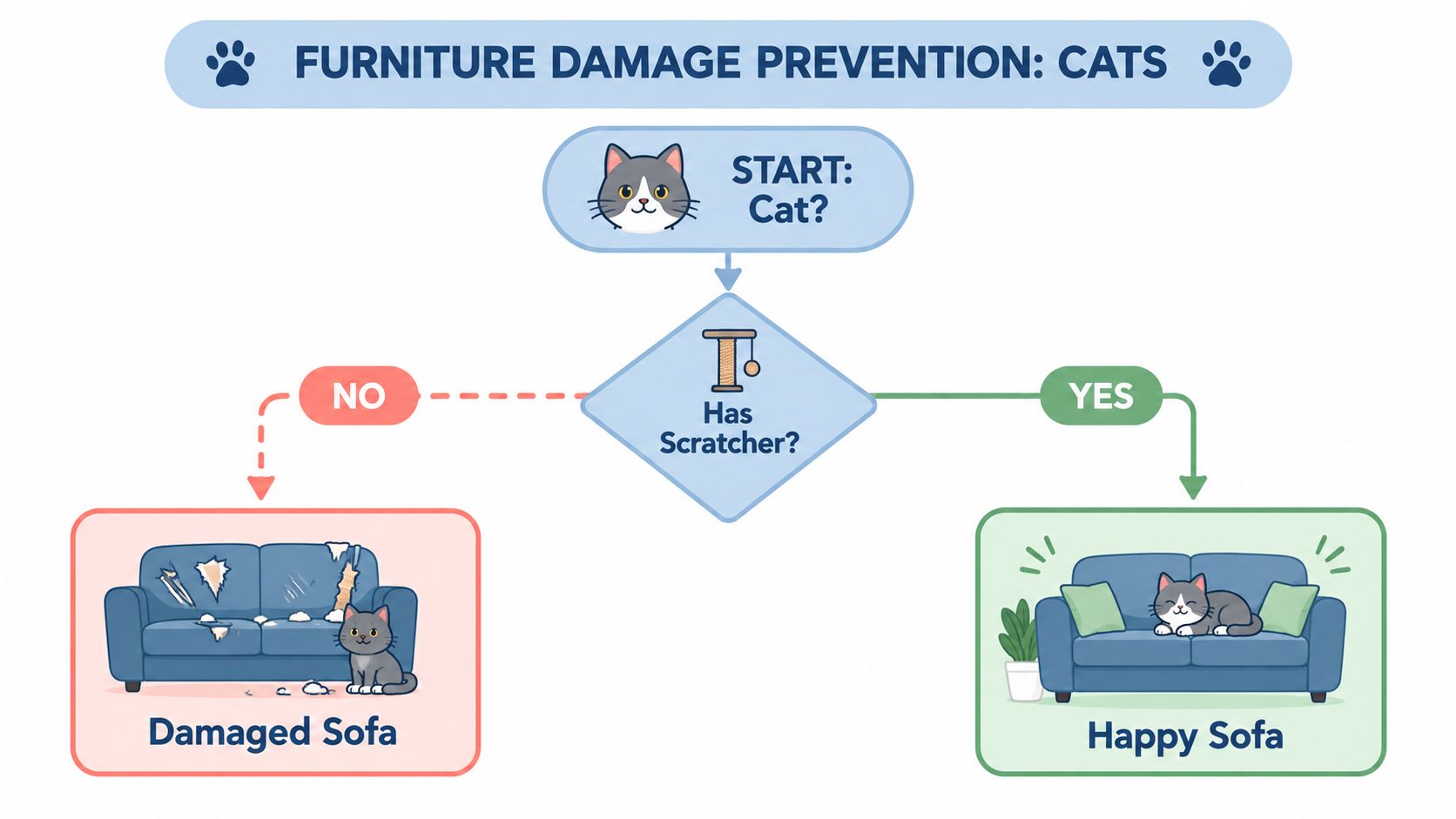
This simple flowchart says it all—giving your cat a proper place to scratch is the secret to a happy sofa.
It really is that straightforward. Providing a dedicated scratching spot is the most direct way to save your furniture from being shredded.
Stability and Materials Matter
A wobbly cat tree is an unsafe one, and cats know it. They’re sensitive to instability and will avoid any structure that doesn't feel solid. A wide, heavy base is an absolute must, especially for taller trees that need to handle energetic leaps without swaying.
Materials change both lifespan and day-to-day usability. Here's the practical trade-off:
- Sisal rope: best for scratching resistance and claw satisfaction; it frays over time, but that usually means your cat is using it.
- Carpet: grippy underfoot and forgiving for jump landings, though it can trap fur and is harder to deep clean.
- Plush fabric: soft and cosy for loungers, but it shows shedding quickly and can look tired sooner in busy homes.
- Engineered wood: common in mid-range trees and fine when the joins are well-made; weaker units tend to loosen at the screws first.
- Solid wood: usually the most durable and easiest to wipe down, though it often raises the price.
If you're weighing up looks and longevity, a good guide to finding the best modern wood cat tree can give you some fantastic pointers on durable and stylish options. I also think darker sisal and mid-tone pink fabrics hide everyday fur far better than very pale plush, which can start to look scruffy long before the structure wears out.
A stable base and quality materials are the foundation of a good cat tree. It’s a purchase that should offer peace of mind, knowing your cat is safe while playing and relaxing.
Compare Your Options
Now, let's compare some common styles to find the perfect match. This handy table breaks down the key features to help you see at a glance what might work best for your cat’s habits and your living space.
Pink Cat Tree Feature Comparison
| Feature | Best For | Material to Look For | Space Consideration |
|---|---|---|---|
| Tall Multi-Level Tree | Active climbers and multi-cat homes | Strong wood frame, thick sisal | Ideal for larger rooms with high ceilings |
| Compact Condo Style | Timid cats and loungers who prefer security | Plush fabric, enclosed hideaways | Great for smaller flats or room corners |
| Sleek & Stylish Post | Dedicated scratchers in minimalist homes | Durable sisal rope, heavy base | Fits anywhere, perfect for tight spaces |
| Wall-Mounted Shelves | Energetic climbers in homes with no floor space | Solid wood, carpeted tops | Utilises vertical space without clutter |
For small spaces, the smartest options are usually corner footprints, narrow vertical towers, or trees that sit flush to a wall instead of jutting into the room. A wall-adjacent placement gives your cat a stable launch point and makes the piece feel less dominant visually. If you're working to a specific budget, don't forget to check out our guide on cheap cat furniture for more great ideas.
Styling Your Pink Cat Tree Like an Interior Designer

Styling works best when placement serves the cat first and the room second. The ideal spot is usually somewhere social but not chaotic: by a window for bird-watching, beside the arm of a sofa, in an unused corner that needs vertical interest, or as part of a reading nook where a floor lamp, chair, and cat perch can share one visual zone. Window-adjacent placement consistently makes a tree feel more valuable because cats return to it throughout the day.
What usually fails is isolation. If you put the tree in a spare room no one uses, or wedge it where it blocks a walkway, it can become both visually awkward and less appealing to your cat. Avoid placing it right beside a loud speaker, next to a slamming door, or where people constantly brush past it.
Create a Cohesive Colour Palette
The key to making a pink cat tree look intentional is to match the tone of pink to the rest of the room instead of treating all pinks as interchangeable.
- Blush pink: works beautifully with cream, oat, stone, pale wood, and soft sage. This is the easiest version to blend into a calm living room.
- Dusty rose: pairs well with walnut, tan leather, olive, muted navy, and textured linen. It tends to look more grown-up than candy pink.
- Brighter pink: looks strongest when used as a single punchy accent against white walls, charcoal, navy, or lots of natural wood.
A blush tree can sit near a beige sofa with green cushions and look understated. A dusty rose model beside a navy armchair feels more finished. If the room already has strong wood tones, pink often reads warmer and less sugary than it does against cool grey alone.
By coordinating your sofa covers and throws with your pink cat tree, you turn a potential eyesore into a coordinated style statement. It's about creating a visual link between your pet's furniture and your own.
Play with Textures and Fabrics
Beyond colour, texture is what keeps the setup from feeling flat. If the tree has plush beds, balance that softness with woven baskets, a linen curtain, or a smoother sofa fabric nearby. If the tree is wood-forward and minimal, add softness with a throw or cushion so the pet furniture doesn't look too stark beside the rest of the room.
For example, a plush pink tree feels even more opulent when it's next to a sofa draped in a velvet cover. Alternatively, you could contrast that softness with the clean, structured lines of a jacquard-patterned throw. Exploring different materials is key, and our guide to pet-friendly fabrics can help you find textiles that are as durable as they are beautiful.
Browse our stretch sofa covers to protect and refresh your sofa without buying a new one.
In small flats, visual clutter matters as much as floor space. A vertical design with open sightlines usually looks lighter than a bulky condo with boxed-in sides. Corner placement helps, and a basket nearby for toys or lint rollers keeps the whole area from spreading across the room. I also prefer models with legs or a visible base gap when possible, because they make tight rooms feel less visually heavy than solid blocky bottoms.
How to Keep Your Pink Cat Tree Clean and Safe
That gorgeous pink cat tree adds a brilliant splash of personality to your room, but keeping it fresh and safe is absolutely vital for your cat’s health and your home's hygiene. A bit of regular maintenance will make sure your investment lasts, stopping it from turning into a dusty, wobbly eyesore. Think of it as a quick MOT for your cat’s favourite piece of furniture.
This routine care doesn't have to be a massive chore. A simple, consistent cleaning schedule is all it takes to keep the plush fabric looking vibrant and the scratching posts primed for action. If you let it slide, you're inviting a build-up of fur, dander, and maybe even a few unwanted pests.
Simple Steps for Routine Cleaning
The best approach is a little and often. For the plush or carpeted surfaces, a weekly vacuum with a brush attachment works wonders. This will lift away most of the loose fur, dust, and any stray cat litter that’s been tracked onto it.
For a deeper clean, especially on those favourite napping spots, grab a damp cloth with a tiny amount of pet-safe cleaner or a simple mix of water and white vinegar. Just be sure to test a small, hidden spot first to make sure the pink dye doesn't run.
A clean cat tree is more than just nice to look at; it creates a much healthier environment for your pet. Regular cleaning gets rid of allergens and dander, which improves the air quality in your home and makes the space far more inviting for your cat.
The sisal rope posts need a bit of attention too. Use a stiff brush to get rid of any trapped dirt or shredded bits from your cat's claws. Try to avoid getting the sisal wet, as moisture can damage the fibres and weaken the glue holding it all together.
Performing Essential Safety Checks
Beyond keeping it clean, making sure the structure is safe is essential. A wobbly tree is a hazard that your cat will quickly learn to avoid. At least once a month, run through these simple checks:
- Tighten All Connections: Go over every single screw and bolt holding the platforms and posts together. All that energetic jumping can easily loosen them over time.
- Inspect for Wear and Tear: Keep an eye out for frayed sisal rope, ripped fabric, or any splintered wood. Damaged parts can be a real injury risk.
- Check the Base: Make sure the whole structure stands firm and doesn't rock when your cat takes a leap. A stable base is the most critical safety feature of all.
These checks only take a few minutes but will give you huge peace of mind. Keeping your cat’s designated scratching spot in top shape also goes a long way in protecting your furniture. To learn more about safeguarding your sofa, you might be interested in our guide on effective cat scratch couch protectors.
Putting Your Own Spin on a Pink Cat Tree

So, you love the idea of a pink cat tree, but nothing you’ve found online is quite you. If you have a creative itch to scratch or a very specific look in mind, why not get your hands dirty and personalise one yourself? A little DIY magic lets you create something unique that slots perfectly into your home, often for a lot less than a high-end designer model.
This is a brilliant way to give a budget-friendly cat tree a serious glow-up, or to bring a tired, well-loved one back from the brink. With just a few simple, cat-safe materials, you can turn a basic structure into a real showstopper.
It’s no surprise that stylish pet furniture is having a moment. UK cat ownership has climbed to 12.5 million in 2024, and pink cat trees in particular saw their online sales jump by 28% year-on-year in 2025 as people embraced their playful aesthetic. It's a smart move for your furniture, too. An RSPCA survey found that giving cats their own scratching spots can cut furniture damage claims by up to 40%. You can dig deeper into the global cat furniture and scratchers market trends over at databridgemarketresearch.com.
Simple and Safe Ways to Get Creative
Getting crafty doesn't have to be a huge project. These simple tweaks can make a massive difference to the look of your pink cat tree, making sure it’s both stylish and completely safe for your feline friend.
- A Fresh Lick of Paint: Give the wooden base or platforms a new look. Just make sure you use a non-toxic, water-based paint that’s certified as pet-safe or toy-safe once it has fully cured.
- Rewrap the Posts: Swap out worn-out sisal or just add a pop of colour by wrapping the posts in brightly coloured jute or sisal rope. It adds fantastic visual texture and gives them a fresh surface to get their claws into.
- Hang Some New Toys: Attach some new dangly toys, feathers, or bells using a sturdy, natural fibre like jute twine. This adds a whole new layer of fun and you can switch them out whenever you want to keep things interesting.
When you customise your cat tree, you’re doing more than just making furniture. You're building a special enrichment spot that shows off your style and your cat’s personality.
Your Pink Cat Tree Questions, Answered
This section covers the three questions that come up most often before and just after buying one: safety, getting a reluctant cat to use it, and where it should live in the house. The short version is simple: choose pet-safe materials, make the tree smell familiar, and place it where your cat already likes to observe daily life.
Are the Dyes Used in Pink Cat Trees Actually Safe?
Usually yes, if you buy from a reputable brand that states the fabric and finishes are pet-safe. Before buying, check for non-toxic dyes, low-odour materials, and the absence of loose chemical smell straight out of the box. If a product listing is vague about materials, I would skip it rather than guess.
How Can I Get My Sceptical Cat to Actually Use the New Tree?
Start by making the tree feel familiar, not new. Rub a blanket your cat already sleeps on over the platforms, add a few treats, and use a wand toy to guide them onto the lower levels first. Cats often accept a tree faster when it's near a window or beside a seat they already patrol.
Where’s the Best Place to Put a Cat Tree?
The best spot is usually in a social room with a good view, especially near a window. Living rooms work well because cats like to stay involved in household traffic without being underfoot. Avoid hiding it in a spare room unless your cat already spends time there.
Frequently Asked Questions
Is a cat tree good for cats?
Yes, for most cats a tree is useful because it supports scratching, climbing, stretching, and resting up high. Those behaviours are part of normal feline enrichment, especially indoors. A good example is a stable tower with one high perch and a full-height scratch post rather than a purely decorative model.
Why are some cat trees so expensive?
The price usually reflects structure, materials, and finish quality more than colour alone. Solid wood, thicker posts, replaceable cushions, and better hardware cost more but usually last longer than light particleboard units wrapped in thin plush. In my experience, the jump from cheap to mid-range often buys real stability, which matters more than extra toys or trim.
What kind of cat trees do cats like most?
Most cats prefer trees with a clear route upward, at least one secure elevated perch, and surfaces they can really scratch into. They also tend to use models more when the perch is large enough to rest comfortably and the structure does not wobble. If you have a bigger cat, bed size and post thickness matter more than novelty shapes.
Should a cat tree go by a window?
Usually yes, because windows add built-in entertainment and encourage regular use. Birds, light changes, and outside movement give your cat a reason to return to the perch. Just make sure the tree doesn't block curtains or create a tipping risk when your cat jumps across to the sill.
How do I know if a cat tree is too small?
If your cat can't fully stretch on the scratch post or has to balance awkwardly on the top perch, it's too small. Large cats should be able to lie down without half their body hanging off the edge. A quick check is to compare the perch diameter and post height with your cat's body length when fully stretched.
Ready to create a home that’s both stylish and perfectly cat-friendly? Find the ideal sofa covers to complement your new pink cat tree at The Sofa Cover Crafter. Explore our full collection at https://thesofacovercrafter.co.uk.
