



A plastic cover for chairs is a straightforward, no-nonsense way to protect your furniture from the daily grind of spills, stains, and general wear. It creates an impermeable barrier, making it an absolute must-have for homes with kids and pets, or just for keeping your chairs pristine during messy activities.
Key Takeaways The Essential Guide to Plastic Cover for Chairs
- A simple, affordable shield: Plastic covers protect against spills, stains and everyday wear.
- Vinyl or polyethylene: Vinyl is durable and flexible, polyethylene is lighter and more basic.
- Fit matters: A well-fitted cover with elasticated hems or ties looks and works better than a loose one.
Table of Contents
- Key Takeaways The Essential Guide to Plastic Cover for Chairs
- Why a Plastic Cover for Chairs Is a Practical Choice
- Real-World Scenarios for Maximum Protection
- Beyond Daily Wear and Tear
- Navigating the Different Types of Plastic Chair Covers
- Understanding the Materials
- Comparing Fit and Functionality
- Plastic Chair Cover Comparison Guide
- How to Measure Your Chairs for a Flawless Fit
- Gathering Your Core Measurements
- Tackling Awkward Shapes and Armrests
- Installing Your Covers for a Secure and Tidy Look
- Smoothing Out Wrinkles and Creases
- Achieving a Snug, Tucked-In Appearance
- Using Ties and Elastic Hems Effectively
- Tackling Common Installation Problems
- Keeping Your Plastic Covers Clean and Durable
- Your Daily and Weekly Cleaning Routine
- Tackling Tougher Stains and Spills
- What Cleaning Products to Avoid
- Smart Storage to Prevent Damage
- When a Fabric Cover Is the Smarter Alternative
- Where Style and Protection Meet
- The Benefits of a High-Quality Fabric Cover
- Making the Right Choice for Your Home
- Got Questions About Plastic Chair Covers? We've Got Answers
- Will a Plastic Cover Damage My Chairs?
- Let's Be Honest: Are They Noisy or Uncomfortable?
- Just How Waterproof Are They, Really?
Why a Plastic Cover for Chairs Is a Practical Choice
Life is messy. Keeping your furniture looking brand new can feel like a losing battle, especially in a busy home. Whether you're trying to survive family dinners with toddlers, protecting your dining chairs from pet claws, or even safeguarding the furniture in a rental property, you need a solution that just works. This is exactly where a plastic cover for chairs proves its worth.
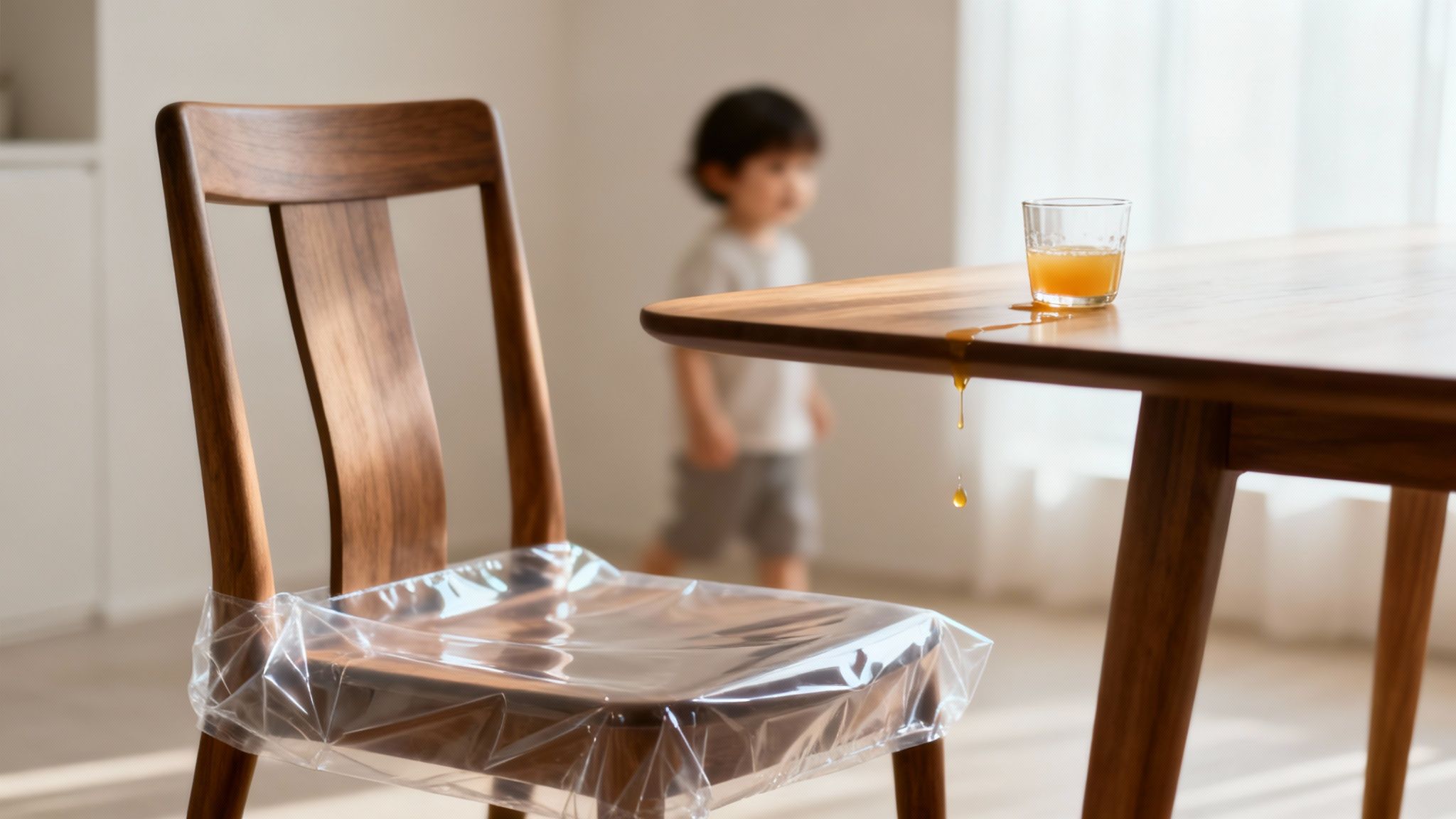
It’s not just about slapping on some plastic; it’s a smart, affordable decision that genuinely extends the life of your furniture. Think of it as a cheap insurance policy against all those unpredictable moments that make a house a home.
Real-World Scenarios for Maximum Protection
The real value of a plastic chair protector becomes crystal clear in everyday situations. Imagine you're hosting a kid's birthday party. Instead of hovering nervously, worried about spilled juice or sticky cake getting on your lovely dining chairs, a clear cover gives you total peace of mind without hiding the furniture itself. When the party's over, cleanup is as easy as a quick wipe with a damp cloth.
Pets are another classic case. Our cats and dogs can do a surprising amount of damage with their claws or muddy paws without even meaning to. A durable plastic cover acts as a shield, stopping scratches and stains from ever reaching the upholstery. That simple barrier can save you a fortune in professional cleaning or reupholstering costs down the road.
A plastic cover is more than a temporary fix; it's a preventative measure that preserves the value and appearance of your chairs for years to come.
Beyond Daily Wear and Tear
The usefulness of these covers goes way beyond the family home. If you're a landlord or an Airbnb host, they're a brilliant way to protect your furniture between tenants, making sure every new guest arrives to clean, well-kept seating. They're also perfect for temporary chaos, like when you're painting a room or having renovations done, guarding your chairs against dust and paint splatters.
These covers can also be a key part of your overall furniture protection strategy, especially during a big event like moving house. By investing in this simple solution, you're proactively defending your furniture from all sorts of potential damage, from minor spills to major mishaps. It's a small step that protects both the look of your home and your financial investment in quality furniture, delivering some serious long-term rewards.
Navigating the Different Types of Plastic Chair Covers
Choosing a plastic chair cover isn't as straightforward as you might think. The market is packed with different materials and designs, and knowing the difference is key to finding a cover that actually does the job you need it to do. It’s less about just grabbing any plastic sheet and more about matching the right cover to your specific situation.
The decision really boils down to two things: what the cover is made from and how it's designed to fit your chair. From crystal-clear vinyl that lets your chair’s original design show through, to heavy-duty frosted PVC built to withstand serious wear and tear, the right choice depends entirely on your priorities.
Understanding the Materials
The kind of plastic used has the biggest impact on how the cover looks, feels, and performs. Each one offers a different balance of clarity, durability, and flexibility.
-
Vinyl (PVC): This is your go-to for a high-quality plastic cover for chairs. It's known for being thick, tough, and brilliant at resisting tears and punctures. Crystal-clear vinyl is perfect if you want to show off your upholstery, while the thicker, frosted versions offer that extra bit of strength for high-traffic areas or homes with pets.
-
Polyethylene (PE): Lighter and more flexible than vinyl, polyethylene covers are usually the ones you see used for temporary or disposable jobs. Think of the thin, crinkly plastic used to protect furniture during a painting project. They’re cheap and cheerful for short-term protection but just don't have the long-term resilience of PVC.
The demand for these protective solutions is surprisingly strong. The UK market for plastic chair protection, which includes covers and sheeting, is valued at roughly £265 million and is steadily growing. This lines up with what's happening in the wider furniture industry, where the use of advanced plastics and polymers is on the rise, partly driven by a bigger focus on recycled materials.
Comparing Fit and Functionality
Beyond the material itself, the way a cover is designed to fit your chair is just as important. The style you pick will determine how secure it is, how neat it looks, and how easy it is to use day-to-day. A simple drape-over cover is ideal for quickly shielding a chair during a messy craft session, but it wouldn't be very practical for the dining table.
For more permanent protection, a fitted cover is the only way to go. These are shaped to hug the contours of your chair, giving you a much tidier look and more reliable coverage.
Pro Tip: When you’re looking at fitted covers, keep an eye out for features like elasticated hems or built-in ties. These small details make a massive difference in keeping the cover snug and stopping it from shifting or sliding off, especially on slick surfaces like a leather dining chair.
A well-designed cover should feel like a second skin for your chair, not a loose, sloppy afterthought. Let’s break down some of the most common options to help you decide what’s best for you.
Plastic Chair Cover Comparison Guide
Choosing the right type of plastic cover comes down to weighing up its material against its intended purpose. This guide compares the most common options to help you find the perfect match for your needs, whether you're looking for temporary protection or a long-term solution.
| Cover Type | Material | Best For | Durability Level | Key Feature |
|---|---|---|---|---|
| Drape-Over | Polyethylene (PE) | Quick, temporary tasks like painting or kids' crafts. | Low | Extremely easy to put on and take off instantly. |
| Fitted Elasticated | Vinyl (PVC) | Daily protection for dining or kitchen chairs. | Medium-High | The elastic hem grips the chair for a secure, neat fit. |
| Custom-Fit | Heavy-Duty Vinyl | Protecting valuable or uniquely shaped armchairs from pets or spills. | High | Tailored to specific dimensions for a perfect, taut look. |
| Zippered Storage Bag | Polyethylene (PE) | Long-term storage in a loft or during a house move. | Medium | Fully encases the chair, protecting it from dust and moisture. |
Ultimately, this comparison highlights how crucial it is to match the cover's features—from the material's toughness to its design—to how you plan to use it. A simple drape is perfect for a one-off messy job, while a custom-fit vinyl cover is a smart investment for daily protection.
The best plastic cover for chairs really depends on how you live. For a prized armchair that needs safeguarding from a curious cat, a thick, custom-fit vinyl cover is a sound investment. For a one-off kids' party, a pack of simple, disposable covers is the more practical and cost-effective choice.
If you're looking for something that is both protective and stylish for everyday use, you might also want to check out our guide on waterproof chair covers, which explores some fantastic fabric alternatives. By weighing clarity against toughness and convenience against security, you can confidently choose the perfect shield for your furniture.
How to Measure Your Chairs for a Flawless Fit
Let's be honest, getting the measurements right is the single most important part of choosing a plastic cover for chairs. There’s nothing more deflating than a cover arriving, only to find it’s baggy and untidy, or so tight you practically break a sweat trying to get it on. A flawless fit is what makes a protective cover look smart and intentional, rather than a messy afterthought.
The good news is, you don’t need to be a professional upholsterer to get this right. All it takes is a flexible measuring tape—the soft kind used for sewing is perfect—and a few minutes of your time. This small bit of effort upfront will save you the headache of returns and guarantee your chairs get the snug, reliable protection you're after.
Gathering Your Core Measurements
For most standard chairs, particularly dining chairs, you'll only need four key measurements to find the right size. Always remember to measure at the widest or longest points to make sure the cover can handle the chair's full shape.
-
Seat Width: Measure from left to right across the absolute widest part of the seat. Don't just measure the front edge; sometimes the widest point is a little further back.
-
Seat Depth: Go from the very front edge of the seat straight back until your tape measure hits the backrest.
-
Backrest Height: Start your tape measure on top of the seat cushion and pull it straight up to the very top of the backrest. This one is critical for making sure the cover is tall enough.
-
Chair Height: If you're looking for a cover that protects the whole chair, legs and all, measure from the floor right up to the top of the backrest.
These four numbers will match up with the vast majority of fitted plastic chair protectors on the market. Just be sure to jot them down as you go to avoid any mix-ups later.
Pro Tip: Once you have your numbers, I'd strongly suggest adding an extra two to three centimetres (about an inch) to your final measurements. This little bit of wiggle room makes the cover so much easier to get on and helps it settle smoothly without being stretched to its absolute limit.
Tackling Awkward Shapes and Armrests
Of course, not all chairs are simple rectangles. What about ones with curved backs, big armrests, or unique, modern shapes? For these, a few extra measurements will make all the difference.
If you're dealing with armrests, measure their height from the seat cushion to the top, and also their length from front to back. For chairs with a curved or winged backrest, you'll need to measure the width at its widest point, which is often near the top. Many manufacturers will have a detailed measurement guide on their product page for these more complex shapes, so always check there for specific instructions.
This diagram shows how plastic covers are versatile enough for daily protection, special occasions, and messy projects.
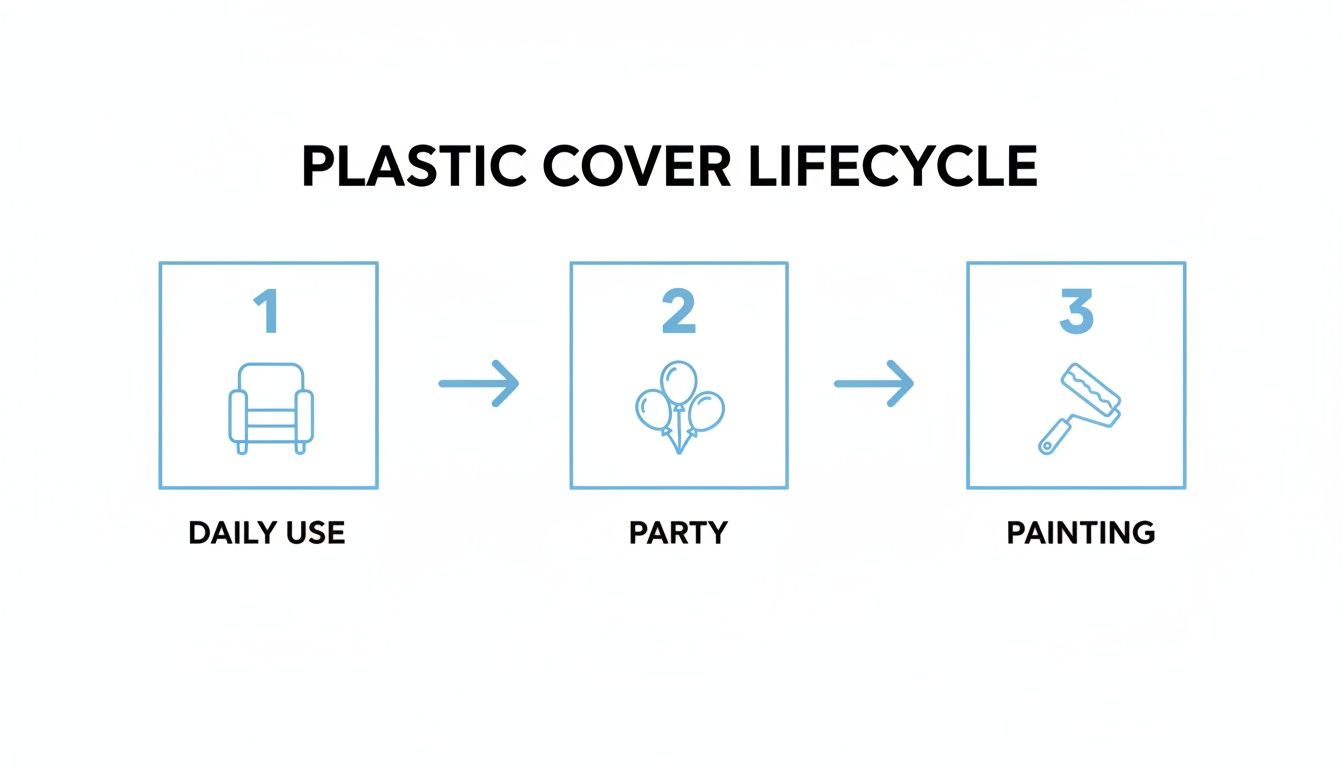 The key insight here is that one simple solution can be adapted for completely different needs, from preserving furniture long-term to providing a temporary shield for a DIY project.
If you find your chair's measurements are just too unconventional for a standard plastic cover, it might be a sign that a different approach is needed. For instance, our guide on choosing the right stretch chair cover can be a fantastic alternative, as the flexible fabric is far more forgiving for unusual shapes.
Ultimately, taking the time to measure properly is an investment in the final result. It’s what separates a sloppy, ill-fitting cover from a clean, tailored look that provides dependable protection without making your room look messy.
Installing Your Covers for a Secure and Tidy Look
So, you’ve measured carefully and chosen the perfect plastic cover for chairs. Now for the final step: getting it fitted properly. A poorly installed cover doesn't just look messy; it can slip, bunch up, and ultimately fail to give your furniture the consistent protection it needs. Nailing the fit transforms the cover from a simple shield into a neat, tidy layer of defence.
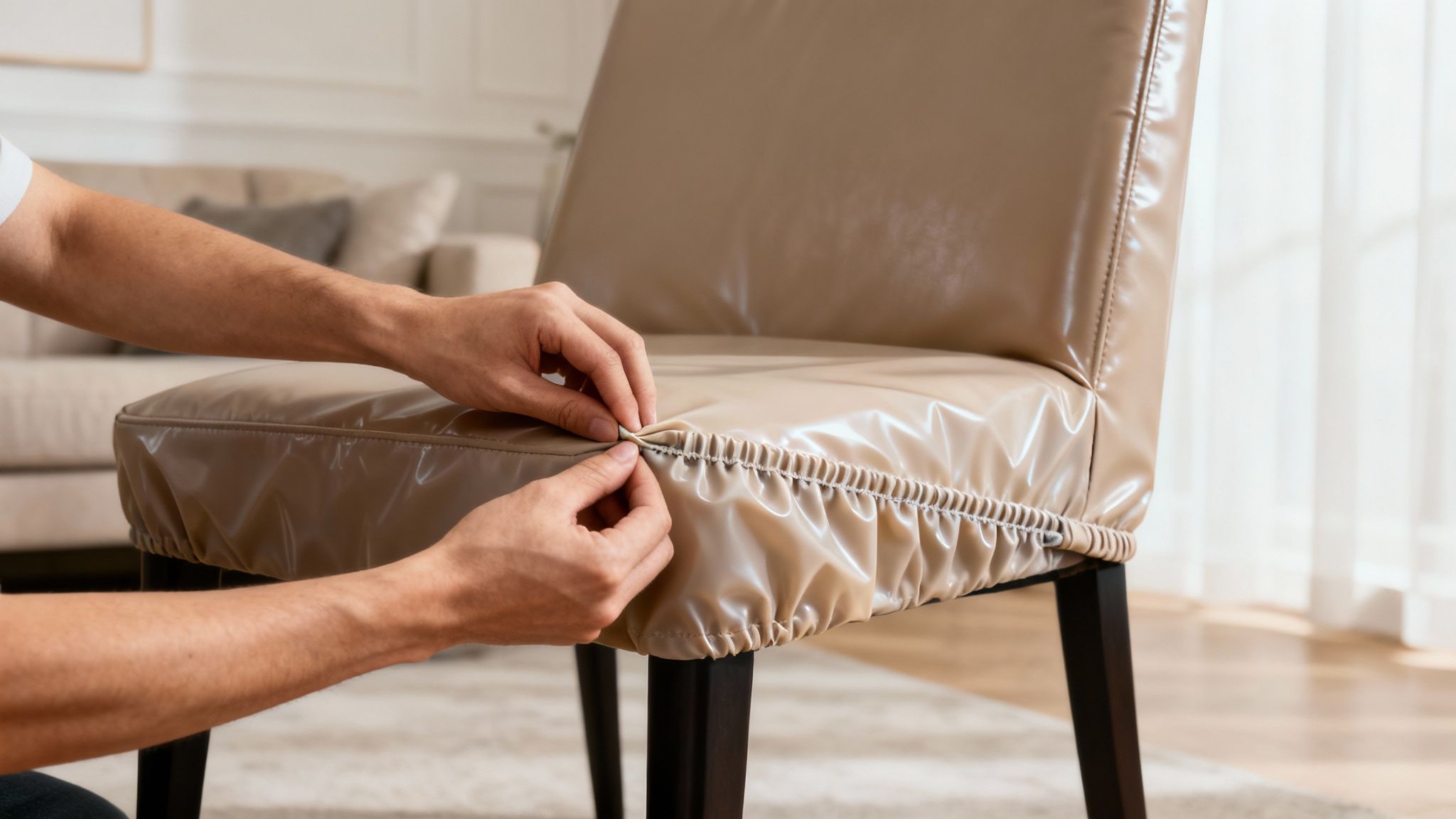
This process is about more than just draping plastic over your chairs. I'll walk you through a few practical techniques I've picked up to get a professional finish, making sure your cover stays exactly where it’s meant to.
Smoothing Out Wrinkles and Creases
The first thing you’ll notice when you unpack your new cover is the stubborn wrinkles from the packaging. These can make even the best-fitting cover look untidy, but don't worry—a little heat is all you need.
A hairdryer on a low to medium setting is your best friend here. Gently wave it back and forth over the creases, keeping it about 15-20 centimetres away from the surface so you don't overheat the plastic. As the material warms up, it becomes more pliable, letting you smooth the wrinkles out with your hand. It’s a simple trick that makes a huge difference to the final look.
Achieving a Snug, Tucked-In Appearance
For that truly tailored look, the secret is all in the tuck. Any excess material, especially around the seat and where the backrest meets the base, can look bulky. The goal is to neatly work this extra plastic into the chair's natural crevices.
Start by centring the cover, then gently push any loose material deep into the seams around the seat cushion. You can use your hands, but I find a blunt, flat object like a wooden spoon or a ruler gets it really snug. This technique works wonders for defining the chair's shape and stops the cover from shifting when someone sits down.
Don't be afraid to take your time with the tucking. A few extra minutes spent carefully pushing the material into the chair's crevices is what separates a sloppy fit from a clean, almost custom-made appearance.
Using Ties and Elastic Hems Effectively
Many decent plastic covers come with built-in features to help secure them. These aren't just for show; they're essential for keeping the cover firmly in place.
- Elastic Hems: If your cover has an elasticated bottom, make sure it’s pulled down evenly all the way around and tucked under the seat. This creates the tension needed to hold the entire cover taut.
- Built-in Ties: If there are ties, usually at the back or corners, use them. Tie them in a firm bow or knot around the chair legs. This is particularly good for stopping the cover from riding up or sliding off completely.
For a deeper dive into making covers fit perfectly, our comprehensive installation guide has even more tips and visual examples.
Tackling Common Installation Problems
Sometimes, even with careful installation, you can run into a few snags. A common one is that a plastic cover for chairs can slide around on smooth surfaces like leather or polished wood. To fix this, just place a small piece of non-slip rug gripper or shelf liner on the seat of the chair before putting the cover on. It creates just enough friction to hold it steady.
The accessibility of these covers is a huge plus for UK households. In fact, the British market for plastic furniture items, including protective covers, has seen consumption rise to 41 million units. This demand is largely met by imports, which account for 44 million units, showing how global supply chains make these affordable protective solutions readily available to everyone.
Keeping Your Plastic Covers Clean and Durable
A plastic chair cover is your first line of defence against life’s messes, but a little bit of maintenance will dramatically extend its life and keep it looking its best. The great news is that upkeep is simple, and you don't need a cupboard full of special products to do it properly.
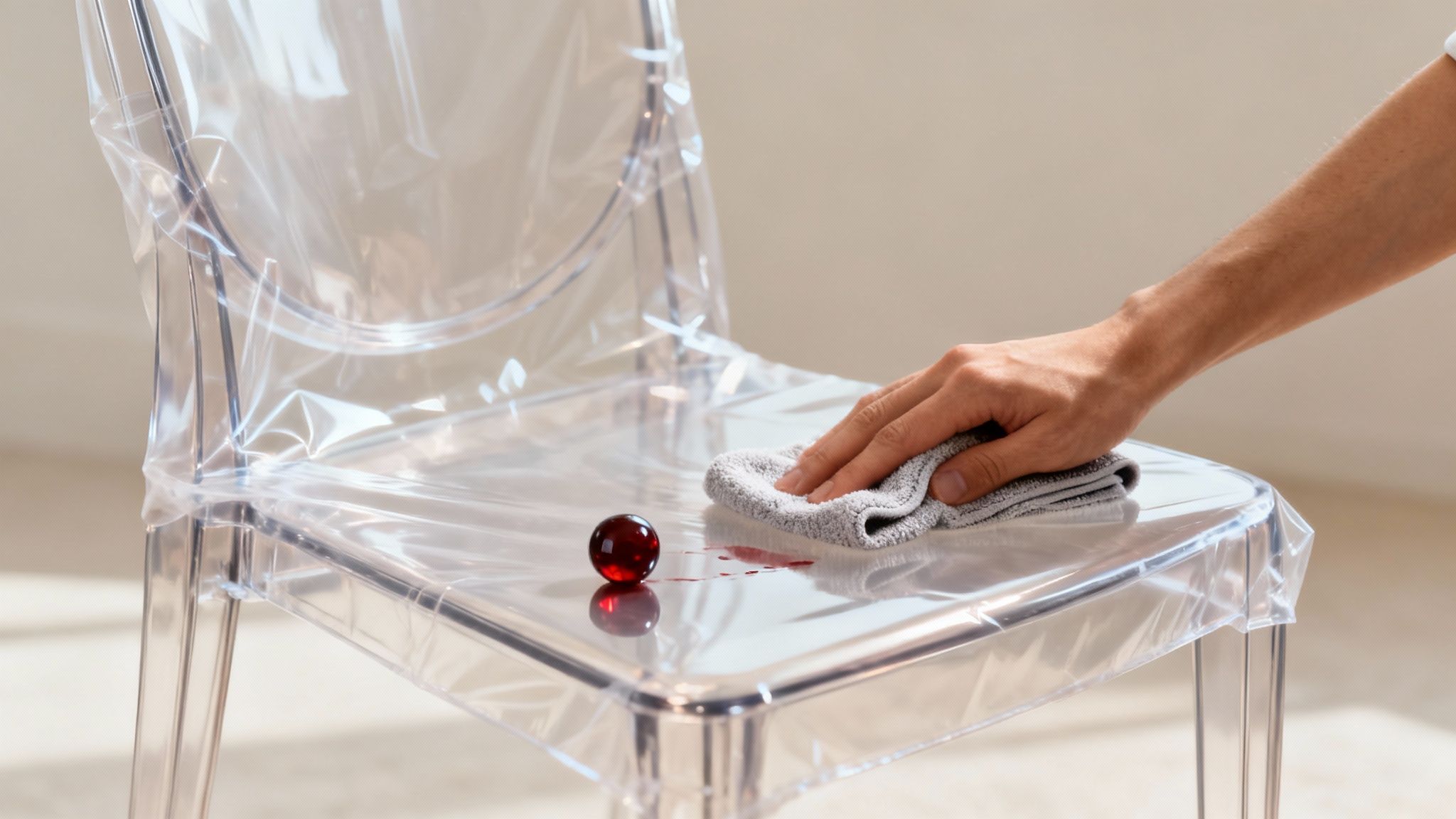
With a consistent and gentle routine, your covers will continue to protect your furniture effectively for years, saving you from the cost of deep cleaning or replacement.
Your Daily and Weekly Cleaning Routine
For everyday dust, crumbs, and minor spills, a quick wipe-down is all you’ll ever need. Just keep a soft microfibre cloth and a spray bottle of water handy. A light mist and a gentle wipe are usually enough to remove surface grime and keep the plastic looking clear and fresh.
Try to do this at least once a week, or immediately after any meals. It’s a tiny habit that stops small messes from drying and becoming a real pain to remove later. It takes less than a minute per chair but makes a massive difference to how they look.
Tackling Tougher Stains and Spills
Life isn't always as simple as a few crumbs. For more stubborn messes like spilt red wine, curry, or an unfortunate encounter with a felt-tip pen, you'll need a slightly stronger approach.
- Act Quickly: The faster you get to a stain, the less likely it is to set. Blot up any excess liquid immediately with a paper towel or a dry cloth.
- Use a Mild Solution: Mix a few drops of mild washing-up liquid into a bowl of warm water. Dip a soft cloth into the soapy water, wring it out, and gently work on the stain in a circular motion.
- Rinse and Dry: Once the stain is gone, wipe the area with a fresh cloth dampened with only water to remove any soap residue. Finally, dry the spot completely with a clean towel to prevent water spots.
Remember that plastic, especially vinyl, is porous. Letting a colourful spill like wine or tomato sauce sit for too long can lead to permanent discolouration, so prompt action is always your best defence.
What Cleaning Products to Avoid
It’s tempting to reach for a heavy-duty cleaner for a tough stain, but this can do more harm than good. Harsh chemicals are the enemy of a durable plastic cover for chairs.
Avoid these products at all costs:
- Bleach or ammonia-based cleaners
- Abrasive powders or scouring pads
- Solvents like nail polish remover or turpentine
- Furniture polish containing oils or silicone
These aggressive agents can cause the plastic to become brittle, cloudy, or even crack over time. A simple mix of soap and water is genuinely the safest and most effective tool for 99% of stains.
Smart Storage to Prevent Damage
If you use your covers seasonally or for special occasions, how you store them is crucial. Whatever you do, don't fold them tightly like a bedsheet. Folding creates sharp, permanent creases that weaken the material and will eventually lead to cracks.
The best method is to roll them up loosely. If you can, find a cardboard tube (like one from wrapping paper) and roll the cover around it to keep the surface smooth and crease-free. Store the rolled covers in a cool, dry place away from direct sunlight, which can cause yellowing and degradation over time.
When a Fabric Cover Is the Smarter Alternative
While a plastic cover for chairs is the undisputed champion for pure, no-nonsense protection, there are times when its utility-first approach just doesn't cut it. For moments when comfort, style, and a welcoming feel are just as important as guarding against spills, it’s time to consider a fabric alternative. Let's be honest, plastic has its drawbacks.
It isn’t breathable, which can feel sticky and uncomfortable during warmer months or after sitting for a long time. It can also crinkle with every movement, and its purely functional aesthetic doesn't exactly scream "cosy living room." It protects, yes, but it doesn’t do much to enhance your home’s décor.
Where Style and Protection Meet
This is where modern fabric covers completely change the game. Forget the old, ill-fitting sheets of the past. Today's high-quality fabric covers are engineered to offer the best of both worlds, blending robust protection with a sophisticated look and feel.
Imagine a soft-touch, machine-washable cover that not only feels great to sit on but also has a hidden waterproof layer to guard against accidents. This is the new standard. You get the peace of mind you need without making your living space feel sterile or unwelcoming. It's the ideal solution for anyone who refuses to sacrifice style for practicality.
These innovative materials are making a real impact. While protective plastic covers can slash repair costs for pet-owning families by extending a chair’s lifespan by 30-50%, advanced textiles are gaining ground. As the UK plastics market grows, options like waterproof spandex blends are becoming increasingly popular, offering a far superior alternative to plain plastic. For a closer look at these shifts, you can explore detailed findings on the UK furniture market.
The Benefits of a High-Quality Fabric Cover
Switching from a purely functional plastic cover for chairs to a premium fabric option brings a host of immediate advantages. It’s about upgrading your experience as much as it is about protecting your furniture.
- Superior Comfort: Fabric is breathable and soft against the skin, making your chairs genuinely comfortable for everyday use. There's no stickiness or cold shock—just a welcoming place to sit.
- Aesthetic Upgrade: With a huge range of colours and textures, like rich jacquards or sleek spandex blends, you can instantly refresh your room's décor. A fabric cover becomes a style statement, not just a protective shield.
- Silent and Secure Fit: Unlike the rustle of plastic, fabric moves silently. High-stretch materials also offer a snug, form-fitting look that hugs every curve of your chair, looking almost like original upholstery.
- Easy Maintenance: Most high-quality fabric covers, including our entire range at The Sofa Cover Crafter, are machine-washable. When a spill happens, you can simply toss it in the wash for a deep clean.
A fabric cover doesn't just protect your chair; it enhances it. It transforms a piece of functional furniture into a part of your home's design, adding colour, texture, and a touch of personality.
Making the Right Choice for Your Home
So, when is fabric the smarter choice? It’s perfect for the furniture you live with every day—your dining chairs, your favourite armchair, or the sofa you relax on every evening. These are the places where comfort and aesthetics matter most.
A plastic cover is brilliant for temporary chaos like a painting project or a messy kids' party, but for long-term, daily living, a fabric solution wins every time.
At The Sofa Cover Crafter, our premium spandex and jacquard covers are designed with this philosophy in mind. They provide that essential barrier against spills, pets, and wear while elevating the look of your space. It's the ultimate choice for anyone who believes you should never have to compromise between a beautiful home and a well-protected one.
Got Questions About Plastic Chair Covers? We've Got Answers
Even after getting all the details, you might still have a few questions floating around. Let's tackle some of the most common things people ask, so you can make your final choice with complete confidence.
Will a Plastic Cover Damage My Chairs?
This is probably the biggest concern we hear. While a plastic cover for chairs is generally fine for short-term protection, leaving one on a leather or lacquered wood chair for a long time isn't a great idea, especially if you live in a warm or humid spot. The plastic doesn't breathe, which means moisture can get trapped underneath. This can lead to mildew on fabric or make a leather surface feel sticky and unpleasant.
For long-term peace of mind on these more delicate materials, a breathable fabric cover is a much safer bet.
Let's Be Honest: Are They Noisy or Uncomfortable?
Another fair question is about comfort. The honest answer is, yes, some of them can be. Cheaper, thinner plastics often have that signature crinkly sound and can feel cold or clammy against your skin, which isn't exactly what you want for your dining chairs.
A thicker, higher-quality vinyl is usually a bit quieter and feels more substantial. But if you’re covering chairs you use every day, especially in a living room where comfort is everything, a stretch-fabric cover is in another league entirely. It's softer, totally silent, and lets air circulate.
That "new plastic" smell from PVC or vinyl is a real thing, caused by a process called "off-gassing". To get rid of it, unpack the covers and let them air out in a well-ventilated space—a garage or a shady spot outside is perfect—for 24-48 hours before you use them. Wiping them down with a weak solution of water and vinegar can also speed up the process.
Just How Waterproof Are They, Really?
Finally, are all plastic covers genuinely waterproof? Most are highly water-resistant and will save your chair from a spilled drink if you wipe it up quickly. The seams, however, are always the potential weak spot where liquid could eventually seep through if left for too long.
If you need guaranteed protection, look for covers that specifically mention they have sealed or welded seams. Alternatively, you could look at modern waterproof fabric covers. These clever designs combine a soft, comfortable surface with a hidden waterproof membrane, giving you the best of both worlds—total protection without sacrificing style or comfort.
For a stylish, comfortable, and protective alternative that elevates your home décor, explore the premium, machine-washable range at The Sofa Cover Crafter. Discover the perfect fit for your chairs.
