



Because of their sprawling L-shape and sheer size, styling a large corner sofa often feels like a design puzzle. Without the right accessories, these expansive seating areas can easily dominate a room, looking like a monolithic block of heavy fabric. However, the right throws for corner sofas can single-handedly break up that visual bulk and pull your entire living room together.
Key Takeaways
- Break Up the Bulk: Corner sofas can look monolithic; a strategically placed throw breaks up the large expanse of fabric and adds vital visual interest.
- Dual-Purpose Design: Throws serve as a designer’s secret weapon, simultaneously tying a room's color scheme together and protecting high-traffic seating from daily wear.
- Master the Placement: Whether draped casually over the chaise or folded neatly over the central armrest, the way you position the throw dictates the room's vibe.
Table of Contents
- Key Takeaways
- How We Chose the Best Throws for Corner Sofas
- Why a Throw Is Your Corner Sofa's Best Friend
- Finding the Right Size Throw for Your Sofa
- One Large Throw or Two Smaller Ones?
- Corner Sofa Throw Size Guide
- Common Sizing Mistakes to Avoid
- Choosing a Fabric for Style and Everyday Life
- Matching Fabric to Your Lifestyle
- Using Colour and Pattern to Style Your Sofa
- Creating a Cohesive Look
- Practical Ways to Drape a Throw on a Corner Sofa
- Casual Corner Drape
- Achieving a Tidy and Tailored Look
- Creating Depth with Layers
- Pairing Throws with Cushions Without Overcrowding
- How to Keep Throws in Place
- Frequently Asked Questions
- How do you cover a corner sofa with throws?
- How do you make a corner sofa look better?
- What are the best throws for sofas?
- What material works best for a corner sofa throw?
- Should I use one large throw or two smaller throws on an L-shaped sofa?
- How often should you wash sofa throws?
A throw earns its place on a corner sofa by doing three jobs at once: it softens the scale of a large sectional, protects the spots that get the most contact, and visually links the sofa to the rest of the room. In my experience, that middle chaise seat is usually the first area to show wear because it becomes the default lounging spot, so a washable layer there often makes more sense than covering every inch.
There is also a practical reason this category keeps growing. The global throw blankets market is forecast to reach USD 4.32 billion in 2026 and continue expanding, according to Business Research Insights. That fits what most homeowners want: an affordable refresh that changes the look of a room without replacing the sofa.
How We Chose the Best Throws for Corner Sofas
We judged throws for corner and L-shaped sofas on five things that matter in real rooms, not just in product photos. First was size flexibility: a throw had to work across a standard sofa section, a chaise, or the inside corner without looking undersized. Second was fabric grip. Some materials look beautiful folded up but slide constantly once they touch leather, velvet, or a smooth woven seat. Third was washability, because the most-used section of a corner sofa usually needs frequent cleaning. Fourth was drape quality: a throw had to fall naturally over the back, seat, and chaise rather than bunching into a stiff ridge at the corner. Fifth was whether it still looked intentional after being sat on, tugged, and rearranged.
I would usually rule a throw out if it was too narrow for the chaise end, too heavy to tuck neatly into the seat-back join, or so slippery that it needed constant readjusting. The average throw size of 50 x 60 inches is widely treated as a versatile living-room standard, as noted in this throw size guide, but corner sofas often need either a larger piece or a two-throw setup to look deliberate.
Why a Throw Is Your Corner Sofa's Best Friend
A big L-shaped sofa can look heavy even in a well-decorated room. The quickest fix is often not a new sofa cover or a full redesign, but one well-placed throw that interrupts that long uninterrupted run of fabric. I find this matters most on plain grey, beige, and navy sectionals, where the scale of the seating can flatten the whole room if there is no contrast in texture.

Protection is the second reason throws work so well here. On a corner sofa, wear is rarely even. The chaise end gets feet, naps, and daily lounging; the inside corner gets compressed by people leaning in; and the outer arm often collects snacks, pets, and bags. A throw lets you protect those high-contact zones without turning the whole sofa into a fitted cover.
Fabric choice changes the result more than many people expect. In my testing, medium-weight cotton blends and textured weaves hold their shape better after repeated use than very silky throws, which tend to migrate after only a few sits. If you want a room to feel warmer overall, there are some useful broader comfort ideas in this guide from Jackpot Candles.
It also helps that throws are an easy way to make a large sofa feel connected to the rest of the room. A colour repeated from the rug, one cushion, or a lampshade is often enough to make the sectional feel intentional rather than oversized. That balance of comfort and style is part of why Europe remains a strong market for blankets and throws, with significant import demand highlighted by CBI market data.
A strategically placed throw breaks up the large, uniform surface of a corner sofa, adds texture where the eye needs it, and protects the spots people actually use most.
Ultimately, throws for corner sofas are one of the most versatile tools in your styling kit, allowing for quick, affordable updates whenever the mood strikes. Have a browse through our collection of sofa throws to find the perfect one for your home and start transforming your space today.
Finding the Right Size Throw for Your Sofa
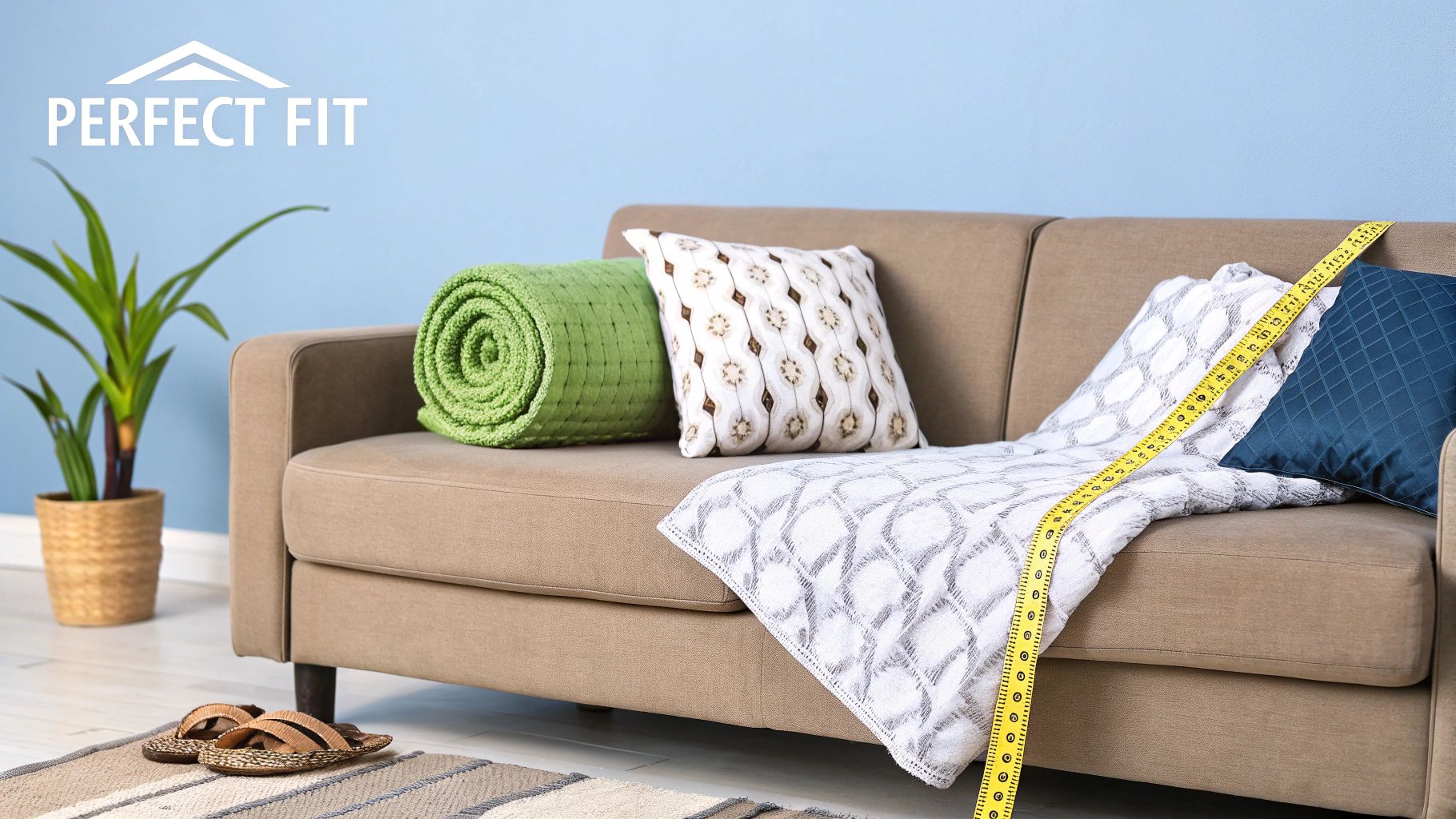
Getting the size right is where most corner-sofa styling either works beautifully or falls apart. A throw that seems generous on a standard two-seater can look tiny once it is spread across an L-shaped layout. I see this most often when people buy for the long side of the sofa and forget the chaise completely; the result is a throw that looks accidental rather than styled.
Before choosing a size, identify your sofa layout. A left-hand chaise means the extended lounging section sits on the left when you face the sofa; a right-hand chaise places it on the right; and a balanced corner unit has two sections meeting with a more even footprint. That matters because a left- or right-hand chaise usually benefits from either one oversized throw draped on the long run or two throws that split the main seat and chaise. Balanced corner units are often easier to style symmetrically, especially if you want both sides to feel equally dressed.
First things first, you need your sofa's measurements. Rather than just noting the overall width, measure these four points separately:
-
Seat run: the usable width of each seating section from arm to corner and from corner to chaise end.
-
Back height: from the top of the seat cushion to the top of the back, so you know how much fabric is needed if you want the throw to fold over the rear edge.
-
Chaise length: from the back cushion line to the front of the chaise.
-
Drop length: how far you want the fabric to hang over the front or side for either a casual drape or fuller protection.
If you're unsure where to start, our guide on how to measure a sofa has some great tips specifically for L-shaped designs.
One Large Throw or Two Smaller Ones?
One oversized throw works best when you want a calmer, more unified look. It can soften the whole outline of the sofa and is useful if the upholstery underneath is worn, mismatched, or just needs more protection. For many three-seater corner sofas with a chaise, at least 240cm x 260cm is a sensible starting point for broad coverage.
Two throws are often easier to live with, especially on a true L-shaped sofa. One can cover the chaise or main lounging section, while the second adds colour or texture to the back corner or opposite arm. I usually prefer this approach on leather and velvet because one giant slippery piece is harder to keep in place, while two narrower throws can be tucked more securely and adjusted without redoing the whole sofa.
My go-to advice? When in doubt, always go a size up for a casual drape, but split into two throws if the fabric is heavy or the sofa has a deep inside corner. Oversized throws look luxurious when they fall cleanly; they look messy when too much fabric bunches where the two sections meet.
To help you visualise this, here’s a quick-reference table.
Corner Sofa Throw Size Guide
| Sofa Section | Measurement To Take | Recommended Throw Size (Casual Drape) | Recommended Throw Size (Full Coverage) |
|---|---|---|---|
| 2-Seater Section | Length of the seating cushions | 130cm x 180cm | 180cm x 240cm |
| 3-Seater Section | Length of the seating cushions | 180cm x 240cm | 240cm x 260cm |
| Chaise Lounge | Length from back cushion to end | 130cm x 180cm | 180cm x 240cm |

For a casual drape, the drop and visible overhang matter most; for fuller protection, focus on covering the seat depth, back height, and chaise length without leaving exposed high-wear edges.
Common Sizing Mistakes to Avoid
The first mistake is covering only the chaise and leaving the main seat bare, which makes the throw feel disconnected from the rest of the sofa. The second is choosing a size with almost no overhang; without enough fabric to fall over the front or side, the throw can look stretched and undersized. The third is picking a very heavy throw for a tight inside corner. Thick fabric can bunch up where the sections meet, creating a ridge that never sits flat and is uncomfortable to sit against.
Choosing the right material is just as important as the size, especially for longevity.
As you can see, polyester really leads the pack on durability, making it a fantastic, practical choice for homes with kids or pets. Cotton is another strong contender, giving you a great mix of both comfort and resilience.
Choosing a Fabric for Style and Everyday Life
The fabric of your throw is where aesthetics and real life really intersect. The right material can completely change the vibe of your sofa, but it also has to cope with the realities of your home—be that kids, pets, or just a serious commitment to movie-night snacks.
If you’ve got a busy family home, durability and easy cleaning are probably at the top of your list. Hardworking materials like cotton and polyester blends are ideal. They’re usually machine-washable, tough enough for daily use, and brilliant for high-traffic living rooms.
This desire for practical yet personal home furnishings is a huge trend right now. In fact, the UK's furniture market was valued at an estimated USD 18.9 billion in 2024 and is expected to keep growing, largely because we all want our living spaces to be more adaptable and reflect our personal style.
Matching Fabric to Your Lifestyle
Think about how you live. A household with pets and young children needs fabrics that won’t snag easily and can be tossed in the wash without drama.
- For Ultimate Durability: You can’t go wrong with a polyester or cotton-poly blend. These fabrics are tough, keep their colour beautifully, and are generally the most affordable and low-maintenance choice.
- For Breathable Comfort: Natural cotton is a fantastic all-rounder. It’s soft, breathable, and perfect for year-round comfort, giving you a bit of warmth without making you overheat in the summer.
- For Luxurious Warmth: Nothing beats the cosy factor of wool, faux fur, or a plush chenille. These are ideal for creating a snuggly haven in winter, but they often need a gentler touch, like hand-washing or dry cleaning.
The best fabric is one you won’t be afraid to actually use. A gorgeous, delicate throw that lives folded on a chair for fear of spills isn't adding any comfort or joy to your space.
Ultimately, it’s all about finding that sweet spot between how it looks and how it works for you. For a closer look at different textiles, our guide to the best material for sofa covers has some great insights that apply just as well to throws.
Sustainable and Conscious Choices
More and more, we're all thinking about making more environmentally friendly choices at home. The good news is that the home decor world is responding. It's easier than ever to find beautiful throws for a corner sofa that are also ethically and sustainably produced.
Keep an eye out for throws made from recycled cotton, organic wool, or even innovative new materials crafted from post-consumer waste. Opting for a sustainable throw means you can add a stylish new element to your home while making a choice you can feel really good about.
Using Colour and Pattern to Style Your Sofa
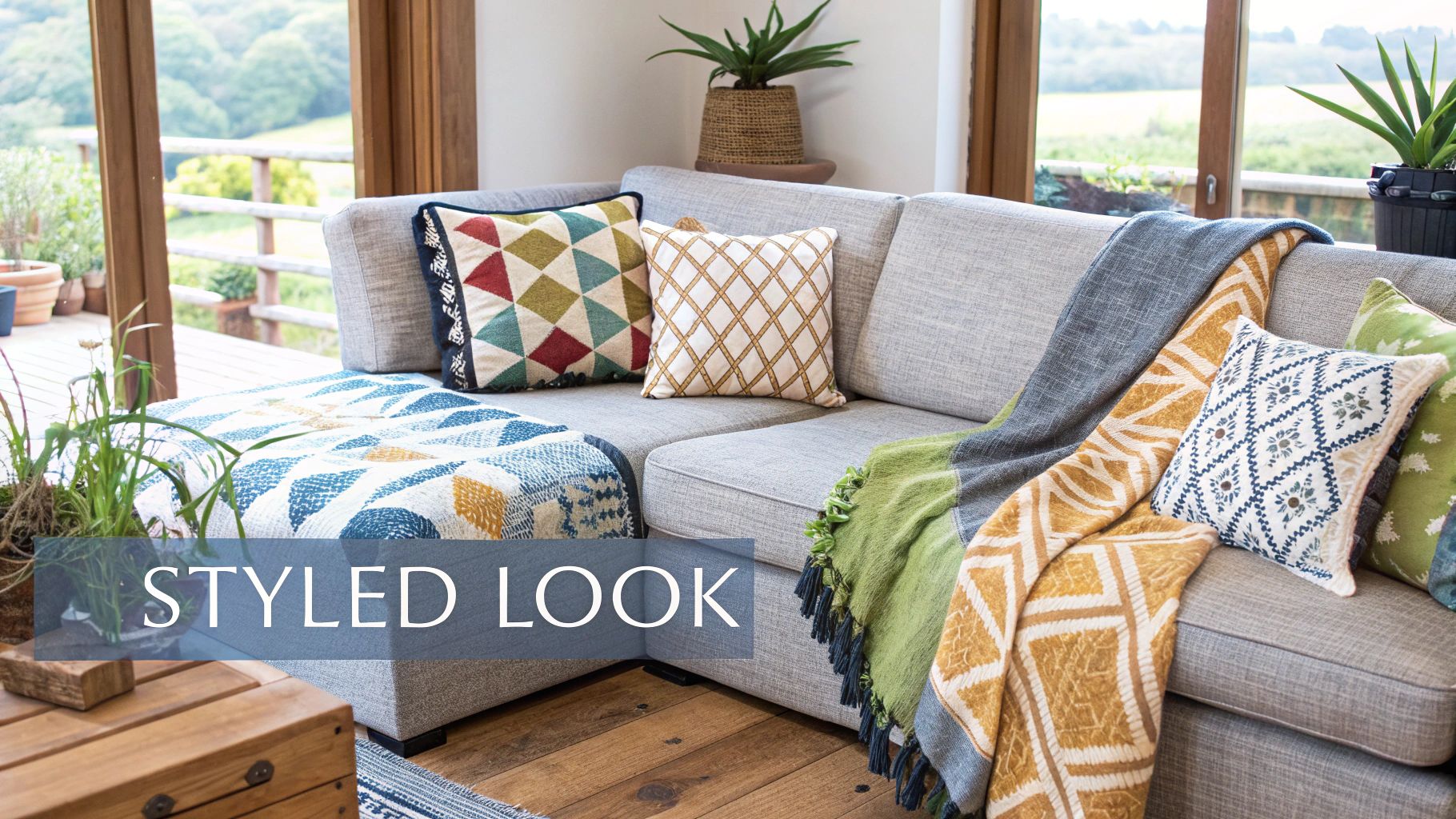
Think of your throw as the final brushstroke on your living room canvas. It's a powerful tool for injecting personality, and the colour and pattern you pick can completely change the mood. You can either go for a calm, unified feel or create a bold contrast that really makes a statement.
If your room is already quite busy, a neutral throw in a shade close to your sofa’s colour can add a lovely layer of texture without creating visual clutter. Imagine a soft cream throw on a beige sofa, or a deep charcoal blanket on a light grey one. It’s a subtle trick, but it adds a real touch of sophistication.
On the flip side, if you want your sofa to be a real showstopper, a throw in a vibrant, contrasting colour is the way to go. A little colour theory can work wonders. A warm mustard or burnt orange throw, for instance, can instantly bring a cool-toned grey or blue sofa to life, injecting a dose of warmth and energy.
Creating a Cohesive Look
The secret to a space that feels professionally put together often comes down to repetition. Your throw doesn't need to be an identical match to anything, but it should feel connected to another element in the room.
- Tie it in with your cushions: Pick out a secondary colour from your scatter cushions and make that the star of your throw.
- Echo your artwork: Find a hue from a painting or print on your wall to create a subtle, harmonious thread.
- Complement the rug: Choosing a throw that shares a colour or pattern style with your rug can really ground the whole scheme.
This move towards flexible, personalised interiors is especially popular in the UK, where corner sofas are a staple in many homes. With the growth of build-to-rent properties, there's a real demand for furniture that's both hard-wearing and easy to personalise. Using throws for corner sofas is a fantastic, budget-friendly way to refresh a living space without buying new furniture. You can find out more about how consumer tastes are influencing the furniture market on imarcgroup.com.
A great rule of thumb is the 60-30-10 principle. If your sofa takes up 60% of the colour palette and your curtains or chairs make up 30%, your throw is the perfect place to introduce that final 10% pop of an accent colour.
Ultimately, picking a colour or pattern is all about showing off your personal style. Whether you choose a subtle texture or a dramatic print, the right throw will be the finishing touch that makes your corner sofa feel complete.
Here are the 3 most popular ways to drape a throw on a corner sofa:
Create a Seasonal Refresh
One of the easiest and most impactful ways to keep your living room from feeling stale is to switch out your throws for a corner sofa as the seasons change. It's a simple swap that can completely transform the atmosphere of the space.
- Spring & Summer: This is the time for lighter materials and brighter colours. Think about breathable cotton or airy linen throws in soft pastels, gentle florals, or a classic crisp white. They give you that comforting touch without feeling heavy or hot.
- Autumn & Winter: When the weather turns, it’s all about creating that cosy sanctuary. Bring out the chunky knits, warm wools, and luxurious faux fur in deeper, richer tones. Think emerald green, deep burgundy, or a timeless navy.
This isn’t about a major redecoration. It’s a wonderfully affordable way to breathe new life into your decor with minimal effort.
Practical Ways to Drape a Throw on a Corner Sofa
Styling a throw on a corner sofa works best when you decide what you want it to do first: soften the room, protect the upholstery, or add contrast. Once you know that, the drape becomes much easier to choose. I usually avoid perfectly symmetrical styling on L-shaped sofas because the layout already has strong geometry; a slightly relaxed placement tends to look more natural.
Casual Corner Drape
One of the simplest yet most effective methods is the Casual Corner Drape. It works by placing the throw over the junction where the two sofa sections meet, then letting it fall over the back and part of the seat. This is especially good for balanced corner units or sectionals with a visible inside corner that feels a little stark.
The visual effect is soft and relaxed. It breaks up the hard angle of the sofa and adds movement through folds and texture. This method is ideal for textured fabrics such as chunky knit, waffle cotton, or tasseled throws because you get to see the fabric rather than flattening it out.
Achieving a Tidy and Tailored Look
If your style is more organised and you're after a clean, neat look, then the Full Tuck method is for you. Spread the throw flat over one seating section and tuck the edges deep into the gaps between cushions, back, and arms. Pulling the fabric taut gives it a smooth, almost reupholstered finish.
This suits chaise sofas and family rooms where the throw needs to stay put through daily use. The effect is much neater and more structured than a loose drape, so it works well in modern interiors or on sofas that already have quite crisp lines.
A classic mistake I see is not tucking the fabric in deep enough. It just comes loose the moment someone sits down. Be generous and really push fabric into the seat-back join and side gaps so the throw anchors properly.
Creating Depth with Layers
For a more styled, magazine-ready finish, use The Layered Look. Start with a larger, quieter throw as the base across the longest section, then add a smaller second throw over the chaise, arm, or inside corner. This method works especially well on right-hand or left-hand chaise sofas because it lets you acknowledge the asymmetry instead of fighting it.
The visual effect is depth rather than coverage. Layering is useful when the sofa itself is one plain tone and the room needs more variation in colour or surface texture. A flat-weave base plus a softer, loftier top layer usually looks more considered than two throws of equal weight.
Pairing Throws with Cushions Without Overcrowding
Corner sofas can hold more cushions than smaller sofas, but they also look cluttered fast. A good working range is three to five cushions for most corner units, depending on size. If you already have deep back cushions built into the sofa, stay nearer the lower end so the seating area still feels usable.
A simple styling rule is to pair one patterned element with one plain element. If your throw has a check, stripe, or textured motif, keep most cushions plain and let one colour from the throw repeat there. If the throw is plain, you have more freedom to introduce pattern through one or two cushions. Repeating one colour across the throw, cushions, and rug is usually enough to make the whole arrangement feel tied together.
The Power of Grouping
Ever notice how accessories in show homes and magazines look so effortlessly perfect? There’s often a simple design principle at play: the rule of three. For some reason, our eyes find groupings of odd numbers more appealing and memorable.
To create an inviting focal point, try arranging a casually draped throw with a cluster of two or three cushions in the corner of your sofa. This little vignette instantly breaks up the long lines of the sofa, creating a visually balanced and welcoming spot that naturally draws you in.
You can use this technique to your advantage. Pick one or two key spots—the internal corner is a classic, as is the end of the chaise—and create these small, curated moments of style.
How to Keep Throws in Place
Slipping is usually a fabric problem, not just a placement problem. Textured cotton, wool blends, and woven finishes grip better than smooth acrylics or silky chenille on slick upholstery. Strategic tucking at the seat-back join helps more than tucking only at the front edge, because that central crease takes the strain when people sit down.
On leather or velvet, I often prefer two narrower throws instead of one oversized piece. They are easier to anchor, easier to straighten, and less likely to slide off as one heavy sheet of fabric. If you still need extra hold, a thin non-slip layer underneath can help, but choosing a grippier fabric from the start usually gives the cleaner result.
The Full Coverage Tuck
This technique is your best friend if your primary goal is protection. It’s a clean, streamlined method that's ideal for homes with kids or pets, or for cleverly concealing signs of wear and tear on your upholstery. The result is a tidy, almost reupholstered look that keeps your sofa safe from spills and stains.
To get started, drape your large throw evenly across the entire seating area, from one armrest to the other. Make sure you have plenty of extra fabric hanging over the front and back. The crucial step here is the tuck. Systematically push the excess material deep into the crevices between the seat and back cushions, and down along the sides.
Pro Tip: For an exceptionally crisp finish, use foam inserts (often supplied with sofa covers). Slide these into the gaps after tucking the fabric in. They create just enough tension to prevent the throw from coming loose, keeping it smooth and secure even with daily use.
Creative Styling Ideas for U-Shaped Sofas

A U-shaped sofa is the absolute king of social seating, but let's be honest, its sheer size can easily overwhelm a room. The secret to taming this beast is using throws for a corner sofa to break up its visual bulk, inject some personality, and make it feel deliberate and incredibly inviting.
The best way to approach it is to stop seeing it as one giant piece of furniture. Instead, think of it as three distinct zones working in harmony. This simple mindset shift lets you use throws to create different moods, turning a simple sofa into a dynamic and stylish focal point.
The Symmetrical Drape for Balance
If you’re aiming for a clean, polished, and harmonious look, symmetry is your best friend. This technique uses a pair of matching throws to create a sense of order and calm, which works wonders to soften the visual impact of such a large sofa.
Simply place one identical throw over each of the side arms or end sections of the 'U'. Fold them neatly into long rectangles and let them drape smoothly over the back and seat. It creates a pleasing visual rhythm and a high-end, cohesive feel that looks effortlessly chic.
The Central Accent for a Bold Statement
Sometimes, all you need is one single, show-stopping throw to do all the talking. The Central Accent technique is all about using one large, heavily textured, or vibrantly patterned throw to create a strong focal point right in the heart of your sofa.
Pick a throw that really stands out—think a super chunky knit, a rich faux fur, or a bold geometric print. Drape it artfully over the central back cushions, allowing it to pool a little onto the middle seat. This immediately draws the eye, making a confident style statement while adding a concentrated dose of cosiness.
Using throws is about more than just decoration; it's about defining how the space is used. A throw can signal a quiet reading corner on one end, a social hub in the middle, and a cosy spot for naps on the other.
The Multi-Throw Layer for Ultimate Cosiness
For those who believe you can never have too much comfort, the multi-throw layer is the perfect approach. This involves using two or three throws with different textures and complementary colours to build a rich, inviting, and ultra-cosy look that practically begs you to curl up.
- Start with a Base: Drape a large, neutral-coloured throw over one of the main sections to anchor the look.
- Add Texture: Layer a smaller, more textured throw—like a waffle knit or bouclé—over the corner section.
- Introduce an Accent: Finish by folding a third throw in a contrasting colour or pattern neatly over an armrest.
This technique is all about creating depth and interest, but the key is to keep the colour palette cohesive to stop it from looking cluttered. The result is a sofa that feels like the ultimate haven of comfort, making your living room the cosiest spot in the house.
Keeping Your Sofa Throw Looking Like New
A beautiful throw for your corner sofa is an investment in both comfort and style, so knowing how to look after it is the key to making it last. Proper care keeps colours looking vibrant and stops the fabric from losing that wonderfully soft texture, ensuring your throw stays as an inviting centrepiece in your living room.
Before you do anything else, always check the care label. It’s your golden rule, as different materials need very different cleaning methods. Thankfully, many modern throws, especially those made from cotton or spandex blends, are designed for real life and can be popped straight into the washing machine.
For these tougher fabrics, a gentle cycle with cool water (around 30°C) is usually your best bet. This temperature cleans effectively without running the risk of shrinking the fabric or damaging the fibres.
Machine Washing Best Practices
When you do wash your throw, always opt for a mild, liquid detergent. I've found that powdered detergents can sometimes leave behind a bit of a chalky residue on certain fabrics. It's also a good idea to skip the fabric softener, as it can coat the fibres over time and actually reduce the absorbency and fluffiness of materials like cotton or microfibre.
To keep your throw’s shape and colour looking perfect, here are a few tips I swear by:
- Wash It Alone: Keep your throw separate from items with zips, buttons, or hooks. These are the biggest culprits for snagging the fabric in the wash.
- Use a Gentle Cycle: A delicate or hand-wash setting on your machine puts far less stress on the fibres, helping it last longer.
- Air Dry When Possible: While you can often use a tumble dryer on a low heat setting, air drying is always the kindest method. Just lay the throw flat or drape it over a drying rack away from direct sunlight, which can cause colours to fade.
Keeping your main sofa covers in top condition is just as important. For more detailed advice, you might find our guide on how to wash sofa covers without shrinking really helpful, as it shares techniques that apply to all sorts of home textiles.
Caring for Delicate Fabrics
If your throw is made from something more delicate like wool, cashmere, or a chunky knit, it’s going to need a much gentler touch. These fabrics are notorious for shrinking, felting, or stretching if you handle them incorrectly, so the washing machine is usually off-limits.
Hand-washing is by far the safest approach here. Fill a clean tub with cool water and a small amount of a wool-safe detergent. Submerge the throw and gently squeeze the soapy water through it—never, ever wring or twist the fabric. After you've rinsed it thoroughly with cool water, carefully press out as much of the excess water as you can.
To dry it, lay the throw flat on a clean, dry towel, roll it all up to absorb even more moisture, and then lay it out flat on a drying rack. This whole process might take a day or two, but it’s absolutely essential for preserving the throw’s shape and soft texture. For any minor spills, spot-cleaning with a damp cloth and a touch of mild soap is the perfect fix.
Frequently Asked Questions
How do you cover a corner sofa with throws?
The easiest method is to decide whether you want full protection or a styled accent. For fuller coverage, use one oversized throw across the busiest section and tuck it into the seat-back join and side gaps. For a more decorative look, use two throws: one for the chaise or main seat, and a second draped over the corner or back.
How do you make a corner sofa look better?
Break up the long run of upholstery with contrast in texture, then repeat one colour elsewhere in the room. A throw, three to five cushions, and one shared tone with the rug or artwork usually does more than adding lots of small accessories. I find large corner sofas look best when one area is styled deliberately and the rest is left fairly clean.
What are the best throws for sofas?
The best throws are the ones that suit your upholstery and your routine. For busy homes, washable cotton or polyester blends are usually the safest choice because they are durable, affordable, and easy to maintain. For a softer, more luxurious finish, wool blends, chenille, or faux fur can work beautifully, but they often need more care.
What material works best for a corner sofa throw?
If you want a throw that stays in place and survives frequent washing, textured cotton or a cotton-poly blend is hard to beat. Smooth, shiny fabrics can look elegant but often slip on leather or velvet. In my experience, medium-weight woven throws are the best compromise between softness, grip, and easy styling.
Should I use one large throw or two smaller throws on an L-shaped sofa?
Use one large throw when you want a calmer look or need broader coverage over worn upholstery. Use two smaller throws when the sofa has a pronounced chaise, slippery fabric, or you want more styling flexibility. Two-piece layouts are often easier to adjust and keep balanced in everyday use.
How often should you wash sofa throws?
That depends on how heavily they are used, but a throw on a main lounging spot usually needs more frequent washing than a decorative one on the back of the sofa. In a pet- or child-heavy room, every few weeks is common; in a lower-traffic room, you can wash less often. Always check the care label first and air dry when possible to help the fabric keep its shape.
Ready to find the perfect throw to complete your living room? Explore our curated collection at The Sofa Cover Crafter and discover stylish, practical options designed for modern homes. Visit us at The Sofa Cover Crafter to browse our range.
How Can I Hide a Stain or a Worn Patch?
The 'Full Coverage Tuck' is your best friend for concealing imperfections. It’s a clean and incredibly effective way to hide a worn-out patch or an unfortunate spill, making your sofa look almost brand new.
Start by draping the throw evenly over the entire seating area, making sure the problem spot is well and truly covered. Then, work your way around, pushing all the excess fabric deep into the gaps between the cushions and the sofa frame.
For a really tight, smooth finish that mimics the look of new upholstery, try using foam inserts. Pushing these into the crevices after tucking the fabric holds everything firmly in place, stopping any annoying slipping or bunching.
Can I Just Use a Regular Bed Throw?
While it’s tempting to grab a bed throw you already own, it’s often not the best fit for the job. A standard double or even a king-size throw usually lacks the generous dimensions needed to fully cover one side of a sectional and still leave enough fabric to tuck in securely.
This often leads to a messy, untidy look that you'll find yourself constantly adjusting. For a much better result, look for throws designed specifically for sofas or extra-large blankets. A size around 240cm x 260cm is a great starting point, giving you the ample coverage needed for a polished and intentional finish.
