



Transforming your living space doesn't require a complete overhaul or a significant financial investment. Creating a home that reflects your personal style and feels refreshed is entirely achievable on a budget. Many of us dream of a stylish sanctuary but are often deterred by the perceived cost of redecorating. The reality is that impactful changes come from creative thinking and strategic updates, not necessarily expensive purchases. This guide is designed to empower you with practical, affordable home decor ideas that deliver maximum visual impact for minimal spend.
Key Takeaways 10 Affordable Home Decor Ideas to Refresh Your Space in 2025
- Embrace Personalisation: Your home should be a canvas for your life. From DIY art projects to displaying cherished collections on open shelving, infusing your space with personal touches is the most authentic way to make it feel like your own.
- Maximise What You Have: Before you buy anything new, always look for opportunities to rearrange, repurpose, or refresh. A simple change in furniture layout or a new coat of paint on an old cabinet can offer a dramatic update for little to no cost.
- Focus on High-Impact, Low-Cost Elements: Items like vibrant indoor plants, strategic lighting, and stylish textiles deliver the most significant visual return on your investment. They add layers of colour, texture, and ambience that make a room feel complete.
You will discover how to leverage simple materials, existing possessions, and clever techniques to breathe new life into any room. From creating a stunning DIY gallery wall to mastering the art of thrift store makeovers, each idea is broken down into actionable steps. We will explore how to use lighting to alter a room's mood, the transformative power of textiles, and how a simple furniture rearrangement can redefine your space entirely. Forget the notion that a beautiful home is a luxury; these tips are for renters, homeowners, families, and anyone looking to enhance their environment without straining their finances. Let's explore how to get started.
Table of Contents
- Key Takeaways 10 Affordable Home Decor Ideas to Refresh Your Space in 2025
- 1. DIY Gallery Wall with Printed Photos and Art
- How to Create Your Gallery Wall
- 2. Removable Peel-and-Stick Wallpaper Accent Walls
- How to Apply Peel-and-Stick Wallpaper
- 3. Thrift Store and Flea Market Furniture Makeovers
- How to Give Furniture a Makeover
- 4. Indoor Plants and DIY Planters
- How to Style with Plants on a Budget
- 5. String Lights and Creative Lighting Solutions
- How to Use Creative Lighting
- 6. Throw Pillows and Blankets for Seasonal Updates
- How to Use Textiles for Seasonal Updates
- 7. Dollar Store and Discount Store Decorating Hacks
- How to Master Discount Decor
- 8. Rearranging and Repurposing Existing Items
- How to Rearrange and Repurpose
- 9. Mirrors for Light and Space Enhancement
- How to Use Mirrors Effectively
- 10. Open Shelving and Creative Display Solutions
- How to Style Your Open Shelves
- The Secret to High-End Style on a Realistic Budget
- Understanding the True Costs
- Comparing Interior Design Service Costs
- Planning Your Budget-Friendly Transformation
- Affordable Home Decor Ideas Comparison Table
- Your Stylish Home is Just a Few Ideas Away
- Your Actionable Next Steps
1. DIY Gallery Wall with Printed Photos and Art
A DIY gallery wall is one of the most impactful and personal affordable home decor ideas you can implement. It involves curating a collection of personal photos, artwork, and prints and arranging them in a stylish composition. This approach turns a blank wall into a focal point that tells a story about your personality, travels, and loved ones without a significant financial outlay.
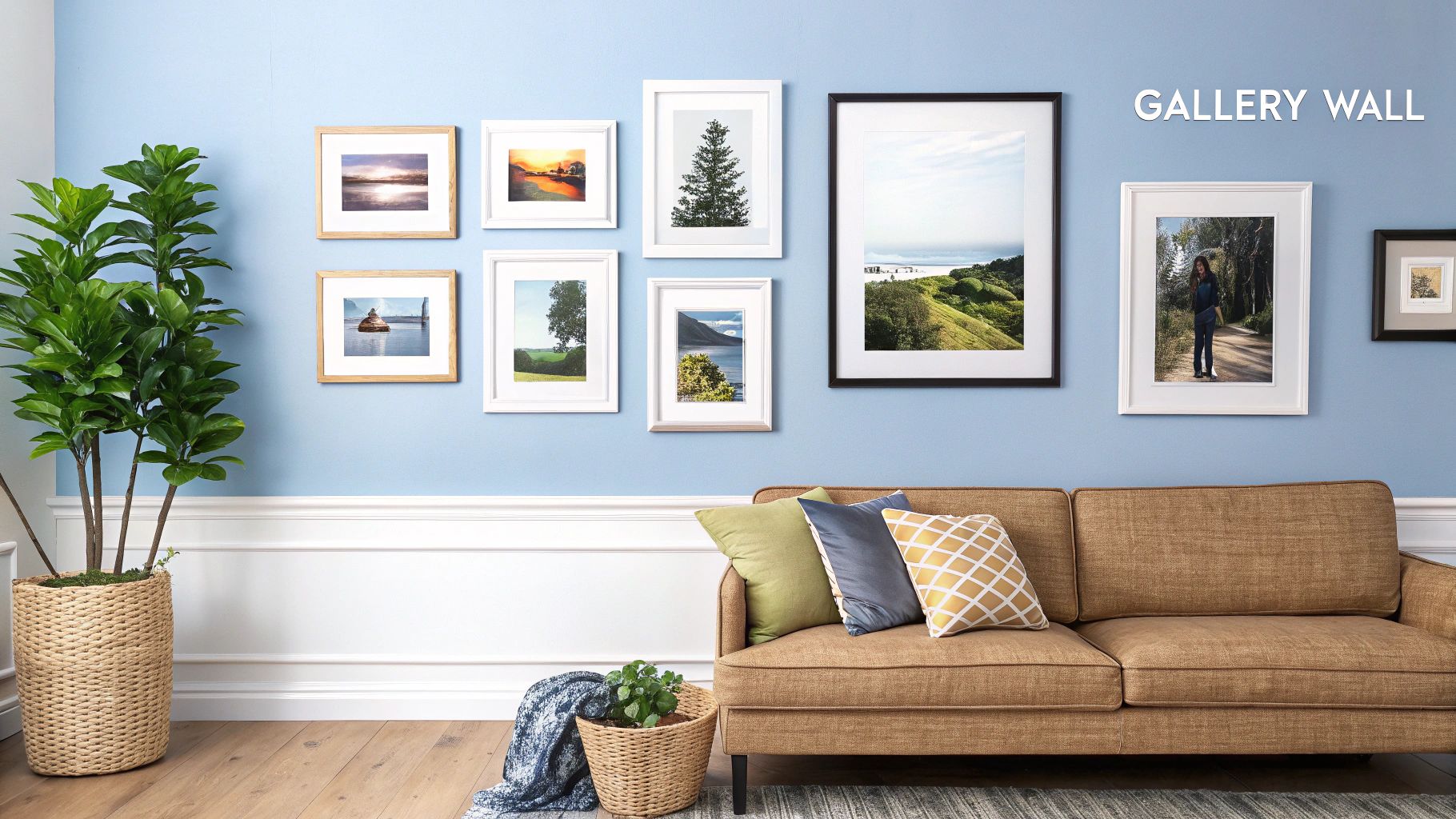
Popularised by designers like Joanna Gaines and made accessible through IKEA's budget-friendly frame collections, this trend works in any room, from a grand staircase display to a compact entryway in a small flat. It’s an ideal solution for renters who want to personalise their space without permanent changes.
How to Create Your Gallery Wall
To get started, gather your chosen images and frames. Mixing frame styles and sizes can create a dynamic, eclectic look, while using identical frames offers a more uniform, modern aesthetic.
- Plan Your Layout: Before hammering any nails, trace each frame onto paper. Cut out these templates and arrange them on the wall with tape to visualise the final composition.
- Start with an Anchor: Place your largest piece in the centre or slightly off-centre at eye level. Build the rest of your arrangement outwards from this anchor point.
- Maintain Consistent Spacing: Aim for a consistent gap of 2-3 inches between each frame to ensure the display looks cohesive and professionally organised, not cluttered.
- Source Affordable Art: Don’t limit yourself to just photos. Explore online marketplaces like Etsy for inexpensive digital prints or find free-to-use vintage illustrations and posters from online museum archives.
2. Removable Peel-and-Stick Wallpaper Accent Walls
Creating a dramatic accent wall is a brilliant way to introduce pattern and personality into a room, and removable peel-and-stick wallpaper makes it one of the most accessible and affordable home decor ideas available. This temporary, adhesive-backed wallpaper allows you to achieve the look of traditional wallpaper without the commitment, mess, or high cost, transforming a space in just a few hours.
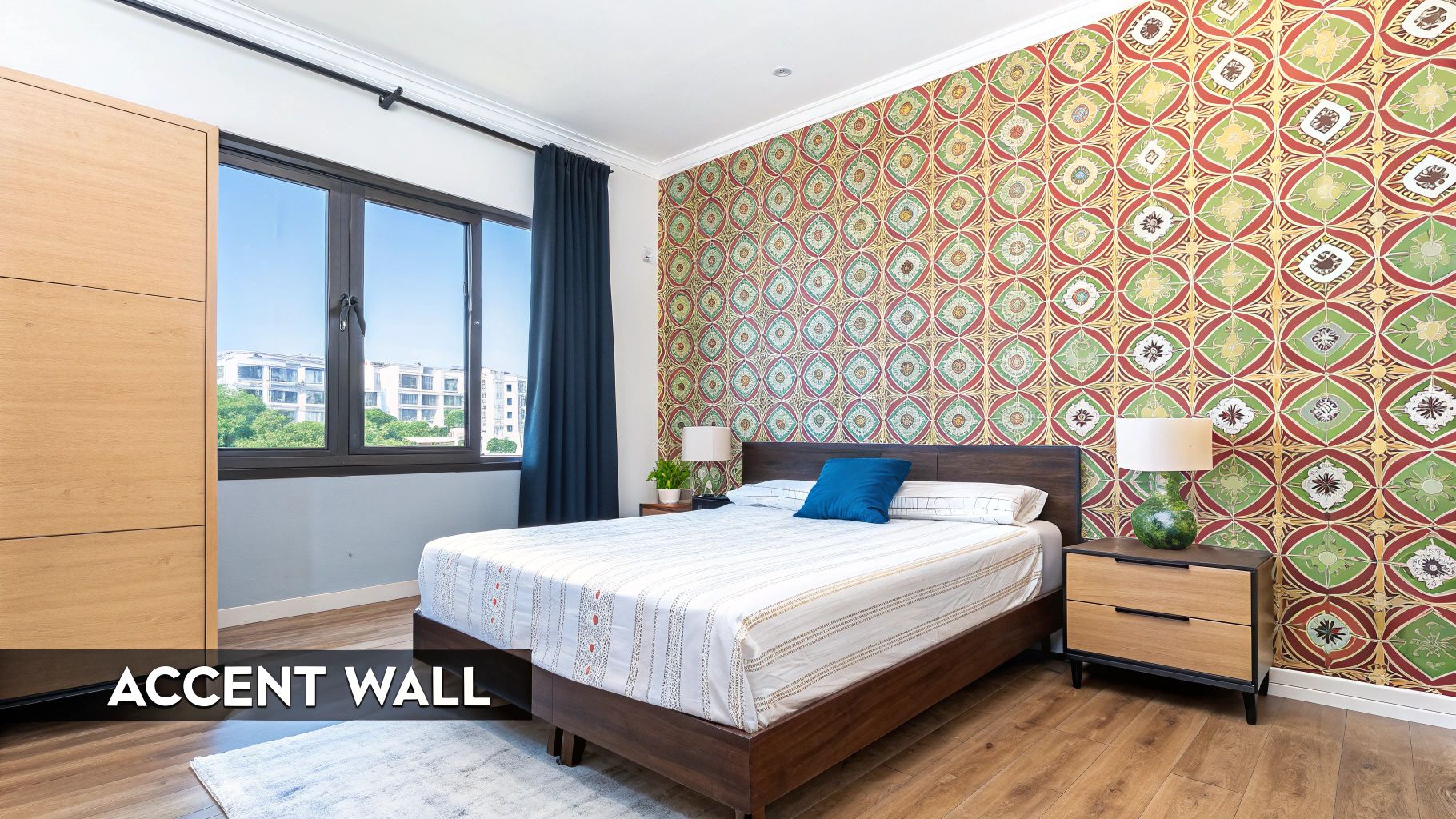
Popularised by rental decorating bloggers and brands like Tempaper and NuWallpaper, this solution is perfect for renters who want to personalise their homes without jeopardising their security deposit. It’s also ideal for homeowners wanting to experiment with bold patterns, such as the geometric designs often seen in children's bedrooms or the realistic brick effects used to add industrial charm to a living room.
How to Apply Peel-and-Stick Wallpaper
Applying this wallpaper is a straightforward DIY project, but careful preparation ensures a professional-looking finish.
- Prepare Your Surface: The wall must be clean, dry, and smooth. Wipe it down with a damp cloth and allow it to dry completely before you begin.
- Order Samples First: Before committing to a full roll, order samples to check the colour and texture in your home's lighting. This step prevents costly mistakes and disappointment.
- Use a Smoothing Tool: As you apply the paper from top to bottom, use a plastic smoothing tool or squeegee to press out any air bubbles for a flawless, flat finish.
- Start Small: If you're new to the process, consider starting with a smaller, less conspicuous area like the back of a bookcase or a small alcove to build your confidence.
3. Thrift Store and Flea Market Furniture Makeovers
Transforming secondhand furniture is a cornerstone of affordable home decor ideas, allowing you to create unique, high-quality pieces for a fraction of retail prices. This sustainable approach involves finding hidden gems at thrift stores, car boot sales, and flea markets and giving them a new lease of life through painting, reupholstering, or other creative modifications. It's a fantastic way to acquire custom furniture that perfectly matches your personal style.
Popularised by creators like Annie Sloan with her revolutionary Chalk Paint and countless furniture-flipping accounts on social media, this trend empowers anyone to become a furniture artist. It’s perfect for those who want to avoid mass-produced items and add character to their home, turning a tired mid-century dresser or a dated set of dining chairs into a modern statement piece.
How to Give Furniture a Makeover
Before you begin your transformation, it's crucial to select the right piece and prepare it properly for its new finish.
- Inspect Before Buying: Look for furniture with "good bones". Check for structural soundness, ensuring drawers slide smoothly and legs are sturdy. Cosmetic flaws like scratches or an ugly finish are easy to fix.
- Prep is Paramount: Thoroughly clean the entire piece to remove dirt and grease. Sanding the surface creates a texture that helps paint adhere properly, ensuring a durable and professional-looking finish.
- Use a Quality Primer: A good primer is non-negotiable. It prevents old stains or wood tannins from bleeding through your new paint colour and provides an even base for the topcoat.
- Upgrade the Hardware: One of the quickest ways to modernise a piece is by replacing old knobs, handles, or pulls. This simple switch can completely change the furniture's aesthetic.
4. Indoor Plants and DIY Planters
Bringing the outdoors in with houseplants is a classic and effective affordable home decor idea. This biophilic design approach adds natural beauty, vibrant colour, and life to any room. Using budget-friendly plant varieties and creative, handmade planters, you can introduce a sense of calm and improve air quality without a significant investment.
Popularised by Instagram influencers and embraced by the Scandinavian design movement, incorporating greenery works in any space. From trailing pothos in macrame hangers to small succulents arranged on a windowsill, plants offer a versatile way to fill empty corners and refresh your decor. This idea is perfect for renters wanting to add personality and homeowners looking for a sustainable way to enhance their living environment.
How to Style with Plants on a Budget
Getting started is easy with a few simple, low-cost materials. You can find inexpensive plants at local nurseries or even propagate them from existing ones for free.
- Choose Hardy Plants: Start with low-maintenance options like snake plants, ZZ plants, or pothos. These are forgiving and thrive in a variety of conditions, making them ideal for beginners.
- Create DIY Planters: Get creative by repurposing items you already own. Painted tin cans make excellent succulent pots, old woven baskets can hide plain plastic containers, and simple glass jars are perfect for rooting new cuttings.
- Group for Impact: Arrange your plants in clusters of odd numbers (three or five) at varying heights. This creates a more dynamic and visually interesting display than single, scattered plants.
- Propagate and Share: Expand your collection for free by propagating your existing plants. Taking cuttings from plants like pothos or spider plants is a simple process that yields new greenery to decorate with or share with friends.
5. String Lights and Creative Lighting Solutions
Using creative lighting is one of the most effective affordable home decor ideas for instantly shifting the atmosphere of a room. This technique involves layering inexpensive string lights, fairy lights, and strategically placed lamps to create warmth and ambiance, moving beyond a single, harsh overhead fixture. It’s about crafting a mood with light, making a space feel cosier and more inviting without investing in costly installations.
Popularised by bohemian and hygge design philosophies, this approach is perfect for adding a touch of magic to any space, from a bedroom headboard to a living room mantelpiece. The versatility of string lights makes them ideal for renters, as they can be installed and removed without leaving a trace, offering a significant visual impact for minimal effort and cost.
How to Use Creative Lighting
To get started, consider where your room needs a soft glow. String lights can frame architectural features, fill empty corners, or become a focal point on their own.
- Choose the Right Tone: Opt for warm white LEDs over cool white to create a cosy, candle-lit feeling. Cool white can feel sterile and clinical, while warm light promotes relaxation.
- Layer Your Light Sources: Don't rely solely on string lights. Combine them with a floor lamp and a table lamp to create varied light levels. This layering technique adds depth and dimension to your room.
- Conceal Wires: For a polished look, tuck wires behind furniture, run them along skirting boards, or use clear, adhesive cord clips. The goal is to see the light, not the messy cables.
- Get Creative with Placement: Drape fairy lights around a large houseplant, fill a clear glass vase or Mason jar with a battery-operated set for a portable lantern, or weave them through a bookshelf display.
6. Throw Pillows and Blankets for Seasonal Updates
One of the simplest yet most effective affordable home decor ideas is to use textiles like throw pillows and blankets to refresh a room’s look. By swapping out these accessories, you can instantly change the colour palette, texture, and overall mood of a space to reflect the current season or your evolving style, all without investing in new furniture.
This strategy has been popularised by home goods retailers like HomeSense and high-street brands, making seasonal decorating accessible to everyone. It is an excellent way to keep your home feeling current and festive, transitioning from light linen textures in spring to chunky woollen knits for autumn and winter.
How to Use Textiles for Seasonal Updates
Getting started is as simple as choosing a seasonal theme. You can switch from bright, floral patterns in the summer to rich jewel tones and velvets in the colder months. Storing the out-of-season covers is easy, as they take up minimal space.
- Stick to a Cohesive Palette: For each seasonal update, choose two to three coordinating colours to avoid a chaotic look. For example, use mustard, rust, and cream for an autumnal feel.
- Mix Textures and Sizes: Combine different materials like faux fur, velvet, and cotton to add visual depth. Varying pillow sizes, such as mixing 18-inch and 22-inch squares with a lumbar cushion, creates a more curated and interesting arrangement.
- Shop Smart: Purchase new pillow covers and blankets during end-of-season sales to prepare for the following year at a significant discount.
- Don't Forget the Throws: A strategically draped blanket over a sofa arm or the foot of a bed reinforces your colour scheme and adds an inviting layer of comfort.
7. Dollar Store and Discount Store Decorating Hacks
Transforming inexpensive items from pound shops and discount retailers into stylish decor is one of the most creative affordable home decor ideas available. This approach involves seeing the potential in basic items and elevating them with simple DIY techniques like spray painting, creative repurposing, and strategic styling. It's about achieving a high-end look on a minimal budget.
Popularised by countless YouTube DIY channels and budget decorating bloggers, this trend proves that great style isn't about how much you spend, but how resourceful you are. It empowers you to create custom pieces that perfectly match your aesthetic, from spray-painting plastic animal toys gold to serve as quirky bookends, to turning simple glass vases into elegant centrepieces with a touch of paint.
How to Master Discount Decor
Success with discount store decor lies in choosing the right items and applying simple, effective upgrades. A can of spray paint can turn a cheap plastic frame into a chic metallic accent, while contact paper can give plain storage boxes a marbled or wooden finish.
- Invest in Quality Finishes: Don't skimp on your supplies. A good quality matte or metallic spray paint will provide a far more convincing and durable finish than a cheaper alternative.
- Group for Greater Impact: A single small item might look lost, but a collection of three or five matching vases or candle holders grouped on a tray creates a cohesive, intentional-looking vignette.
- Focus on Simple Transformations: The best hacks are often the simplest. Think about adding fairy lights to a glass cloche or using pretty bowls as catch-all trays for keys and jewellery.
- Combine with Other Textures: Mix your discount finds with softer textures for a more balanced look. For example, you can learn how to use throws to style a sofa and place your newly styled decor on a nearby side table.
8. Rearranging and Repurposing Existing Items
One of the most effective and entirely free affordable home decor ideas is to work with what you already own. By rearranging furniture and repurposing existing items, you can completely transform the look and feel of a room without spending a single penny. This approach involves rethinking your current layout and finding new, creative uses for your possessions.
This concept, popularised by professional organisers like Marie Kondo and a core tenet of the minimalism movement, encourages you to appreciate and revitalise your current belongings. It’s perfect for anyone on a strict budget or those aiming for a more sustainable, less consumer-driven approach to interior design. A simple furniture shuffle can improve a room's flow and function instantly.
How to Rearrange and Repurpose
Start by looking at your space with fresh eyes, imagining it as a blank canvas. Consider what isn't working with the current layout and how a simple change could make a big difference.
- Rethink Furniture Placement: Before you move anything heavy, sketch a new floor plan or use an online room planner. Consider traffic flow and conversation areas. Could your sofa face a different wall to create a new focal point?
- Shop Your Own Home: Take an inventory of your decor. That decorative bowl gathering dust in a cupboard could become a stylish planter, or a small bookshelf from the living room could serve as a unique bedside table in the bedroom.
- Rotate and Restyle: Swap artwork, rugs, or cushions between different rooms to give each space a quick refresh. Group smaller decorative items in threes or fives on a tray or shelf to create a more organised and impactful vignette.
- Take a 'Before' Photo: Snap a picture of your room before you start. This helps you track your changes and gives you a reference point if you decide the new arrangement isn't quite right.
9. Mirrors for Light and Space Enhancement
Strategically placing mirrors is one of the oldest and most effective affordable home decor ideas for transforming a room. This technique uses the reflective properties of mirrors to bounce light around a space, creating an illusion of depth and brightness. A well-placed mirror can make a small room feel larger, a dark corner feel brighter, and add a touch of elegant sophistication without a hefty price tag.
Popularised by classic French interior design and embraced by small-space design experts, this trick is a go-to for renters and homeowners alike. Affordable collections from retailers like IKEA mean you can achieve a high-end look on a budget. Whether it's a large statement piece in a living room or a collection of smaller mirrors in a narrow hallway, this idea instantly elevates your home's aesthetic.
How to Use Mirrors Effectively
To get the most out of your mirrors, think about what you want them to reflect. Their placement is key to amplifying light and enhancing your existing decor.
- Reflect Natural Light: Position a large mirror directly opposite a window. This will capture the incoming daylight and reflect it back into the room, maximising brightness and creating a sense of openness.
- Create a Focal Point: Use a decorative mirror, like a sunburst or an ornate vintage style, above a fireplace, console table, or sofa. This draws the eye and acts as a piece of art.
- Avoid Reflecting Clutter: Be mindful of what your mirror will show. Avoid placing it where it will reflect a messy area or an unappealing view, as this will only amplify the clutter.
- Consider a Mirror Gallery: For a modern twist, group several smaller, inexpensive mirrors together on one wall. This achieves a similar space-enhancing effect to one large mirror but often at a lower cost.
This simple addition can be a key part of a larger refresh. For more inspiration on how mirrors fit into a complete refresh, explore these living room makeover ideas.
10. Open Shelving and Creative Display Solutions
Open shelving is a fantastic way to blend functional storage with decorative flair, making it one of the most practical affordable home decor ideas. This approach involves installing floating or bracketed shelves to display everything from books and plants to curated collections, turning everyday items into an intentional part of your decor.
Popularised by the minimalist Scandinavian design aesthetic and made mainstream by retailers like IKEA, open shelving works beautifully in any room. It can open up a small kitchen by replacing bulky upper cabinets, create a feature in a living room, or add valuable storage in a bathroom for toiletries and towels.
How to Style Your Open Shelves
The key to successful open shelving is curating a balanced and visually pleasing display. Avoid clutter by being selective about what you show off.
- Group Objects Thoughtfully: Arrange items in small clusters, often in odd numbers like three or five. Use the rule of thirds to place key objects off-centre for a more dynamic look.
- Mix Textures and Heights: Combine books (stacked both vertically and horizontally) with decorative objects like vases, small sculptures, or photo frames. Varying the height and texture of items adds visual interest.
- Use Baskets and Bins: Keep smaller, less attractive items neatly contained in stylish baskets or bins. This helps maintain an organised look while still providing practical storage.
- Leave Breathing Room: Don’t cram every inch of the shelf. Leaving some negative space around your objects prevents the display from looking cluttered and allows each piece to stand out.
Affordable Home Decor Ideas Comparison Table
| Item | Implementation Complexity 🔄 | Resource Requirements ⚡ | Expected Outcomes 📊 | Ideal Use Cases 💡 | Key Advantages ⭐ |
|---|---|---|---|---|---|
| DIY Gallery Wall with Printed Photos and Art | Medium – Requires planning & arrangement | Low – printed photos, frames ($20-50) | Personal, customizable wall art | Small spaces, personalized decor | Cost-effective, highly personalizable |
| Removable Peel-and-Stick Wallpaper Accent Walls | Low – Simple installation, no tools needed | Medium – peel-and-stick wallpaper ($30-100) | Instant visual impact without damage | Renters, temporary decor | Renter-friendly, no wall damage |
| Thrift Store and Flea Market Furniture Makeovers | High – Time & skill intensive | Medium – tools, paint, fabric ($10-75) | Unique, sustainable, personalized furniture | Budget-conscious, creativity-driven projects | Environmentally friendly, skill development |
| Indoor Plants and DIY Planters | Low – Basic planting and crafting | Low – plants & materials ($5-25) | Improved air quality, natural aesthetic | Any room needing biophilic design | Health benefits, affordable start |
| String Lights and Creative Lighting Solutions | Low – Easy to install, minimal setup | Low – lights ($10-40) | Warm ambient lighting, mood enhancement | Budget lighting upgrades, temporary ambiance | Affordable, energy-efficient |
| Throw Pillows and Blankets for Seasonal Updates | Very low – Simple swaps | Low – textiles ($15-60) | Quick seasonal refresh, comfort boost | Seasonal decor updates without furniture changes | Fast refresh, inexpensive |
| Dollar Store and Discount Store Decorating Hacks | Medium – Requires crafting time | Very low – inexpensive materials ($1-10) | Affordable decor transformations | Budget decorating, experimenting with trends | Lowest cost, encourages creativity |
| Rearranging and Repurposing Existing Items | Very low – No additional materials | None – uses existing items ($0) | Free room refresh, new functional uses | Sustainable, no budget projects | Completely free, sustainable |
| Mirrors for Light and Space Enhancement | Low to Medium – Placement planning required | Low to medium – mirrors ($10-80) | Enhanced light, spatial illusion | Small rooms, brightening dark spaces | Dramatic visual impact, versatile |
| Open Shelving and Creative Display Solutions | Medium – Installation and styling needed | Medium – shelving ($15-75) | Functional storage with decorative display | Organized spaces, showcasing collections | Affordable, encourages curation |
The Secret to High-End Style on a Realistic Budget
Forget the overwhelming idea of a complete, floor-to-ceiling gut job. The key to designing a home that looks far more expensive than it is, is to think like a pro. That means being selective and prioritising where your money actually goes. It’s about building a sense of luxury through the clever use of colour, texture, and multi-functional pieces, rather than just splashing out on expensive items.
This approach lets you make small, considered updates that, when brought together, create a massive transformation. Instead of feeling like you need to replace everything, you start to see the potential in what you already own and can pinpoint the few missing pieces that will pull the whole room together.
Understanding the True Costs
So many people are put off by the thought of hiring a professional, assuming it’s an unaffordable luxury. The truth is, the UK's interior design industry has different levels of service to suit all sorts of budgets. Yes, full-service design, which includes managing the entire project, can run from 10%-20% of the total project cost.
But there are much more accessible ways to get expert advice. Design-only services, for instance, typically cost between £500 and £5,000 per room. This gets you a professional plan and a roadmap to follow, without the hefty project management fees. For an even more budget-friendly option, hourly consultancy can start from just £50 per hour. This is perfect for getting a designer's eye on specific challenges, like nailing your layout or choosing the perfect colour palette.
To help you figure out what might work for you, here’s a quick breakdown of the different service models and what to expect.
Comparing Interior Design Service Costs
A breakdown of different interior design service models to help you choose the most budget-friendly option for your project.
| Service Type | Typical Cost (UK) | Best For | Key Benefit |
|---|---|---|---|
| Full-Service Design | 10-20% of project cost | Large-scale renovations or new builds. | A completely hands-off experience from start to finish. |
| Design-Only Service | £500 - £5,000 per room | Room-by-room refreshes; DIY decorators. | Professional plans and sourcing lists you can execute yourself. |
| Hourly Consultancy | £50 - £250+ per hour | Specific design dilemmas (e.g., colour, layout). | Expert advice without the commitment to a full project. |
| E-Design Service | £150 - £1,500 per room | Tech-savvy homeowners on a tight budget. | A cost-effective, digital design plan delivered online. |
As you can see, there are plenty of ways to get professional guidance without blowing the budget.
Planning Your Budget-Friendly Transformation
Before you even think about buying a single thing, the most critical step is to plan. A solid plan is what stops you from making impulse purchases you'll later regret and ensures every pound you spend is working as hard as it can.
Here’s where to start:
- Define Your Vision: Get on Pinterest and create a mood board. Pin images that capture the feeling and style you're aiming for. This is brilliant for cementing your ideas and landing on a colour scheme.
- Assess Your Space: Take a good, honest look around. What's working and what isn't? Maybe the sofa is perfectly good, but the fabric is dated. Perhaps the layout feels cramped, but the actual furniture is fine.
- Prioritise Your Spending: Figure out which items will make the biggest difference. It's almost always smarter to invest in a quality sofa you'll use every day than to spend that money on trendy accessories that will feel dated in a year.
The most impactful designs always come from a mix of high and low. Spend your money on the pieces you touch and use daily—like your sofa or dining chairs—and save on the decorative bits you can easily swap out with the seasons.
Getting into this mindset is fundamental to achieving a polished, expensive-looking home without overspending.
Your Stylish Home is Just a Few Ideas Away
Creating a home that truly reflects your personality and offers a sanctuary from the outside world doesn’t require a monumental budget. As we’ve explored, the journey from a house to a home is paved with creativity, resourcefulness, and a little bit of DIY spirit. The most impactful transformations often stem not from expensive overhauls, but from thoughtful, well-executed affordable home decor ideas that inject character and warmth into your living spaces.
By now, you should realise that the power to reinvent your home is already in your hands. It’s about seeing the potential in a thrifted piece of furniture, understanding how a simple gallery wall can tell your family’s story, or appreciating the transformative effect of a new set of throw pillows. These aren’t just decorating tips; they are strategies for creating a personalised environment that supports your well-being and brings you joy every single day. The key is to start small, focus on one project at a time, and build momentum.
Your Actionable Next Steps
Feeling inspired? The best way to maintain this momentum is to take immediate action. Don’t let these affordable home decor ideas remain just ideas. Choose one project from our list that genuinely excites you and commit to starting it this weekend. Whether it's mapping out a gallery wall, hunting for treasures at a local flea market, or simply rearranging your living room, taking that first step is crucial.
Ultimately, mastering these approaches empowers you to be the curator of your own space, free from the constraints of a large budget. It’s about developing a decorator’s eye, learning to spot potential, and having the confidence to bring your unique vision to life. Your stylish, comfortable, and deeply personal home is not a distant dream; it’s just a few creative decisions away.
Ready to make one of the biggest and easiest impacts? Transforming your sofa can redefine your entire living room. Discover a stunning range of durable, stylish, and pet-friendly covers at The Sofa Cover Crafter and give your most-loved piece of furniture a brand-new look for a fraction of the cost of replacement. Explore the collection at The Sofa Cover Crafter today.
