



We do not currently make a teal sofa throw, and the nearest stocked tones in our sofa throw range are Vintage Blue, Denim Blue, Blue, Navy Blue, Sage Green, Green Tea, Forest Green, and Moss Green. Teal still matters as a decorating choice even when the exact colour isn't on the shelf.
The popular advice is wrong if it starts with “buy a teal throw first”. That's the lazy route, and it usually leaves you with a colour that fights the room. The smarter move is to treat teal as the anchor you already own, then build around it with calmer blue, green, beige, terracotta, and charcoal pieces that sit together instead of shouting over each other.
Table of Contents
- Why a Teal Sofa Throw Is Harder Than It Looks
- What Teal Actually Is and Why It Refuses to Match
- Our Nearest Blue and Green Tones to Teal
- Building the Room Around a Teal Sofa, Rug or Wall
- Which Throw Size Works for Your Sofa
- Keeping Teal Vibrant Through the Year
- Cushions, Seasonal Swaps and Quick Questions
Why a Teal Sofa Throw Is Harder Than It Looks
A teal sofa throw is hard to match because teal sits in a narrow band between blue and green, and that balance shifts under different light, finishes, and textures. Two items both labelled teal can look like they came from different rooms once they're on the same sofa.
Light changes the colour, not just the mood
Warm indoor light pushes the green side of teal forward, while cooler daylight pulls the blue side out. That's why a throw can look calm in a shop and suddenly look sharper, greener, or bluer at home. The surface matters too. A weighted jacquard throw catches light differently from fleece, and woven cotton reads flatter and more matte, so each fabric changes how much of the colour you see.
Practical rule: if the room already has a teal sofa, teal rug, or teal wall, stop chasing an exact match and start choosing support colours with more restraint.
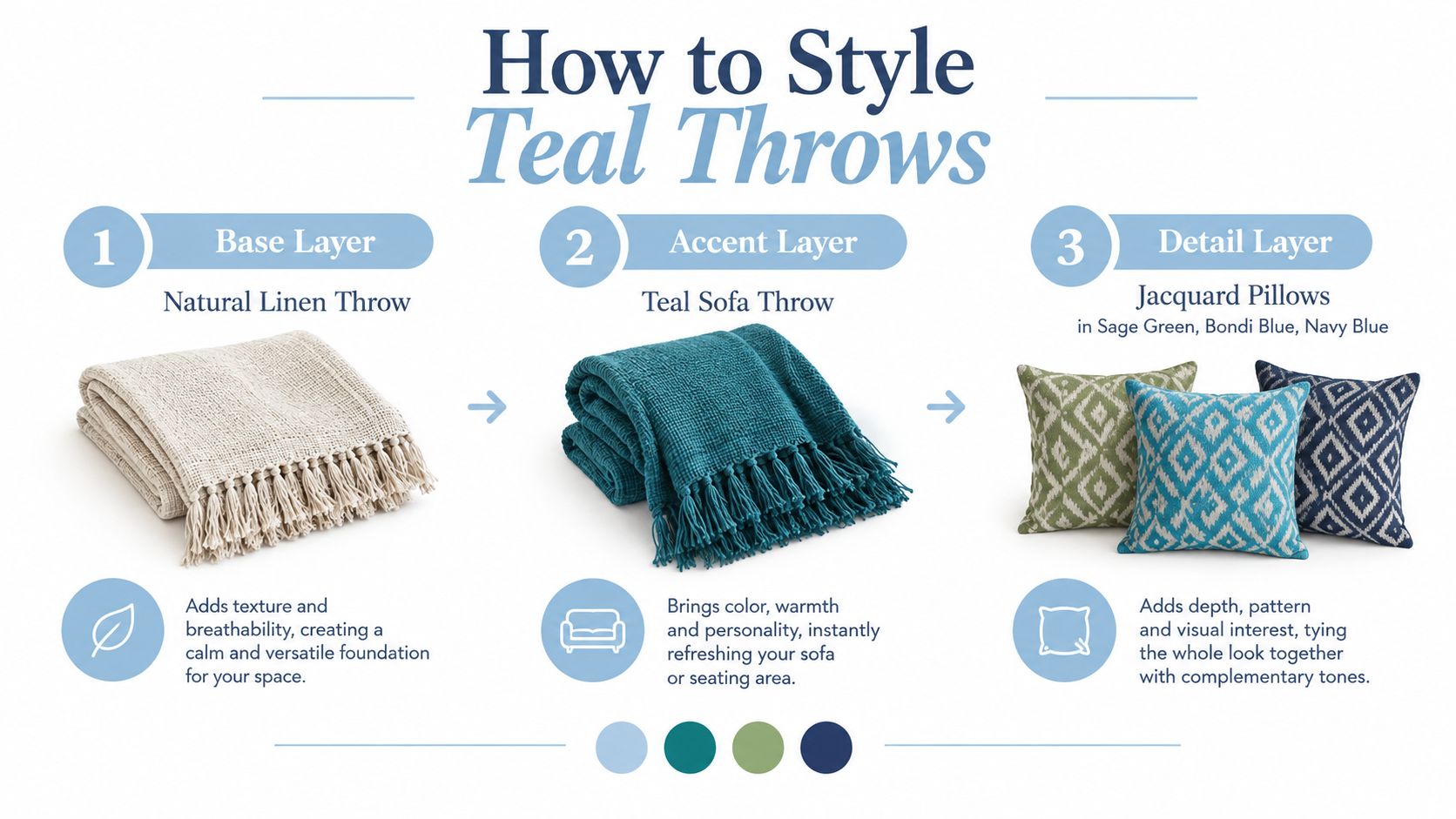
That is the clean answer for sofa throws teal styling. Build a base, add one accent, then let the eye rest on neutral or earthy tones instead of forcing every textile to speak the same colour language.
Teal also behaves differently depending on depth. A muted teal can sit almost like a neutral, but a bright one needs more breathing room. That's why the room often looks better when the throw is not the loudest thing in it.
What Teal Actually Is and Why It Refuses to Match
Teal is a blue-green hybrid, and the exact balance keeps moving. Some teals lean more turquoise and bright, others lean pine and dusky, so a shopper who says “teal” is usually describing a family of shades rather than one fixed colour.
The room decides which side of teal shows up
A warm bulb makes teal feel greener. A cool daylight bulb makes teal feel bluer. That means the same sofa throw can look friendlier at night and crisper by a window, which is exactly why buying textiles online by name alone is a gamble.
Value and saturation matter too. A deep, muted teal behaves more like a quiet backdrop, while a bright teal demands a calmer supporting cast. If the teal is saturated and shiny, don't surround it with more saturated colour. Use one strong teal piece and let the rest of the scheme soften around it.
Teal rarely fails because the colour is wrong. It fails because the supporting textiles are trying too hard.
That's why the fibre finish matters. A plush velvet, a dense jacquard, and a casual woven cover don't just change texture, they change how teal reads in the room. One can make it feel jewel-toned, another can make it feel softer, and a third can make it feel almost muted.
Our Nearest Blue and Green Tones to Teal
The closest stocked tones to teal fall into two useful groups, and they each behave differently beside a teal sofa, rug, or wall.
The blues keep teal cooler
Vintage Blue in the Melareve Sofa Throw, Denim Blue in the Herpome Sofa Throw, Blue and Navy Blue in the Elligate Sofa Throw, and Blue in the Mistara Sofa Throw all sit safely on the cooler side. These work best when the teal is more green-dominant, because the blue pieces calm the colour without flattening it. A navy cushion is useful as a grounding accent, while a brighter blue throw is better as the main drape on a neutral sofa.
The greens keep teal richer
Sage Green in the Elligate Sofa Throw, Green Tea in the Coveri Sofa Throw, Forest Green in the Melareve Sofa Throw, and Moss Green in the Klint Sofa Throw lean into the botanical side. These are strongest beside a bluer teal, especially when the room already has wood, brass, or plants. They make teal feel deeper and less synthetic.
The exception is overmatching. A dusty teal next to a soft sage can blur into one flat palette, and that's when the room starts looking muddy instead of layered. The same problem shows up if a turquoise-leaning teal sits right beside another bright blue-green. The eye reads it as two separate rooms.
| Stocked Tone | Pairs With | Avoid Next To | Best Role |
|---|---|---|---|
| Vintage Blue | Teal with more green in it | Bright turquoise teal | Main throw or support layer |
| Denim Blue | Muted teal, cream, beige | Neon-bright blue-green | Softer drape on a sofa arm |
| Navy Blue | Bright teal, warm neutrals | Very dark teal with no contrast | Grounding cushion or deep accent |
| Sage Green | Blue-leaning teal | Pale dusty teal with no contrast | Bridge cushion or light throw layer |
| Forest Green | Rich teal, wood, brass | Light aqua teal | Stronger grounding textile |
| Moss Green | Teal with natural textures | Cool grey-heavy rooms | Transitional layer |
One practical option for people who want a darker green beside teal is the Velvet Sofa Cover in Dark Green. Its dark green velvet finish sits in the right family for a teal-led room, but it reads as a separate grounding piece rather than a copy of teal.
Building the Room Around a Teal Sofa, Rug or Wall
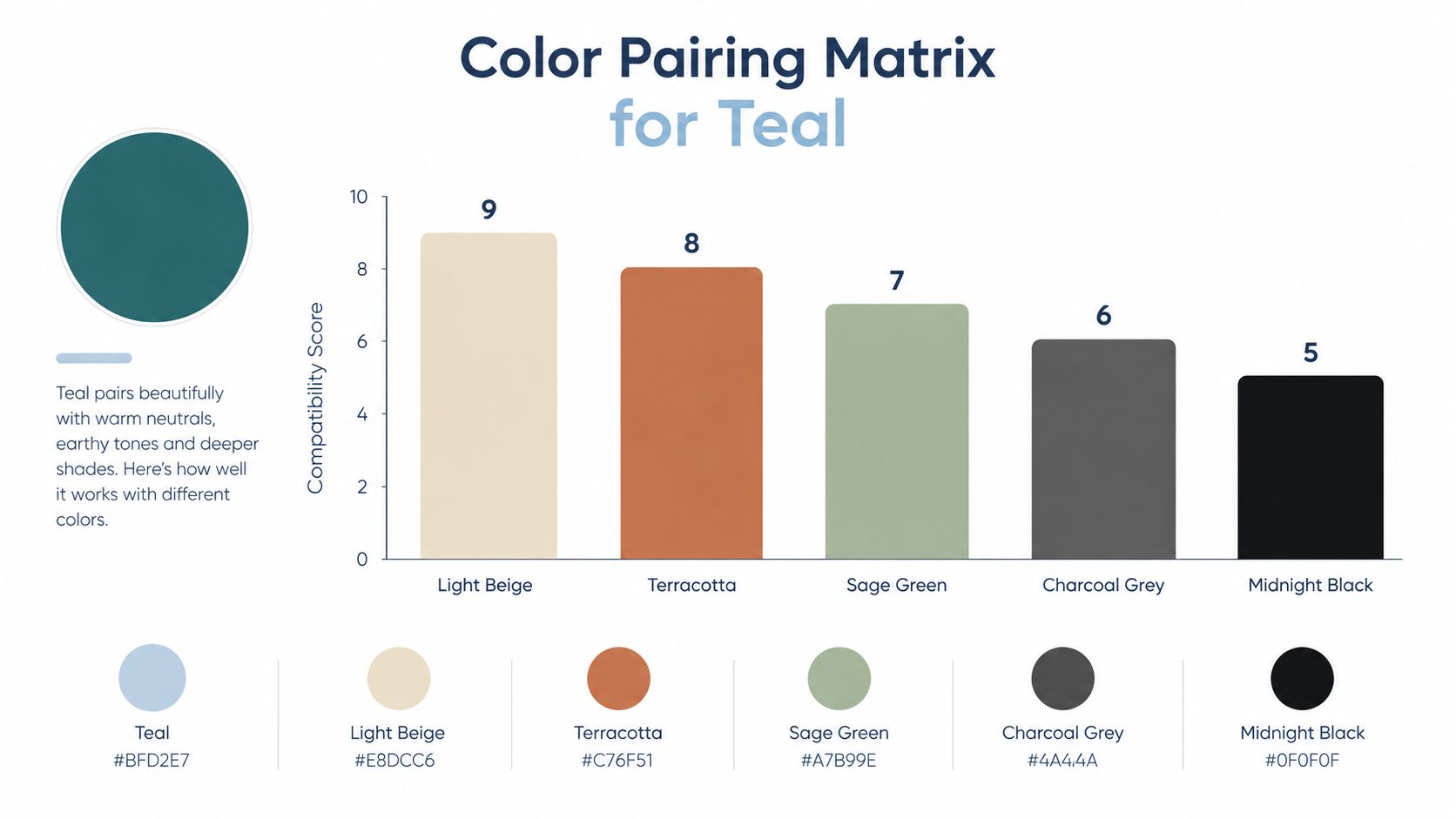
A teal sofa, rug, or wall needs three things around it, a warm neutral, a clay tone, and a deep grounding shade. Skip one of those and the room usually feels incomplete.
Start with a warm neutral, not a harsh white
A warm neutral stops teal from feeling clinical. Use Light Beige in the Melareve Sofa Throw, Moon Beige in the Norka Sofa Throw, or Sandy Tan in the Soft Tassel Sofa Throw as the first balancing layer. Fold one of these along the sofa back, or use it on the seat of an adjacent chair, so the teal has somewhere soft to land.
Add clay for contrast that still feels natural
Teal looks better beside earthy warmth than beside another cool colour. Terracotta in the Yeluxe Sofa Throw or Terracotta Orange in the Herpome Sofa Throw brings that necessary heat without turning the room loud. Drape one across an arm, not the whole sofa, so it reads as an accent rather than a colour takeover.
For readers who like to see scheme logic in another room, the broader principles in sofa tips from Giorgi Bros. line up with this approach, keep the strong colour anchored and let the surrounding textures do the work.
Finish with something deep and steady
A dark grounding piece keeps teal from floating. Charcoal Grey in the Melareve Sofa Throw or Midnight Black in the Norka Sofa Throw works well on a chair, a bench, or as a cushion-heavy counterweight. For cushions, the Jacquard Pillow Cover range in Off-White, Chestnut Brown, Dark Grey, and Chocolate gives you the same stabilising effect without adding another bold colour.
The same logic applies whether teal is on the sofa, the rug, or the wall. If the teal is already the big gesture, the rest of the room should be edited, not competing. For a deeper teal-focused read, the velvet sofa teal guide is the closest internal reference, but this layer is about what sits beside the teal, not replacing it.
Which Throw Size Works for Your Sofa
The right size is the one that looks intentional on the sofa you own. Too small and the throw looks lost, too large and it starts to read like a cover.
| Throw Size | Best Sofa Type | Drape Style |
|---|---|---|
| 180 x 130 cm | Two-seater or accent sofa | Casual arm drape or neat back fold |
| 180 x 230 cm | Three-seater | Full back spread or diagonal corner drape |
| 180 x 300 cm | Large sofa or generous corner section | Wider spread with clear edge drop |
| 180 x 420 cm | Extra-long sofa or layered look across a broad seat | Full span with deliberate overhang |
Pick the size by how much sofa you want to show
A 180 x 130 cm throw suits a two-seater when you want a quick arm fold, not full coverage. It looks wrong stretched across a four-seater because the proportion vanishes and the fabric seems stingy. A 180 x 230 cm throw is the safest all-rounder for a three-seater, especially if you want enough length for a relaxed fold without drowning the arms.
A 180 x 300 cm throw is the one to reach for when the sofa is large or when you want more of the back and seat to read as a single swath of colour. A 180 x 420 cm throw only makes sense when the sofa is genuinely broad, or when you want a dramatic layered finish with plenty of spill. If you're using the throw as a decorative accent rather than practical coverage, don't overbuy. The neatest sofa throws teal look is usually the one with breathing room around it.
Rule of thumb: the throw should cover roughly two thirds of the seating depth if you want the proportions to feel right.
Keeping Teal Vibrant Through the Year
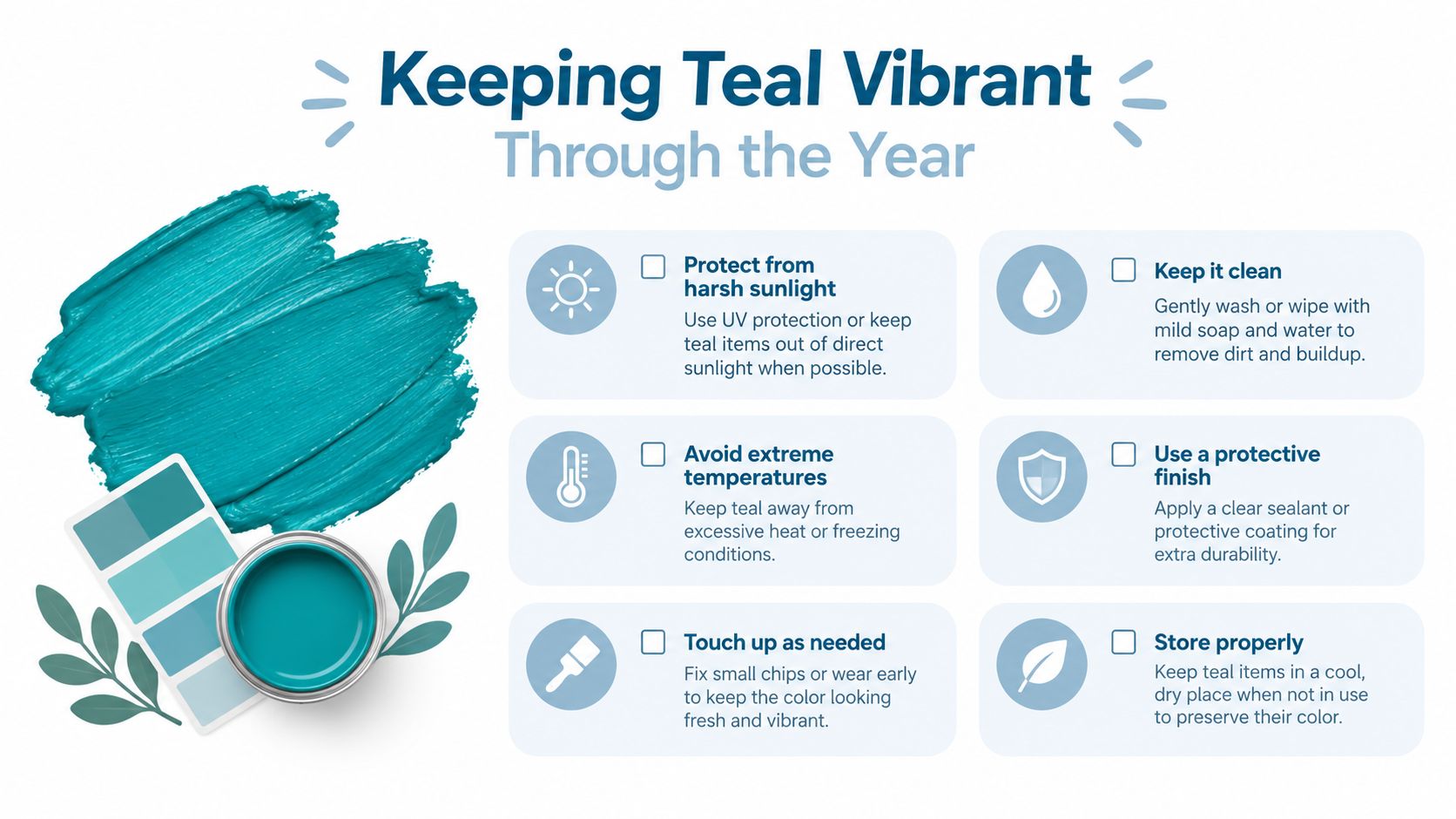
Teal fades from UV and abrasion more than it gets damaged by dirt, so the main job is to protect the colour face, not just wash the fabric. Sunlight, rubbing, washing mistakes, and heavy detergent all dull a blue-green faster than people expect.
Rotate before the fade shows
Turn the throw end for end every few weeks so one fold line does not sit in the window's light path. Swap the arm side and the back side when you drape it, because the same edge takes more rubbing than the rest. If the throw is used daily, that simple rotation does more than most users realise.
Wash for colour, not convenience
Wash the teal throw inside out on the shortest cycle you can use confidently, and keep the detergent mild. Skip fabric softener, because the film it leaves scatters light and makes the colour look flatter. Dry flat and keep it out of direct sun. For care language, the care label on the throw is the thing to read, because its symbols tell you whether washing, drying, ironing, bleaching, or professional cleaning is allowed.
The detailed guidance in lightweight summer sofa throws is useful here too, especially if you're swapping between lighter and heavier layers across the year. Teal doesn't need heroic care, it needs consistent care.
Store seasonal teal pieces in a breathable cotton bag with a cedar block, not plastic. Plastic traps damp and can leave the fabric looking tired by the time you pull it out again. If the teal starts looking muddy by month four, check the lighting first. In many homes, the room is too warm, not the throw.
Cushions, Seasonal Swaps and Quick Questions
The easiest cushion rule is simple, let teal be the statement and use the cushions to steady it. The Jacquard Pillow Cover range in our pillow covers does that job well because the colours already sit in the right supporting registers.
Use cushions to change the temperature of the room
Off-White and Light Grey soften a teal sofa without competing with it. Sage Green and Bondi Blue keep the room cooler and more layered. Navy Blue and Dark Grey add weight when you want the sofa to feel more grounded. Chestnut Brown and Chocolate bring warmth that works especially well in autumn, while Sky Blue gives the room a lighter, fresher edge. The one colour I'd use sparingly is anything too close to the exact teal family, because near-matches usually look accidental rather than styled.
For broader pairing logic, the ideas in pillows and throws for couches are worth following, especially if you like changing the sofa feel without replacing the whole scheme.
Seasonal swaps should change texture first
Spring needs lighter-feeling layers and more open colour, so use pale neutrals with one cool accent. Autumn suits darker, denser textures and the brown or charcoal end of the cushion range. Winter looks better when the room gets a little heavier, with navy, dark grey, and chocolate doing the grounding work. You do not need a full redesign each season, just a small shift in texture and depth.
Common questions shoppers ask
Can two teal tones live together? Yes, but only if one is clearly lighter or darker than the other. Two teals at the same depth usually collapse into each other and look flat.
How often should I rotate a throw? Rotate the drape every few weeks if it gets daylight, and change its position more often if one arm of the sofa gets the most use. That keeps the wear and fade even.
What if a new cushion clashes with my teal piece? Pull the new cushion back with beige, charcoal, or a deeper blue-green. If it still fights the teal, the colour is wrong for the room, not just the sofa.
The Sofa Cover Crafter gives you the practical pieces to build around teal without guessing, from sofa throws and pillow covers to sofa covers in colours that work beside a strong accent. If you're styling around a teal sofa, rug, or wall, visit The Sofa Cover Crafter and pick the tones that steady the room instead of crowding it.
