



If you're looking at a herringbone pattern sofa, the honest answer is simple, it's a sofa upholstered in a broken-twill V pattern that gives the fabric direction, depth, and a polished feel. If you want the look without replacing your sofa, the better route is usually a woven cover or textured layer that gives you that same sense of structure without pretending to be herringbone when it isn't.
Table of Contents
- What Is a Herringbone Pattern Sofa
- Does The Sofa Cover Crafter Stock a Herringbone Cover
- Which Woven Pattern Suits a Large Sofa
- How to Fit a Patterned Sofa Cover Without Ruining the Look
- How to Care for a Textured Sofa Cover
- Frequently Asked Questions
What Is a Herringbone Pattern Sofa
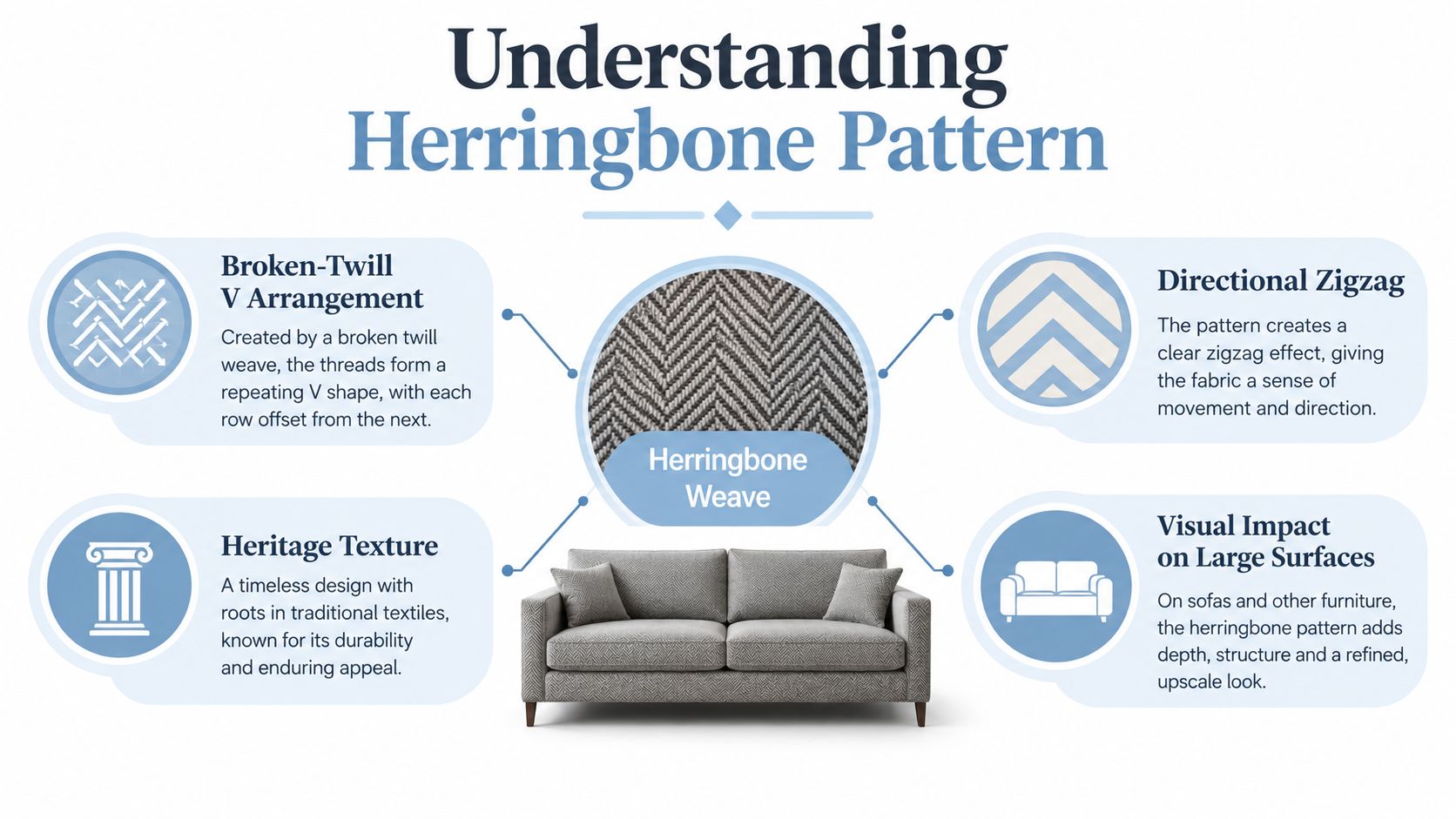
A herringbone pattern sofa is a sofa covered in fabric with a broken-twill zigzag, where the V shape reads as directional texture rather than a flat print. On a sofa, that direction matters more than on a cushion because the eye sees the back, arms, and seat as one broad surface, so the weave's movement becomes part of the furniture's shape.
Herringbone works because it looks ordered without feeling rigid. The pattern carries a quiet rhythm across a large frame, which is why it can make a sofa feel more sharply finished than plain weave and less shouty than a bold geometric print. The same logic is why the weave shows up across upholstery, curtains, blinds, and cushions in British interiors, not just on seating.
A useful way to think about it is that herringbone has a built-in direction, and that direction is the point. A large sofa gives that direction room to breathe, while a small chair or cushion can make the same weave feel busier and more decorative. For a practical comparison of weave mechanics, the clearest companion reading is herringbone sewing tips for quilters, because it shows how the pattern's broken rhythm behaves when the fabric is cut, aligned, and repeated.
Why the weave looks different on a sofa
The broken V is what keeps herringbone from reading like a plain stripe. On a sofa, that subtle reversal creates movement across the seat, so the upholstery catches light differently as you move around the room. That's why the same motif can feel classic in one fabric and a little more modern in another.
For a broader weave breakdown, our guide to what is jacquard fabric is the better place to compare how decorative weaves behave, but the short version is this, herringbone's appeal comes from direction, not noise.
Practical rule: if a sofa pattern only looks good from across the room because it's loud, it's fragile styling. If it still works up close because the weave itself has structure, it's a safer long-term choice.
Does The Sofa Cover Crafter Stock a Herringbone Cover
No, The Sofa Cover Crafter doesn't make a herringbone cover, and nothing in the current range is a herringbone weave. The honest choice is to look at the nearest woven textures in the range, then pick the one that gives you visual structure without misrepresenting the fabric.
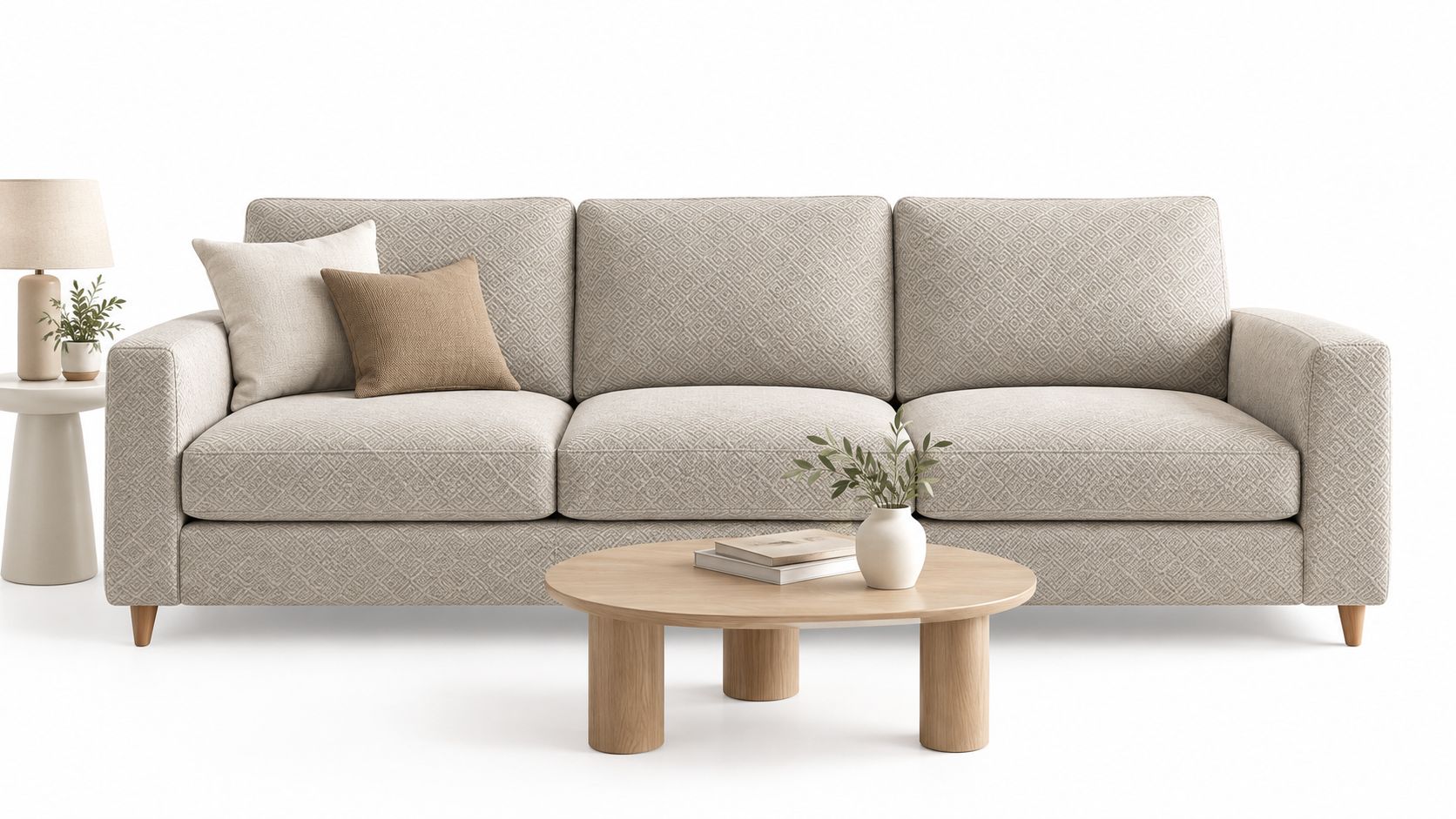
The closest woven option is the Crosshatch Sofa Cover, which is available in Blue, Grey, Beige, Dark Grey, Pink, Eggshell, Coffee, and Blue & Gold. Matching pillow covers exist for Crosshatch, and the same general size bands run across the range, from 1 seater 90 to 130 cm, 2 seater 135 to 175 cm, 3 seater 180 to 220 cm, and 4 seater 225 to 300 cm. The crosshatch option is woven, not printed, so it gives the sofa a more tactile surface than a flat graphic would.
Jacquard and diamond jacquard are the other woven routes if you want visible texture rather than a plain finish. Jacquard sofa covers come in Bondi Blue, Light Grey, Navy Blue, Chocolate, Off-White, Dark Grey, Black, Cream, Garnet Red, Chestnut Brown, Sky Blue, and Sage Green. Diamond Jacquard Sofa Covers come in Light Concrete Grey, Light Sage Green, Brown, Chestnut Brown, Pale Purple, Black, Sky Blue, Light Brown, and Cardinal Red, and matching pillow covers exist for both of those ranges. Other textured weaves in the line include Bobble-Textured Sofa Cover, Flecked Sofa Cover, Linear Geometric Sofa Cover, and Interwoven Recliner Cover.
| Woven Patterns Available as Sofa Covers | Colour range summary | Matching pillow covers |
|---|---|---|
| Crosshatch | Blue, Grey, Beige, Dark Grey, Pink, Eggshell, Coffee, Blue & Gold | Yes |
| Jacquard | Bondi Blue, Light Grey, Navy Blue, Chocolate, Off-White, Dark Grey, Black, Cream, Garnet Red, Chestnut Brown, Sky Blue, Sage Green | Yes |
| Diamond Jacquard | Light Concrete Grey, Light Sage Green, Brown, Chestnut Brown, Pale Purple, Black, Sky Blue, Light Brown, Cardinal Red | Yes |
| Bobble-Textured | Textured options only, colour range varies by listing | Not listed here |
| Flecked | Flecked weave options, colour range varies by listing | Yes |
| Linear Geometric | Linear geometric weave options, colour range varies by listing | Yes |
| Interwoven Recliner | Recliner-focused woven option | Not listed here |
You can compare every woven finish side by side in the sofa covers collection. Crosshatch also comes as a corner cover in the corner sofa covers collection, and the matching cushion fronts sit in the pillow covers collection. The point is not to fake the weave, it's to choose a surface that suits the sofa you already own.
Which Woven Pattern Suits a Large Sofa
A smaller repeat is usually the safer choice on a large sofa because broad frames magnify pattern decisions. A three-seater gives every weave more visual space, so a dense or high-contrast design can start to dominate the room, while a more restrained woven texture settles into the furniture and feels easier to live with.
How scale changes the result
Crosshatch is the nearest visual cousin to herringbone in this range because it gives a structured, woven read without becoming a loud statement. Jacquard and diamond jacquard can work well when you want the sofa to feel more finished, but the more contrast the pattern carries, the more carefully you need to think about the rest of the room. A plain rug, plain walls, or quieter curtains give the sofa somewhere to land.
Violet T. sums up the effect well on the Crosshatch Corner Sofa Cover in Blue, saying, “The blue cross pattern looks heaps good in my living room, adds a nice pop of colour without being over the top.” That's the right benchmark for a large sofa. You want texture and presence, not a pattern that keeps shouting once the novelty wears off.
What usually works best
- Crosshatch Sofa Cover: Best when you want the sofa to read as textured from across the room, with more structure up close.
- Jacquard Sofa Cover: Best when you want a more decorative woven face and don't mind the sofa taking more visual weight.
- Diamond Jacquard Sofa Cover: Best when you want a clearer motif that still feels woven rather than printed.
- Bobble, Flecked, Linear Geometric, Interwoven: Best when your room already has other hard-working surfaces and you want the sofa cover to stay practical first, decorative second.
If you're weighing room-wide texture against a quieter seat, the older furniture concept still applies, plain surfaces make woven detail look more deliberate. That's why a woven sofa cover often looks strongest in a room with calmer companions, not beside another busy pattern.
How to Fit a Patterned Sofa Cover Without Ruining the Look
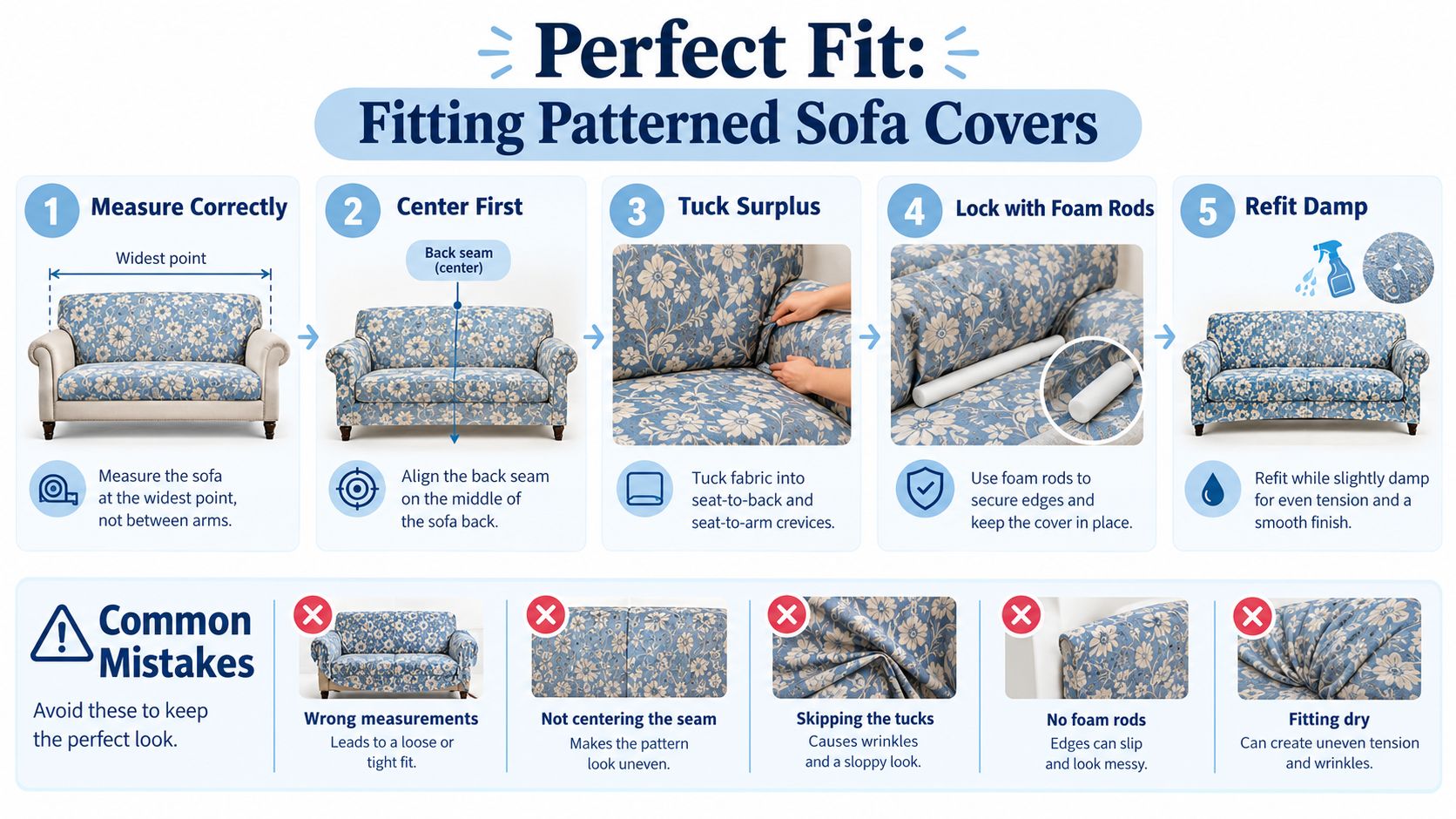
A patterned sofa cover needs to be centred before it's stretched, and the sofa should be measured across its widest point before anything else. If the cover is pulled on off-centre or sized from the seat between the arms, the weave can run diagonally and the pattern won't settle back once tension holds the skew.
Start with the widest measurement of the sofa, not the visible seat width. That's the mistake that drops people into the wrong size band, especially on arms that flare or cushions that hide the true sofa span. Once the cover is on, push surplus fabric into the seat-to-back and seat-to-arm crevices, then lock it with foam rods so slack doesn't migrate to the front edge.
The fitting sequence that protects the pattern
- Measure the full sofa width first. The outside line matters more than the seat alone.
- Line up the back seam in the middle. A centred start keeps the pattern straight from the first stretch.
- Tuck surplus deep into the crevices. Surface slack always shows later.
- Use foam rods to hold the line. They stop the fabric from creeping out of the gap.
- Check the pattern before smoothing the front. Once the tension is set, a skewed weave stays skewed.
A patterned cover doesn't forgive rushed centring. Once the weave is pulled off-axis, smoothing the front won't fix the direction.
The reason this matters so much on woven upholstery is simple, the eye reads direction before it reads colour. A diagonal drift across the seat makes even a good cover look wrong. If you want a broader fitting reference for larger furniture, our guide to large sofa covers is useful alongside these pattern checks.
How to Care for a Textured Sofa Cover
Heat and abrasion flatten a weave long before dirt does. That's why textured covers need gentle washing habits, because the relief in the fabric is what makes the surface read as woven rather than flat.
Wash the cover inside out on the shortest cycle, then air-dry it instead of using heat. Skip fabric softener, because the film it leaves can fill the recesses of the weave and make the pattern look softer than it really is. Refit the cover while it's still slightly damp so it sets under even tension and pulls straight on the sofa.
Care that keeps the texture visible
- Wash inside out: That protects the outer face from extra abrasion in the drum.
- Keep the cycle short: Less agitation helps the weave keep its shape.
- Avoid fabric softener: It can dull the pattern's definition visually.
- Air-dry only: Heat can flatten the raised and recessed structure.
- Refit while slightly damp: Even tension helps the cover settle properly.
For cloth upholstery more broadly, general upholstery cleaning advice for homes is worth reading too, especially if you're trying to decide how much maintenance your household can realistically handle. The styling rule stays simple too, plain cushions and calm throws let the weave stay in focus instead of competing with it.
If you want a deeper look at texture choices beyond one pattern, our guide to texture of fabrics is the better place to compare surfaces side by side.
Frequently Asked Questions
Is a herringbone pattern sofa still a good choice for a UK home?
Yes, a herringbone pattern sofa still works well in a UK home because the weave has a long, proven life in British interiors and doesn't depend on trend noise. It feels especially right when the room already has plain walls, simple flooring, or quieter seating around it.
Do you sell a herringbone sofa cover?
No, The Sofa Cover Crafter doesn't sell a herringbone sofa cover. The closest woven alternatives are Crosshatch, Jacquard, Diamond Jacquard, and the other textured weaves in the range.
What's the safest cover choice if I want texture on a large sofa?
A Crosshatch Sofa Cover is usually the safest starting point if you want texture on a large sofa without pushing the room too far. The pattern reads as woven, stays more versatile than a loud motif, and works well with plain cushions.
Can a landlord use a decorative sofa cover in a UK let?
Yes, a landlord can use a decorative sofa cover in a UK let if the upholstered furniture meets the relevant fire-safety rules. Rental properties still need compliant upholstered furniture, so the cover choice has to sit inside that wider legal framework.
The Sofa Cover Crafter makes practical, textured sofa covers and cushion covers that help you refresh a room without buying a new sofa. If you want a woven look that's honest about what it is, and a fit that's built for everyday use, take a look at The Sofa Cover Crafter and compare the woven finishes that suit your sofa best.
