



Start with your sofa's undertone, because that decides the right answer to what colours go with a grey sofa. Hold white paper against the fabric to see whether the grey leans cool, with a blue or green tint, or warm, with a brown or yellow tint, then choose partners from the same temperature family or use a deliberate contrast.
A cool grey such as Shadow Grey, Space Grey, or Slate usually looks sharp with navy, ink blue, terracotta, burnt orange, mustard, or clean white and black. A warm grey such as Clay Grey, Stone Grey, Mouse Grey, or Dove Grey feels softer beside cream, beige, mushroom, greige, olive, and sage.
Table of Contents
- Why Your Grey Sofa Needs Different Colour Partners
- Colour Pairings That Work With Grey
- How to Balance Colours Using Proven Formulas
- Why Texture Matters More Than Matching Colours
- Transforming Your Grey Sofa Instead of Just Accenting It
- Frequently Asked Questions About Grey Sofa Styling
Why Your Grey Sofa Needs Different Colour Partners
What colours go with a grey sofa depends on undertone, not just the word grey. A grey sofa with a blue undertone wants different companions from a grey sofa with a brown or yellow undertone, because colour temperature either supports the sofa or fights it. A cool grey sofa can look crisp with white, black, navy, and other cool accents, while a warm grey sofa usually feels richer beside cream, beige, terracotta, and wood-led colours. That's the distinction that stops a room from feeling accidental.
The quickest way to read a grey sofa is the white paper test. Hold a sheet of true white paper against the upholstery, because the undertone shows against white and not against magnolia, which already carries its own warmth. In a room lit by warm bulbs, a cool grey sofa can suddenly read flat or even chilly if the surrounding walls are magnolia and the fabrics are picked from a screen instead of from the room itself.
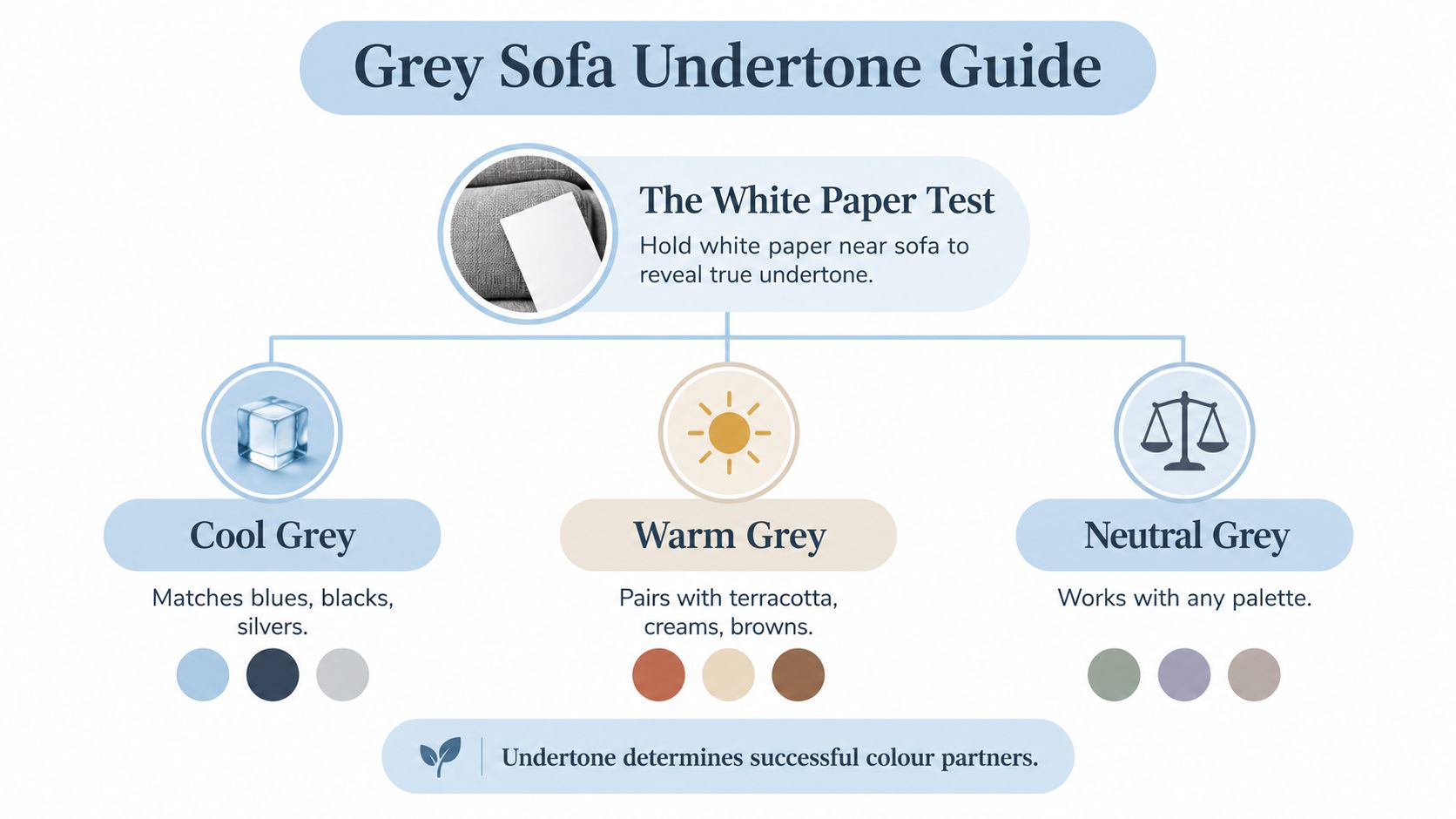
The grey names that usually signal temperature
Shadow Grey, Space Grey, and Slate usually sit in the cool family. Clay Grey, Stone Grey, Mouse Grey, and Dove Grey usually sit in the warm family. That doesn't mean every sofa with one of those names behaves identically, but it gives you a useful first read before you start styling.
Practical rule: test the sofa in the room, not on a product page, because a grey cover judged against a white screen can feel very different once it lands in warm light and next to painted walls.
Warmer, softer partners are often the easier route: cream, beige, mushroom, and greige can do much of the heavy lifting around grey seating, especially when the aim is a room that feels lived-in rather than severe. For a broader room palette reference, the ideas in this living room colour scheme guide can help you place the sofa inside the whole scheme instead of treating it as a lone object.
Colour Pairings That Work With Grey
Grey sofas do not all want the same colour partners. A cool grey, the kind with a blue or slate cast, usually needs colours that add warmth. A warm grey, with beige or taupe in the undertone, can take softer creams, muted greens, and deeper neutrals without looking flat. That is why the same cushion colour can feel perfect on one sofa and slightly off on another.
Terracotta and burnt orange are the safest bold accents for a cool grey sofa. They work because they sit opposite the sofa's coolness, like sunlight hitting stone. A product like Herpome Sofa Throw in Terracotta Orange gives that effect cleanly; if you want a softer clay note rather than a louder one, look for the same tone in a matte or washed finish. A single throw or one cushion is often enough to warm the whole seating area without making the room feel sugary or busy.
Mustard and ochre bring warmth with a little more restraint than orange. They suit grey sofas that need energy but still have to feel calm by the end of the day. A mustard throw or cushion works especially well when the room already has wood, brass, or cream nearby, because those materials echo the warmth in the colour. For readers comparing cushion styles, mustard cushion styling ideas help show how one mustard piece can be stronger than several mixed shades that do not quite belong together.
Deep green is the quietest way to warm a grey sofa without adding heat. Olive and forest green behave like foliage against concrete, which is why they settle a room instead of shouting in it. A Sofa Cover - Velvet - Dark Green - Adaptable & Expandable can shift the whole sofa into that grounded mood, while a smaller green cushion gives the same idea in a lighter touch. If the grey sofa is cool, green should still have some depth. Bright grass tones usually look less settled than olive, sage, or dark green.
Navy and ink blue keep a grey sofa deliberately cool and sharp. They work best in rooms that already have white walls, pale timber, glass, or chrome, because those surfaces give the blue room to breathe. A navy cushion or throw can make a grey sofa feel crisp without adding warmth that the room does not need. This is also the point where a broader palette check helps: step back and ask whether blue is supporting the room or just repeating the coldness already there.
Blush and dusty pink soften grey without pushing the room into a childish direction. These shades work best when the sofa needs gentler edges, especially in spaces with cream walls, pale wood, or woven textures. The softness comes from contrast in temperature, not from brightness. A muted pink cushion beside a cool grey sofa feels calmer than a vivid pink, while a warmer grey sofa can usually handle pink with even less effort because the undertones are already closer.
Warm neutrals bridge a grey sofa instead of trying to match it exactly. Beige, moon beige, sandy tan, and soft linen tones are useful because they let the sofa sit inside the room rather than stand apart from it. A single neutral throw can connect the sofa to curtains, rugs, or wall colour, which matters more than chasing an exact grey match. The result is usually more natural than a perfect match, because the eye reads related tones more easily than identical ones.
Black is the dark anchor that stops a grey-and-neutral room from looking washed out. It adds weight, outlines the sofa shape, and gives lighter textiles something to sit against. Use it in smaller doses if the room is already dark, or let it appear in a cushion, edge detail, or throw if the scheme needs more definition. With the right undertone behind it, black does not make a grey sofa feel severe. It gives the arrangement a clear ending point.
How to Balance Colours Using Proven Formulas
Match one thing and contrast the rest. If the sofa cover, cushions, and throw all sit in the same shade, the room loses depth and the sofa becomes one flat block. The eye has nowhere to move, which is why even a well-chosen grey scheme can feel dull when every textile repeats the same colour and texture.
Use a different colour and a different texture
Keep the cushions tied to one colour already present in the room, then let the throw bring another layer. A grey sofa with beige cushions and a terracotta throw feels more finished than a grey sofa with beige on beige on beige, because the contrast creates shape. For landlords, Airbnb hosts, and families, that approach also helps a room look considered without buying a full new set of textiles.
Simple rule: repeat one colour across the throw and one cushion, then let the third cushion be the odd one out.
A useful way to organise the room is the 60-30-10 rule, where 60% is the main colour, 30% the secondary colour, and 10% the accent. In a grey sofa living room, the sofa often fills most of the 60, while a throw is the easiest place to put the 10 because it's small enough to be bold and easy to swap. The formula works because it stops the sofa from competing with every other element in the room.
Let light and shade do some of the work
A strong grey scheme needs one clear step between the sofa, the cushions, and the throw. If everything lands at the same lightness, the room can look muddy or flat. If each layer is too different, the sofa can look pasted into the room rather than anchored in it.
That's why a light neutral sofa often works well with a mid-tone cushion and a darker throw, or the reverse. The point isn't symmetry, it's depth. A room with visible contrast reads better in real life and in photographs, because the layers separate cleanly.
For a fuller cushion arrangement reference, the mix-and-match approach in how to mix and match cushions for a stylish sofa is useful after you've picked the colour family. The formula stays the same, but the texture and placement do the final work.
Why Texture Matters More Than Matching Colours
Three textures side by side look more expensive than three matching colours. A grey sofa can carry a lot of colour without feeling busy, but texture is what keeps the scheme from looking flat. Velvet, flat weave, and chunky knit each catch light differently, so the room stays alive even when the palette is restrained.
Why velvet behaves differently from a flat weave
Velvet has a directional pile, which means the same cushion can read darker from one side of the room and lighter from another. That makes velvet brilliant for adding depth, but it also means a velvet cushion shouldn't be forced to do all the work alone. A flat-woven jacquard has no directional pile, so it holds one tone more consistently through the day and works well as the steady piece beside a more reflective fabric.
The best placement is simple. Put the textured anchor where light crosses it rather than hitting it dead on, then keep the surrounding pieces flatter. A grey sofa with one velvet cushion, one jacquard cushion, and one plain throw feels richer than a set where every item has the same sheen.
Practical styling note: repeat one colour, not one fabric, across the throw and at least one cushion, then let a third cushion break the pattern.
That approach matters for busy homes too. Families and pet owners usually need fabrics that look good after real use, not just on day one, and texture helps hide everyday variation in a way flat matching rarely does. If you want a more detailed look at how surfaces behave, texture of fabrics is the right next read.
Transforming Your Grey Sofa Instead of Just Accenting It
A grey sofa can be changed, not just decorated around. If the sofa itself feels too cool, too flat, or too familiar, a new cover shifts the whole room faster than another cushion ever could. That matters when the sofa is the largest visual block in the living room and you want the base colour to do more of the work.
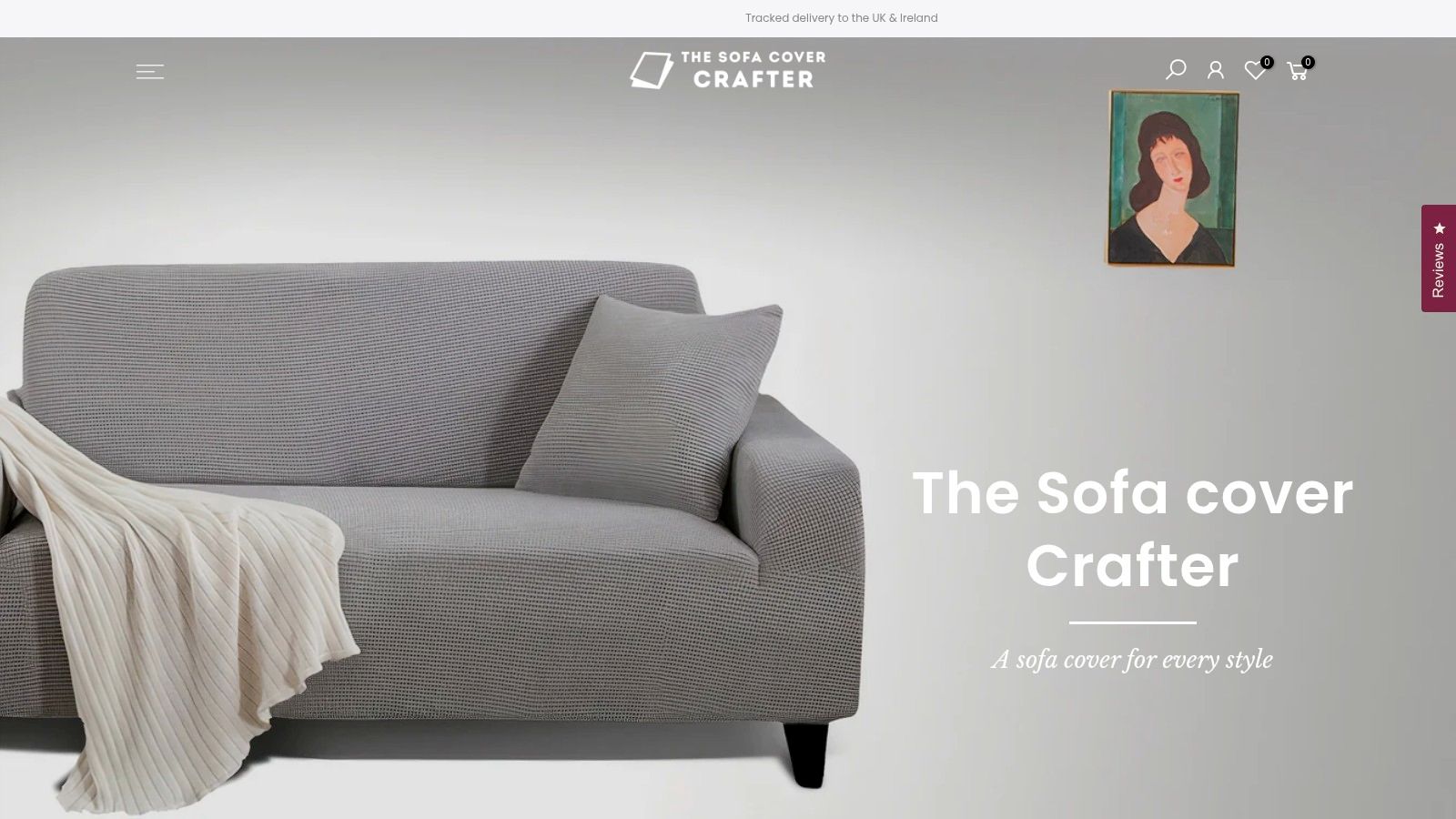
Grey covers that move from cool to warm
The Classic Stretch range runs from Clay Grey, Dolphin Grey, Mouse Grey, and Shadow Grey, so it covers both warmer and cooler readings depending on the shade you choose. Luma offers Light Grey and Neutral Grey, which sit more centrally, while Jacquard gives Light Grey and Dark Grey options with a more textured finish. Flecked extends that choice further with Light Grey, Grey, and Anthracite Grey, and Velvet offers Grey and Light Grey for a softer, more tactile look.
That range matters because the cover itself can either warm a room or keep it crisp. A warmer grey cover helps a neutral room feel less stark, while a cooler grey cover supports a sharper scheme with white walls and darker accents. If you would rather change only the seat cushions, the Velvet Sofa Cushion Cover comes in Grey and Light Grey in Standard and Deep sizes, plus Chaise Narrow, Chaise Wide, and Backrest S and M.
A broader room update can work alongside the sofa change. For readers who want the wall art side of the room to carry more of the mood, pick contemporary wall decor and canvas prints with the sofa in mind, because the sofa cover and the artwork should feel like part of the same temperature family.
Frequently Asked Questions About Grey Sofa Styling
How do you identify undertone in low natural light? Use the white paper test in the brightest part of the room and compare the sofa against true white, not against cream or magnolia. If the grey still looks blue or green beside white paper, treat it as cool. If it reads brown, yellow, or greige, treat it as warm.
What colours work best for a high-traffic rental property? Darker, grounded colours are usually safer because they stay looking composed when a room gets a lot of use. On a grey sofa, that means navy, charcoal, deep green, black, and muted earth tones are especially practical choices.
How do you style a grey sofa in a small living room without making it feel cramped? Keep the palette tight, use one clear accent, and avoid packing every cushion with the same colour. A grey sofa looks lighter when the surrounding pieces have some breathing room, especially if you combine one warm neutral with one deeper accent.
Can you mix cool and warm greys in the same room? Yes, but only if one grey clearly leads and the other stays secondary. A cool grey sofa can sit beside a warm grey throw or cushion, but the room needs a strong bridge, such as beige, wood, or black, so the mix feels intentional rather than accidental.
If you want a grey sofa to feel more deliberate, The Sofa Cover Crafter gives you throws, cushion covers, and sofa covers that make colour testing much easier in a real room. Visit The Sofa Cover Crafter to compare grey, green, terracotta, beige, and black options, then build the undertone-led scheme that fits your sofa and your space.