



Most velvet sofa marks are not stains. They're usually pile distortion, where the nap has been pushed in different directions, so the same fabric reads as two or three shades under the light. If a velvet sofa looks blotchy after sitting, you often don't need water at all, just a flat hand or a soft brush moved one way.
I sell covers rather than sofas, and that matters here because the mechanism is the same across velvet surfaces: the look lives in the pile, not just in the colour. Once you understand that, you stop treating every pale patch like a disaster and start handling velvet in a way that protects the nap instead of fighting it.
Table of Contents
- Why Most Velvet Marks Are Not Actually Stains
- Dry First, Always, and Why the Direction Matters
- How to Blot a Spill on a Velvet Sofa Without Crushing the Pile
- Stain-by-Stain Responses for Food, Grease, Pet Urine and Ink
- What You Should Never Do to a Velvet Sofa
- When to Patch Test, Clean Seam to Seam, and Call a Professional
- How a Velvet Cover Stops the Next Stain Becoming Permanent
Why Most Velvet Marks Are Not Actually Stains
The pale patches people call watermarks on velvet are often just crushed pile, not permanent staining. Velvet gets its depth from a directional nap, so light bounces differently depending on which way the fibres lie. Stroke the fabric with the nap and it looks lighter, stroke against it and it looks darker, which is why a seat can look mottled exactly where someone has sat down.
A true stain is different. A stain means pigment, oil, or liquid has bonded to the fibres, while pile distortion only changes how the fabric reflects light. That difference matters because the wrong response, especially adding water too early, can leave a real watermark behind where none existed before.
A quick dry pass is often the first sensible move. Run a flat palm or a soft brush in the same direction across the mark, then look again from a few angles. If the patch evens out, you were looking at nap distortion, not a stain.
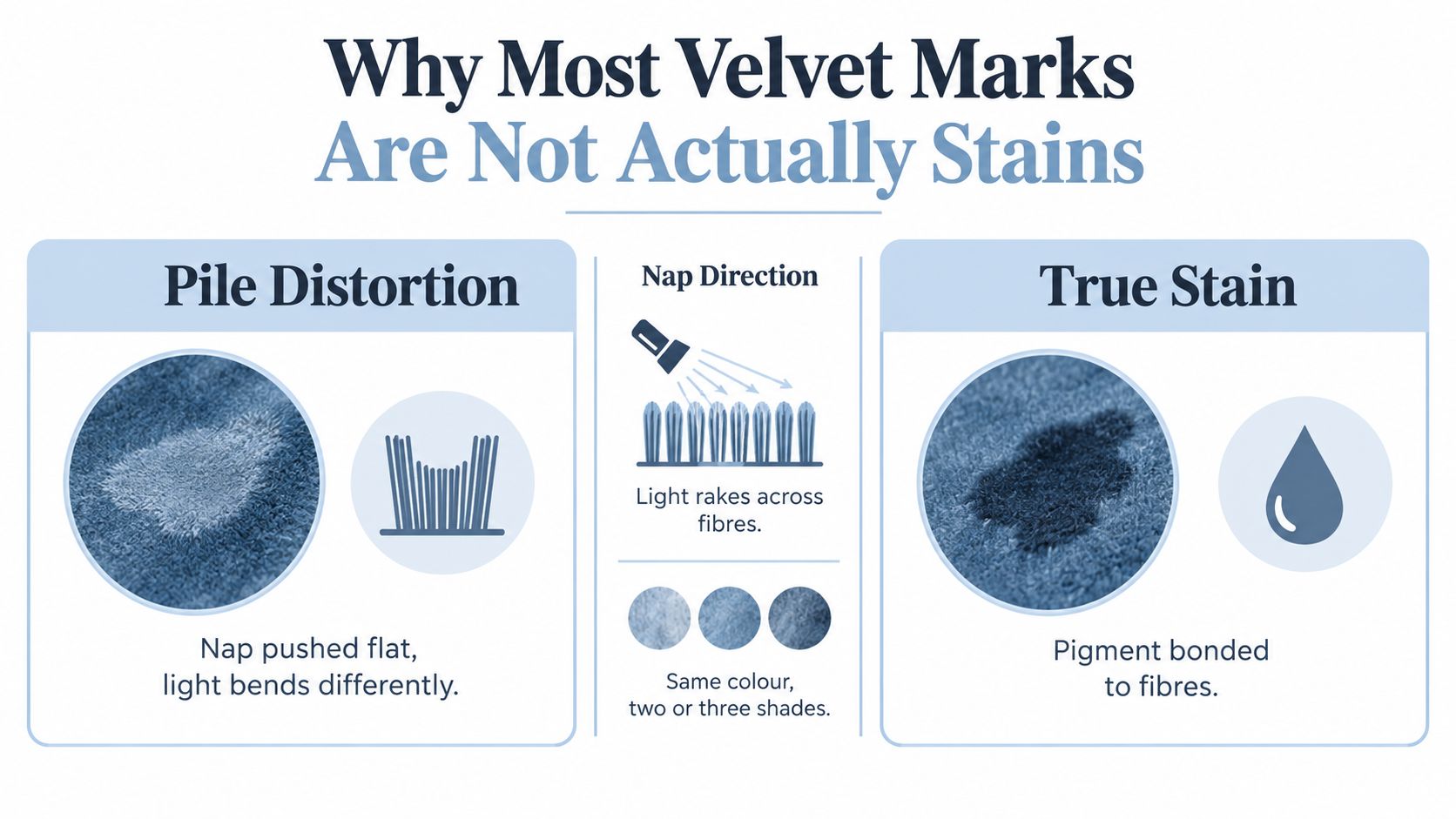
Practical rule: if the mark changes when you brush it one way, treat the pile first and the liquid second.
A dark green velvet cover such as Sofa Cover - Velvet - Dark Green - Adaptable & Expandable is built around that same visual behaviour, because velvet's surface shifts with touch and light. Once you read the nap correctly, the sofa stops looking randomly damaged and starts looking like a fabric that needs directional care.
Dry First, Always, and Why the Direction Matters
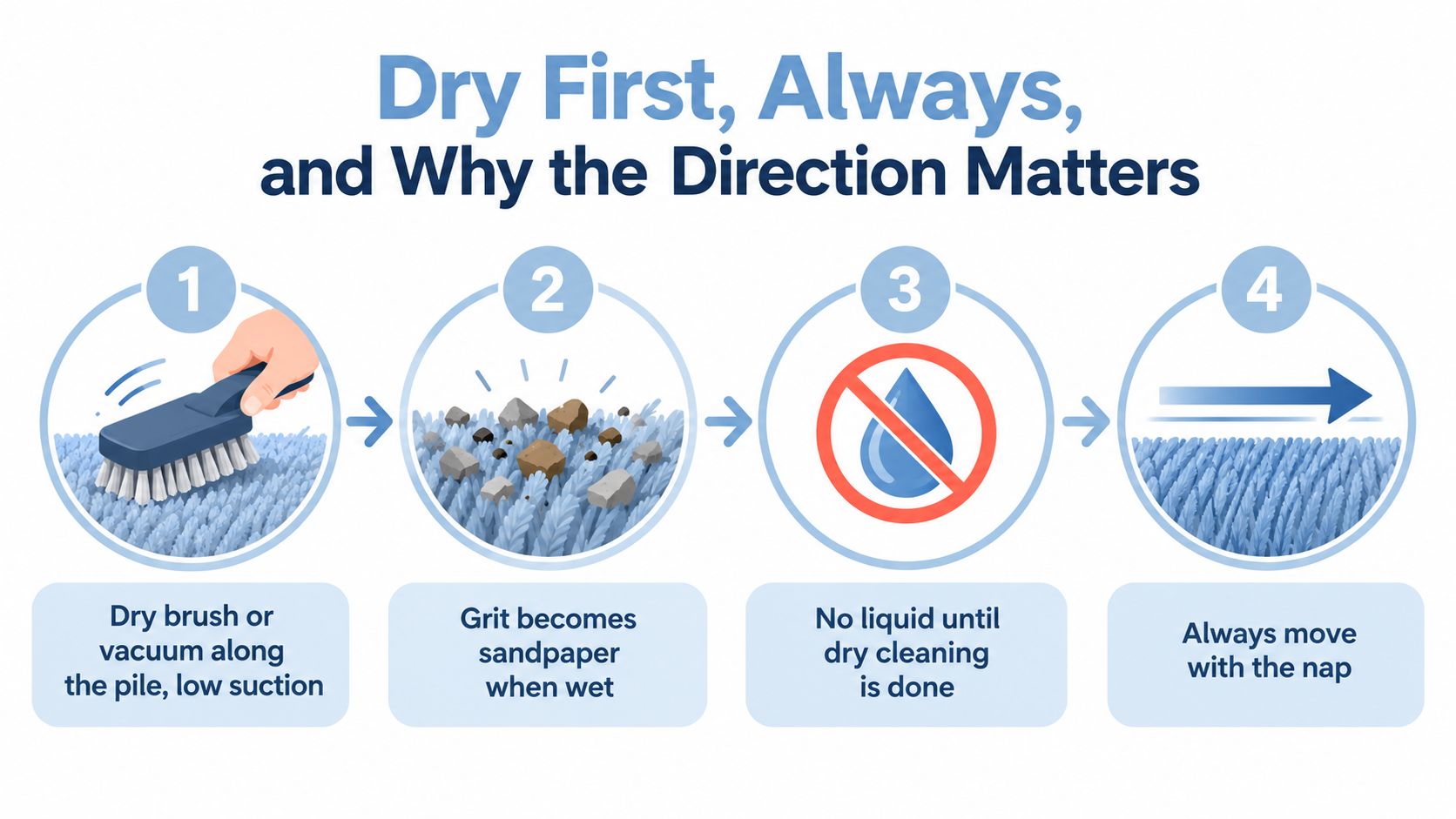
Velvet should be cleaned dry first, in the sense that loose dust and grit need to come off before any liquid touches the surface. The pile traps particles at the base, and once those particles get wet they act like fine abrasive grit every time someone sits down or wipes the fabric. That's why a dry start protects both the look and the life of the pile.
How to handle the surface before any liquid
Use a vacuum with a soft brush attachment, or a soft brush on its own, and move in long strokes with the nap. Vacuum velvet regularly, more often with pets, and lightly dust it between times with a soft brush or lint roller, because dust settles quickly on velvet furniture. Go easy on friction too, because rubbing grit into the fibres is what makes the pile dull and rough.
The smoothest direction is usually the direction that feels least draggy when you stroke the fabric.
Once the loose debris is gone, the fabric is ready for closer inspection. Brush one small section both ways and watch how the colour changes, because that's the easiest way to find the nap if the sofa doesn't show it clearly. A clean velvet surface always looks more even after that step, and it gives you a much better read on whether you're dealing with a mark, a crushed patch, or just settled dust.
How to Blot a Spill on a Velvet Sofa Without Crushing the Pile
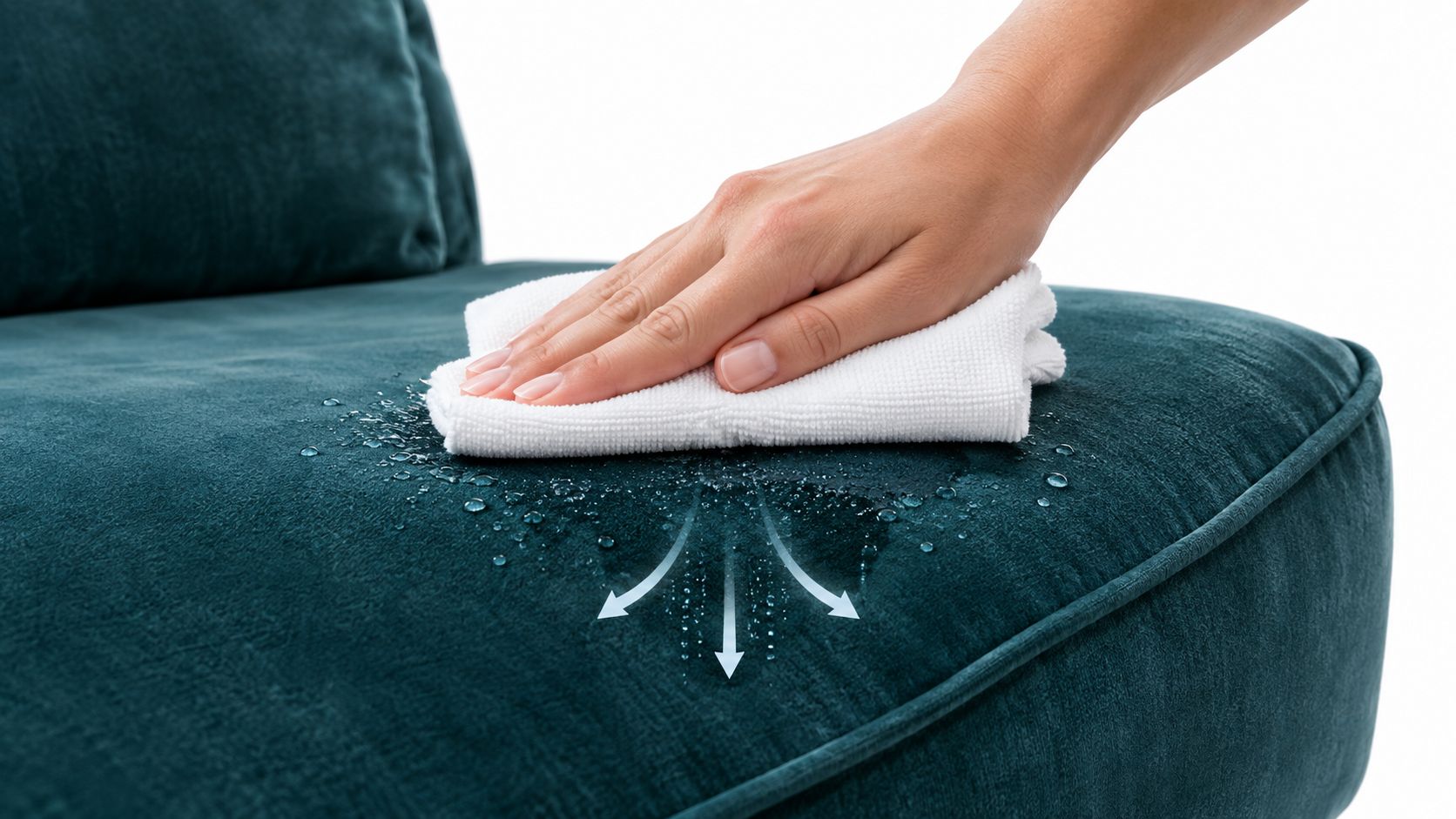
Blotting beats rubbing on a velvet sofa because rubbing flattens the nap and spreads the spill. A clean, lint-free cloth pressed straight down absorbs liquid without dragging the fibres in different directions, and that vertical pressure is the least damaging way to take moisture off the surface. UK advice also warns that excessive water can leave watermarks or flatten the pile, so the goal is control, not saturation.
Why the stain seems to come back
A spill on a sofa rarely stays only where you see it. Liquids can move into the foam underneath, then creep back up as the sofa dries, which is why a patch can look better for a while and then seem to return later. That is wicking, and it's the main reason people think they've cleaned a mark properly when the sofa is still in the process of pulling moisture back to the surface.
Work from the outside of the spill inward, replace cloth layers as they get damp, and keep pressure vertical. If you can access the back of a cushion or the underside of a cover, that helps moisture move out rather than deeper in. The principle is simple, the less you disturb the pile, the less chance the spill has to turn into a darker ring later.
Best practice: blot first, keep the cloth clean, and stop as soon as the visible liquid is gone.
For pet accidents, the same logic applies, but the underlying foam becomes part of the problem, not just the visible nap. A detailed route for odour control belongs in a separate guide, including what to do after dog urine on upholstery, because velvet itself doesn't change the fact that the liquid can travel below the surface.
Stain-by-Stain Responses for Food, Grease, Pet Urine and Ink
Velvet doesn't like aggressive rescue work, so each spill needs the lightest response that makes mechanical sense. A sofa label always outranks any general advice, and if the label says the upholstery is dry-clean only, that ends the DIY discussion immediately. Test spots matter too, because velvet can show colour change, pile damage, or crushing if you over-wet or scrub it.
| Stain | First Action | Technique | Risk if Wrong |
|---|---|---|---|
| Food | Lift solids first | Use a blunt edge, then dab with a clean cloth slightly dampened with cool water, working with the nap | Pushing residue deeper into the fibres |
| Grease | Absorb oil | Lay plain kitchen paper over the spot and press gently so the oil moves up into the paper | Forcing grease deeper into the pile |
| Pet urine | Blot immediately | Press, don't rub, then move a damp cloth in one direction and treat the foam beneath if you can access it | Wicking, odour return, and tide lines |
| Ink | Stop spreading | Press a dry cloth to lift what you can, then leave the rest to a specialist if the mark stays | Smearing the ink and flattening the pile |
For food residue, the blunt scrape matters more than the wipe. For grease, the paper should do the work, not your fingers. Ink is the one that most often defeats home treatment, so don't keep attacking it once the nap starts to look tired.
Whatever you reach for, velvet still needs a cautious touch and a hidden patch test first. The upholstery care principle remains the same across all four stain types, go light, go directional, and stop before the pile starts to look bruised.
What You Should Never Do to a Velvet Sofa
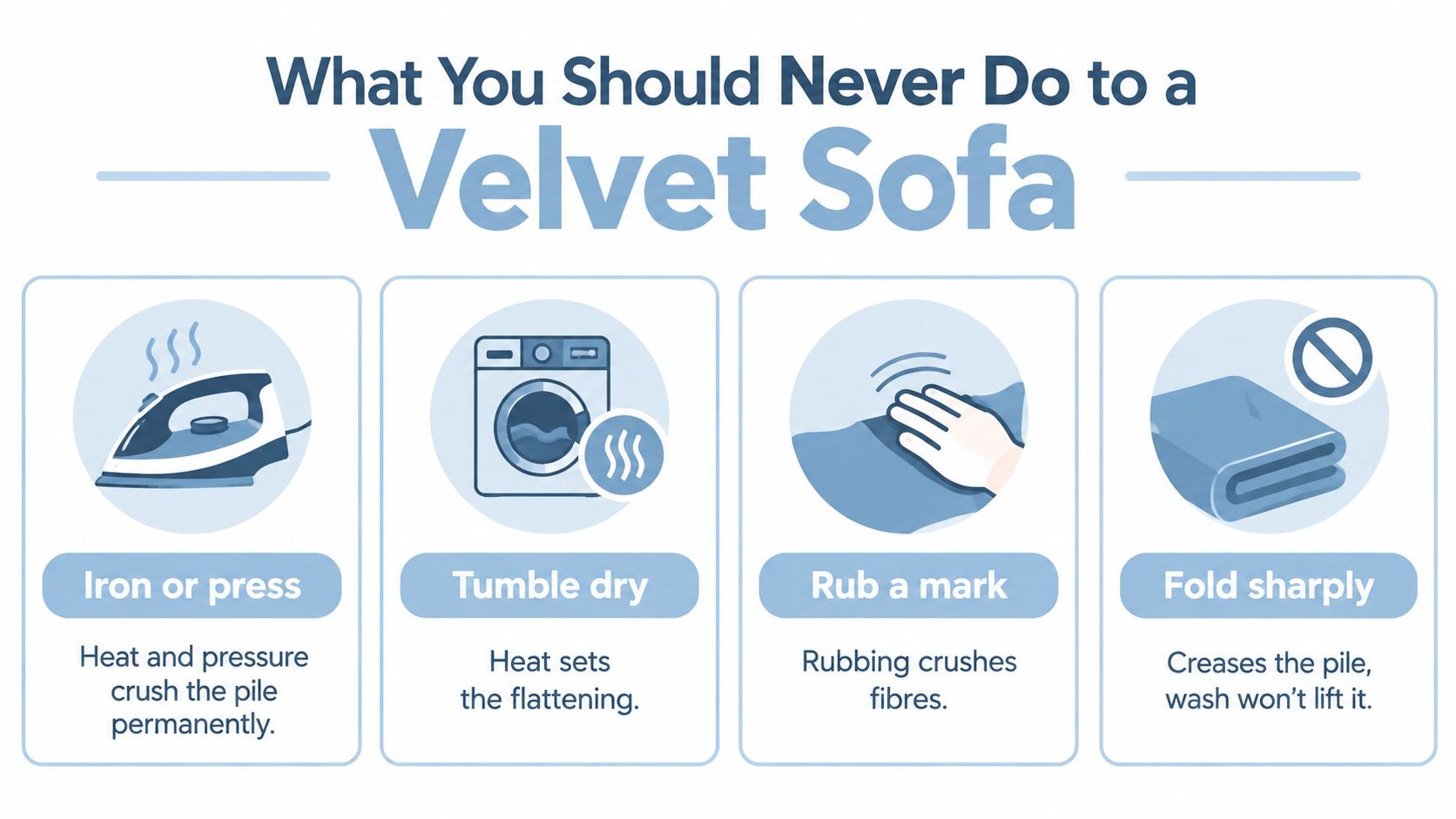
Ironing a velvet sofa is a bad idea because heat and pressure crush the pile and can leave a shiny bald patch. Tumble drying does something similar from another angle, because heat sets the flattening and can make the fabric behave unevenly. Wringing and twisting are just as rough, they pull the nap out of alignment and leave hard watermarks that don't brush out cleanly.
The mistakes velvet punishes most
- Iron or press. Heat and pressure crush the pile permanently.
- Tumble dry. Heat sets flattening and can distort the fabric.
- Rub in circles. Circular scrubbing mats the pile instead of lifting it.
- Fold sharply. A hard crease presses into the nap and can stay visible after washing.
High-heat steam is another problem. Steam can drive moisture deep into the foam, which encourages wicking underneath and can create the same returning mark people think they removed. The same caution applies to bleach, solvent cleaners, and undiluted detergent, because they can strip dye and leave a visible tide line on a fabric that already shows every mistake.
The rule is simple. Velvet forgives gentle, one-directional, low-moisture care, and it punishes force. Once the pile is crushed, you're usually trying to disguise damage rather than reverse it.
When to Patch Test, Clean Seam to Seam, and Call a Professional
A patch test comes first whenever you use any moisture, cleaner, or steam on velvet upholstery. Pick a hidden area such as the back of a cushion or the underside of the sofa, then wait long enough for the area to dry and show its true colour before you touch the visible fabric. Check for colour change or pile change after a test, and that's the right level of caution for velvet.
Why seam to seam matters
When water is involved, a seam-to-seam pass helps prevent tide lines. UK retailer advice says to dampen a colourfast cloth with warm water and wipe the whole panel or cushion from seam to seam, rather than treating only the marked spot, because partial wetting leaves a ring where the cleaned area ends. That approach is less about perfection and more about blending the moisture evenly across the surface you're working on.
If the mark is large, the stain source is unknown, or the upholstery label says dry clean only, stop there and call a professional. The same goes for ink, deep pet accidents, or any velvet where the pile already looks crushed in patches, because more rubbing usually adds a second problem on top of the first. For broader cover care mechanics, especially the way washing can affect fabric structure, the safer reference is how to wash sofa covers without shrinking, not improvising on the sofa itself.
A professional upholstery cleaner isn't a last resort for velvet, it's the correct answer when the fabric has already crossed your risk threshold.
How a Velvet Cover Stops the Next Stain Becoming Permanent
A washable velvet cover is the mechanical answer to the part of velvet care that never gets easier, the foam underneath still wicks liquid back after the surface looks clean. Once a spill reaches the sofa core, the visible fabric can seem fine for hours and then darken again as the moisture climbs back up. A fitted cover gives that moisture somewhere else to go.
That's why a cover matters more than another round of spot cleaning. Body oil, sunscreen, and denim dye also transfer onto seating surfaces in ways that spot treatment rarely reverses cleanly, and a removable cover protects the pile from repeated wear as well as from the spill itself. The same idea sits behind the broader explanation in upholstery protection, only here the protection is matched to velvet's directional surface.
A good velvet cover should match the look and feel of the sofa, stay put, and wash easily after a spill. The Sofa Cover Crafter's velvet range includes sofa covers, sofa cushion covers, and pillow covers in the same palette, which helps the seat and scatter cushions stay visually consistent rather than fighting each other. If the reader wants the velvet look with less panic over the next accident, a removable cover changes the job from rescue to routine.
Velvet sofa care gets a lot simpler when the fabric facing the spill is washable and the foam underneath stays protected. If your sofa needs a practical reset, visit The Sofa Cover Crafter and look at the velvet cover range, because the cleanest fix is often the one you can take off, wash, and refit before the next mark has a chance to settle in.
