



The secret to keeping a leather sofa looking incredible is to start with a gentle, proactive routine. This isn't about harsh chemicals or intense scrubbing; it's about weekly dusting or vacuuming with a soft brush, blotting spills the moment they happen, and using a mild, pH-neutral leather cleaner for general upkeep. And always, always test on a hidden spot first.
Key Takeaways The Best Way to Clean a Leather Sofa and Keep It Like New
- Know your leather type: The care tag decides which products and methods are safe.
- Act fast on spills: Quick action in the first few seconds makes the biggest difference.
- Keep it gentle: Use distilled water, a pH-neutral cleaner, and finish with a leather conditioner.
Table of Contents
- Key Takeaways The Best Way to Clean a Leather Sofa and Keep It Like New
- Your Essential Guide to Proper Leather Sofa Care
- Leather Type Quick Care Guide
- The Foundation of Lasting Leather
- Immediate Action for Spills
- A Gentle and Effective Cleaning Method
- The Essential Toolkit Checklist
- The All-Important Spot Test
- Your Cleaning Technique Matters
- How to Tackle Tough Stains on Your Leather Sofa
- Handling Greasy or Oily Stains
- Removing Ink Marks
- Tackling Dark Stains Like Tea, Coffee, or Red Wine
- Your Guide to Removing Common Stains
- Conditioning to Keep Your Leather Soft and Supple
- Choosing the Right Conditioner for Your Sofa
- The Best Way to Apply Leather Conditioner
- Allowing Time for Penetration and Buffing
- How Often Should You Condition Your Sofa?
- Common Cleaning Mistakes That Can Ruin Your Sofa
- The Hidden Dangers in Everyday Wipes
- Why Too Much Water Is Your Enemy
- Got Questions About Cleaning Your Leather Sofa?
- How Often Do I Need a Professional Leather Cleaning?
- Can I Use the Same Cleaner on All Leather Types?
- How Can I Protect a Brand New Leather Sofa?
- Can I Just Use Vinegar or Baby Wipes on a Small Mark?
Your Essential Guide to Proper Leather Sofa Care
Before you even reach for a cleaning cloth, the most critical step is to understand what you're working with. A leather sofa is a serious investment, and slapping the wrong product on it can cause damage you can't undo. The method that works wonders on a tough, protected leather sofa could permanently stain a delicate aniline one.
Your sofa's care tag is your best friend here. Look for any codes that give you a clue about the leather type and how to clean it. If the tag is long gone, a simple water test on a hidden area (like underneath a cushion) can tell you a lot. Drop a single bead of water on the surface. If it sits on top, you likely have protected leather. If it soaks in right away and darkens the spot, you're dealing with a more porous aniline or nubuck leather, which needs a much more delicate touch.
Leather Type Quick Care Guide
Here’s a quick reference for the first steps in caring for your specific leather sofa.
| Leather Type | Weekly Maintenance | Immediate Spill Response |
|---|---|---|
| Protected/Pigmented | Dust with a dry microfibre cloth or vacuum with a soft brush attachment. | Blot with a dry cloth. Can handle a slightly damp cloth with mild soap for sticky messes. |
| Aniline/Unprotected | Dust with a dry microfibre cloth only. Avoid excessive rubbing. | Blot immediately with a highly absorbent cloth. Avoid water; use a specialised aniline cleaner if necessary. |
| Nubuck/Suede | Use a specialised nubuck brush or cloth to lift dirt. Vacuum with a brush attachment. | Blot with a dry cloth. Use a nubuck eraser for dry stains. Avoid all liquids. |
This table should give you a starting point, but always refer to your sofa's specific care instructions if you have them.
The Foundation of Lasting Leather
Proactive maintenance is so much more effective than reactive cleaning. Honestly, a simple weekly dusting or a quick pass with your vacuum's soft brush attachment is the single most important habit you can get into. This tiny effort stops abrasive dust and crumbs from settling into the grain and scratching the finish over time.
Think of it as the difference between a quick daily wipe-down of your kitchen counter and having to do a deep scrub once a month. Consistent light cleaning prevents the need for more aggressive, potentially damaging treatments down the line. For a more detailed look at the general principles, this guide on how to clean leather the right way is a great resource.
Immediate Action for Spills
When a spill happens—and it will—how you react in the first few seconds makes all the difference. The golden rule is to blot, never rub. Grab a clean, dry microfibre cloth and gently press it onto the spill to soak up as much as you can. Rubbing just grinds the liquid deeper into the leather's pores, turning a minor oops into a major stain.
A quality leather sofa can easily last 15-20 years in a UK home with meticulous care, far outpacing fabric alternatives. This impressive longevity hinges on a consistent routine of weekly dusting, immediate spill management, and professional conditioning. You can find out more about the lifespan of different sofas from the experts at FCI London.
For an extra layer of defence, especially in busy homes with kids or pets, using a protective cover is a brilliant move. Our guide on the best slipcovers for leather couches has some fantastic options that don't compromise on style. Getting this foundational knowledge right turns sofa care from a dreaded chore into a simple, effective habit that will safeguard your furniture for years to come.
A Gentle and Effective Cleaning Method
Right, you’ve figured out what kind of leather you’re dealing with and you're ready for the hands-on part. The best way to clean a leather sofa isn't about harsh chemicals or aggressive scrubbing; it’s about a gentle touch and the right technique. Our goal here is to lift away the grime without stripping the leather of its natural oils and beautiful finish.
Forget any of the potent, all-purpose cleaners lurking under your sink. When it comes to leather, simplicity is your best friend. The ideal cleaning solution is nothing more than distilled water mixed with a few drops of a specialised, pH-neutral leather cleaner. If you're in a pinch, a very mild, pure soap like Castile soap can do the job.
The ratio is what matters most: you want a solution that is almost all water. Think of it as creating slightly soapy water, not a foamy, sudsy mess. Using distilled water instead of tap water is a small detail that makes a big difference, as it stops mineral deposits from leaving behind a chalky residue on your sofa's surface.
The Essential Toolkit Checklist
Gathering your supplies beforehand just makes the whole process smoother. You don't need a lot of complicated gear, but having the right tools is crucial for cleaning your leather sofa safely and effectively.
- Two or three microfibre cloths: These are brilliant because they’re soft, absorbent, and won't leave lint behind. You’ll want one for cleaning, one for drying, and a spare for conditioning.
- A bottle of distilled water: Tap water in many parts of the UK is hard and contains minerals that can leave faint, chalky marks on your leather. Distilled water is pure, ensuring you get a clean, residue-free finish.
- A pH-neutral leather cleaner: Harsh, alkaline soaps or all-purpose sprays can strip the natural oils from leather, causing it to become dry and brittle over time. A cleaner specifically formulated for upholstery is your safest bet.
- A high-quality leather conditioner: This is your final, essential step after cleaning. It replenishes moisture and keeps the material supple and protected.
It's also useful to understand the distinction between sanitizing and cleaning, as this will guide your choice of products for the task at hand. Our goal here is cleaning, not harsh disinfection.
The All-Important Spot Test
Before you even think about applying that solution to a visible part of your sofa, you have to do a spot test. This is the one step you absolutely cannot skip. It’s your safety net, making sure the cleaner won’t cause any discolouration, lightening, or other damage to your specific leather finish.
Find a hidden area for your test—the underside of a cushion, a patch on the back that faces the wall, or a flap of leather underneath the frame are all perfect spots.
- Dab a tiny amount of your cleaning solution onto the area with a cotton swab.
- Let it dry completely. Don't rush it.
- Once it's dry, have a close look. Check for any changes in colour, texture, or finish. If it looks exactly the same as the surrounding leather, you’re good to go.
If you spot any darkening, stiffening, or see colour transferring onto your cotton swab, stop immediately. It means your leather is too delicate for that solution. At this point, you should switch to a dry-cleaning method or consider calling in a professional. This test takes five minutes but can save you from a very costly and irreversible mistake.
Your Cleaning Technique Matters
With your solution mixed and tested, the focus now shifts entirely to your technique. Control is everything, which means working in small, manageable sections. If you try to clean a whole cushion in one go, you’ll likely end up with an uneven finish and oversaturated leather.
Instead, mentally divide each cushion or panel into smaller zones, roughly the size of a dinner plate. This approach ensures you can maintain a consistent, light touch and give each area the attention it needs without rushing. It also stops one part of the sofa from getting soaked while you're still working on another.
For this part, you'll need two clean, soft microfibre cloths—one for cleaning and one for rinsing.
- Dampen your first cloth with the cleaning solution. It should be damp, never soaking wet. Wring it out until not a single drop of water comes out.
- Start on your first small section, wiping the leather with gentle, circular motions. There's no need to apply heavy pressure; just let the cloth and the mild solution do the work of lifting the dirt from the grain.
- Immediately grab your second cloth, dampen it with plain distilled water, and wring it out completely.
- Wipe over the same section to rinse away any soap residue. Leaving cleaner on the leather can create a sticky film that actually attracts more dirt over time.
- Finally, take a third, completely dry microfibre cloth and gently buff the area. This lifts any last traces of moisture and helps bring back the leather’s natural sheen.
Move onto the next section and just repeat this simple three-step process—clean, rinse, dry—until the entire sofa is done. This methodical approach is the secret to achieving a flawless, even finish.
This visual guide breaks down the essential first steps for proactive sofa care, setting the stage for a successful deep clean.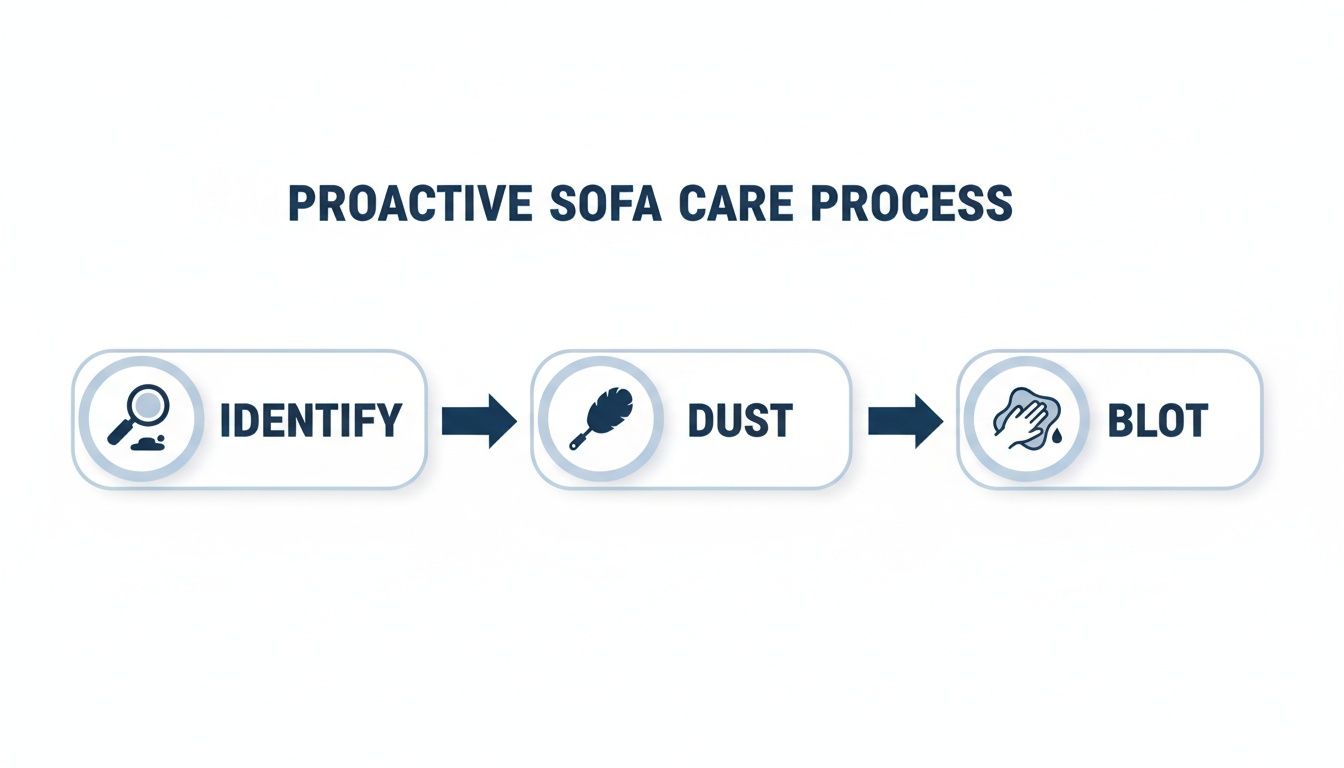
As the infographic shows, identifying your material and performing regular maintenance like dusting and immediate blotting are foundational to keeping your sofa pristine.
While these techniques are excellent for leather, cleaning other materials requires a different approach. If you have a variety of furniture, our guide on the best way to clean a fabric sofa provides specialised instructions for different textiles. Mastering this gentle, section-by-section method will build your confidence and ensure your leather sofa looks its best for years to come.
How to Tackle Tough Stains on Your Leather Sofa
Even with the best intentions, life happens. A splash of red wine during film night or an unfortunate scribble from a felt-tip pen doesn't have to spell disaster for your beautiful leather sofa. The secret is to act quickly and use the right approach for that specific stain. Think of this as your emergency playbook for the most common household spills.
Before you launch an attack on any stain, just remember the golden rule we covered earlier: always test your cleaning method on a hidden spot first. Leather can be unpredictable, and a remedy that works wonders on one type might damage another. Patience and a gentle touch will always give you better results than frantic, aggressive scrubbing.
Handling Greasy or Oily Stains
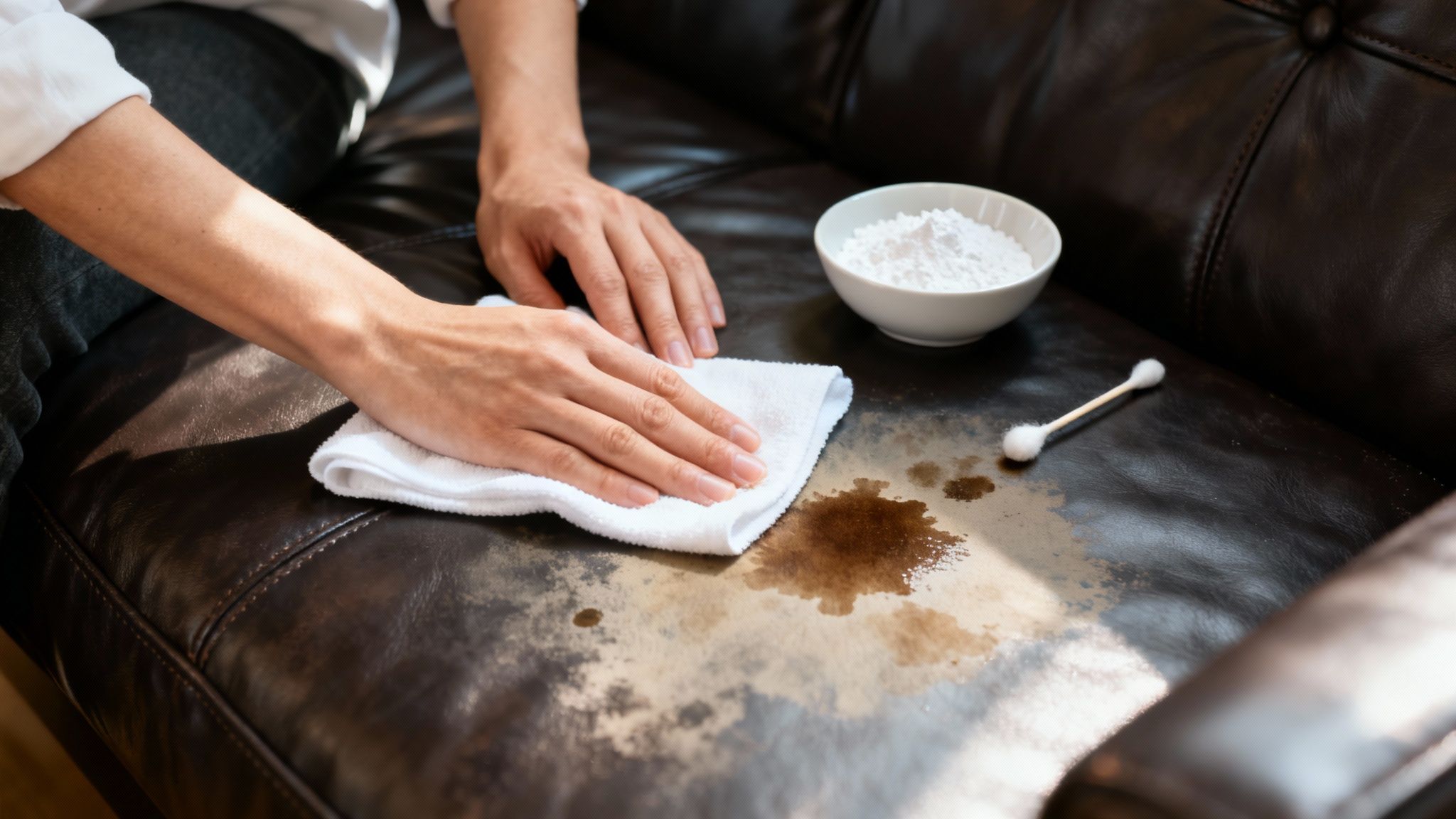
Greasy marks are a common headache, whether they come from pizza, crisps, or even the natural oils from skin and hair. For these types of stains, your first move isn't a liquid cleaner—it's an absorbent powder.
- Action Step: Generously sprinkle cornstarch, talcum powder, or bicarbonate of soda directly onto the greasy patch. Don’t be tempted to rub it in.
- Waiting Game: Let the powder sit for at least a few hours, or even overnight if you can. This gives it enough time to draw the oil out from deep within the leather's pores.
- Finishing Up: Gently brush or vacuum the powder away. If a faint mark is still visible, you can now go in with the mild soap and water solution we talked about earlier.
This powder trick is incredibly effective because it pulls the grease out before it has a chance to set and become a permanent resident.
Removing Ink Marks
An ink stain can feel like a true catastrophe, but it’s often manageable if you handle it with care. The key is to lift the ink without spreading it.
For this, you'll want some isopropyl alcohol (rubbing alcohol) and a few cotton swabs. Lightly dampen the cotton swab—it should not be dripping wet. Now, very gently dab at the centre of the ink mark. Your goal is to lift the ink directly up and onto the swab, not to wipe it across the leather.
As you dab, you’ll see the ink transfer to the cotton. It's crucial to switch to a clean swab as soon as the first one gets saturated to avoid simply reapplying the ink. Work slowly from the outside of the stain inwards to stop it from spreading. Once the ink is gone, let the area air-dry completely, then follow up with a good leather conditioner to restore any lost moisture.
Tackling Dark Stains Like Tea, Coffee, or Red Wine
These tannin-based stains can leave behind some nasty, dark marks if they’re not treated the right way. On protected leather, a simple homemade paste often works wonders.
Here's what to do:
- Create a Paste: Mix equal parts cream of tartar and lemon juice until you have a thick paste.
- Apply Gently: Dab a small amount onto the stain and let it sit for about 10 minutes. The mild bleaching properties of the ingredients help to lift the discolouration.
- Wipe Away: Use a clean, damp microfibre cloth to carefully wipe the paste away.
- Dry and Condition: Finish by drying the spot with a separate clean cloth. Once it's fully dry, apply a little leather conditioner to rehydrate the area.
For a bit more guidance, especially on trickier spills, this expert guide on removing leather stains is a valuable resource. Knowing how to handle different messes is a huge part of keeping your sofa looking pristine for years.
Your Guide to Removing Common Stains
To make things even easier, I've put together a quick-reference chart for treating some of the most common stains you're likely to encounter on your leather sofa.
| Stain Type | Recommended Remedy | Critical Precaution |
|---|---|---|
| Grease or Oil | Sprinkle with cornstarch or talcum powder, let sit for hours, then brush off. | Do NOT rub the powder in. Let it absorb the oil naturally. |
| Ink | Gently dab with a cotton swab dipped in isopropyl alcohol. | Work from the outside in to avoid spreading the stain. Never wipe. |
| Tea or Coffee | Apply a paste of equal parts lemon juice and cream of tartar for 10 minutes. | Test on a hidden area first, as this has a mild bleaching effect. |
| Red Wine | Blot immediately, then apply the lemon juice and cream of tartar paste. | Speed is essential. Blot, don't rub, to prevent the stain from setting. |
This table should help you react quickly and confidently the next time an accident happens, which is the key to successful stain removal.
Pro Tip: For very stubborn stains or on delicate leathers like aniline, it's always safer to call in a professional. They have access to specialised solvents that are far more effective and targeted than household remedies, minimising the risk of causing permanent damage.
Conditioning to Keep Your Leather Soft and Supple
Right, so you've cleaned your sofa. Job done? Not even close. Cleaning gets the grime off, but conditioning is what keeps the leather alive, supple, and feeling luxurious. Think of leather as skin—because that's what it is. Just like your own skin, it needs moisture to stay healthy. Without it, the natural oils dry out, leaving the surface brittle, prone to cracking, and looking old before its time.
This is where a quality leather conditioner comes in. It gets right into the pores, putting back the essential moisture that gets lost during cleaning and just from day-to-day life. Honestly, this step is non-negotiable if you want to protect your investment and keep your sofa looking and feeling fantastic for years.
Choosing the Right Conditioner for Your Sofa
Not all conditioners are created equal, and picking the right one is crucial. You wouldn't use a heavy oil on sensitive skin, and it's the same principle here—you have to match the product to your sofa's finish.
- Leather Creams and Lotions: These are your safest bet and the most popular choice for most modern, protected leathers. They're a doddle to apply, soak in well, and won't leave a greasy film. Brands like Leather CPR are brilliant for being gentle yet effective.
- Conditioning Oils: Thicker products like Leather Honey offer a much deeper conditioning treatment, which can be a lifesaver for reviving very dry, older leather. Just be aware they can sometimes darken the colour slightly, so a spot test is absolutely essential. They can also feel a bit tacky if you're too heavy-handed.
- Waxes: A wax conditioner offers a two-for-one deal: it conditions the leather while adding a protective barrier against future spills. They can bring out a lovely sheen but do require a bit more elbow grease to buff in properly.
For the average family sofa, a high-quality cream conditioner is the perfect go-to for routine maintenance.
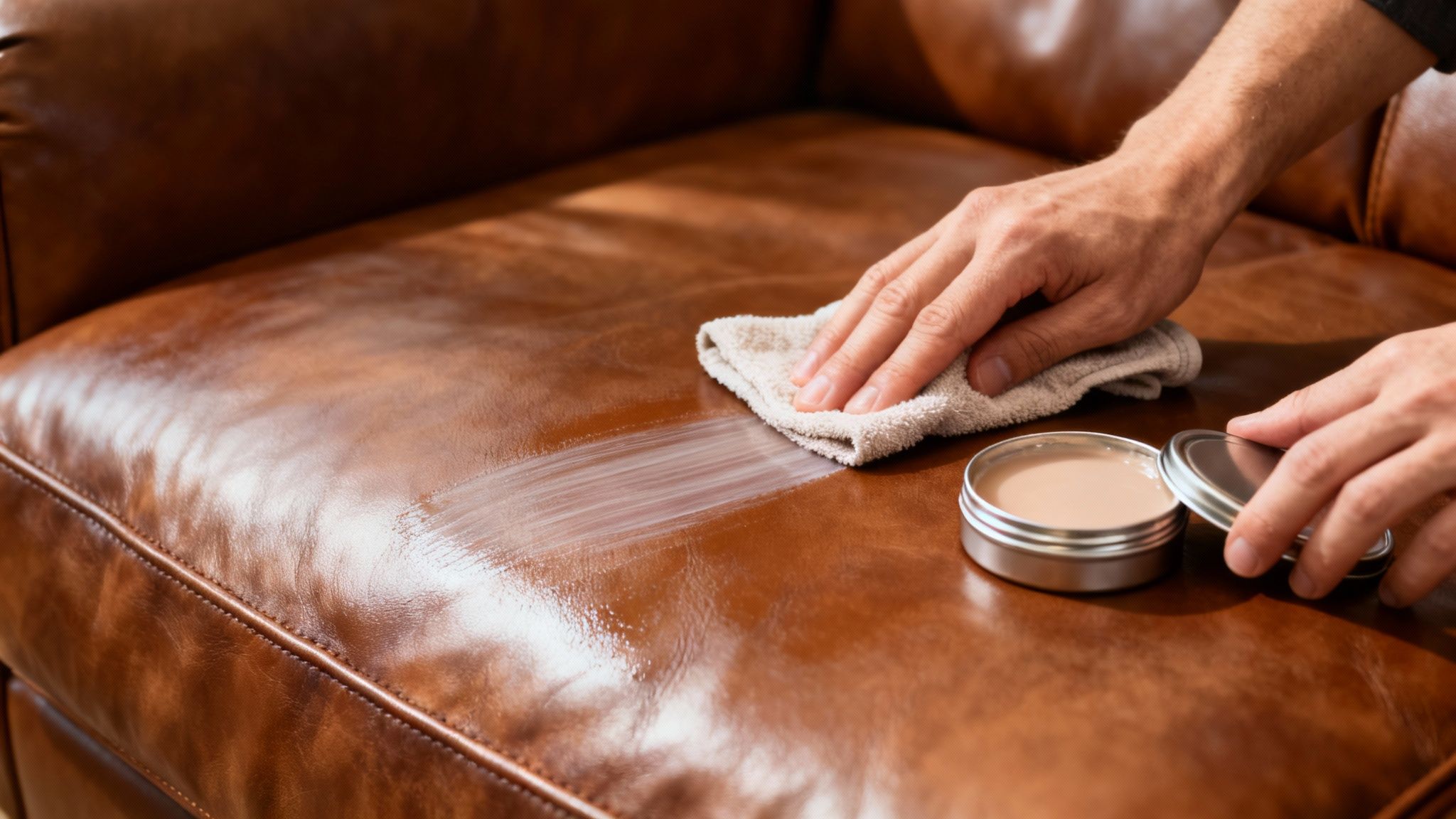
The rule of thumb is that less is always more. You're aiming for a thin, even layer that the leather can drink up completely. Slathering on too much will just create a sticky finish that attracts dust, undoing all your hard work.
The Best Way to Apply Leather Conditioner
Once you've picked your conditioner and done your spot test, the application itself is straightforward and incredibly satisfying. You'll need a clean, soft applicator pad or another microfibre cloth—never, ever use the one you cleaned with.
Start by putting a small, coin-sized blob of conditioner onto your cloth, not directly on the sofa. This gives you far better control and stops you from ending up with a big, splotchy patch.
Using small, circular motions, gently massage the conditioner into the leather. Take your time and work on one section at a time, just like you did with the cleaning. This ensures you get a consistent, even coat across the whole surface. Pay a little extra attention to the high-traffic areas like armrests and seat cushions, as these tend to dry out the quickest.
Allowing Time for Penetration and Buffing
After you've covered the entire sofa, step back and let the conditioner do its thing. Most products will recommend a waiting period, which can be anything from 30 minutes to a full 24 hours. This time allows the conditioner to penetrate deep into the fibres and properly replenish all that lost moisture.
Once the waiting time is up, grab a final clean, dry microfibre cloth and give the entire sofa a gentle but thorough buff. This final step lifts off any tiny bit of excess product left on the surface and brings out a beautiful, soft sheen. Your leather should now feel supple and hydrated to the touch, not greasy or slippery.
How Often Should You Condition Your Sofa?
Regular conditioning is the key to your sofa's long-term health. For most households, treating your leather sofa every 6 to 12 months is absolutely ideal.
However, your home's environment really does play a part.
- Dry Environments: If you have very dry air in your home, especially from central heating in the winter, you might need to condition it more often—perhaps every 3-4 months.
- Sunlight Exposure: Sofas that sit in direct sunlight will also dry out much faster. In this case, choosing a conditioner with a UV protectant is a very smart move to prevent both drying and fading.
Following this simple conditioning routine is a vital part of the best way to clean a leather sofa, ensuring it not only looks clean but stays soft, healthy, and inviting for years.
Common Cleaning Mistakes That Can Ruin Your Sofa
Knowing how to clean your leather sofa is only half the battle. Just as important is knowing what not to do. I’ve seen countless well-intentioned cleaning attempts cause irreversible damage, stripping the protective finish and drying out the leather until it cracks. Let's walk through the common pitfalls that can turn a simple clean-up into a costly disaster.
The biggest culprits are often hiding right under your kitchen sink. It can be tempting to reach for an all-purpose spray or a home-brewed concoction you saw online, but these are almost always a terrible idea for leather. Their chemical properties are just too harsh.
Take vinegar, for example. It's a popular DIY cleaner, but its high acidity will slowly eat away at the leather’s protective sealant. Over time, this leads to discolouration and brittleness. Bleach-based sprays or ammonia are even worse; they will chemically burn the finish, causing permanent lightening and weakening the material's entire structure.
The Hidden Dangers in Everyday Wipes
Baby wipes seem so gentle, they must be safe for leather, right? Unfortunately, this is one of the most common and damaging myths out there. Most baby wipes contain moisturisers and chemicals designed for human skin, not for a tanned animal hide. These ingredients leave behind a sticky residue that actually attracts more dirt and can slowly degrade the leather’s finish.
Furniture polish is another absolute no-go. While it makes your wooden coffee table shine, it's packed with silicones and waxes that are poison for leather. These substances clog the leather’s pores, stopping it from breathing. This leads to a greasy, unnatural-looking build-up that’s incredibly difficult to remove.
The professional verdict is clear: avoid steam cleaning genuine leather sofas at all costs. The combination of high heat and excessive moisture can cause permanent watermarking, strip natural oils, and lead to stiffness and cracking. Discover more insights on why UK professional cleaners unanimously advise against this method.
Why Too Much Water Is Your Enemy
Perhaps the most frequent mistake people make is simply using too much water. Leather is porous, and oversaturating it allows moisture to soak deep into the material. This can lead to a whole host of problems that are difficult, if not impossible, to fix.
- Water Stains: As the excess water evaporates, it can pull tannins from within the leather up to the surface, leaving behind dark, unsightly rings.
- Loss of Oils: Water washes away the natural oils that keep leather soft and supple. Once it dries, the leather often becomes stiff and uncomfortable.
- Weakened Fibres: When leather gets waterlogged, its internal fibres swell up and can become permanently weakened, making it far more susceptible to future damage like rips and tears.
Scrubbing too aggressively is another fast track to ruining your sofa. While it might seem like the best way to tackle a tough spot, vigorous scrubbing can abrade the protective topcoat and even lift the colour right off pigmented leather. You'll be left with a faded, rough patch that’s far more noticeable than the original stain.
Sometimes, deep scuffs and scratches need more than just cleaning. If you find yourself in that situation, our guide on repairing scratched leather offers some practical solutions.
By steering clear of these common errors, you're taking a huge step towards preserving the beauty and longevity of your sofa. The best approach always starts with a gentle touch and a bit of know-how.
Got Questions About Cleaning Your Leather Sofa?
Even once you've got the basics down, real-life situations with leather always throw up a few tricky questions. Getting the right answers can be the difference between a quick clean-up and a very expensive mistake. Let's tackle some of the most common queries I hear, so you can handle anything that comes your way.
Knowing the little details about professional care, which products to use, and how to prevent damage in the first place is what really takes your sofa care to the next level. It’s what helps you build a routine that will genuinely protect your investment for years.
How Often Do I Need a Professional Leather Cleaning?
While your regular at-home maintenance is absolutely crucial, it's best to think of a professional clean as a deep, restorative spa day for your sofa. It's a smart move to book one in every 12 to 24 months, especially if your sofa is at the heart of a busy family home.
This is doubly true for sofas in lighter colours, as they tend to show up dirt and grime much more obviously. The pros have access to high-grade conditioners and specialised equipment that can get much deeper into the grain than we can at home.
If you're facing down stubborn, set-in stains or seeing signs of wear that feel too risky to tackle yourself, a professional clean becomes essential. Their expertise means they can safely restore the finish without causing more damage, protecting your sofa's value and appearance.
They can also spot potential issues before they turn into serious problems, offering advice that’s specific to your sofa. For the average family couch, calling in an expert every other year is a fantastic way to keep it in prime condition.
Can I Use the Same Cleaner on All Leather Types?
Absolutely not. If you take one thing away from this guide, let it be this: using the wrong product is the fastest way to cause irreversible damage. The sensitivity and durability of leather varies massively from one type to another.
Here's a quick way to think about it:
- Protected (Pigmented) Leather: This is the most common and robust type you'll find on family sofas. It has a tough polymer topcoat that resists stains, so it can handle mild, pH-balanced cleaners without any trouble.
- Aniline or Nubuck Leather: These are beautifully soft, natural-feeling leathers that are much more absorbent. They are incredibly sensitive and should never be treated with water-based cleaners, which will leave permanent water spots in an instant. They need special products designed for their porous nature.
Always figure out what type of leather you have before you let any product near it. If you're ever in doubt, that spot test we talked about earlier isn't just a suggestion—it’s your non-negotiable safety net. A few minutes of testing can save you a lifetime of regret.
How Can I Protect a Brand New Leather Sofa?
Prevention is, without a doubt, your most powerful tool. The very first thing you should do when your brand-new leather sofa arrives is apply a high-quality leather protector. Think of it as creating an invisible shield across the surface.
This barrier won't make your sofa bulletproof, but it buys you precious time when a spill happens. It works by repelling liquids, making them bead up on the surface instead of soaking straight in. This gives you a crucial few seconds to blot them away before they have a chance to stain.
To keep that shield strong, you'll want to reapply the protector every 6 to 12 months, ideally right after you've given it a good clean and condition.
Beyond products, a few simple daily habits can make a huge difference. Getting everyone to use coasters for drinks and placing a stylish throw blanket where the dog or kids usually sit adds another physical layer of defence. These small, consistent actions are the real secret to keeping your sofa looking brand new for as long as possible.
For the ultimate in proactive protection, especially in homes with children, pets, or frequent guests, a well-fitting, washable cover is an unbeatable solution. At The Sofa Cover Crafter, we offer a wide range of stylish and practical covers that shield your leather from spills, scratches, and everyday wear, ensuring it stays pristine underneath. Explore our collection at https://thesofacovercrafter.co.uk and find the perfect defence for your sofa.
Can I Just Use Vinegar or Baby Wipes on a Small Mark?
It’s so tempting to reach for a quick fix, but for both of these, the answer is a firm no. Vinegar is far too acidic. It will slowly eat away at the protective finish on your leather, eventually causing it to dry out, become brittle, and even crack.
Baby wipes are just as bad, if not worse. They’re packed with chemicals, alcohol, or moisturisers that are meant for skin, not for treated leather hides. They can leave a sticky film, lift the colour right out of the material, or dry it out completely. It's just not worth the risk. Your safest bet is always a proper leather cleaner or our simple mix of distilled water and a few drops of pH-neutral soap.
The best way to clean a leather sofa is always with products specifically designed for the job. Household shortcuts are a gamble that can lead to costly, irreversible damage.
