



Let's be honest, finding a high-quality cover for a huge sectional or a tricky L-shaped sofa can feel like an impossible task. But it's often the smartest and most practical solution you can choose. The very best covers for large sofas are made from incredibly stretchy fabrics that mould themselves to unique shapes, giving you an instant style upgrade while protecting your furniture—all without breaking the bank.
Table of Contents
- Why a Sofa Cover Is a Smart Investment
- Why Cover Instead of Replace Your Sofa
- A Practical Choice for Property Owners
- The Renter’s Style Solution
- How to Measure Your Sofa for a Flawless Fit
- The Key Dimensions to Capture
- Tackling Sectional and Corner Sofas
- Handling Unique Features and Curves
- Using a Sizing Chart
- Choosing the Best Fabric for Your Lifestyle
- Matching Fabric to Function
- Fabric Selection Guide for Large Sofa Covers
- Durability in a Demanding World
- Achieving a Wrinkle-Free Finish
- The Power of Tucking and Anchoring
- Securing the Base for a Non-Slip Fit
- Troubleshooting Common Installation Issues
- How to Style and Maintain Your New Cover
- Styling Your Newly Covered Sofa
- Keeping Your Cover Looking Brand New
- Machine Washing Best Practices
- Tackling Common Stains Like a Pro
- Your Big Sofa Cover Questions, Answered
- Will a Cover Actually Fit My L-Shaped or Chaise Sofa?
- How Do I Stop the Sofa Cover From Slipping and Untucking All the Time?
- Are Sofa Covers a Good Idea for Landlords or Airbnb Hosts?
- Can I Use a Sofa Cover on My Leather Sofa?
- As a Landlord How Quickly Can I Refit a Cover Between Tenants?
Why a Sofa Cover Is a Smart Investment
If you're wrestling with an oversized, sprawling sectional or a unique corner unit, the thought of finding a cover that actually fits can be overwhelming. Many people just give up, assuming a custom job is the only answer or that they'll have to replace the whole thing. But a well-chosen stretchy cover is a far smarter, more cost-effective choice than buying entirely new furniture, especially for a busy home.
A great cover does so much more than just hide a few stains or a dated pattern. It acts as a protective shield against the daily realities of life.
- Ultimate Protection: It guards your sofa against spills, pet fur, scratches, and general wear and tear, keeping the original upholstery in pristine condition underneath.
- Instant Style Refresh: In a matter of minutes, you can completely change the colour and mood of your living room, adapting to new trends or seasons without a major financial commitment.
- Cost-Effective Solution: It breathes new life into a structurally sound but aesthetically tired sofa, saving you hundreds, if not thousands, of pounds compared to a replacement.
So, when does a cover make more sense than starting from scratch? It's a question of weighing up cost, time, and your desire for a quick change.
Why Cover Instead of Replace Your Sofa
This table breaks down the key differences to help you decide which path is right for you.
| Consideration | Using a Sofa Cover | Buying a New Sofa |
|---|---|---|
| Cost | A small fraction of the price of a new sofa. | A major financial investment, often hundreds or thousands of pounds. |
| Time | Can be fitted in under an hour for an instant transformation. | Involves shopping, delivery times (often weeks), and removing old furniture. |
| Versatility | Change colours and styles with the seasons or your mood. | You're committed to one look for many years. |
| Protection | Shields original upholstery from pets, kids, and spills. | The new sofa is immediately exposed to wear and tear. |
| Sustainability | Extends the life of existing furniture, keeping it out of landfill. | Contributes to furniture waste and consumption. |
As you can see, for a quick, affordable, and flexible home refresh, a sofa cover is an incredibly powerful tool. It's a practical choice that delivers immediate results.
A Practical Choice for Property Owners
This cost-saving benefit is especially significant for landlords and rental property managers. For instance, landlords and Airbnb hosts protecting investments between guests saved an estimated 60% on full replacements by opting for durable covers, extending sofa life by 3-5 years on average. You can discover more insights about the contract furniture market and see how professionals make their assets last longer.
Choosing a cover isn’t just about covering up flaws; it’s about making a proactive decision to extend the life of one of your home's most important pieces of furniture. It transforms your sofa from a liability into a versatile and protected asset.
Ultimately, finding the right cover sets the stage for a confident and successful home refresh, turning a daunting task into a genuinely satisfying project.
The Renter’s Style Solution
If you're in rented accommodation, making a space feel like your own can be a challenge. You can’t change the paint, and buying new furniture that might not fit your next home feels risky. A stylish sofa cover is the perfect compromise.
It allows you to inject your personality into a living room, covering up a landlord's less-than-ideal sofa choice with a colour or texture that reflects your own taste. It’s a non-permanent design choice that has a huge visual impact. For other ideas on refreshing existing pieces, have a look at these creative vinyl wrap ideas to transform furniture.
How to Measure Your Sofa for a Flawless Fit
Let’s be honest, getting the measurements right is the one thing that stands between a gorgeous, snug-fitting cover and a saggy, frustrating mess. Guesswork is your worst enemy here, especially with sprawling corner sofas or those with really deep cushions. Taking a few extra minutes with a tape measure now will save you the headache of a return later.
Forget just measuring the length from one armrest to the other. To get a truly accurate size for covers for large sofas, you need to trace the path the fabric will actually take. This means measuring up and over the arms, not just in a straight line across the front.
The Key Dimensions to Capture
Grab a flexible tape measure for the best results. Your goal is to map the sofa's total shape, including all its curves and height.
- Total Length: Start at the outer edge of one arm. Run the tape up and over the armrest, across all the seating cushions, up and over the other armrest, and finally down to the outer edge of the second arm. This continuous measurement is the big one you'll see on most size guides.
- Sofa Height: Measure from the floor to the very top of the sofa's backrest.
- Armrest Depth: Measure from the front edge of an armrest to the back.
- Cushion Width: Measure the width of a single seat cushion. This is a great way to double-check the overall scale.
A little insider tip: a cover with a high percentage of spandex is incredibly forgiving. If your measurements are within a few centimetres of a size guide, the stretch will almost certainly accommodate the difference perfectly.
The infographic below highlights why protecting your sofa with a cover that fits properly is such a smart move, saving you money and preserving your furniture in the long run.
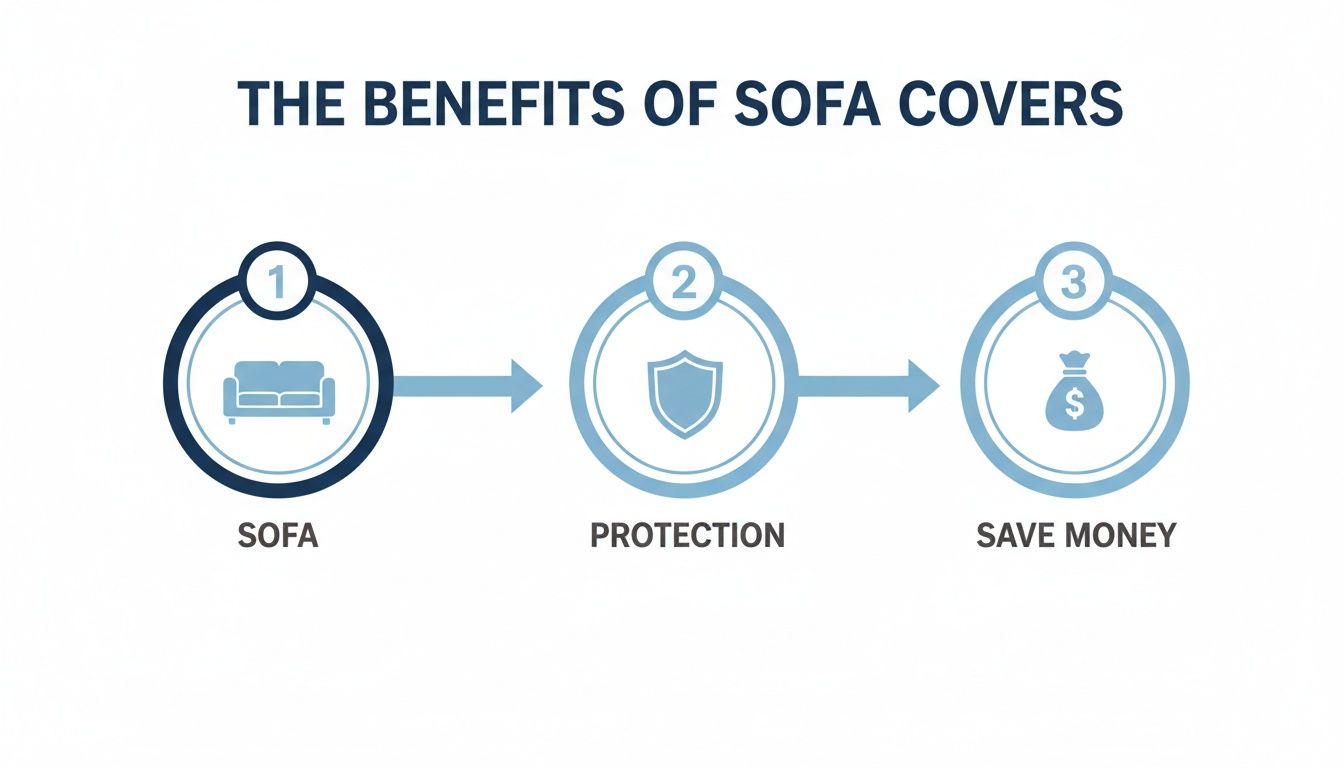
As you can see, a good cover acts as a shield, which directly translates into financial savings by helping you avoid costly reupholstery or replacement.
Tackling Sectional and Corner Sofas
Measuring an L-shaped or U-shaped sofa sounds more complicated than it really is. The secret is to treat each distinct section as a separate sofa. Don't try to measure the whole thing as one giant, continuous piece.
For a typical L-shaped sectional, you will almost always need two separate covers. Measure the main sofa section first, then measure the chaise or corner section using the exact same up-and-over technique. Just write down both sets of measurements and buy one cover for each part.
The visual guide below shows an example of how to measure different sofa styles, which can be a huge help.
Following a clear diagram like this one takes all the guesswork out of the process, ensuring you capture the exact dimensions needed for a perfect order. For even more detailed visual instructions, you can check out our complete guide on how to measure a sofa. It provides step-by-step visuals that make the process foolproof, guaranteeing you select the right size the first time.
Handling Unique Features and Curves
Large sofas often come with design details that need a little extra attention. Things like high-back designs, classic rolled arms, or curved backs need to be measured carefully.
When you're measuring a curved back, don't just pull the tape measure straight across the gap. Instead, make sure you follow the actual curve of the sofa from one end to the other. This ensures the cover has enough fabric to hug your sofa's shape without being stretched too tightly. Similarly, for deep-seated sofas, check that your seat depth measurement goes all the way back to the back cushions.
If you're thinking about making a custom cover, getting precise dimensions is even more critical. To make sure you buy or cut the right amount of material, understanding how to go about calculating fabric yardage accurately is essential.
Using a Sizing Chart
Once you've got your numbers written down, you can use a sizing chart with confidence. Most manufacturers provide a simple table that matches measurement ranges to their specific cover sizes (e.g., 3-seater, 4-seater, extra-large).
It's your best tool for translating your measurements into the right purchase.
Sofa Cover Sizing Chart
Here is a typical example to help you match your sofa's measurements to the correct cover size. For single-piece sofas, the key number is the total length from outer arm to outer arm.
| Sofa Type | Measurement Range (cm) | Recommended Cover Size |
|---|---|---|
| 3-Seater Sofa | 185 - 230 cm | Large |
| 4-Seater Sofa | 235 - 300 cm | Extra-Large |
| L-Shaped Main Section | 185 - 230 cm | Large (Sectional Piece) |
| L-Shaped Chaise | 140 - 180 cm | Medium (Sectional Piece) |
Always choose the size that your sofa's largest measurement falls into. If your sofa is right on the borderline between two sizes, it's almost always better to choose the larger size. You can easily tuck away any excess fabric for a snug fit, but a cover that's too small is simply not going to work.
Choosing the Best Fabric for Your Lifestyle
The material you choose for your sofa cover does so much more than just set the colour. It dictates the entire feel, durability, and day-to-day practicality of your living room's main attraction. Getting this right is all about matching the fabric’s properties to the reality of your life. What works beautifully in a quiet, formal sitting room will be a disaster in a bustling family home.
If your household is a whirlwind of energetic kids and furry friends, durability isn't just a nice-to-have; it's essential. Modern spandex blends are often the perfect answer here. They offer incredible stretch to hug the contours of even the most sprawling sofas, and they're tough enough to handle daily life. Many are also machine-washable, turning muddy paw prints or accidental spills into a minor inconvenience rather than a major drama.
Matching Fabric to Function
Thinking about your specific needs will quickly help you narrow down the options. Every material offers a unique mix of comfort, resilience, and style.
- For High-Traffic Family Homes: A waterproof or water-resistant spandex blend is an absolute lifesaver. These fabrics are designed to make liquids bead up, giving you that crucial window to wipe away spills before they have a chance to soak in.
- For the Style-Conscious: If you want to add a touch of elegance, a jacquard weave cover is a fantastic choice. The intricate, textured patterns bring a visual depth and luxurious feel that you just don't get from a standard flat fabric.
- For Ultimate Comfort: When cosiness is your top priority, look for soft-touch materials. A plush, velvety cover can transform your large sofa into an irresistible sanctuary, perfect for those long, relaxing evenings.
Understanding the properties of different materials is key. For some extra insight, a guide to custom blanket materials is a great read. While it focuses on blankets, many of the principles of texture and durability apply just as well to sofa covers.
To make things a bit clearer, here’s a quick guide to help you find the perfect match for your home.
Fabric Selection Guide for Large Sofa Covers
This table breaks down the most popular fabric choices, highlighting where each one truly shines.
| Fabric Type | Best For | Key Features |
|---|---|---|
| Spandex Blend | High-traffic areas, families with kids, and a snug fit. | Incredible stretch, durable, often machine-washable. |
| Jacquard Weave | Adding elegance and a touch of luxury. | Textured, intricate patterns, visually interesting. |
| Velvet/Plush | Creating a cosy, comfortable, and inviting atmosphere. | Super soft to the touch, rich appearance, surprisingly hard-wearing. |
| Waterproof Fabric | Homes with pets, young children, or frequent spills. | Repels liquids, easy to wipe clean, offers maximum protection. |
| Chenille | A balance of softness and durability; great for everyday use. | Soft pile, good texture, hides wear and tear well. |
Looking at the options side-by-side makes it much easier to weigh up what matters most to you—be it practical resilience, opulent texture, or sink-in comfort.
Durability in a Demanding World
Let's be honest, our furniture has to put up with a lot. Wear-and-tear is a huge issue, especially when you consider that a staggering 68% of UK households report pet-related furniture damage within just two years. This makes washable, protective covers an essential tool for extending a sofa's life.
Think about the use case. A cover for an Airbnb property needs to withstand frequent, heavy-duty washing and all sorts of guests, so resilience is the top priority. In contrast, a cover for a rarely used sofa in a formal room can focus purely on aesthetics.
This practical approach ensures your choice isn't just beautiful but is also perfectly suited to its environment. To help you dive even deeper, we've put together a complete breakdown of the best fabric for a sofa to help you find the ideal match for your home. This will ensure your new cover not only looks fantastic but also performs brilliantly for years to come.
Achieving a Wrinkle-Free Finish
Getting a brand-new cover to look like it was made for your sofa is the final, most satisfying step. A smooth, taut finish transforms your furniture, making it look intentionally stylish rather than just covered up. The secret isn't brute force but a methodical approach, using a few simple tools and techniques to work with the fabric, not against it.
First things first, get the cover oriented the right way. Most high-quality covers for large sofas have a tag indicating the back. Drape it over your sofa, lining this tag up with the centre of the backrest. This simple starting point saves you from wrestling with a twisted piece of fabric later.
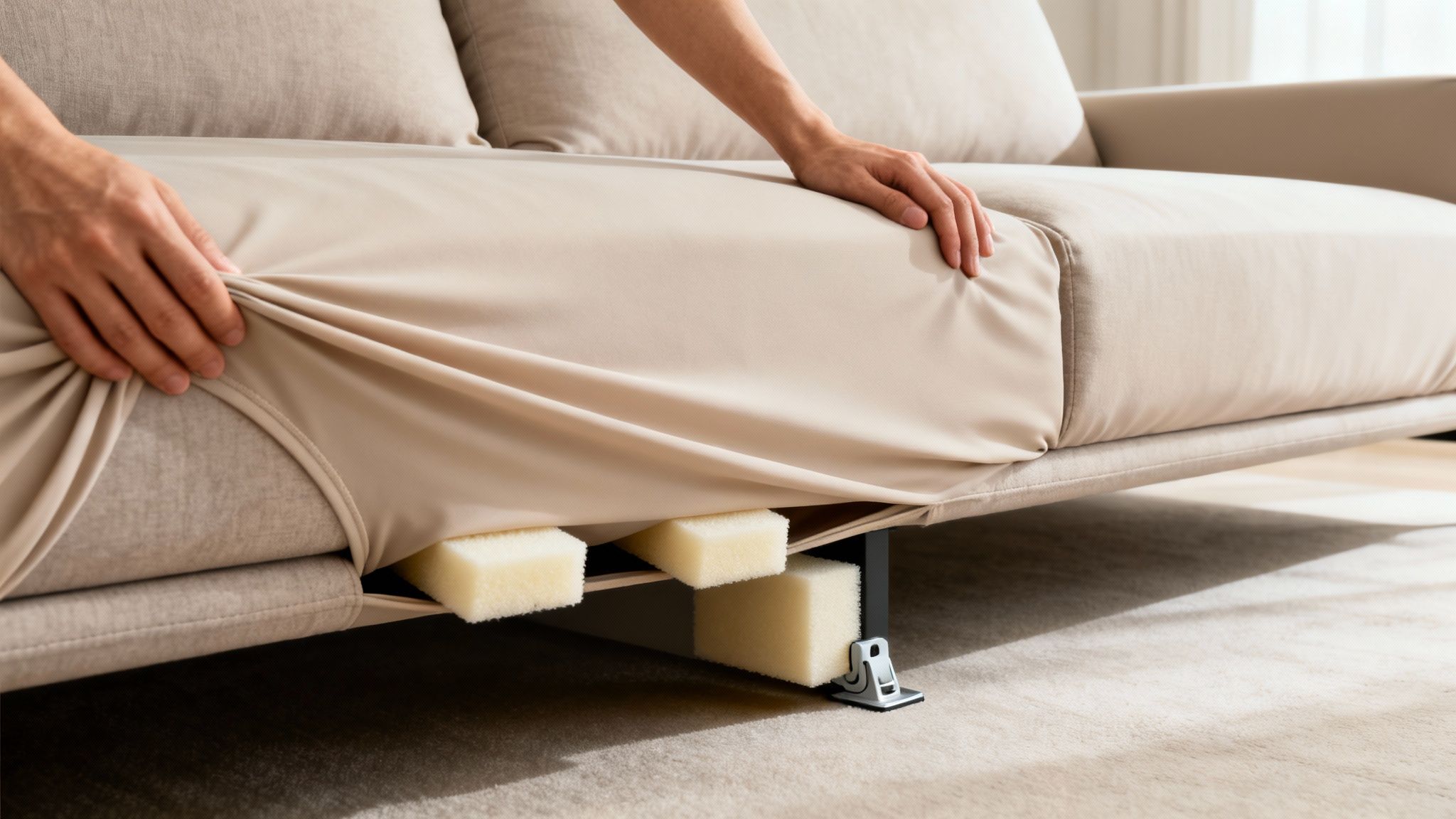
From there, gently pull the fabric down over the arms and seat, smoothing out any major bunching as you go. Don't aim for perfection just yet; this is about getting the general placement right before you start refining the fit. The real magic happens in the details.
The Power of Tucking and Anchoring
This is where you get that sharp, tailored look. The goal is to eliminate any loose, baggy fabric by securing it deep within the sofa’s structure.
Your best friends in this process are the little foam inserts that probably came with the cover. They’re specifically designed to be pushed deep into the crevices between the seat cushions, the back, and the arms, locking everything in place.
- Start by systematically tucking the excess fabric into these gaps with your hands.
- Follow up by pushing the foam inserts firmly into the same crevices, effectively pinning the tucked fabric.
- Work your way around the entire sofa, ensuring an even and consistent tuck on all sides for a balanced look.
This technique does more than just smooth out wrinkles; it creates defined lines that mimic the sofa's original upholstery, giving you a much more professional and integrated appearance.
Most importantly, it stops the cover from pulling loose every time someone sits down—a common frustration with poorly fitted covers.
Securing the Base for a Non-Slip Fit
Once the top and sides are smooth, the final move is to anchor the entire cover from underneath. A lot of people skip this, but it’s absolutely essential for preventing the cover from riding up or shifting around, especially in a busy household.
Most modern covers come equipped with ties or elastic straps. Gently tip your sofa forward so you can get to the underside. Find the corresponding ties or clips and fasten them securely to create tension across the entire cover. This pulls everything taut and makes sure it stays put.
A snug base is critical for a lasting, wrinkle-free finish. If you're curious about the mechanics, understanding how sofa cover elastic works really highlights why this tension is so important for a flawless fit.
With everything tucked and tied, your large sofa now has a fresh, seamless new look that will stay neat and tidy, even with daily use.
Troubleshooting Common Installation Issues
Even with the most careful fitting, you might hit a couple of common snags, especially with uniquely shaped sofas. Here’s how to handle them.
Problem: Excess Fabric on a Corner Sofa
Sectional sofas can leave you with a bit of extra material bunched up at the corner join. The fix is to create a neat, clean fold. Pull the excess fabric taut at the corner, create a crisp vertical pleat (just like wrapping a present), and tuck it down securely into the seam between the two sofa sections.
Problem: The Cover Slips on Leather
Leather and faux-leather sofas have a slick surface that can cause covers to shift. This is where those under-sofa straps or clips that came with your cover become absolutely essential. Make sure you secure these tightly to pull the entire cover taut from below. The combination of deeply tucked foam sticks and secured straps is specifically designed to stop covers from sliding on smooth surfaces.
How to Style and Maintain Your New Cover
Styling Your Newly Covered Sofa
Once the cover is fitted perfectly, the real fun begins—the styling. A new cover is a fantastic chance to refresh your entire living room aesthetic. It’s a blank canvas, inviting you to play with texture and colour.
Your newly covered sofa is now the centrepiece, so build the room's look around it.
- Add Throw Pillows: This is the easiest way to create a cohesive look. Choose pillows that pick up on other colours in your room—from your curtains, rug, or wall art. For a plush, inviting feel, try textures like corduroy or velvet to add a layer of cosiness.
- Drape a Throw Blanket: A soft throw draped over an armrest or the back of the sofa adds another layer of texture and colour. It breaks up the solid block of colour and makes the space feel more lived-in and welcoming.
- Coordinate with Your Decor: If you've chosen a bold colour for your cover, keep other accessories in the room more neutral to create balance. On the other hand, a neutral grey or beige cover is the perfect backdrop for more vibrant cushions and throws.
By pairing a flawless installation with thoughtful styling, your cover becomes more than just a protective layer—it becomes a central part of your home's design.
With your new cover perfectly fitted, the real fun can begin. Now it’s time to weave your refreshed sofa into the fabric of your living space, turning it from just another piece of furniture into a genuine focal point. This is your chance to accessorise and bring the room’s new look to life.
Think of your freshly covered sofa as a blank canvas. Start by layering textures with cushions and throws. If you’ve chosen a neutral cover, like a soft grey or beige, use it as an opportunity to introduce some bold colours or patterns. A chunky knit throw draped casually over an armrest or a couple of rich velvet cushions can add instant warmth and character.

Don't be afraid to mix and match different materials. Pairing a smooth, sleek cover with a rough-textured linen cushion or a faux-fur throw creates a really sophisticated, layered effect that designers love. Once you've got the hang of this, you could apply the same principles to the whole room with these expert interior design tips for creating a living space that reflects your style.
Keeping Your Cover Looking Brand New
Beyond the styling, consistent care is what will truly prolong the life and beauty of your cover. A little regular maintenance stops small issues from becoming big problems and keeps the fabric looking vibrant.
The massive rise in washable covers for large sofas is no accident; it’s a direct response to the realities of modern life. With 45% of UK households now owning pets, it’s hardly a surprise that 52% of them report sofa damage from claws and muddy paws. This trend has driven a 28% increase in washable cover sales as families hunt for practical solutions that actually work.
For routine cleaning, a quick vacuum with a soft brush attachment once a week will deal with dust and crumbs. For minor spills, the trick is to act fast.
The golden rule of stain removal is to blot, never rub. Gently dab the area with a clean, damp cloth to lift the spill without pushing it deeper into the fabric fibres.
Machine Washing Best Practices
When it's time for a full clean, always check the care label first. Thankfully, most modern, high-quality covers are designed for machine washing, which is one of their biggest selling points.
- Use a Gentle Cycle: Always wash your cover on a cool, gentle cycle. This protects the fabric's elasticity and stops the colour from fading.
- Mild Detergent Only: Harsh chemicals can damage the fibres over time. Stick to a mild, non-bio detergent.
- Air Dry When Possible: While some covers can be tumble-dried on a low setting, air drying is always the safest bet. Drape it over a washing line or clothes horse away from direct sunlight to prevent any fading.
Proper care ensures your investment continues to protect your sofa and enhance your home’s style for years to come.
Tackling Common Stains Like a Pro
Accidents are inevitable, but a quick response can stop a temporary spill from becoming a permanent mark. Whether it's a splash of red wine or a muddy paw print, acting fast is your best defence.
For most liquid spills, start by blotting—never, ever rubbing—the area with a clean, dry cloth to soak up as much as possible. For more stubborn stains, a simple solution of mild washing-up liquid and cool water usually does the trick. Gently dab the stain with a sponge, working from the outside in to stop it from spreading.
A brilliant household hack for greasy stains like pizza or butter is a sprinkle of cornflour or bicarbonate of soda. Let it sit for about 15-20 minutes to absorb the oil, then gently brush it off before spot-cleaning the area.
Your Big Sofa Cover Questions, Answered
Deciding on a cover for a large or sectional sofa can feel like a big commitment. Get it right, and you’ve transformed your living room. Get it wrong, and it's a daily frustration. So, let's clear up some of the most common questions we get about choosing and fitting covers for large sofas.
A lot of people worry that an off-the-shelf cover just won't cut it for their furniture's unique shape, but you'd be surprised how adaptable modern designs are. It all comes down to understanding how they're engineered for specific sofa types.
Will a Cover Actually Fit My L-Shaped or Chaise Sofa?
Absolutely. This is probably the number one concern we hear, and the answer is a definite yes—as long as you order correctly. Most modern covers for large sofas are now designed specifically with these popular shapes in mind. For a typical L-shaped or corner sofa, you'll need two separate cover pieces, one for each part of the sofa.
The trick is to measure each section as if it were a completely separate piece of furniture. Super stretchy fabrics, especially those with a good bit of spandex in them, are incredibly forgiving and will mould themselves to the sofa's unique contours. The foam inserts that come with the cover then help create a sharp, intentional line where the two sections meet.
How Do I Stop the Sofa Cover From Slipping and Untucking All the Time?
A slipping cover is a real nuisance, but it’s nearly always a problem you can solve with a better fitting technique. A secure, tidy look really just boils down to two things: effective tucking and solid anchoring.
First, grab any excess fabric and really push it deep into the gaps between the seat cushions, the back, and the arms. Then, use the complimentary foam inserts that come with the cover to lock that fabric in place. Think of them as anchors inside the sofa's crevices.
Second, and this is the bit people often forget, make sure you use the under-sofa ties or clips. Securing the cover underneath the sofa pulls the whole thing taut and is the single most effective way to stop the base from riding up.
For a household with active kids or pets who are constantly launching themselves onto the furniture, this step is non-negotiable. It’s the secret to keeping it looking neat and wrinkle-free day after day.
Are Sofa Covers a Good Idea for Landlords or Airbnb Hosts?
Sofa covers are an absolutely brilliant, cost-effective solution for property owners. They act as a robust shield against the inevitable spills, stains, and general wear-and-tear that comes with frequent guest use, protecting your furniture investment.
By choosing durable, machine-washable covers, you can give the sofa a quick refresh between bookings, ensuring a perfectly clean and hygienic space for every new guest. They also give you incredible versatility; you can easily change the colour scheme of a rental property to keep it looking modern and appealing, all without the huge expense of buying new furniture.
Can I Use a Sofa Cover on My Leather Sofa?
Yes, you certainly can, but there are a couple of things to keep in mind to get the best result. Leather has a smooth, non-porous surface, which means some fabrics might have a greater tendency to slide on it compared to a fabric sofa.
To combat this, it's vital to choose a cover with a strong elasticated base and to make full use of any under-sofa ties or straps. The foam tuck-in inserts will be your best friend here, as they're essential for locking everything securely into the crevices of a leather sofa. A cover is a fantastic way to protect your leather from pet scratches or sun damage, or even just to change the look of your room for a cosier vibe.
Ready to find the perfect fit for your large sofa? At The Sofa Cover Crafter, we offer a wide range of high-stretch, durable, and stylish covers designed to transform your living space in minutes. Explore our collection of covers for large and sectional sofas and give your furniture the refresh it deserves.
As a Landlord How Quickly Can I Refit a Cover Between Tenants?
We designed our covers with landlords and Airbnb hosts in mind, because we know that a quick, efficient turnaround is everything. The entire process is refreshingly straightforward and won’t eat into your valuable time.
Here’s a realistic breakdown of how it works:
- Removal: Pulling off the old cover takes just a couple of minutes.
- Washing: All our covers are machine washable on a gentle, cool cycle, which is usually about an hour.
- Drying: You can tumble-dry them on a low heat or just let them air-dry, which takes a few hours.
- Re-installation: Once you’ve done it once, fitting a fresh cover takes around 10-15 minutes.
This means you can easily have a fresh, clean, and hygienic sofa ready for new guests or tenants in half a day. It's a hugely practical way to protect your furniture investment and maintain high standards of cleanliness with minimal fuss, ensuring your property always looks its best.
Check out our full collection of pillow covers here.