



If you are choosing a round sofa chair, the decision usually starts with a simple question: will it fit? In the UK market, where average living spaces are shrinking, a chair that looks perfect in a showroom can dominate a room in reality. That practical gap includes where to place these chairs, how to style them for specific room types, and what the confusing terminology means.
Key Takeaways Round Sofa Chairs: The 2026 Guide to Small-Space Styling and Placement
- Check the fit first: Footprint and placement flexibility decide whether a round chair works in your space.
- Match the shape to its use: Upright styles suit reading, deep wraparound designs suit lounging.
- Terms vary: Cuddle chair, snuggler, barrel chair and tub chair often describe similar curved shapes.
The shift towards curved furniture is measurable. Market analysis from 2024 and 2025 values the global round sofas market between $12.5 billion and $18.7 billion, with projections reaching over $23 billion by 2032, driven by consumer preference for softer, organic forms round sofas market data. This isn't just a design whim; it reflects a structural change in how we use living rooms and apartments. A 2026 trends overview confirms that curved silhouettes are actively replacing sharp angular lines across sofas, chairs, and tables.
How We Evaluated Round Sofa Chairs for Real Homes
Before we discuss styling or covers, it is necessary to explain how we judge these chairs. Too many guides rely on aesthetic adjectives like "cozy" or "luxurious" without addressing the physical reality of placing a large object in a small room.
We evaluate round sofa chairs based on five criteria:
-
Footprint efficiency: How much floor area does the chair consume relative to its seating capacity? Does it block circulation paths?
-
Placement flexibility: Can the chair work in a bay window, a corner, or between zones without disrupting the room's flow?
-
Comfort for intended use: Is it suitable for reading (upright support), lounging (deep wraparound), or occasional sitting?
-
Fabric practicality: How does the material hold up against abrasion, stains, and cleaning? How well does a cover fit curved surfaces?
-
Small-space suitability: Does the chair's diameter and height align with the constraints of flats, box rooms, and open-plan layouts?
I treat product labels with skepticism. Retailers often use terms like "cuddle chair," "barrel chair," or "tub chair" interchangeably, but these describe different silhouettes with different spatial requirements. A barrel chair is upright; a cuddle chair is expansive. Confusing the two leads to poor placement decisions.
Curved seating has historical precedent beyond current trends. Circular conversation seating, such as the 19th-century borne settee and divan de milieu, was designed to encourage social interaction in formal rooms 19th-century curved seating history. Today, that same geometry is used to soften the rigidity of rectangular living spaces. However, modern implementations must also account for smaller average room sizes and the need for multi-functional furniture.
Why Round Sofa Chairs Are a Modern Design Staple
Modern interiors are moving away from the rigid, boxy forms of mid-century modernism towards softer, more organic shapes. Round sofa chairs are central to this shift because they solve two common design problems: visual monotony and spatial flow.
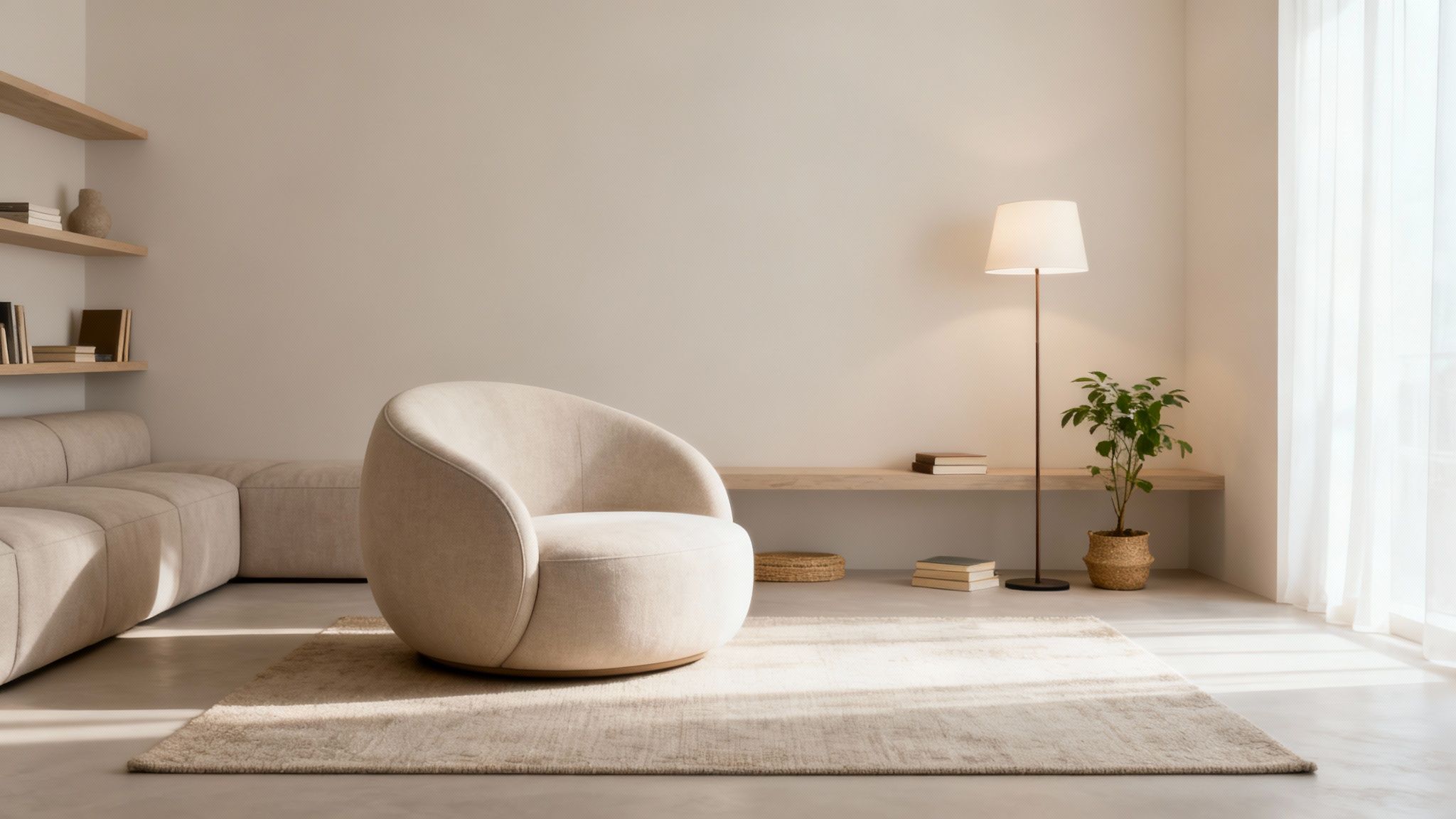
Breaking Up the Box
Most rooms are rectangular, filled with rectangular furniture: sofas, coffee tables, bookshelves. A round sofa chair acts as a visual circuit-breaker. Its curved form interrupts the monotony of straight lines, adding dynamic energy without cluttering the space. Unlike a square armchair, which can feel rigid and blocky, a round chair introduces an organic shape that makes a room feel more curated and intentional.
This geometric contrast is not merely aesthetic. Curved furniture encourages the eye to move smoothly around the room, creating a sense of harmony and reducing the visual "noise" of sharp corners. As noted in design analysis from 2024-2026, rounded silhouettes are replacing sharp angular lines across sofas, chairs, and tables, particularly in markets where interiors favor softer, inviting living spaces 2026 interior design trends.
The Instant Cosy Nook
The enveloping design of a round sofa chair—often called a "cuddle chair" or "snuggler"—creates a cocoon-like effect. This is not just about comfort; it is about psychological security. The curved back and arms provide a gentle boundary, defining a personal zone within a larger open-plan space. This makes the chair ideal for carving out a dedicated relaxation corner, whether by a window, near a fireplace, or in a quiet study area.
What Is a Circular Chair Called?
Terminology in the furniture industry is inconsistent, which complicates shopping. Here is a plain-English breakdown of common labels:
- Round sofa chair / circular chair: Broad descriptive terms for any chair with a curved footprint or rounded seat.
- Cuddle chair / snuggler: Wider, deeper chairs designed for lounging; often resemble small loveseats in feel and scale.
- Barrel chair / tub chair: More upright styles where the back curves around into the arms, providing structured support.
- Swivel chair: Refers to the base mechanism, not the shape. A swivel chair can be round, barrel-shaped, or only lightly curved.
- Occasional chair: A functional term for a chair used infrequently, often placed in living rooms or bedrooms for guests.
- Cleopatra chair: Usually refers to a specific high-backed, upholstered chair with a distinct silhouette, often inspired by ancient Egyptian motifs. It differs from a standard round chair in its height and often more structured, less enveloping shape.
When comparing listings, I ignore the headline name and focus on four measurements: outside width, inside seat width, back height, and base type. These facts determine fit and function far more accurately than marketing terms.
Solving Space and Style Challenges in UK Homes
UK homes vary widely, from sprawling new builds to compact city flats. This diversity demands furniture that is both aesthetically pleasing and spatially intelligent. Round sofa chairs excel in this environment because their geometry allows for flexible placement that square chairs cannot match.
Where to Place a Round Sofa Chair
Placement is the most critical decision when adding a round chair to a room. Here are five proven scenarios:
- Bay windows: A rounded chair sits naturally in a bay because the curve echoes the architecture. Ensure you leave enough space to access curtains or blinds, and avoid pushing the back hard against the window if condensation is a concern.
- Angled off a main sofa: In open-plan living areas, place the round chair at an angle to the main sofa. This creates a conversational grouping without blocking the room's primary circulation path.
- Beside a fireplace: A round chair near a fireplace creates a cozy focal point. The curve draws the eye inward, enhancing the sense of intimacy around the heat source.
- Bedroom corner: A compact tub or barrel style works well in a bedroom corner, providing a reading nook without overwhelming the space. Avoid oversized cuddle chairs here, as they can make the room feel cramped.
- Swivel accent between zones: In large open-plan layouts, a swivel round chair can serve as a bridge between the kitchen and living area. It allows the user to turn towards conversation or TV viewing without moving the entire chair.
Practical Spacing Rules
Proper spacing is essential for both aesthetics and functionality. Use these guidelines:
- Circulation clearance: Maintain at least 60-75 cm of walking space on the main side of the chair. This allows people to pass comfortably without bumping into the seat.
- Side table proximity: Leave 35-45 cm between the chair and a side table. This provides enough reach for a drink or book without cramping the seating area.
- Radiator and door safety: Ensure the chair does not block radiators, door swings, or access to utilities. A chair that obstructs a radiator can reduce heating efficiency and pose a safety risk.
When a Round Chair Works Better Than a Square Accent Chair
Round chairs offer distinct advantages in small rooms:
- Improved flow: The curved outline allows traffic to move around the chair more easily than around a square armchair, which creates dead corners.
- Softer visual impact: In tight spaces, round chairs feel less imposing than bulky square chairs, making the room feel more open.
- Conversational flexibility: Round chairs can be angled to face different parts of the room, encouraging interaction.
However, round chairs are not always the best choice. If you need maximum seating capacity in a small footprint, a square armchair may be more efficient. If the room already has strong curves (e.g., arched doorways, circular rugs), a round chair might create visual redundancy rather than balance.
Small-Room Reality Check
Before purchasing, tape the chair's footprint on your floor. Walk through the room as you normally would: entering, sitting, opening storage, and passing others. This simple test reveals spatial conflicts that floor plans often miss. If the taped outline forces you to pivot awkwardly or clip a coffee table, the chair is too large for that space.
For more inspiration on maximizing small layouts, see our guide on furniture for small spaces.
Best Round Sofa Chairs for Small Spaces
Small spaces require careful selection. The goal is to choose a chair that provides comfort and style without overwhelming the room. Here are key considerations for small-space round sofa chairs:
Diameter and Proportion
For rooms under 12 square meters, look for chairs with a diameter of 70-80 cm. Larger diameters (90 cm+) can dominate the space, making it feel smaller. A smaller diameter chair maintains proportionality and leaves room for other furniture.
Height and Scale
Low-profile chairs with exposed legs create a sense of airiness. They allow light and sightlines to pass underneath, making the floor area appear larger. Avoid high-backed, bulky chairs that visually weigh down the room.
Multi-Functionality
Chairs with storage compartments or convertible features (e.g., sleeper chairs) are valuable in small spaces. They maximize utility without requiring additional furniture.
Fabric and Maintenance
In small spaces, every detail is visible. Choose fabrics that resist stains and wear, such as waterproof performance blends or durable jacquards. Lighter colors can make the chair feel less intrusive, while darker colors can anchor the space.
Top Picks for Small Spaces
-
Compact Tub Chair: Ideal for corners and reading nooks. Look for models with a diameter under 75 cm and exposed legs.
-
Swivel Accent Chair: Perfect for open-plan layouts. A swivel base allows flexible positioning without needing extra clearance for movement.
-
Low-Profile Barrel Chair: Suitable for modern minimalist interiors. Its upright back provides support without bulk.
When selecting a cover for a small-space chair, prioritize fit and ease of cleaning. A well-fitted cover enhances the chair's profile and protects against wear in high-traffic areas.
Styling Your Chair for Different Looks and Seasons
Styling a round sofa chair involves more than choosing a cover color. It requires considering the chair's role in the room's overall design. Here are five specific styling setups for different living-room aesthetics:
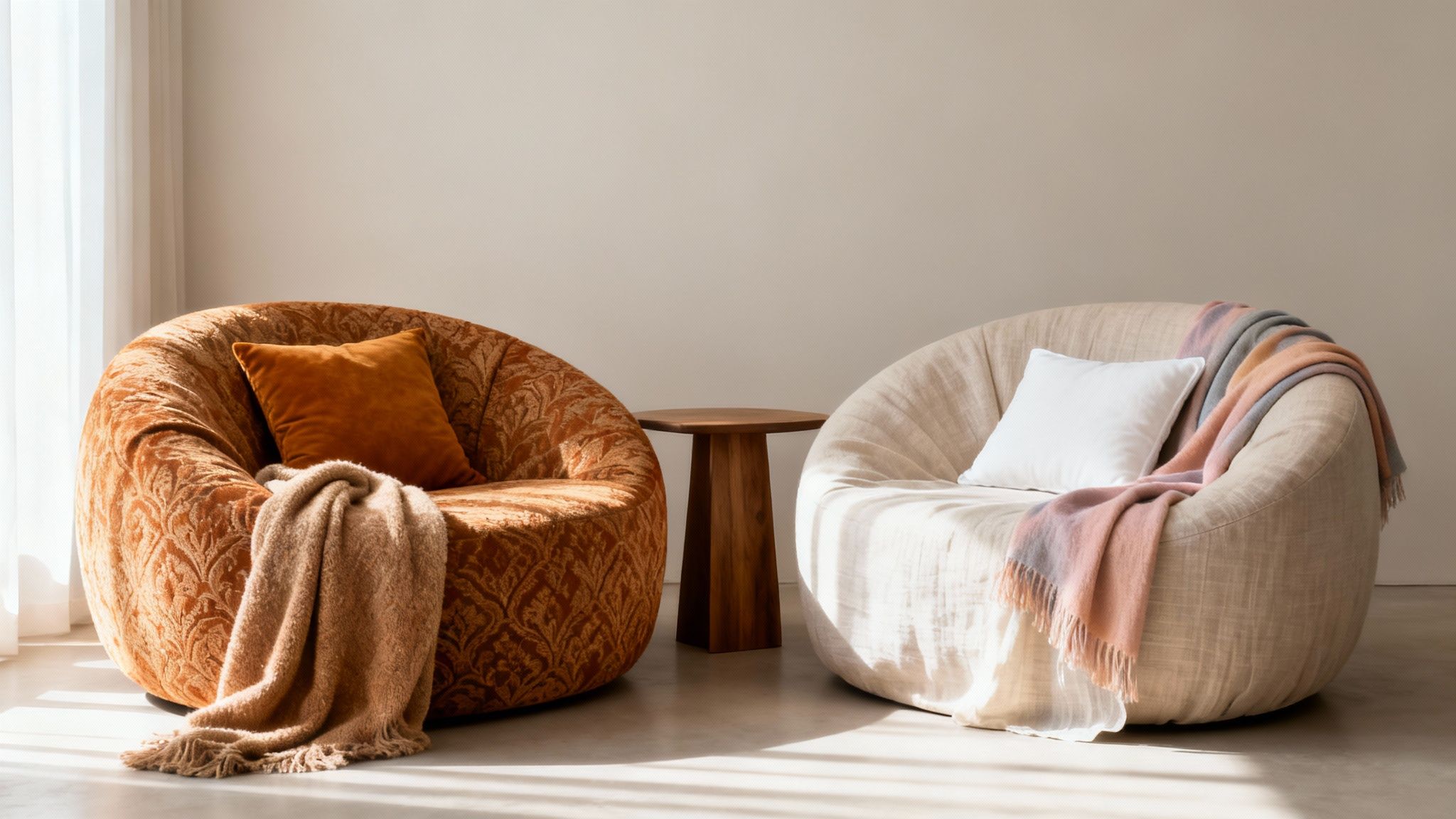
Modern Minimalist
Chair choice: Sleek barrel or tub chair with clean lines and neutral upholstery. Pairings: Low-profile side table with slim legs, abstract art, monochromatic color palette. Rug: Large, plain rug in a light neutral to define the seating area without visual clutter. Lighting: Architectural floor lamp with a geometric shade. Cushions: Minimal or none; rely on the chair's form for interest.
Warm Neutral
Chair choice: Soft, plush round chair in beige, cream, or warm grey. Pairings: Natural wood side table, woven textures, earthy tones. Rug: Jute or sisal rug for texture and warmth. Lighting: Warm-toned table lamp with a fabric shade. Cushions: Two to three cushions in varying textures (knit, linen) in complementary neutrals.
Contemporary Luxe
Chair choice: Velvet or high-gloss finish round chair in jewel tones (emerald, navy, burgundy). Pairings: Metallic accents (gold, brass), marble side table, plush throw. Rug: Patterned rug with subtle sheen to add depth. Lighting: Statement chandelier or sculptural floor lamp. Cushions: Decorative pillows with metallic trim or intricate patterns.
Family-Friendly Casual
Chair choice: Durable, waterproof fabric round chair in dark or patterned colors. Pairings: Sturdy, easy-clean side table, storage ottoman for toys. Rug: Low-pile, stain-resistant rug in neutral tones. Lighting: Practical, easy-to-reach table lamp. Cushions: Washable cushion covers in fun patterns or solid colors.
Small-Space Apartment
Chair choice: Compact swivel chair with light upholstery and exposed legs. Pairings: Slim, leggy side table, floating wall shelves. Rug: Small accent rug to define the zone without overwhelming the floor. Lighting: Compact desk lamp or clip-on light. Cushions: One or two small cushions to add color without bulk.
Preventing Oversized Appearance
To stop a round sofa chair from feeling oversized:
-
Balance with leggy furniture: Pair the chair with tables and shelves that have exposed legs, creating visual openness.
-
Utilize open floor space: Avoid placing the chair against a wall if it blocks sightlines; instead, position it to maintain clear pathways.
-
Choose lower-profile sofas: If pairing with a sofa, select one with a lower back and arms to maintain proportional balance.
-
Use mirrors: Place a mirror nearby to reflect light and create the illusion of more space.
Seasonal styling should be secondary to these core design principles. Swap throws and cushions for seasonal colors, but keep the foundational furniture choices aligned with the room's overall aesthetic. For guidance on selecting the right cushions to complement your setup, check out cushions for sofas.
Choosing the Right Fabric for Your Lifestyle
The fabric you choose bridges style and practicality. For round sofa chairs, which often feature curved surfaces, fabric elasticity and fit are paramount.
The Role of Modern Blends
High-stretch spandex blends have revolutionized sofa covers. They hug curved contours smoothly, eliminating the bunching and slipping associated with less flexible materials. This creates a custom-upholstered look without the custom price tag.
Fabrics for Real-Life Scenarios
- Waterproof covers: Essential for families with children or pets. They repel spills, allowing for quick cleanup. Modern waterproof fabrics remain soft and breathable, avoiding the stiff, plastic feel of older materials.
- Jacquard textures: Ideal for adding decorative flair. The intricate woven patterns hide minor wear and offer versatility for seasonal styling.
- Plush velvet: Perfect for creating a luxurious, cozy feel. However, it requires more maintenance and may show pressure shading.
Cover Fabric Suitability Guide
| Fabric Type | Best For | Key Features | Audience Match |
|---|---|---|---|
| Spandex Blend | Sleek, custom-like fit on curves | High elasticity, wrinkle-resistant, smooth finish | Anyone wanting a modern, seamless look |
| Waterproof | Homes with kids, pets, or frequent guests | Repels liquid spills, easy to clean, soft texture | Families, pet owners, landlords |
| Jacquard Texture | Adding decorative flair and hiding wear | Woven patterns, durable, rich texture | Style-conscious homeowners, seasonal decorators |
| Plush Velvet | Luxurious, cosy feel | Ultra-soft, elegant sheen, comfortable and warm | Those seeking sophisticated comfort |
Which Fabric Types Work Best on Curved Chairs?
For rounded frames, these tradeoffs apply:
- Spandex blend/high-stretch knit: Best for cover fit; smooths curves effectively with low wrinkling. Less luxurious in feel compared to premium upholstery fabrics.
- Waterproof performance fabric: Strongest practical choice for family use; often slightly heavier and may retain more heat depending on the backing.
- Jacquard: Decorative and forgiving of minor wear, but some patterns may clash with the chair's shape if the fit is not tight.
- Velvet/plush pile: Beautiful on statement chairs, soft and warm, but higher maintenance and more prone to showing pressure shading.
Editorial Note
After reviewing customer feedback on curved seating, I consistently find that high-stretch, mid-weight fabric is the safest cover choice for a round chair. It follows the back curve better, creates fewer tension lines around the arms, and is less likely to twist on asymmetrical cuddle-chair shapes than thicker decorative fabrics.
For a detailed comparison of fabric options, refer to our guide on best fabric for your sofa.
How to Measure Your Round Chair for a Perfect Fit
Accurate measurement is critical for a well-fitting cover. Curved shapes require specific techniques to capture their dimensions correctly.
Step-by-Step Measuring Guide
- Total Height: Place the tape measure on the floor at the back of the chair. Run it straight up and over the highest point of the backrest, then down to the floor in front. This captures the full vertical span.
- Total Width (Diameter): Measure the widest part of the chair, usually from the outer edge of one armrest, across the front of the seat, to the outer edge of the other armrest.
- Seat Depth: Measure from the front edge of the seat cushion to where it meets the backrest.
Measuring Different Round Chair Types
- Swivel bases: Measure the upholstered body separately from the base. Note the widest diameter of the swivel pedestal if the cover needs to accommodate it.
- Loose seat cushions: Measure both the frame and the cushion. Determine whether the cover wraps over the cushion or sits beneath it.
- Wraparound backs: Follow the full outer curve of the back rather than taking a straight measurement. Deep curved backs often require more fabric.
- Low-profile accent chairs: Pay attention to arm and back height. Covers designed for taller lounge chairs may bunch on low sculptural seats.
- Oversized cuddle chairs: Record both outside and inside seat widths. These chairs often have broad outer arms and a large internal sitting area.
Common Measuring Mistakes
- Measuring cushion width instead of frame width
- Ignoring the chair's rear curve
- Forgetting to account for swivel pedestals or plinth bases
- Measuring only the front view without considering the deepest side profile
- Assuming symmetry when many rounded chairs are asymmetrical
Round Sofa Chair Measurement Checklist
| Measurement Area | How to Measure | Your Measurement (cm) |
|---|---|---|
| Total Diameter | Across the widest part, outer edge to outer edge. | |
| Seat Depth | From the back of the seat cushion to the front edge. | |
| Back Height | From the top centre of the backrest down to the floor. | |
| Back Curve Width | Following the curve from one side to the other. |
For general measuring tips, explore our guide on learn how to measure a sofa.
Effortless Installation
Installing a cover is straightforward:
- Drape the cover over the chair, ensuring the tag is at the back.
- Gently pull the fabric down and around the chair, smoothing it over the arms, back, and seat.
- Tuck the elasticated hem neatly underneath the base.
- Use included foam inserts to tuck excess fabric into crevices between seat cushions and the frame. This anchors the cover and prevents shifting.
For detailed instructions on various furniture types, see how to measure your sofa.
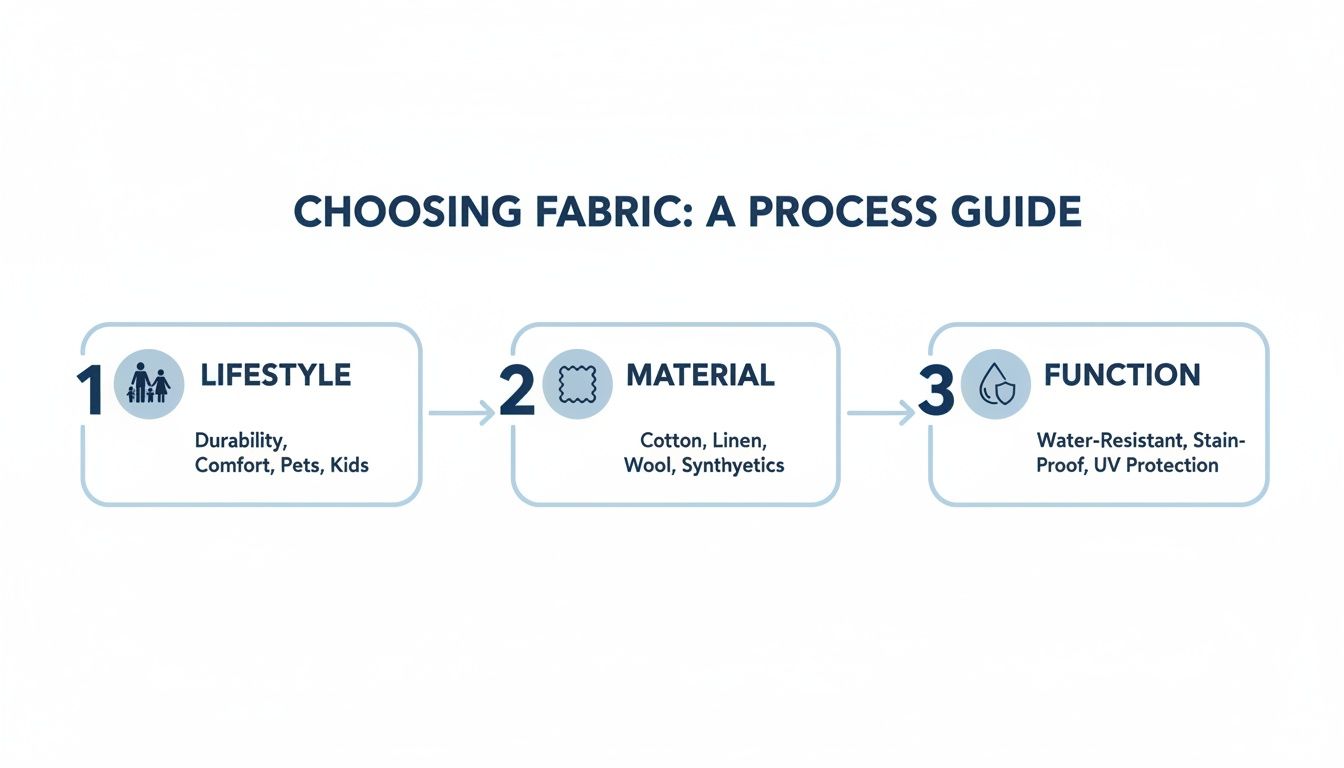
This visual guide emphasizes balancing daily life demands with material feel and features like waterproofing.
Troubleshooting Common Issues
- Excess fabric at the base: Lift the cover and tuck more slack into the seat creases.
- Swivel base interference: Ensure the elasticated hem sits above the swivel mechanism, not underneath, to allow free movement.
Simple Care for a Long-Lasting Fresh Look
Proper care extends the life of your round sofa chair and cover.
Machine Washing Guidelines
Most covers are machine washable. Follow these steps:
- Wash the cover alone to prevent snagging or color transfer.
- Use cold water (≤30°C) to protect elastic fibers and prevent shrinkage.
- Use a mild detergent; avoid bleach and fabric softeners.
- Select the delicate cycle to minimize stress on seams.
Drying and Spill Management
- Air-dry covers whenever possible. Tumble drying on high heat can shrink or weaken the fabric.
- For spills, waterproof covers allow quick wiping with a damp cloth. Liquids bead up on the surface, giving you time to clean before soaking in.
For additional cleaning insights, such as how to clean a microfiber couch effectively via Sunset Shine Home Cleaning, you can find useful tips on maintaining different fabric types.
Frequently Asked Questions
Will a Standard Armchair Cover Fit My Round Sofa Chair?
No. Round sofa chairs, especially cuddle or swivel styles, have unique curved shapes that standard armchair covers are not designed to accommodate. Attempting to force a standard cover will result in a saggy, ill-fitting appearance. Our stretchy spandex blend covers are designed to hug curves, but accurate measurement of your chair's diameter and height is essential for a snug fit.
Are Waterproof Covers Still Soft and Comfortable?
Yes. Modern waterproof covers feature a special inner layer that repels liquids while maintaining a soft, inviting touch surface. You gain protection against spills without sacrificing the comfort and cosiness of your chair.
How Do I Stop the Cover from Slipping on a Leather Chair?
This is a common concern. Our covers address it in two ways:
- High-stretch fabric and elasticated hem: Create a snug grip around the chair's base.
- Foam inserts: Tucking these into the crevices between seat cushions and arms/back securely anchors the cover, preventing shifting even on smooth leather surfaces.
Ready to refresh your round sofa chair? Explore the full collection at The Sofa Cover Crafter and find the perfect cover for your home.
