



A sofa on castors is really just what it sounds like: a comfy sofa with wheels tucked underneath. It’s a simple idea, but it completely changes how you can use your living space. This one small feature turns a heavy, static piece of furniture into something flexible and practical, perfectly blending convenience with comfort.
Key Takeaways Sofa On Castors The Ultimate Guide To Mobile Living
- Wheels add flexibility: Rearranging the room and cleaning underneath become much easier.
- Choose the right castor type: Swivel castors manoeuvre freely, locking castors keep the sofa stable.
- Match castors to the sofa style: Not every design suits being on wheels.
Table of Contents
- Key Takeaways Sofa On Castors The Ultimate Guide To Mobile Living
- Why a Sofa on Wheels Is a Modern Living Game Changer
- The Appeal of Adaptable Furniture
- Core Benefits of a Mobile Sofa
- How To Choose The Right Sofa On Castors
- Locking vs Swivel Castors
- Matching Castors To Sofa Styles
- Castor Types And Their Best Use Cases
- The Real Pros And Cons Of A Wheeled Sofa
- Weighing The Advantages
- Considering The Potential Drawbacks
- Perfectly Fitting A Cover On Your Wheeled Sofa
- Measuring For Success
- The Magic Of High-Stretch Fabrics
- Securing The Cover For Good
- Simple Care For Long-Lasting Mobility
- Quick Maintenance Checklist
- Got Questions? We've Got Answers
- Can I Add Castors To My Existing Sofa?
- Will A Sofa On Castors Damage My Wooden Floors?
- How Do I Stop A Sofa Cover From Tangling In The Wheels?
- How Much Weight Can A Sofa On Castors Hold?
Why a Sofa on Wheels Is a Modern Living Game Changer

Imagine being able to redesign your living room for a movie night in a matter of seconds. Or gliding your couch out of the way for a proper deep clean without breaking your back. That’s the everyday reality a sofa on castors offers. In today's dynamic homes, especially the multi-purpose spaces so common across the UK, our furniture needs to be able to adapt right alongside us.
This clever blend of comfort and convenience has made wheeled sofas a go-to solution for homeowners, renters, and property managers alike. They tick all the boxes for modern living, delivering both style and practicality in one neat package.
The Appeal of Adaptable Furniture
The move towards mobile furniture isn’t just a passing trend; it’s a smart response to our changing lifestyles. For families, a sofa on castors means the living room can quickly switch from a kids’ play area to a quiet reading nook. In smaller flats, it allows a single room to serve multiple functions with barely any effort.
You can see this growing demand reflected in the market. The sofa retail sector has seen a 25% surge in organic visibility, with practical features like castors driving a huge amount of consumer interest. It highlights a clear shift towards furniture that works harder for us. You can learn more in the Sofa & Chair Industry Report from Salience Search Marketing.
Core Benefits of a Mobile Sofa
The advantages of adding wheels to your sofa go way beyond just being able to move it easily. They represent a fundamental improvement in how we interact with our living spaces.
- Effortless Rearranging: You can change your room's entire feel in minutes, whether it's for a seasonal refresh or to make space for guests.
- Simplified Cleaning: Getting to the dust bunnies under the sofa is no longer a major chore, making it so much easier to keep your home truly clean.
- Floor Protection: The right kind of castors will prevent the scuffs and scratches you often get from dragging heavy, stationary furniture around.
By making our largest pieces of furniture mobile, we unlock a new level of freedom within our homes. A sofa on wheels isn't just a piece of furniture; it's a tool for creating a more functional, flexible, and cleaner living environment.
How To Choose The Right Sofa On Castors
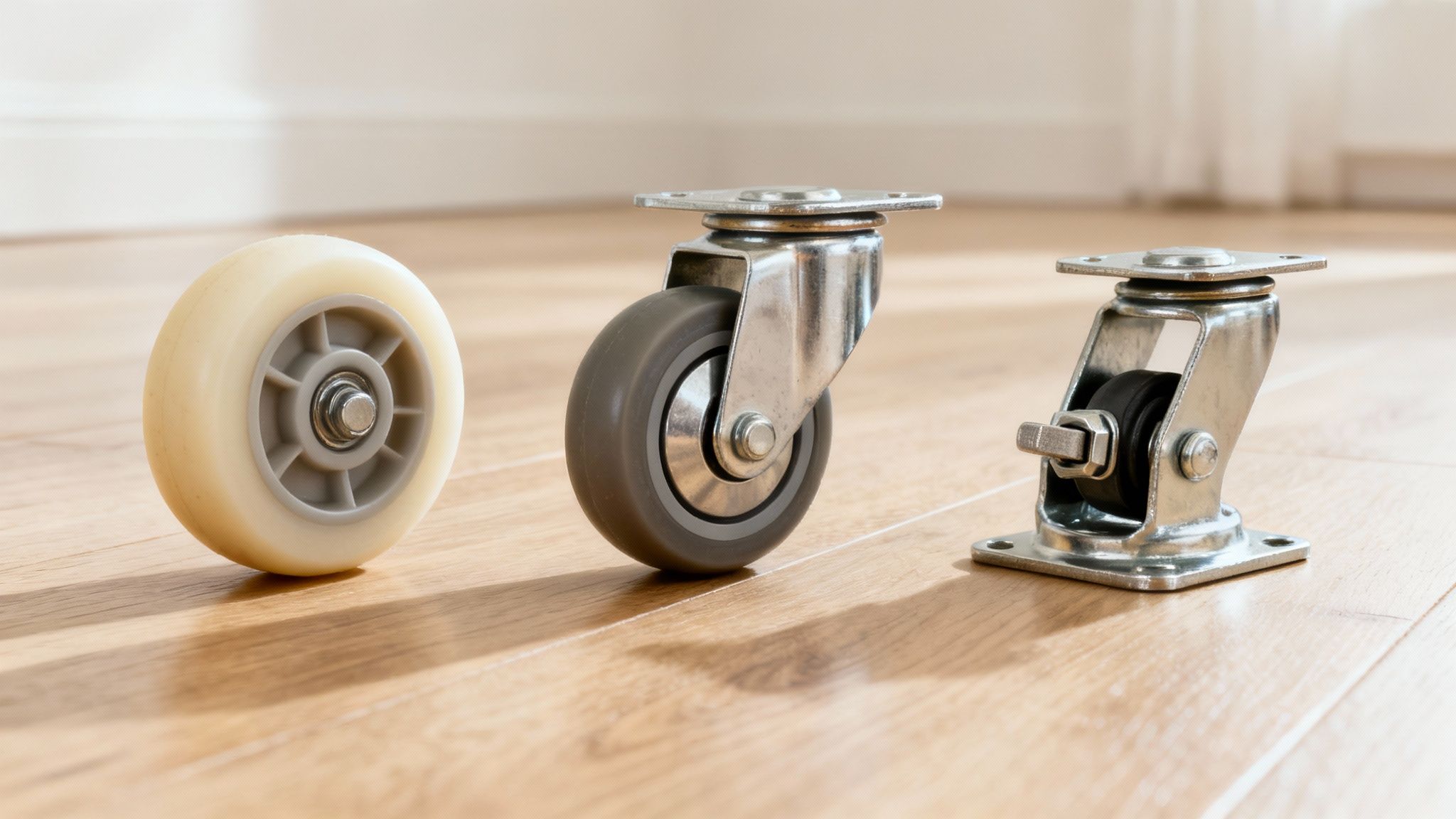
Choosing the right sofa on castors isn't just about how it looks; it’s about making sure the wheels are a perfect match for your home and your lifestyle. Get it right, and your sofa will glide effortlessly without leaving a single mark. Get it wrong, and you could be dealing with frustrating scratches and scuffs. Think of it like picking tyres for a car—what works beautifully on a smooth racetrack won't do you any favours off-road.
In the same way, the material of your castor wheels is the most important thing to consider for protecting your floors. For delicate surfaces like hardwood, laminate, or vinyl, soft rubber or polyurethane wheels are an absolute must. These materials are designed to be forgiving, rolling smoothly without leaving marks. Hard plastic or metal castors, while tough, are best left for thick carpets where scratching isn't really a concern.
Locking vs Swivel Castors
Beyond the wheel material, you need to think about how the castors actually work. Your choice here is a simple trade-off between easy movement and solid stability, and the two main types offer very different benefits.
- Swivel Castors: These wheels can spin a full 360 degrees, giving you incredible manoeuvrability. They make it a breeze to navigate around tight corners or pivot the sofa in a smaller room.
- Locking Castors: These are your secret to stability. A small lever or brake lets you lock the wheel in place, stopping the sofa from rolling around when you don't want it to—especially important on smooth, hard floors.
For the best of both worlds, look for a sofa on castors that has a combination of both features. A locking swivel castor gives you the freedom to move your furniture with total ease and then secure it firmly once you've found the perfect spot. Many high-quality sofas now come with at least two locking castors as standard.
Matching Castors To Sofa Styles
Not every sofa design is a natural fit for being on wheels. The structure of the frame and the overall look play a huge part in figuring out whether castors will work well. As a general rule, sofas with a visible and sturdy wooden or metal frame are always the best candidates.
Classic styles like the Chesterfield have a long history with castors, often on their front legs, blending that timeless design with practical movement. Modern sectionals and modular sofas also benefit hugely from castors, as they let you reconfigure your seating layout in a flash. Lighter, more minimalist designs can also work, as long as the frame is strong enough to support the mounting points for the wheels.
When it comes to picking the right wheels for your sofa, a little bit of knowledge goes a long way. The type of castor you choose can make all the difference in terms of movement, stability, and floor protection. I've put together a quick table to break down the most common options and help you find the perfect match for your home.
Castor Types And Their Best Use Cases
| Castor Type | Best For Flooring | Key Feature | Ideal For |
|---|---|---|---|
| Rubber | Hardwood, Laminate, Tile | Soft and quiet, excellent grip | Protecting delicate floors from scratches |
| Polyurethane | Hardwood, Vinyl, Concrete | Non-marking and durable | Versatile use across most hard surfaces |
| Plastic (Nylon) | Carpet | Hard-wearing and low-cost | Moving sofas easily over carpeted floors |
| Metal (Brass/Steel) | Carpet, Rugs | Heavy-duty and decorative | Traditional or antique sofas on soft flooring |
| Locking Swivel | All Floor Types | 360° rotation with a brake | Maximum mobility and rock-solid stability |
As you can see, matching the castor to your floor type is the first and most important step. Choosing a soft rubber wheel for your beautiful wooden floor is just as crucial as opting for a hard-wearing plastic one for a deep-pile carpet.
The weight of the sofa is another vital thing to consider. A heavy three-seater will need much more robust, heavy-duty castors than a lightweight two-seater. Always check the weight capacity of the castors, making sure their combined rating is comfortably more than the sofa's weight plus the likely weight of people sitting on it. This guarantees both safety and smooth, long-lasting performance. The right wheels paired with the perfect upholstery create a truly versatile piece; for more guidance, check out our article on choosing the best fabric for a sofa.
The Real Pros And Cons Of A Wheeled Sofa
A sofa on castors is a fantastic idea in theory, giving you incredible flexibility. But before you commit, it's worth weighing up the day-to-day reality of having your main piece of furniture on wheels. It’s a choice that really pits ultimate convenience against a few practical points you need to consider.
The biggest win, hands down, is the unparalleled mobility. You can completely transform your living room for a party, a big family movie night, or just a seasonal refresh in a matter of minutes. No heavy lifting, no calling for backup. For anyone who loves to switch up their decor on a whim, this freedom is an absolute game-changer.
Another huge benefit is how ridiculously easy it makes cleaning. No more awkward stretching or battling with vacuum attachments to get to the dust bunnies breeding underneath. You just glide the sofa out of the way, clean properly, and push it back. This turns a deep clean from a major chore into a simple task, helping you keep your home healthier and dust-free.
Weighing The Advantages
The practical perks go beyond just moving it around. Here’s a quick breakdown of the key positives:
- Floor Protection: Good-quality, soft rubber castors are much kinder to your floors. They prevent the scuffs and deep scratches you often get from dragging a heavy, stationary sofa across delicate surfaces like hardwood or laminate.
- Versatility in Small Spaces: In smaller UK homes or flats, a mobile sofa lets one room serve multiple purposes without any fuss. It can go from a cosy living room to an open space for a workout in seconds.
- Accessibility: For anyone with mobility issues, being able to move furniture around easily can make a significant difference in their daily independence and comfort at home.
It's no surprise this type of furniture is gaining traction. The UK furniture market is projected to hit a massive USD 37.07 billion by 2030, and the demand for flexible, wheeled sofas is a noticeable part of that growth, especially in England's Southeast where consumer spending is highest.
Considering The Potential Drawbacks
Of course, a wheeled sofa isn’t without its challenges. The most common complaint is unwanted movement, especially if you have very slick or slightly uneven floors. A gentle nudge from a pet or a child jumping on it can send it rolling, which can be pretty frustrating. Luckily, this is almost entirely solved by choosing a model with locking castors.
Another point to keep in mind is the tiny bit of maintenance needed. Over time, the castor mechanisms can pick up dust, hair, and other bits of fluff from the floor, which can stop them from rolling smoothly. A quick clean every few months with a brush or vacuum is usually all it takes to keep them in top condition.
Finally, the added height from the wheels can create a small visual gap between the bottom of the sofa and the floor, which might not suit every style. Beyond the day-to-day, a wheeled sofa might also influence how you think about long-term planning, and understanding different furniture storage options can be a big help when things change.
Perfectly Fitting A Cover On Your Wheeled Sofa
One of the biggest questions we get from owners of wheeled sofas is whether a cover will actually fit properly—and more importantly, stay put. It's an understandable worry. With wheels lifting the frame and the sofa being moved around, it sounds like a recipe for a constantly slipping, bunched-up mess.
Fortunately, the answer is a resounding yes; you can absolutely get a flawless fit. The key is choosing the right type of cover and using a few simple tricks to secure it. A snug, tailored look is entirely achievable, even on a piece of furniture that's always on the move. It all comes down to accurate measurements and knowing which features make a cover compatible with a sofa on castors.
Measuring For Success
Before you even start dreaming about fabrics or colours, you need to get your measurements right. This step is the absolute foundation for a perfect fit, and it’s slightly different for a sofa on wheels because you have to account for the extra height the castors add.
Start by measuring the length of your sofa from the outer edge of one armrest clear across to the other. Next, measure the height from the very top of the backrest all the way down to the floor, making sure you include the castors. This total height measurement is vital. Finally, measure the depth from the front of the sofa to the back.
For a more detailed guide, you can find a complete walkthrough on how to measure your sofa accurately.
This infographic shows how the core benefits of a wheeled sofa—mobility, easy cleaning, and floor protection—work together.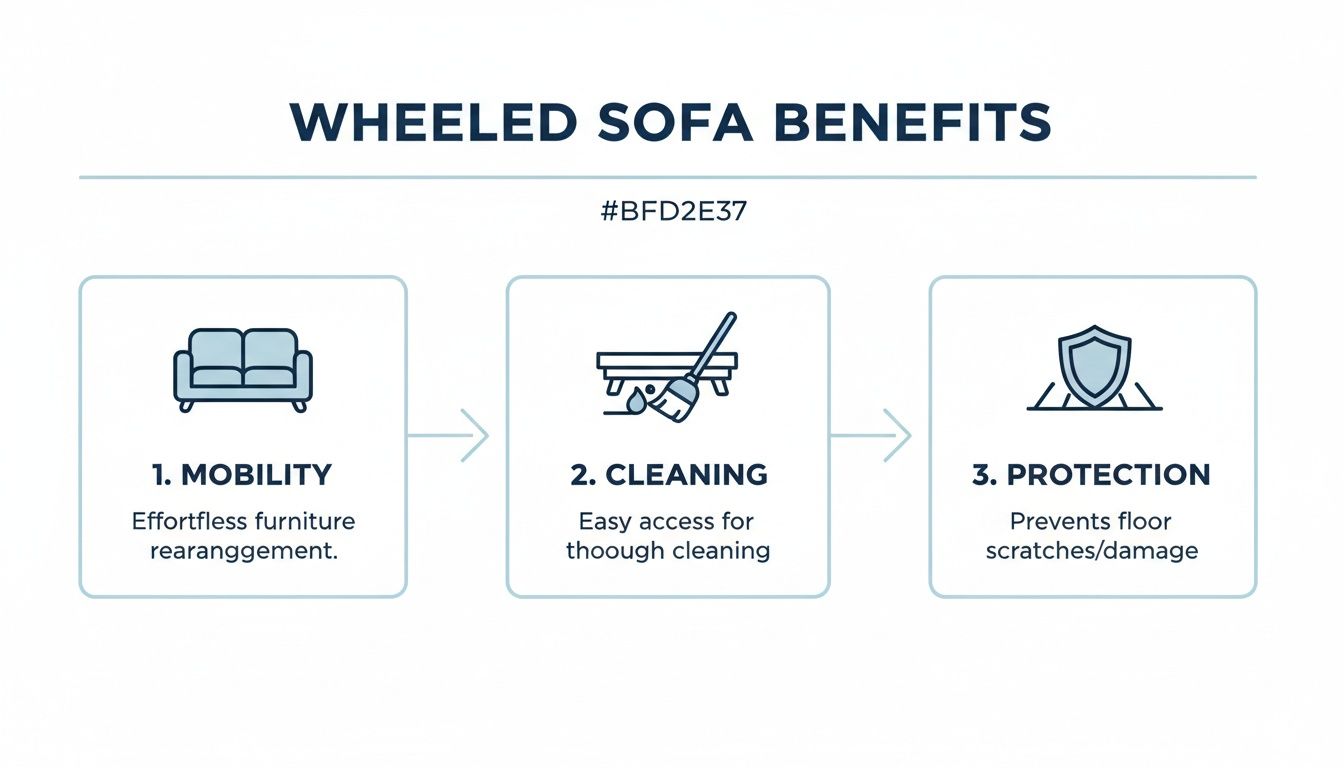
The visual highlights that the practical advantages of a sofa on castors are all interconnected, creating a more functional and easy-to-maintain living space.
The Magic Of High-Stretch Fabrics
Once you have your dimensions, the secret weapon for covering a sofa on castors is a high-stretch fabric. Materials blended with spandex are your best friend here. Think of it like putting on a fitted sports top versus a stiff cotton shirt; the stretchy material effortlessly conforms to every curve and angle without a fight.
This elasticity is what allows the cover to accommodate the unique shape of a wheeled sofa, stretching smoothly over the frame without pulling or straining. It hugs the contours, providing a custom-like finish that looks intentional, not like a temporary fix.
Securing The Cover For Good
This is the most critical part: preventing the cover from riding up or getting tangled in the wheels as you move the sofa. A well-designed cover will include specific features to combat this exact problem.
The real trick to a secure, professional-looking fit on a mobile sofa isn't just the fabric—it's the anchoring system underneath. Without it, even the stretchiest cover will eventually shift.
Look for covers that come equipped with robust under-sofa clips and adjustable straps. These are non-negotiable for a sofa on castors. Here’s how they create a foolproof fit:
- Pull the Hem Taut: After draping the cover over the sofa, reach underneath and pull the elasticated hem tight.
- Attach the Clips: Fasten the clips to the elastic hem on opposite sides of the sofa's underside, creating tension. This pulls the fabric inwards, away from the wheels.
- Secure the Straps: Run any additional straps under the belly of the sofa, connecting them to keep the cover from ballooning or shifting forwards and backwards.
This anchoring system effectively lifts the hem of the cover, creating a clean line and ensuring there's plenty of clearance around the castors. It guarantees the fabric stays firmly in place, giving you the freedom to roll your sofa wherever you need it without having to constantly readjust the cover.
Simple Care For Long-Lasting Mobility
To keep your sofa on castors gliding smoothly for years, a little maintenance goes a long way. Think of it like looking after a bicycle; a quick clean and check-up prevents bigger problems down the line. This simple upkeep preserves both the wheels' function and the life of your sofa cover, ensuring your furniture remains a practical, stylish asset.
The good news is that this routine takes just a few minutes every couple of months. The main culprits that stop a sofa rolling freely are everyday debris like dust, pet hair, and carpet fibres. When these get tangled up in the castor mechanism, they can cause sticking or jamming.
A quick clean is all it takes to sort this out. Simply tip the sofa gently onto its back and use a brush, the nozzle of your vacuum cleaner, or even a pair of tweezers to clear any visible fluff and hair from around the wheel axles. This one simple action will keep them spinning freely.
Quick Maintenance Checklist
While you're cleaning the castors, it's the perfect time for a quick inspection. This makes sure everything is still secure and your floors stay protected.
- Check for Tightness: Gently wiggle each castor to make sure it's firmly attached to the sofa's frame. If any feel loose, tighten the screws or bolts holding them in place.
- Inspect Wheel Surfaces: Run your fingers over the wheels to check for any embedded grit or damage that could potentially scratch your flooring.
- Test Locking Brakes: If your castors have locking mechanisms, click them on and off a few times to ensure they’re working properly and haven't become stiff.
Maintaining your sofa's mobility is about more than just convenience; it's about protecting your investment. A well-cared-for sofa on castors moves predictably, protects your floors, and provides reliable flexibility for years to come.
This effortless mobility is a key reason castor-fitted sofas are so popular, especially for shoppers who prioritise comfort and practicality. The UK furniture market, valued at a massive £19.5 billion, is heavily influenced by this demand for easy-to-manage pieces. You can see this trend in the product lines of major retailers, where wheeled models are now a common sight. For more insights, have a look at Mintel's UK Furniture Retailing report.
This practicality connects directly to looking after your sofa cover. Because you can move the sofa so easily for cleaning, having a machine-washable cover is a huge advantage. Spills and marks can be dealt with swiftly, keeping your sofa looking fresh. This pairing of easy upkeep and smart protection is what truly extends the life and value of your furniture. For tips on keeping your cover in top condition, you might be interested in our guide on how to wash sofa covers without shrinking.
Got Questions? We've Got Answers
Even when you've seen all the benefits, it's natural to have a few practical questions about what it's really like to live with a sofa on castors. We've gathered some of the most common queries we hear to give you the confidence to choose, use, and maintain your mobile furniture.
Think of this as a quick-fire round to clear up those final thoughts, reinforcing some of the key ideas we've covered and helping you get the absolute most out of your versatile sofa.
Can I Add Castors To My Existing Sofa?
In many cases, absolutely! If your sofa already has screw-in feet, you can often find compatible castors to swap them out. The two most important things to check are the fitting type—it’s usually a threaded bolt—and that the sofa's frame is solid enough to handle the new hardware.
Always go for castors with a weight rating that comfortably exceeds your sofa’s total weight. This simple little DIY project can bring fantastic mobility to a stationary piece you already own and love.
Will A Sofa On Castors Damage My Wooden Floors?
This is a really common and valid concern, but it's one you can easily sidestep. The solution is all about choosing the right wheel material for the job.
To protect delicate surfaces like hardwood or laminate, you should only use castors with soft rubber or polyurethane wheels. These are specifically designed to glide smoothly without causing scratches or scuffs.
Avoid hard plastic or metal wheels on these types of floors, as they're far more likely to leave marks. For extra peace of mind, using the locking brakes will keep the sofa securely in place when it’s not being moved.
How Do I Stop A Sofa Cover From Tangling In The Wheels?
A well-designed cover is engineered to prevent this exact problem. The key is to look for covers that include features like under-sofa clips or adjustable straps.
These essential bits of kit let you pull the elasticated hem tight right underneath the sofa's main frame, securing the fabric well away from the ground and the wheels. When you combine this with a high-stretch material that gives a snug, form-fitting look, you can be sure the cover will stay perfectly in place, even when your sofa on castors is on the move.
How Much Weight Can A Sofa On Castors Hold?
The total weight capacity really comes down to the quality of the castors themselves and the strength of the sofa's frame. Each individual castor will have its own specific weight rating printed on the packaging or in its specifications.
To work out the total capacity, you just multiply the rating of a single castor by the number of castors on the sofa (usually four). It’s crucial to select castors with a combined rating that is significantly higher than the sofa's weight plus the expected weight of the people using it. This simple calculation ensures both safety and long-lasting durability. For example, some heavy-duty castors can support a safe working load of up to 240 kg.
Ready to give your mobile sofa the stylish, secure protection it deserves? At The Sofa Cover Crafter, our covers are designed with high-stretch fabrics and robust under-sofa clips to ensure a perfect, non-slip fit. Explore our collection and find the ideal cover for your home at https://thesofacovercrafter.co.uk.
