



When you're trying to choose between a 2- and 3-seater sofa, it really boils down to one simple thing: what is this sofa for? A 2-seater, often called a loveseat, is perfect for smaller spaces or as a stylish partner to other furniture. A 3-seater, on the other hand, is the foundational anchor piece for a busy family living room.
But before you fall in love with a style, the first and most important step is always the same: measure your space. It's the only way to guarantee a perfect fit.
Table of Contents
- Choosing Your Perfect Sofa: A Quick Guide
- Loveseat or Living Room Anchor?
- 2-Seater vs 3-Seater At a Glance
- How to Measure Your Space for the Perfect Fit
- Mastering the Delivery Path
- Balancing Visual Weight in Your Room
- Matching Your Sofa Fabric to Your Lifestyle
- For Busy Families with Kids and Pets
- For the Style-Conscious Host
- Matching Fabric to Popular Sofa Styles
- How to Confidently Buy a Sofa Online
- Decode the Digital Showroom
- Harness the Power of Real Customer Experiences
- See It in Your Space with Augmented Reality
- Understand the Fine Print Before You Click
- Styling and Maintaining Your New Sofa
- Building a Cohesive Look
- A Simple Maintenance Plan
- Choosing Sofas for Commercial and Rental Properties
- Durability and Fire Safety Standards
- Smart Choices for Landlords and Designers
- Your Sofa Questions Answered
- What Is the Average Size of a 2 and 3 Seater Sofa in the UK?
- How Do I Know If a Sofa Will Fit Through My Door?
- Can I Mix a 2 Seater and a 3 Seater Sofa?
- Is a Loveseat the Same as a 2 Seater Sofa?
Choosing Your Perfect Sofa: A Quick Guide
Deciding between a compact 2-seater and a more generous 3-seater is often the first big choice when you’re furnishing a living room. It’s a decision that shapes not just how many people can sit down, but the entire flow and feel of your space.
Think of it like choosing between a nimble city car and a spacious family vehicle; both will get you where you need to go, but they serve completely different needs.
The most obvious factor is, of course, size. A 2- and 3-seater sofa set can offer brilliant flexibility, but it’s crucial to understand what each piece brings to the table on its own. A 2-seater is ideal for flats, snug living areas, or as a complementary piece in a larger room. In contrast, a 3-seater is built to be the main event, offering plenty of room for family movie nights or for hosting guests comfortably.
Loveseat or Living Room Anchor?
Beyond the simple measurements, think about the sofa's role in your daily life. A 2-seater sofa encourages closeness and is perfect for a quiet reading nook or a more formal sitting area. A 3-seater, however, is built for lounging and socialising, giving multiple people the space they need to relax without feeling cramped.
Before you even start browsing online, it's essential to measure not just the spot where the sofa will live, but all the access points to get it there. This includes:
- Doorway heights and widths
- Hallway corners and tricky turning circles
- Stairwell clearances, especially if you live in a flat
Forgetting to measure your access routes is the number one reason for delivery day disappointment. A sofa that fits your room is useless if you can’t get it through the front door.
With the rise of online furniture shopping, making an informed choice from your screen has become the new normal. Understanding these fundamental differences is your first step toward buying with confidence. To simplify your decision, here’s a quick comparison.
2-Seater vs 3-Seater At a Glance
Sometimes, seeing the key differences side-by-side makes the decision much clearer. This little table breaks down the essentials to help you figure out which size is the right fit for your home and lifestyle.
| Feature | 2-Seater Sofa (Loveseat) | 3-Seater Sofa |
|---|---|---|
| Typical Width | 150cm - 180cm | 180cm - 220cm |
| Best For | Small rooms, flats, couples | Family rooms, larger spaces |
| Primary Use | Accent seating, reading nooks | Main household seating |
| Space Feel | Creates an open, airy feel | Acts as a room's anchor |
| Pros | Versatile, easy to move | Ample space for lounging |
| Cons | Limited seating for guests | Can overwhelm small rooms |
Ultimately, whether you go for a cosy 2-seater or a roomy 3-seater, the best choice is the one that fits both your room's dimensions and the way you live your life.
How to Measure Your Space for the Perfect Fit
Choosing a new sofa is one of the most exciting parts of decorating, but that dream can quickly turn into a delivery-day nightmare if it doesn't actually fit. Getting the measurements right isn’t just about making sure the sofa looks good in its final spot; it’s about ensuring it can gracefully navigate the journey from the delivery van to your living room. The most common mistake people make is forgetting to measure the path the sofa has to travel.
A gorgeous 2 and 3 seater sofa that’s too big for the hallway is just a very expensive, immovable obstacle. To avoid this, all you need is a tape measure and a plan that covers every centimetre of the delivery route. This simple prep work is the difference between a stressful ordeal and a seamless setup.
This simple graphic breaks down the core steps to a successful sofa purchase.
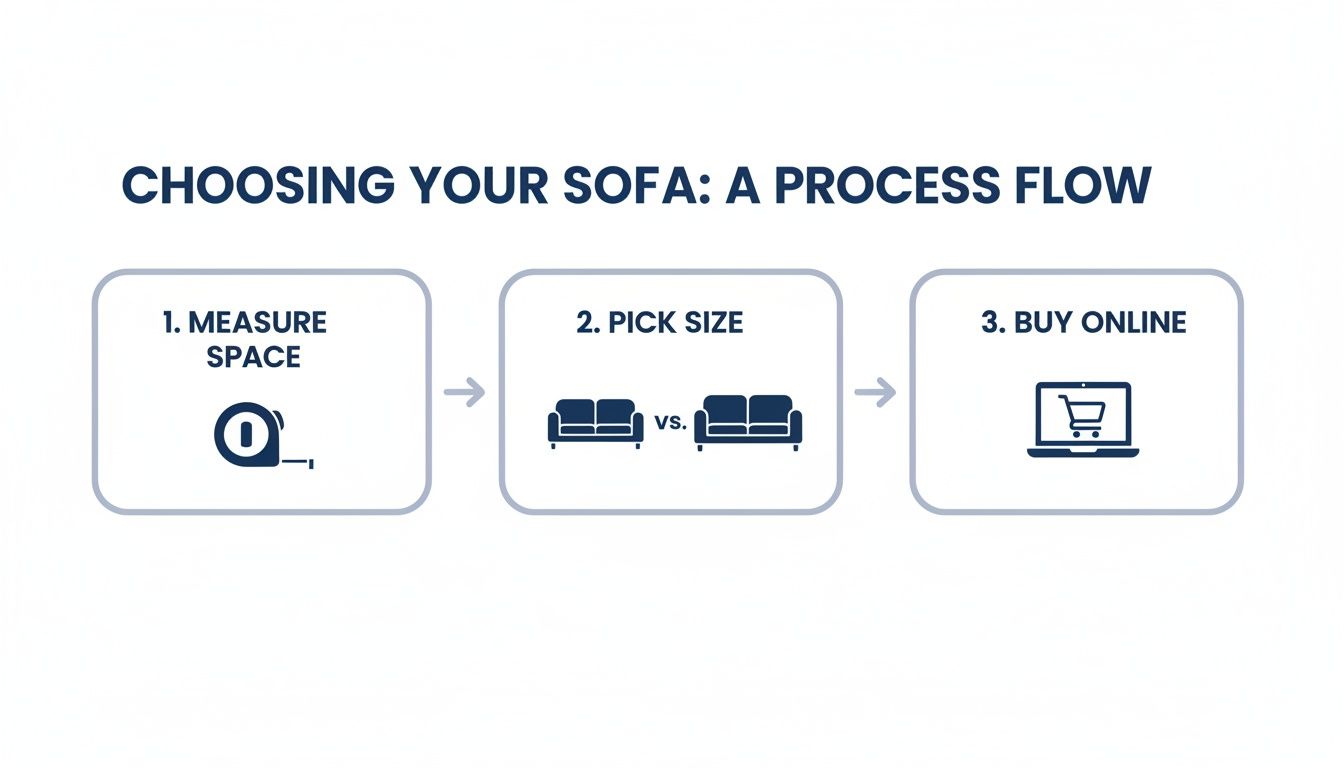
As you can see, measuring your space is the foundational first step that informs every other decision you'll make.
Mastering the Delivery Path
Before you even start dreaming about colours and fabrics, you need to become a logistics expert for your own home. Think like a delivery driver for a moment and map out the entire route, measuring every potential bottleneck along the way.
Your Delivery Checklist:
- Exterior Doors: Measure the width and height of your front door frame. Don’t forget to measure the narrowest point, which is usually the frame itself, not the wider opening.
- Internal Doorways: Repeat the process for every single door the sofa has to pass through. Don't forget the door to the living room itself!
- Hallways & Corridors: Measure the width of your hallways, paying close attention to any obstructions like radiators, shelving, or low-hanging light fixtures that eat into the usable space.
- Corners & Turns: This is where most problems happen. You'll need to measure the diagonal space available when turning a sharp corner, from the inner wall to the outer wall.
- Stairs & Lifts: If the sofa is going upstairs, measure the width of the staircase, the ceiling height at its lowest point (especially at the top and bottom), and the clearance around any landings.
A great tip is to compare the sofa's narrowest dimension (usually its depth or height) against the narrowest measurement on your delivery path. If the sofa's depth is greater than your doorway's width, it simply won't fit.
Balancing Visual Weight in Your Room
Once you've confirmed the sofa can actually get into the room, it's time to think about how it will look in the space. This is about more than just its physical length; it’s about visual weight. Think of your sofa as the anchor for the entire room. A sofa that is too large can feel like a massive, heavy weight dragging the room down, making it feel cramped and unbalanced.
For instance, a classic Victorian terrace in the UK often has high ceilings but narrow rooms. A bulky, deep 3-seater sofa might technically fit, but its visual weight would completely dominate the space. In this scenario, a more elegant 2-seater with slender legs would create a sense of airiness and balance. On the other hand, a modern, open-plan new build can easily handle a substantial 3-seater, which helps define the living area and properly anchor the layout.
This idea of fit and proportion has become even more important as more of us buy a 2 and 3 seater sofa sight-unseen online. That shift means retailers are focusing on compact, modular designs perfect for smaller UK homes, and we as consumers have to rely on accurate measurements to make the right choice from home.
For a detailed walkthrough on measuring your existing sofa for a new cover, which uses many of the same principles, check out our guide on how to measure a sofa. Taking the time for these careful measurements ensures your new sofa not only fits through the door but also looks like it was made for your room.
Matching Your Sofa Fabric to Your Lifestyle
Picking the right fabric for your sofa is about so much more than just landing on a colour you love. Think of it like buying a coat; some are purely for turning heads, while others are built to withstand a downpour. The material you choose for your sofa 2 and 3 seater is where style and real life collide, and getting it right means it’ll look fantastic for years, no matter what you throw at it.
The best fabric is one that can genuinely handle your daily routine. A gorgeous velvet might look incredible in a pristine show home, but it's probably not the smartest choice for a living room that’s also a playroom, a dining room, and the dog’s favourite spot for a snooze. This is all about matching the material to the mission.
For Busy Families with Kids and Pets
In a home that’s a constant whirlwind of activity, durability and cleanability aren't just nice to have—they’re non-negotiable. Your sofa is the heart of the action, so it needs to be tough enough to survive spills, sticky fingers, and furry friends.
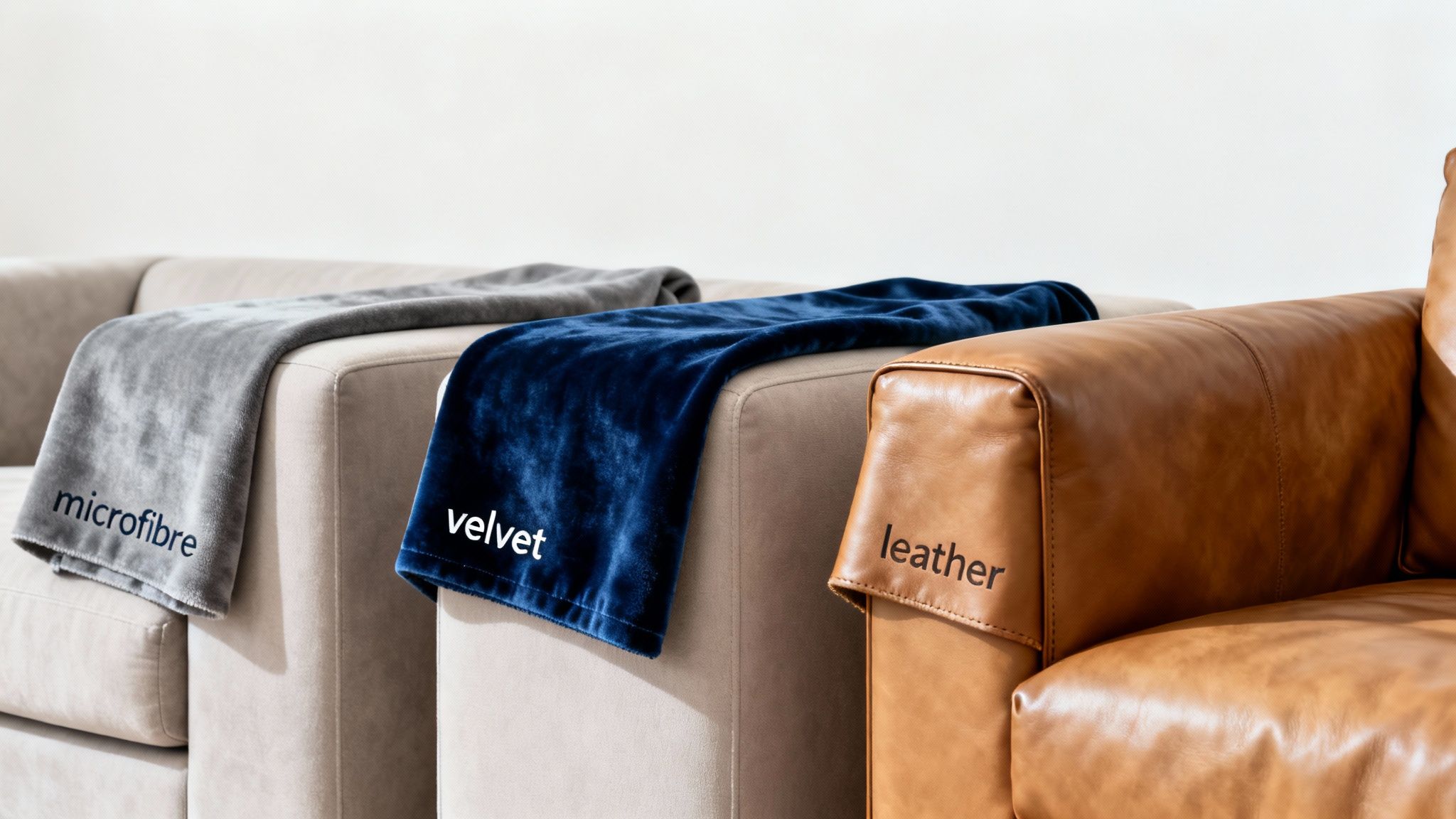
In this scenario, performance fabrics are your best mates. Modern microfibres and clever synthetics are specifically engineered to fend off stains and resist wear and tear. Their tight weave is a real advantage, making them less prone to snagging from pet claws and a breeze to clean with a simple wipe.
Top Choices for High-Traffic Homes:
- Microfibre: It’s soft to the touch but incredibly resilient and famous for its stain-resistant powers. Spills tend to bead up on the surface, buying you precious time to grab a cloth before they soak in.
- Smart Fabrics (e.g., Aquaclean): These are treated with a special finish that lets you clean off most household stains using just water. It’s the ultimate peace of mind when you know a dropped ice lolly or a muddy paw print isn't a total disaster.
- Tightly-Woven Polyester: A budget-friendly and seriously robust option. Modern polyesters come in a huge range of colours and textures while offering brilliant durability.
For the Style-Conscious Host
If your living room is less of a family rumpus room and more of a chic space for entertaining, you can afford to prioritise beautiful aesthetics and luxurious textures. This is where you can really indulge in fabrics that make a statement.
Velvet brings a rich, opulent feel to a room and catches the light beautifully, adding instant glamour. It's surprisingly durable, though it can be a bit more demanding to clean than synthetic options. Leather, on the other hand, is a timeless classic that gets better with age, developing a gorgeous patina that adds character and sophistication.
It’s a common myth that all velvet is delicate. The truth is, many modern velvets are made from durable polyester, which makes them far easier to look after than their traditional silk or cotton cousins. You get the luxe look without the high-maintenance headache.
To get into the nitty-gritty of different materials, you can explore our detailed guide on the best fabric for a sofa. It will help you weigh up the pros and cons of everything from natural linen to hardy chenille.
Matching Fabric to Popular Sofa Styles
The fabric you pick can also elevate the design of your sofa, whether it's a neat 2-seater or a sprawling 3-seater. Certain materials just feel right with specific styles, creating a look that feels cohesive and intentional.
Let's look at a few classic UK sofa styles:
- The Chesterfield: This iconic design, with its deep button-tufting and rolled arms, is traditionally dressed in rich, dark leather. The pairing creates a distinguished, classic look that's perfect for a study or a more formal living room.
- The Scandi Minimalist: Known for its clean lines, pale wood legs, and uncluttered feel, this style is a perfect match for textured, neutral fabrics like a grey or beige woven blend. It’s all about simplicity and natural comfort.
- The Mid-Century Modern: Sleek and angular, these sofas really sing when upholstered in fabrics with a tight weave and bold, block colours—think mustard yellow, teal, or burnt orange. This combination highlights the sofa's sharp silhouette and cool retro vibe.
Ultimately, choosing the right fabric is a balancing act between the life you live and the style you love. If you think about your daily needs first, you'll find an upholstery that's not only beautiful but absolutely perfect for your home.
How to Confidently Buy a Sofa Online
Buying a sofa online, without ever having sat on it, can feel like a massive gamble. You’re picking the future centrepiece of your living room based on perfectly styled photos and persuasive descriptions. But with the right strategy, you can turn that leap of faith into a confident, informed decision.
The secret is to think like a detective. Instead of just admiring the professional shots, you need to dig deeper into the details that tell the sofa's real story. It’s about learning to read between the lines of product pages and using every digital tool you can to bridge the gap between your screen and your living room.
This shift to online shopping isn't just you—it's a huge trend, and a big slice of it is spent on living room staples like the sofa 2 and 3 seater, with younger buyers in particular driving online sales for compact designs perfect for flats and smaller homes.
Decode the Digital Showroom
Your first mission is to master the product description. Don't just skim the highlights; hunt for the specific, tangible details that paint a clear picture of what you’re actually buying.
- Materials Breakdown: Look beyond vague terms like 'wood frame'. Is it solid, kiln-dried hardwood, or is it engineered wood? This small detail tells you a whole lot about the sofa's long-term durability.
- Cushion Fillings: The description needs to specify what’s inside. "Foam" is meaningless, but "high-density foam core with a feather-down wrap" tells you it offers firm support with a soft, sink-in feel.
- Fabric Composition: Check the exact fabric blend. A 100% linen sofa will look and behave very differently from a polyester-linen mix, which will be far more resistant to creasing and stains.
Think of the product description as the sofa's CV. A detailed and transparent one suggests the manufacturer is proud of its quality. A vague one might be hiding a few shortcuts.
Harness the Power of Real Customer Experiences
Studio photos sell a dream, but customer photos tell the truth. This is where you'll see how that "oatmeal beige" fabric looks in real British daylight, not under glaring studio lights.
Hunt for reviews that include photos and pay close attention to comments about comfort, how accurate the colour is, and how the fabric is holding up over time. These user-submitted images are your best tool for managing expectations and avoiding disappointment. They show you the sofa in a real home, with life happening all around it.
See It in Your Space with Augmented Reality
Loads of retailers now offer Augmented Reality (AR) tools that let you virtually place a sofa in your room using your phone's camera. This is an incredibly powerful feature that moves way beyond guesswork.
With AR, you can:
- Check Proportions: Instantly see if that 3-seater sofa will completely overwhelm your space or if a 2-seater looks a bit lost.
- Test Colours: See how that bold colour choice actually works with your wall paint and other decor.
- Confirm Placement: Experiment with different positions without having to move a single piece of real furniture.
Understand the Fine Print Before You Click
Finally, a confident purchase means knowing exactly what happens after you pay. Before you commit, get to know the company’s policies on these key areas:
- Return Policy: What's the return window? Are there restocking fees? Do you have to pay for return shipping? A generous and clear return policy is a huge sign of a retailer's confidence in their product.
- Delivery Options: Understand the difference between kerbside delivery and a 'white glove' service, where the team brings the sofa inside, unpacks it, and takes away the packaging. For a beast of an item like a sofa, the latter is often worth every penny.
- Flexible Payments: Many online stores offer financing options. Make sure you understand the terms, interest rates, and payment schedule before you commit.
By running through this digital checklist, you can navigate the online marketplace with skill, ensuring the sofa 2 and 3 seater that arrives at your door is the one you actually wanted all along.
Styling and Maintaining Your New Sofa
So, your new sofa has arrived. This is the moment it goes from being just a piece of furniture to becoming the real heart of your home. Styling is where you get to stamp your personality all over it, while a simple maintenance routine will make sure your investment looks fantastic for years.
It all starts with layering. Think of your sofa as a blank canvas and accessories like cushions and throws as your paint. This is your chance to play with colour, texture, and pattern to build a complete, inviting look.
Building a Cohesive Look
Styling a sofa 2 and 3 seater set is all about creating balance and comfort. The goal is to make it look curated but still utterly liveable—a spot that practically begs you to sit down and relax.
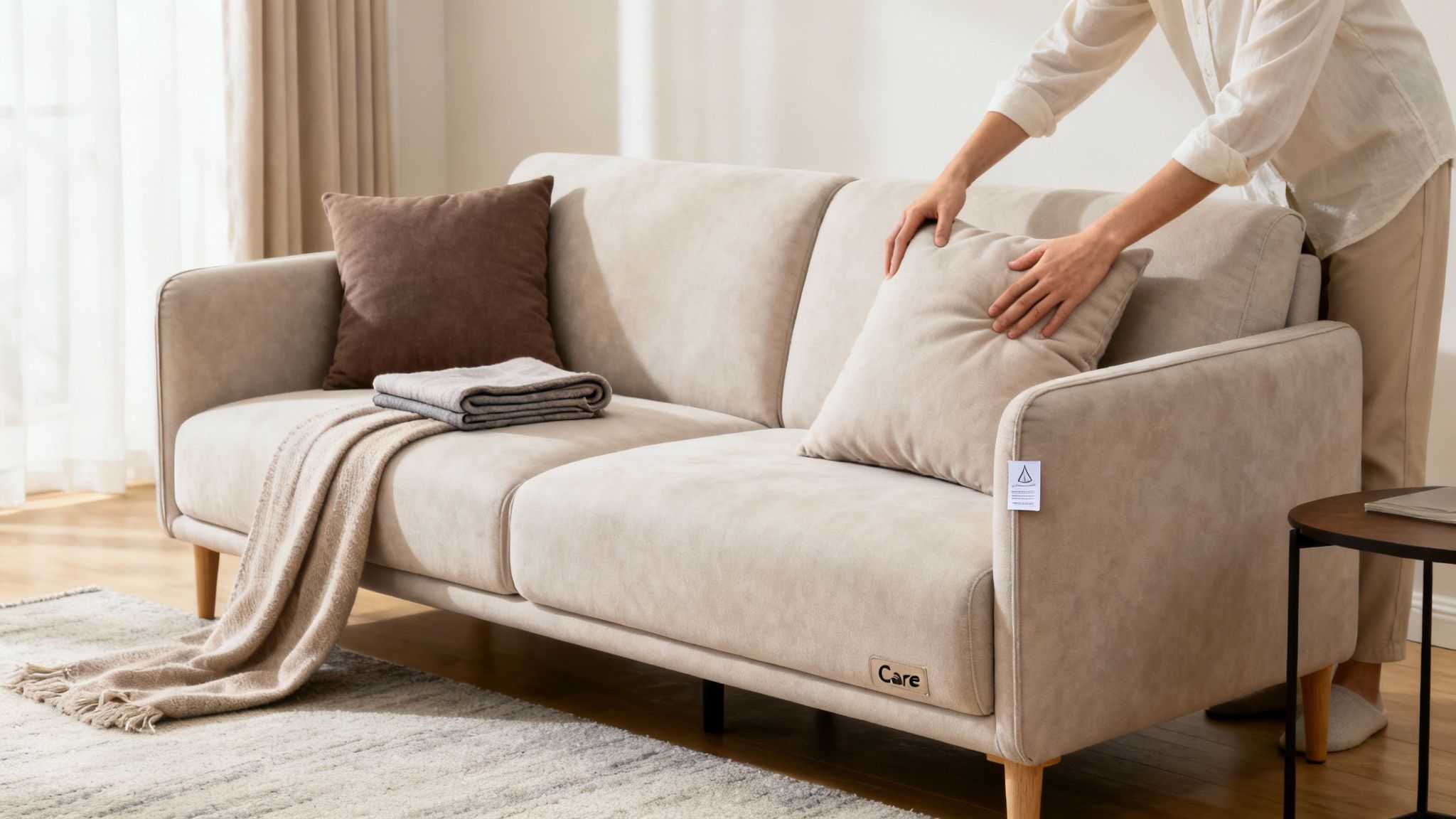
Start with cushions. A good rule of thumb is to mix up sizes and shapes to create a bit of depth. For a 3-seater, you could try two larger square cushions at each end, followed by two slightly smaller ones in a complementary pattern, and finish it off with a single rectangular lumbar cushion right in the centre.
Next up, add some texture with a throw blanket. Casually draping it over one arm or folding it neatly across the back adds a layer of softness and stops the sofa from looking too one-dimensional. Don't be shy about mixing materials, either—a chunky knit throw against a smooth linen sofa, or a faux-fur cushion on a leather couch, creates a rich, tactile feel.
Finally, ground the whole scene with an area rug. Make sure it's big enough for at least the front legs of your sofa to sit on. This simple trick ties the whole seating area together, making the arrangement feel intentional and unified.
A Simple Maintenance Plan
Keeping your sofa in pristine condition doesn’t require a monumental effort, just a little consistency. A simple weekly routine can make all the difference in preserving its fabric and structure.
Your Weekly Sofa Care Checklist:
- Plump the Cushions: Every few days, give both the seat and back cushions a good shake and fluff. This helps redistribute the filling, preventing that dreaded sagging and keeping them looking full and comfortable.
- Rotate and Flip: If your cushions are reversible, flip and rotate them weekly. This ensures they wear evenly on all sides, which can seriously extend their lifespan.
- Vacuum Gently: Grab the soft brush attachment on your vacuum cleaner to get rid of dust, crumbs, and pet hair. Pay special attention to the crevices where debris loves to hide.
A well-maintained sofa is a long-lasting one. Think of this weekly tidy-up not as a chore, but as a five-minute ritual to protect the centrepiece of your living room.
For a deeper clean, always check the manufacturer’s care label first. Some fabrics need a professional touch, while others are more forgiving. For those inevitable spills and accidents, learning to clean upholstery stains like a pro is a lifesaver for tackling marks before they have a chance to set.
If your sofa fabric allows for it, a protective cover can be a game-changer, especially in a busy household. For anyone looking for practical and stylish options, exploring machine washable sofa covers is a brilliant way to shield your furniture from daily life while also giving you an easy way to update your style. It's the perfect blend of protection and personality, making sure your sofa stays a beautiful and functional part of your home for the long haul.
Choosing Sofas for Commercial and Rental Properties
When you’re buying a sofa for a high-traffic spot like a rental property, an office reception, or a hotel lobby, the rulebook for choosing furniture gets thrown out the window. A standard sofa you'd buy for your own living room, no matter how stylish, just isn't built to handle the constant wear and tear of commercial use. This decision isn't just about looks; it's a strategic move that affects safety, how long your investment will last, and your budget.
Think of it like choosing tyres for a car. Your personal runaround is perfectly fine with standard road tyres, but a long-haul lorry needs heavy-duty, commercial-grade ones built for constant use and heavier loads. The exact same idea applies to a sofa 2 and 3 seater going into a commercial or rental space—it has to be tougher from the inside out.
Durability and Fire Safety Standards
The real difference comes down to construction and compliance. Commercial-grade furniture, often called 'contract' furniture, is specifically engineered to withstand being used by lots of different people, day in and day out. That means it has reinforced frames, more resilient cushion fillings, and upholstery with a high 'rub count'—which is just a technical way of saying the fabric can handle a lot of friction before it wears out.
Most importantly, furniture for commercial spaces in the UK must meet very strict fire safety regulations, known as Crib 5 or BS 7177. This is a legal requirement for public spaces and rented properties, making sure the materials are flame-retardant to a much higher standard than your typical domestic sofa. Choosing a non-compliant sofa doesn't just risk it falling apart quickly; it's a major safety and liability risk.
Investing in contract-grade furniture is a proactive financial move. The higher initial cost is offset by a much longer lifespan and reduced need for repairs or replacements, delivering a superior return on investment over time.
This isn't a niche market, either. The UK contract furniture market is valued at around $2.72 billion, which shows just how much demand there is for durable, specialised seating in business and hospitality settings. These sofas are almost always made to a much higher standard than retail models, and buying them from specialist suppliers can often lead to big savings if you're ordering in bulk.
Smart Choices for Landlords and Designers
For landlords and Airbnb hosts, the two most important things are durability and easy maintenance. A sofa that’s simple to clean and resists stains will keep your turnover costs down and ensure the property looks fresh for every new guest. Look for robust, non-porous fabrics like treated polyesters, vinyl, or certain commercial-grade leathers.
If you’re specifically choosing sofas for this kind of property, it’s worth exploring other tips for decorating rental properties to help create a space that’s both inviting and hard-wearing. By focusing on durability, compliance, and ease of care, you make sure your sofa 2 and 3 seater is an asset that performs, not a liability that ends up costing you time and money.
Your Sofa Questions Answered
Choosing a new sofa can throw up a few last-minute questions. To help you make that final decision with total confidence, we’ve put together some straightforward answers to the most common queries we hear about sofa 2 and 3 seater models.
Think of this as your final checklist before you commit. It’s all about making sure you’re just as happy with your choice on day one hundred as you are on day one.
What Is the Average Size of a 2 and 3 Seater Sofa in the UK?
While the exact dimensions can vary quite a bit between different brands and designs, there are some reliable guidelines you can follow. A typical 2-seater sofa in the UK generally falls somewhere between 150cm and 180cm wide.
Your standard 3-seater sofa is usually a bit bigger, ranging from 180cm to 220cm wide. It's always a good idea to double-check the specific width, depth, and height of the exact model you're eyeing up, as you'll often find 'compact' or 'oversized' versions that sit outside these averages.
How Do I Know If a Sofa Will Fit Through My Door?
This is the classic delivery day worry, but a few quick measurements will put your mind at ease. You need to measure the height and width of every doorway, hallway, and stairwell that the sofa will have to pass through on its way into the room.
Compare these numbers with the sofa's dimensions—pay special attention to its depth and its diagonal depth (that’s the measurement from the bottom back corner to the top front corner). Many retailers will list a 'minimum doorway width' to make things easier. If you’re ever in doubt, giving the shop’s customer service team a quick call before you order is a very smart move.
Can I Mix a 2 Seater and a 3 Seater Sofa?
Absolutely! Pairing a 3-seater with a 2-seater from the same collection is a timeless and hugely popular setup for medium to large living rooms. It provides plenty of flexible seating while creating a really cohesive, pulled-together look.
Don’t be afraid to mix and match sofas of different but complementary styles or colours, either. This can create a more eclectic, designer-led feel. The secret to making it work is finding a way to unify the two pieces—try using similar cushions across both sofas, or place them on a large, shared area rug.
Is a Loveseat the Same as a 2 Seater Sofa?
Yes, for the most part. Here in the UK and in many other places, the terms 'loveseat' and '2-seater sofa' are pretty much interchangeable. The name 'loveseat' originally came from seating made for two people to sit cosily together.
These days, it simply refers to a more compact sofa model that comfortably seats two adults. This makes it a perfect choice for smaller living rooms or as a stylish accent piece to complement a larger sofa.
Ready to protect your new sofa or give an old favourite a stunning makeover? Explore the beautiful, practical, and easy-to-fit collections at The Sofa Cover Crafter and find the perfect style for your home.