



Colour drenching works because walls, ceilings, skirting, woodwork and often radiators all disappear into one colour, but the sofa is the one thing that stays visually separate and decides whether the room feels immersive or unfinished. In a drenched room, the sofa is the largest unpainted surface left, so its fabric choice carries more weight than many expect.
Table of Contents
- What is Colour Drenching and Why Does the Sofa Matter
- How to Style a Sofa in a Colour-Drenched Room
- Why Fabric Texture Changes the Look of Drenching
- Choosing a Palette for the Sofa and Soft Layers
- Styling Combinations and Seasonal Adjustments
- How to Test a Colour Before Committing
What is Colour Drenching and Why Does the Sofa Matter
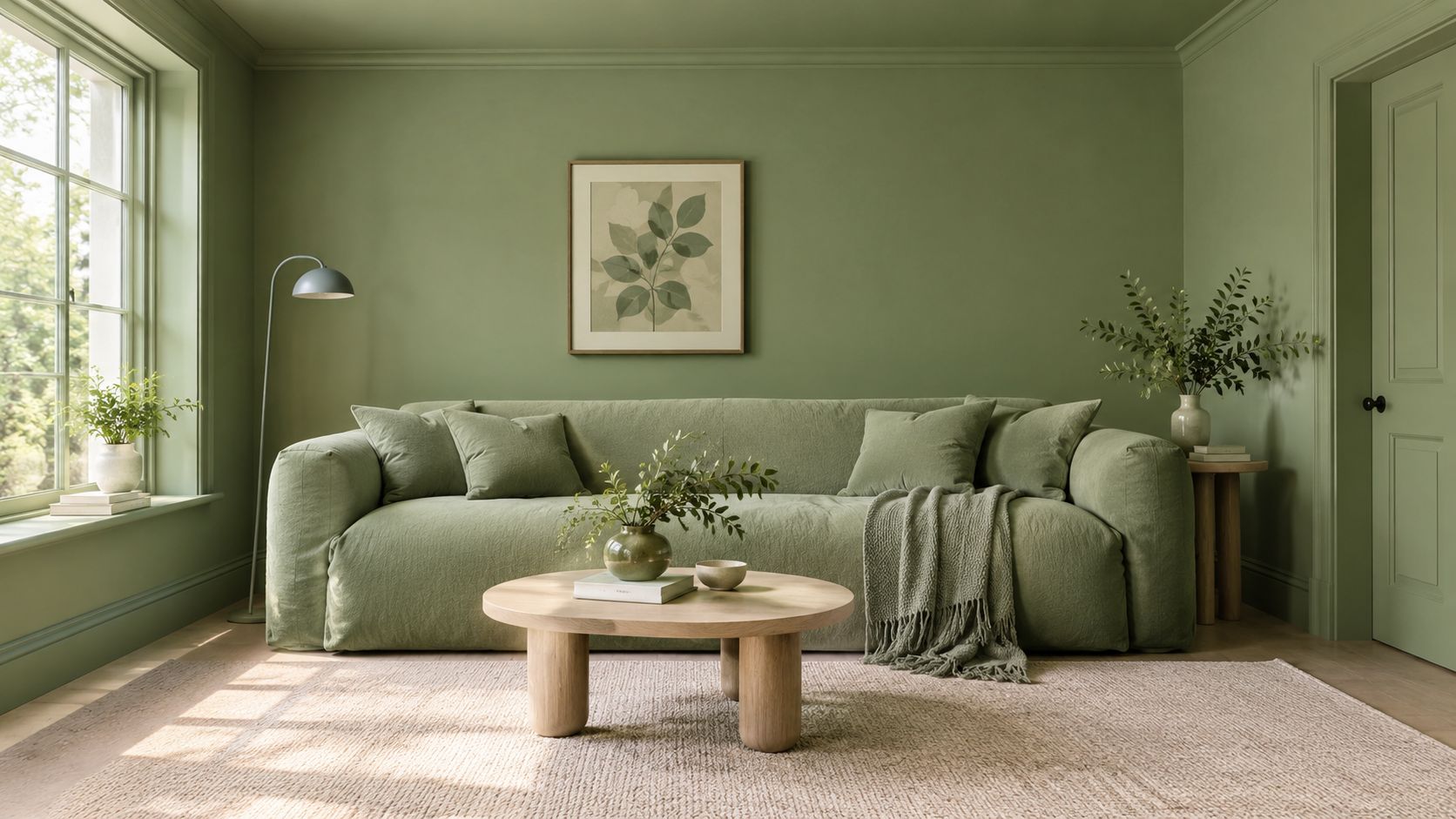
Colour drenching is the practice of carrying one hue across the room's hard surfaces so the shell reads as a single visual field. That usually means the walls, ceiling, skirting boards, doors, woodwork and sometimes radiators all sit in the same colour family, which creates a cocooning effect and reduces the visual interruptions that break a room apart.
The sofa matters because it is the biggest object that cannot be painted. If the sofa fights the walls, the room starts to feel like a painted box with furniture dropped into it. If the sofa works with the surrounding colour, the whole space reads as designed rather than assembled.
The practical point is simple. A drenched room already asks the eye to process fewer contrasts, so the sofa has to either continue that calm or introduce tension on purpose. A neutral upholstered piece can soften the scheme, a tonal sofa can extend it, and a textured cover can keep the room from going flat.
Practical rule: in a drenched room, every surface either supports the colour story or interrupts it, and the sofa is usually the biggest decision left.
That is why the cover, cushion and throw plan matters so much. The room may be painted top to bottom, but the seating still decides whether the drench feels complete.
How to Style a Sofa in a Colour-Drenched Room
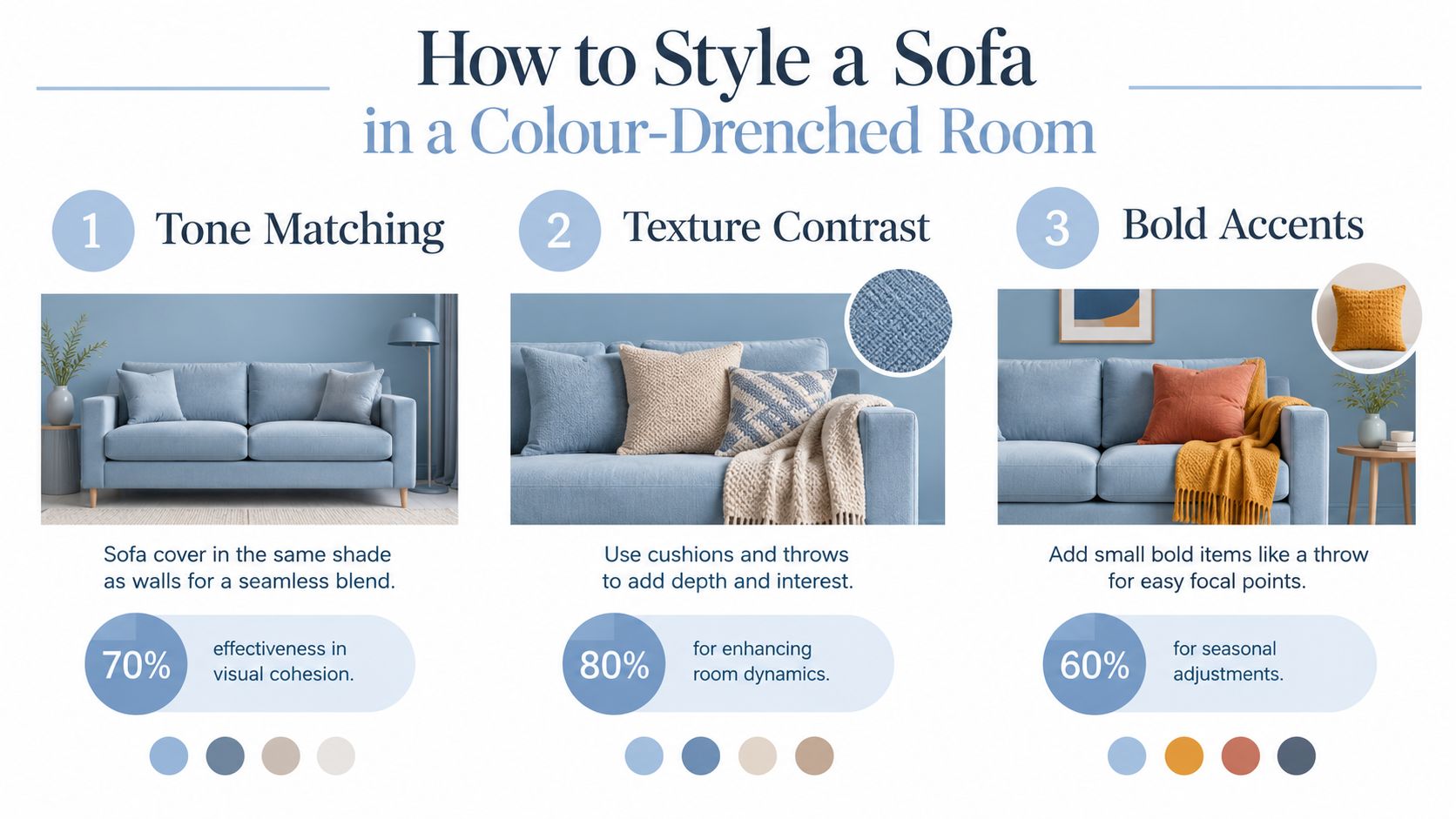
Carry the drench onto the sofa
A stretch cover in the same colour family as the walls makes the sofa read as part of the room rather than a separate block. When the sofa tone sits close to the wall tone, the eye stops reading a hard edge where the sofa ends and the room begins, so the space feels like one continuous volume instead of a wall with a large object parked in front of it.
That approach suits people who want the strongest cocooning effect. The Sofa Cover - Velvet - Dark Green - Adaptable & Expandable is one example of a sofa cover that can support that approach with a deep tone and a velvet surface. In a drenched room, the point is not perfection of match, but closeness of tone and consistency of finish.
Break it on purpose
Matching one thing and contrasting the rest can work better than a perfect match. If the cover, cushions and throw all sit in the same shade, the room can lose depth because the eye has nothing to move between, and the sofa can flatten into one big block, especially in photographs.
Let the cushions pick up one colour from the walls and let the throw bring a different texture. That small bit of tension gives the room something to read, so the sofa feels styled rather than bought as a set.
Leave the sofa alone and drench only the soft layers
A simple 60-30-10 frame helps when you want the room to feel layered rather than matched. Use 60% for the main colour, 30% for a second tone, and 10% for the accent. A throw is the natural 10% because it is small enough to be bold and easy to swap when you change your mind.
For a room that already feels saturated, the throw can be the release valve. It keeps the sofa from merging completely into the wall colour while still letting the scheme stay coherent.
Why Fabric Texture Changes the Look of Drenching
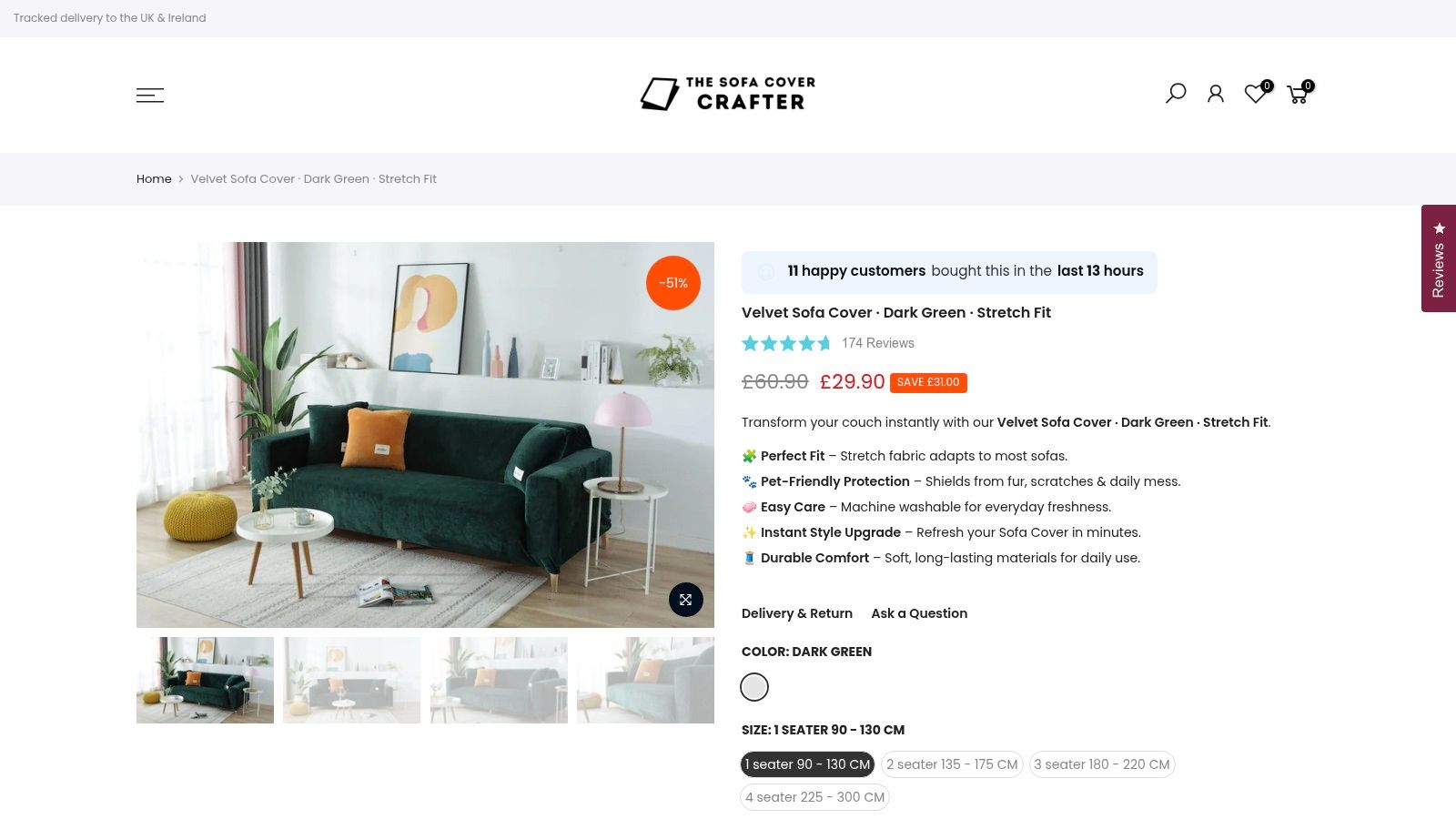
A drenched room bounces its own colour back onto everything in it, so a cover judged against a white product-photo background will read differently once it is in the room. That is why a small fabric sample matters more than a polished online image.
Stretch fabric behaves differently in the room
On a stretch fabric, the same colour can shade lighter across the flat back panel and darker in the tucked crevices. That means a mid-tone always shows more contrast in the room than it does on the page, because light hits the wide planes and falls away in the seams.
That contrast is useful in a drenched living room. It gives the sofa a little relief without introducing a new colour, so the upholstery still belongs to the room's main story. For more detail on surface behaviour, the notes on texture of fabrics are worth looking at before you choose between finishes.
Velvet pushes the effect further
Velvet goes further because the pile lies in a direction called the nap. That means a velvet cover can show two or three shades of the same colour at once depending on which way light crosses it, and that variation is exactly what stops a single-colour room from looking flat.
Velvet is useful in a drenched scheme because it gives the eye movement without forcing a second colour into the room.
Texture does the work that many people try to get from extra paint. If the walls, ceiling and woodwork are already committed to one colour, the sofa needs surface interest, not a louder shade. Velvet gives that interest while keeping the room calm.
Choosing a Palette for the Sofa and Soft Layers
The safest palette choice depends on whether you want the sofa to merge, contrast or sit somewhere between the two. If you want the sofa to disappear into the room, keep the cover within the same family as the walls. If you want more depth, let the sofa sit a touch away from the wall colour and use cushions and throws to bridge the gap.
The easiest way to keep that balance under control is to use the 60-30-10 logic across the whole soft-furnishing plan. The main room colour carries the largest share, the sofa or cushion tone can support it, and the throw can supply the final accent. That structure keeps a drenched room from looking accidental, which is often what happens when every soft layer is chosen independently.
In a drenched room, mood comes from repetition as much as from the hue itself. Repeating one colour family across the sofa, cushions and throw gives the room a visual rhythm that a single painted wall never can.
Match, then introduce one break
If the sofa stays close to the wall colour, let one cushion echo the wall and let the throw introduce a different material. That creates a controlled break without losing the drenched effect. If the sofa is already darker than the wall, use softer cushions to pull it back into the scheme.
The right move is not always more matching. Sometimes one quiet contrast is what gives the room structure, especially when the painted surfaces are already doing a lot of visual work.
Keep the throw as the easiest change point
A throw is the natural place for the boldest move because it is small, movable and easy to replace. The Sofa Throw range gives you options across several colourways and lengths, including 180130 cm, 180230 cm, 180300 cm and 180420 cm, so the same basic styling idea can work on different sofa sizes. If the room needs more energy, the throw can carry it without forcing the whole sofa to do the job.
For people comparing room palettes more broadly, the internal guide to living room colour scheme ideas sits well beside this approach, but the sofa rule stays the same. The bigger the visual weight of the room, the more important it is that the seating either belongs to the scheme or clearly interrupts it on purpose.
Styling Combinations and Seasonal Adjustments
A dark green velvet sofa cover in a forest green room creates a deep, enclosed feel, while a lighter beige or grey cover can take the edge off a stronger wall colour. In a shadow grey drench, a neutral grey sofa keeps the room quiet, but a slightly different texture keeps the upholstery from disappearing into the background.
The point is to let the sofa earn its place in the room. A drenched scheme can be calm, moody or airy, but the sofa should never look like it was left out of the plan. If the walls are saturated, the sofa should either repeat that saturation or offset it with texture and a clear soft-furnishing accent.
The seasonal part is easier than one might expect. In colder months, heavier velvet and richer throws make the room feel denser and more enclosed. In warmer months, lighter textures and less contrast can open the space up without touching the paint.
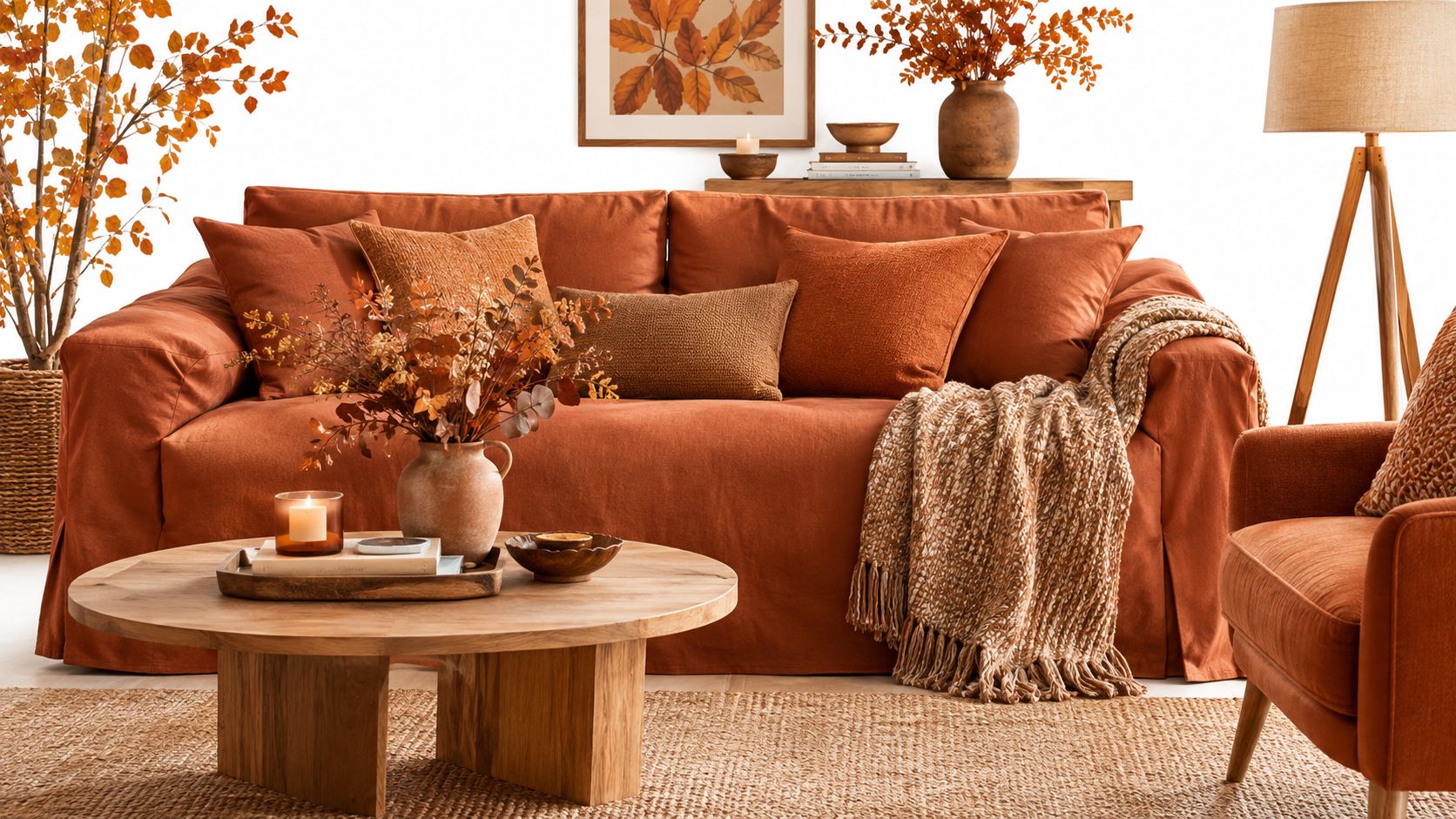
A sofa in a drenched room does not need constant reinvention. Small changes to the cover, cushions and throw are enough to shift the tone of the room while keeping the same painted backdrop.
Seasonal rule: keep the sofa structure stable, then change the soft layers when you want a new mood.
That approach works especially well for households that want the room to feel current without starting over. The paint stays put, the upholstery carries the style, and the accents do the renewing.
How to Test a Colour Before Committing
A 45cm x 45cm pillow cover in the shade you are considering is a cheap, reliable test. Hold that pillow cover against the wall you have already painted, and you will see how the fabric reads in your actual room light instead of in a product image. The method is simple, and it removes a lot of guesswork before you commit to a full sofa.
The internal guide to try before you buy is useful here because the room itself is the ultimate test environment. A colour that looks right online can lean warmer, cooler, flatter or richer once it sits beside your painted wall, and a small cushion sample shows that shift quickly.
Test the sample in daylight and again in the evening. Then hold it beside the sofa arms, the seat and the backrest, because those surfaces catch light differently. If the sample still feels right in all three spots, the larger cover is much more likely to work.
The Sofa Cover Crafter offers sofa covers, throws and pillow covers that help a colour-drenched room feel finished rather than half done. If you are planning the sofa layer around painted walls, visit The Sofa Cover Crafter and choose the cover, throw or pillow cover that lets your room hold together as one deliberate whole.