



Ever ordered a “tweed” cushion online and found it scratchy, partly synthetic, or marked dry clean only? The word points first to a look: a flecked, sturdy cloth with a bit of spring. Fibre content, softness and washing needs sit behind that first impression.
In a living room, read tweed as a cue for accents. It often earns its place on cushion covers and throws, where texture and warmth matter more than constant seat wear. A full sofa in coarse wool asks more from skin and cleaning. Match the romance of flecked wool to the practicalities of crumbs, pets and rainy-day elbows.
Table of Contents
- What Is Tweed Fabric and Where Did the Name Come From?
- What Are the Main Types of Tweed?
- How Does Tweed Behave in a Living Room?
- Is Tweed a Good Choice for Sofas, Cushions and Throws?
- What Can You Use Instead of Tweed on a Sofa, and What Should You Check?
- How Do You Clean Tweed Without Felting It?
- How Do You Pair Tweed Accents Without Clashing?
What Is Tweed Fabric and Where Did the Name Come From?
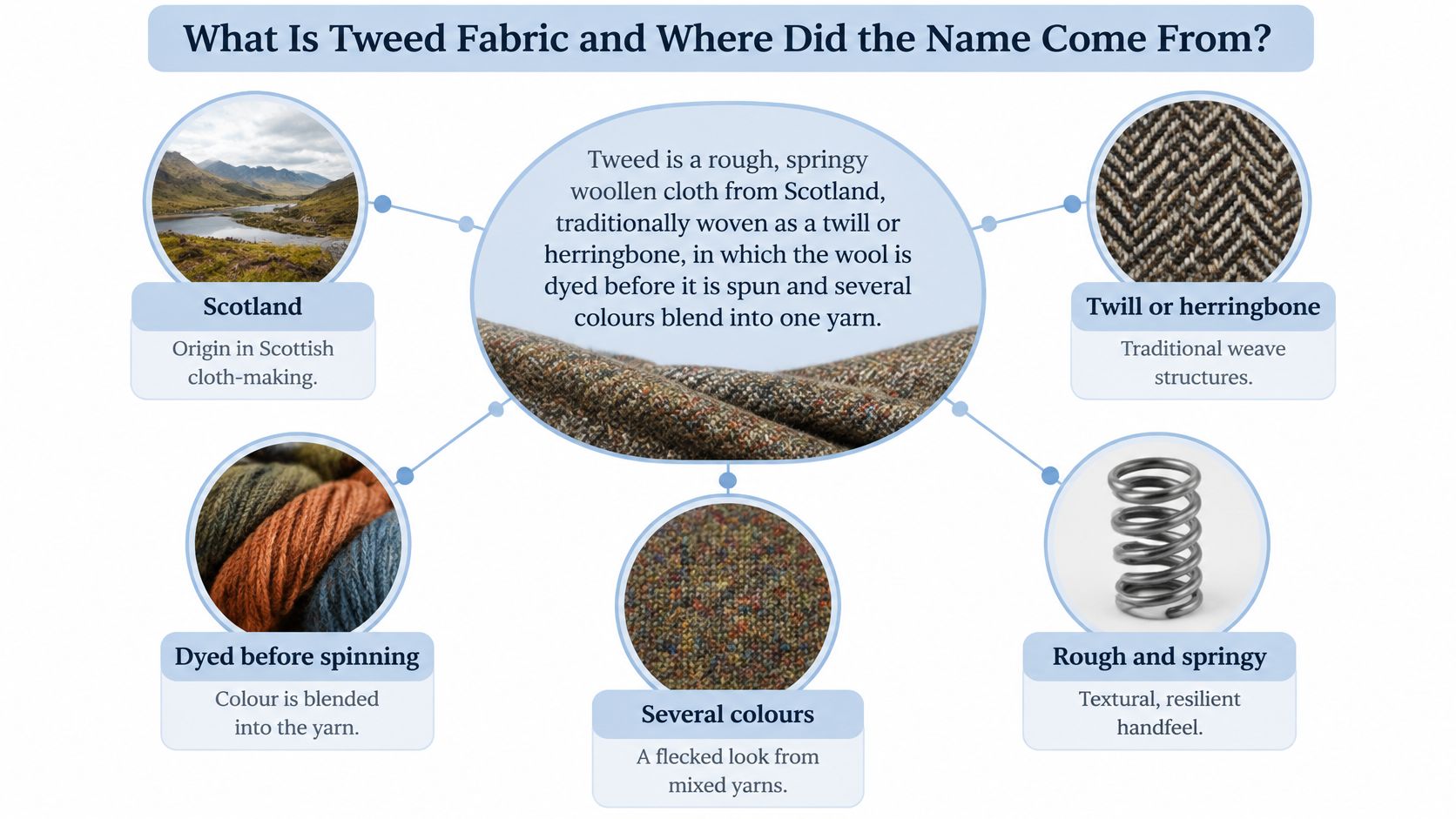
Why does a tweed cushion read as plain brown or grey from the doorway, then break into flecks of three or four colours once you sit beside it? That shifting surface is the first clue to what tweed is: a woollen cloth first woven in Scotland, made from yarn dyed before spinning, with several colours twisted into a single thread. The colour lives inside the yarn, so the cloth looks softly blended at a distance and speckled up close.
That blended yarn shapes the feel as much as the look. Woollen spinning leaves fibres hairy and full of trapped air, so the cloth feels warm, sheds light rain for a while and springs back after creasing. The surface stays slightly coarse and irregular, which is why tweed sits happily on cushions and throws but can feel scratchy on a seat you use in short sleeves. In Harris Tweed those flecks echo the ground the cloth was woven on: heather purples, moss greens and peat browns.
How Did Tweed Get Its Name?
The story goes that a London merchant misread tweel, the Scots word for twill, as Tweed, after the river. The mistaken name stuck. Treat it as the traditional naming story rather than a technical definition, because the word tweed on a label still promises no single fibre recipe.
Harris Tweed is the protected example to remember. According to a BBC history of Harris Tweed, its modern commercial history is commonly traced to 1864, and the Harris Tweed Orb began marking genuine cloth in 1911. Under the Harris Tweed Act 1993, authentic Harris Tweed must use pure virgin wool dyed and spun in the Outer Hebrides, be handwoven by islanders in their homes and be finished in the Outer Hebrides. Generic tweed carries no equivalent guarantee.
When you compare fabrics, look for flecks inside the yarn itself plus a diagonal rib or zigzag across the weave. Those clues identify tweed by its structure, whatever the tag claims.
What Are the Main Types of Tweed?
The main types of tweed are Harris Tweed, Donegal tweed, herringbone tweed, houndstooth tweed and glen check tweed. They differ mainly by weave pattern and tradition rather than by one fixed fibre. That distinction matters when you shop, because two cushions can both carry a tweed label yet feel and wear differently. Always separate the pattern name from the composition label.
Most traditional tweed uses a twill weave, which creates fine diagonal ribs, and is commonly made from carded woollen yarns. In carded yarn the fibres stay relatively short and irregular, unlike the smoother combed worsted yarns used in suiting. The result is a dry handle, a visible grain and a blended colour rather than a flat, polished finish.
Is Herringbone a Type of Tweed or a Weave?
Herringbone tweed is tweed woven in a broken twill that reverses direction to form a zigzag or V shape. Because the pattern is geometric and orderly, it reads calm on a cushion front compared with larger checks. For a deeper look at using that weave at home, read the Herringbone Pattern Sofa complete guide.
Houndstooth is a broken check with a pointed, four-part motif, so it reads bolder at cushion scale. Glen check is a small two-tone check with a quieter effect from a distance. Donegal tweed is traditionally handwoven in County Donegal, Ireland, and is recognised by coloured flecks or slubs in the yarn. Harris Tweed stands apart from all of them: the name belongs to a place and a protected mark, so a cloth can be plain weave or herringbone and still be Harris Tweed.
| Type | Typical weave or look | Origin or tradition | Typical use |
|---|---|---|---|
| Harris Tweed | Plain or herringbone weave, heathered multicolour | Outer Hebrides, Scotland, protected name with Orb mark | Jackets, coats, throws and fine accessories |
| Donegal tweed | Twill with coloured flecks or slubs | Traditionally handwoven in County Donegal, Ireland | Jackets, coats and heavier cloth |
| Herringbone tweed | Broken twill in a zigzag V pattern | Weave rather than place, made by many mills | Structured jackets, cushions and upholstery |
| Houndstooth | Broken check with a four-point motif | Weave rather than place, made by many mills | Suits, coats and bolder accents |
| Glen check | Small two-tone check | Scottish tradition, made by many mills | Suits, skirts and throws |
Read the table as a guide to tradition and appearance. A label that says houndstooth or glen check describes the pattern alone, so fibre content, yarn weight and finishing still need checking on the product itself. Before choosing tweed for furniture, return to the individual product label for its actual fibres.
How Does Tweed Behave in a Living Room?
In a living room, tweed fabric behaves as a textured, springy and fairly stiff cloth that hides everyday debris well, feels coarse against bare skin and should be kept away from hot water and agitation. Its advantages are mostly visual and structural. Its limitations show up through touch and cleaning.
The broken surface is forgiving after an ordinary evening on the sofa, as this tweed armchair scene shows.
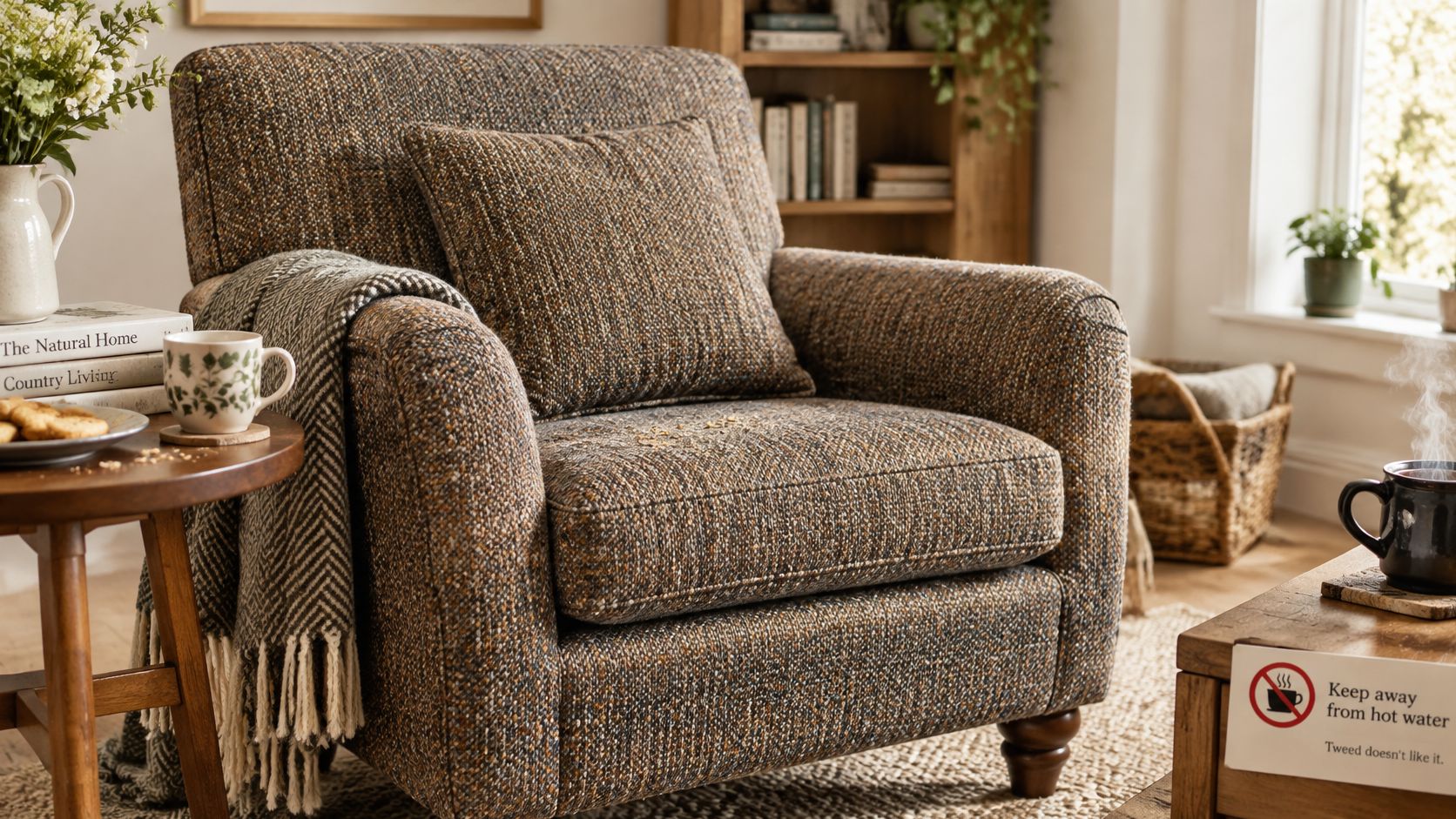
Flecked yarn breaks light across several colours, so crumbs, lint and pet hair blend into a tweed cushion where they'd stand out on a plain cover. Woollen yarn also recovers after pressure, helping a cushion face rebound instead of holding a dent. The cloth's stiffness holds a crisp cushion edge and folds into structured pleats over a sofa arm rather than pooling softly.
The Harris Tweed Authority FAQ describes Harris Tweed as made from 100% pure new wool, dyed and spun in the Outer Hebrides. That woollen yarn, hairy and full of air, is what lets tweed shed a light shower for a while, but water resistance shouldn't be overstated. A wool tweed throw may shed light moisture briefly, but prolonged soaking will get through and heavy soiling still needs proper treatment.
Tweed is forgiving on the surface and demanding underneath, because its flecks disguise daily mess while its wool fibres need gentle cleaning.
Compared with smoother furnishing textures such as bouclé, chenille and velvet, tweed feels drier and coarser. Our guide to the texture of fabrics explains why that hand feel changes comfort.
Finally, hot water plus agitation can felt wool tweed, shrinking and matting the fibres. That's why tweed is usually brushed, spot-cleaned or dry-cleaned rather than treated like an everyday washable cover.
Is Tweed a Good Choice for Sofas, Cushions and Throws?
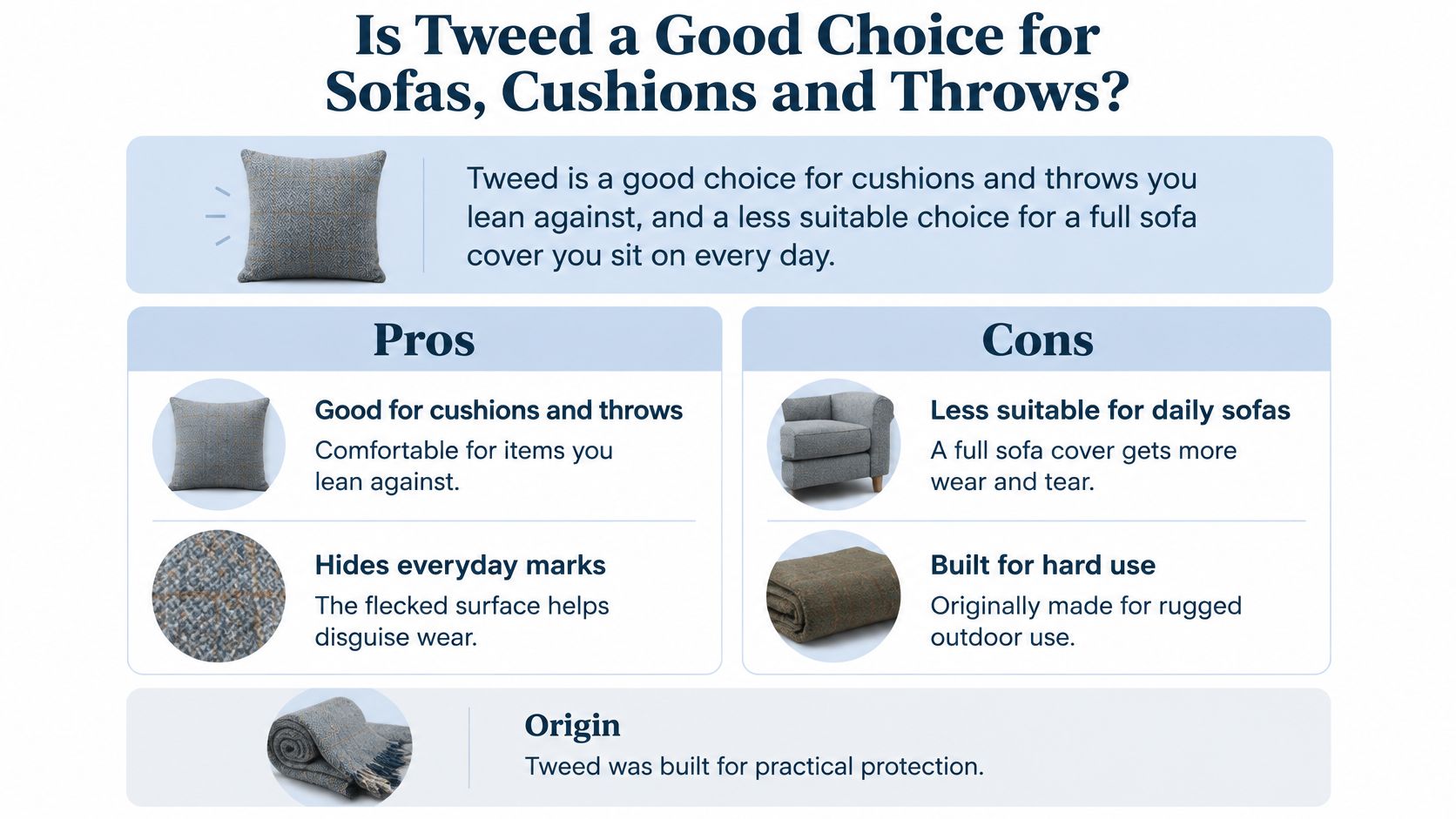
Tweed fabric is a good choice for cushions and throws you lean against, but a less suitable choice for a full sofa cover you sit on every day. That isn't a failure of the cloth. Tweed developed for coats and jackets, so smaller, structured accents play to its origins better than a large seat surface.
A tweed cushion benefits from the flecked surface, springy recovery, and firm edge without placing coarse wool under bare legs for hours. A throw folded over a sofa arm adds refined texture and stays where hands or shoulders meet it briefly. If you're comparing wool throws specifically, our sofa throws wool guide covers that separate buying decision.
For a full sofa, weigh these drawbacks first:
- Coarse against skin: A tweed sofa seat can feel prickly through shorts or a light dress.
- Little natural give: Woven tweed doesn't stretch readily around curved arms or deep seats.
- Cleaning workload: Felting risk makes a large tweed cover harder to refresh than a washable sofa cover.
Choose tweed where texture matters more than softness. If you need the flecked appearance across the seat itself, a tweed-effect alternative is usually the more practical route.
What Can You Use Instead of Tweed on a Sofa, and What Should You Check?
Tweed gets its flecked surface from yarn dyed in several colours before weaving. A cotton or synthetic yarn can produce the same speckle, which is why a flecked or tweed-effect fabric is the practical alternative to genuine tweed on a sofa. You keep the look and drop the fibre that makes a large cover demanding to live with. We do not sell tweed or any wool fabric: our Flecked range is a tweed-like flecked look, not tweed.
For cushions, the Flecked Pillow Cover brings that speckled surface to an accent piece; you can browse the wider pillow covers collection or view the Flecked Pillow Cover in Anthracite Grey. For the seat itself, the Flecked Sofa Cover gives a flecked surface within our sofa covers collection, and the sofa throw collection covers the case where you only want an accent layer over an arm. A flecked cover is also a straightforward way to refresh an outdated sofa or change its design without paying for a new one.
Fit is a separate question from fabric. Check the size guide against your own sofa, including L-shaped or recliner configurations, before ordering. Our guide to the best fabric for a sofa compares the main sofa fabrics side by side.
| Option | Look | Best for | Check before buying |
|---|---|---|---|
| Flecked sofa cover | Flecked, tweed-like surface | Everyday sofa seating | Size guide against your sofa's shape and measurements |
| Wool-blend tweed-effect fabric | Tweed look with a warmer hand | Cushions and upholstery | Fibre content and an abrasion result from the seller |
| Polyester tweed-effect fabric | Tweed look with easier care | Upholstery that needs regular cleaning | Cleaning code alongside fibre content |
| Plain herringbone-weave fabric | Herringbone texture in a single colour | Sofa or cushion in plain surroundings | Whether the herringbone is woven in or printed on |
What Should You Check on a Tweed Label?
A tweed label should be checked for fibre names and percentages, country of manufacture, any Orb mark, weight and weave, cleaning code and any abrasion result the seller can supply. The UK Government's textile labelling guidance says a textile product's fibre content must be stated, and where a product has two or more components with different fibre compositions, the content of each component must be shown. The word tweed describes a style of weave; the label still has to name the wool, polyester or acrylic beneath it.
- Fibre content: Confirm whether the piece is pure wool, wool-rich or a synthetic blend.
- Origin and Orb: Look for manufacture details, and expect the Orb only on genuine Harris Tweed.
- Construction: Ask about weight, weave and any available abrasion result.
- Care: Read the cleaning code before assuming a tweed-effect cover can be washed.
If softness matters more than flecks on a family seat, the Velvet Sofa Cover is an option with a smooth surface. We offer sofa covers, throws, cushion covers and related home textiles, with covers in stretch, velvet, jacquard and waterproof fabrics, so score each option against the checklist above rather than choosing on the name alone.
How Do You Clean Tweed Without Felting It?
You clean tweed fabric by brushing and spot-cleaning tweed, not by machine-washing or soaking tweed, because hot water plus agitation felts wool. Work gently and use as little moisture as the mark allows. This process is for home spot-cleaning only, not a substitute for professional cleaning.
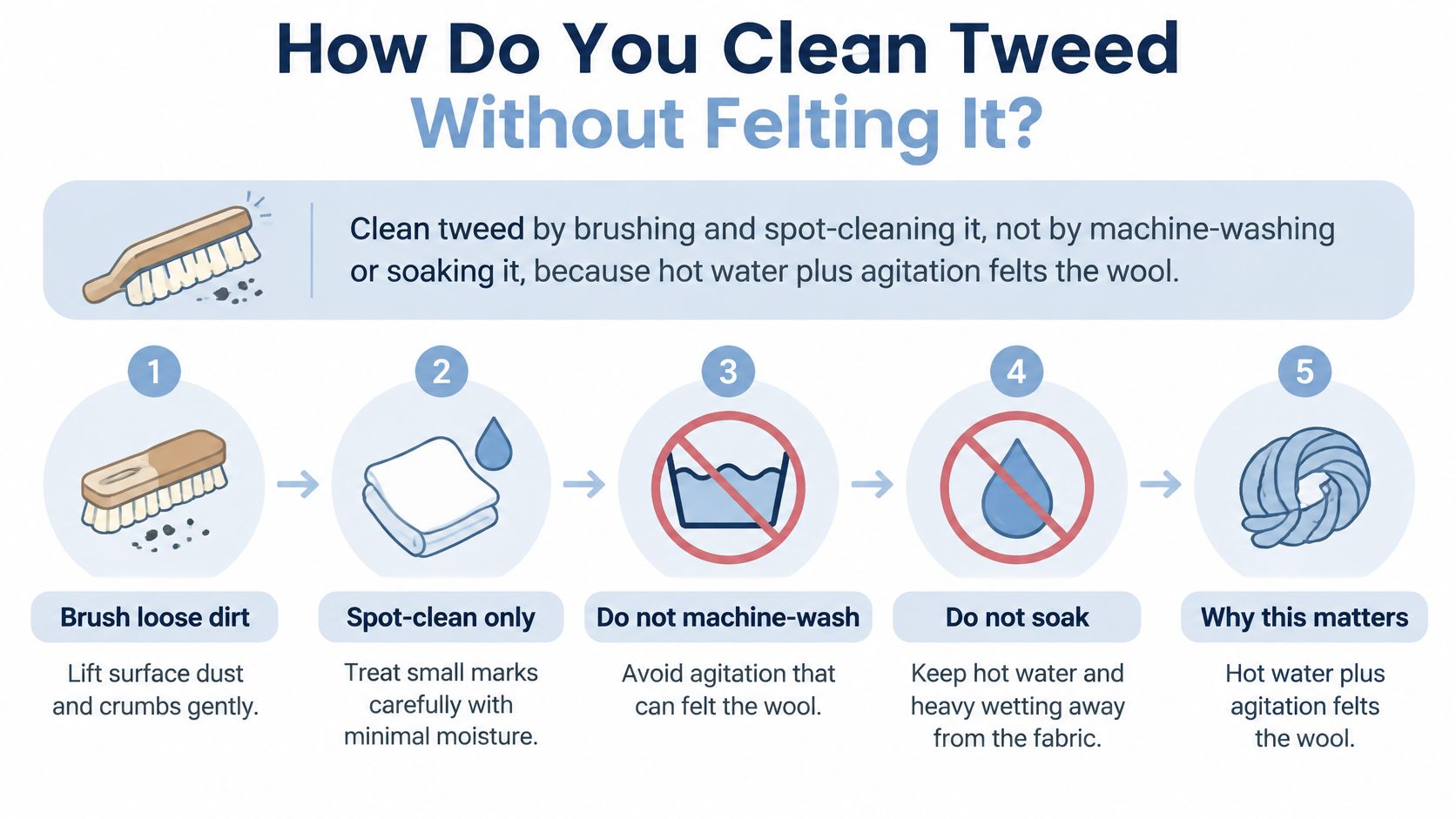
- Brush loose debris: Use a soft clothes brush in one direction to lift crumbs and hair without roughening the fibres.
- Read the care label: For upholstery, look for a furnishing cleaning code such as W, S or X before choosing a cleaner.
- Blot fresh spills: Press a clean white cloth from the edge inward. Don't rub, because rubbing spreads the spill and disturbs the surface.
- Test first: Try any water-based cleaner on a hidden corner, then dab with a lightly dampened cloth rather than a soaking one.
- Air-dry gently: Let the area dry away from radiators and direct heat so the wool isn't stressed while damp.
- Use a professional: Take a full tweed cover, or any item coded S or X, to a dry cleaner.
Common slip to avoid: scrubbing harder when a mark lingers. More friction is exactly what wool tweed doesn't need.
How Do You Pair Tweed Accents Without Clashing?
A grey herringbone cushion on a plain linen sofa reads as one considered accent. The same cushion beside a checked rug and floral curtains starts arguing with both. Pairing tweed well means letting one herringbone or tweed texture carry the pattern in the seating area while everything around it stays plain.
Tweed's flecked yarn packs several colours into a few square inches, so even a cushion-sized piece counts as a full pattern. Give it calm surroundings: painted walls, a plain rug or wooden floors let the eye settle on one detailed surface instead of scanning competing ones.
Because tweed is a coarse wool, it earns its place on pieces you handle rather than pieces that carry a body's full weight, so think of cushions you lean into and a throw folded over an armchair within reach.
Choose companion cushions in one of the colours already present in the flecks. Say a grey tweed cushion contains rust and cream flecks. Add a plain cream cushion and skip a rust cushion with its own check, so the palette connects without doubling the pattern.
Keep one textured piece per seating area and let everything around it stay plain.
Two competing patterns will undo the fitted effect. When shopping, hold your proposed tweed accent beside the sofa, rug and cushions together; if another pattern pulls your eye first, simplify the companion pieces. A 'tweed' label on a cushion or throw describes a look instead of guaranteeing a fibre, so judge each piece by its flecks and weave instead of its name.
If you like tweed's flecked character but need an easier-care finish for everyday seating, explore the flecked cushion and sofa cover options in our sofa covers collection, including the Flecked Sofa Cover in Light Grey. Check the size guide against your sofa, compare the plain surroundings in your room, and choose the accent that gives you texture without wool care.
